
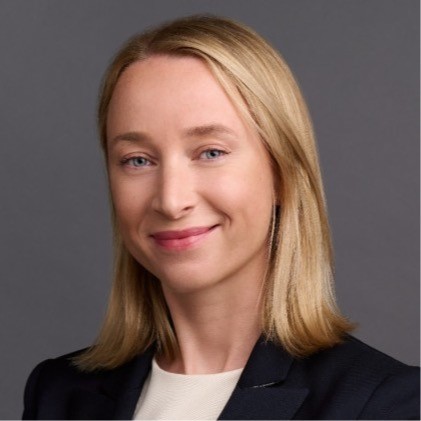
[upbeat music]
Siobhan Broadbery, Public-private solutions sales specialist at Capital Group
Siobhan: Should I really invest in private markets? Are they durable? What are the risks? How are assets valued? We know that those are the kinds of things you're getting asked by curious clients. New investment offerings always bring skepticism. So, what’s the best way to address these concerns?
Connor DeLaney, Director of global client solutions at KKR
Connor: Siobhan, let’s dive into all these and more. By the end of this video, we hope you’ll have the information you need to confidently field even the tough questions coming your way.
- Yes, alright, here’s one that I’m hearing a lot out in the field. “Why now?”
- I hear that too and am curious how you answer. From your perspective, what is it about the current market environment that makes our two companies want to partner now?
- Well, across the industry, there are several things driving timing. A large and growing part of the investable universe is now in private assets – for example, companies that aren’t publicly traded or lending that occurs outside of the traditional banking system.
Private market investments were historically really considered out of reach for many investors, but now they’re increasingly seen as a way to access a wider investment universe. Product innovation has seen advances in semi-liquid fund structures which offer the potential to be made available to a broader set of investors.
- Those are great points, Siobhan.
- Thanks. You know, Connor, I’m also hearing some debate amongst financial pundits on whether private markets aren’t a bubble or whether they’re a durable asset class and I’d love to hear how you respond to that.
- Ok, here’s how I respond to that question: We believe private market opportunities are here to stay and that they can potentially have long-term benefits for investors.
I also like to remind them that these types of investments are not new or untested. As KKR knows, they’ve been investing in private markets for decades. What is new, is the structure that Capital Group and KKR have unlocked with Public-Private+ Solutions. These funds help provide access for investors who’ve traditionally had limited or no exposure to private markets. And they may help you identify additional ways to diversify your clients’ portfolios.
Advisors may also get asked: “What’s the benefit of investing in Public-Private+ Solutions vs. more private focused options?”
- Yep, for sure and here’s what I would say to that: Public-Private+ Solutions can offer distinct potential benefits that investors may find more appropriate compared to other private investment options. This includes potentially better liquidity terms, lower investment minimums and accreditation requirements and more familiar investment solutions that may complement existing core allocations. Public-Private+ Solutions have the flexibility to take advantage of potential relative value differences between public and private investments to maintain selectivity when it comes to originating loans and to manage risks across a broader range of assets and investment capabilities of both Capital Group and KKR.
Ok, here's a big one: “How do Public-Private+ Solutions address the risks of investing in private markets?”
- Right. This answer has layers. Capital Group and KKR designed Public-Private+ Solutions to help address some of the distinct risks and complications that come with private market investments. Those include valuations. The securities held in the Public-Private+ Solutions are subject to Capital Group's fair valuation policies and procedures. Capital lock-up. These funds do not have a lock-up period and have daily subscriptions. Administrative. The Public-Private+ Solutions are 40 Act interval funds, offering the same 1099 tax treatment as individual traditional mutual funds.
Minimum investments. Public-Private+ Solutions have a low minimum investment of $1,000 dollars across most share classes. And finally, limited liquidity. Public-Private+ Solutions currently offer quarterly repurchases of 5% to 10% of the fund’s outstanding shares at NAV, depending on the fund.
Please note, to the extent more than 5% or 10%, as applicable, of outstanding shares are tendered for repurchase, the redemption proceeds are generally distributed proportionately to redeeming investors. Due to this repurchase limit, shareholders may be unable to liquidate all or a portion of their investment during a particular repurchase offer window.
- Ok, Connor, here’s another one we hear a lot: “Why not just buy a public fund and a private strategy on your own instead of combining them?”
- There is value in both approaches, in the end, it may make more sense for some investors to own these exposures separately. But we believe there are potential benefits to a single-integrated solution.
- That’s right. And those include holistic portfolio construction. As it relates to the public-private credit funds, partnering with KKR allows Capital Group’s portfolio managers to have that 360-degree view of the fixed income market spectrum. The Public-Private Equity Fund will be managed solely by Capital Group as the investment adviser. The fund will invest in KKR vehicles and direct investments sourced by KKR for private equity exposure.
- And don’t forget, we have best-in-class managers. Capital Group and KKR offer what we believe is best-in-class experience in our respective markets. Each manager can play to their strengths and can bring the best of their investment knowledge into public and private sleeves.
- That’s great Connor and I think it speaks to the power of this partnership, right? And the opportunities it could unlock for investors. Now, we’ve covered a lot of ground and while you may get some, or all of these questions from your clients, addressing their concerns comes down to having a clear strategy. It’s important to be transparent with both details and demystifying how Public-Private+ Solutions can fit into a portfolio. It’s also critical to understand exactly who’s managing the funds you’re considering.
- We hope we’ve helped you shape those conversations and that you can identify who might be open to the potential benefits of these exciting investment opportunities.
- Thanks for watching.
[upbeat music]