[upbeat music]
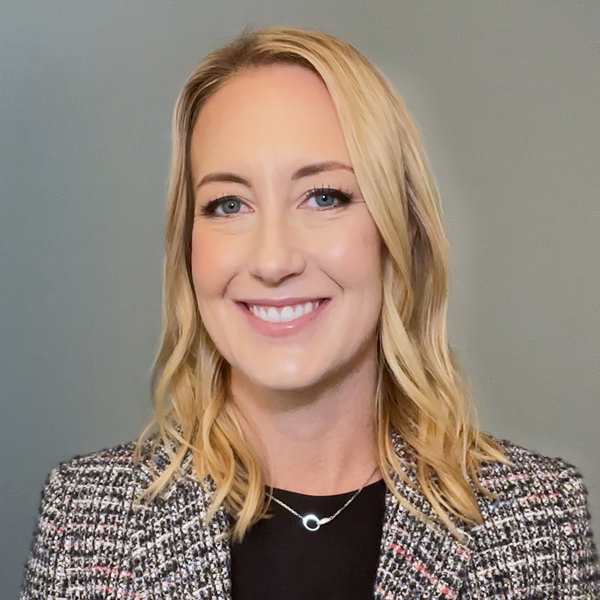
Holly Framsted, Head of product group at Capital Group
Holly: Hello, I'm Holly Framsted, global Head of Product at Capital Group. In this segment, we're going to talk about our new solution, which combines public and private equity into one blended fund that can unlock access to a broader spectrum of equity opportunity than previously available to individual investors.
I'm pleased to be joined by Jessica Spaly, the Principal Investment Officer of Capital Group, KKR US Equity Plus and Alisa Wood, a partner at KKR and co-Chief executive of KKR private equity conglomerate.
Together, alongside our firms and teams, we formed this partnership to bring KKR’s deep private equity capabilities and Capital Group’s public equity platform together, with a shared commitment to a rigorous client-centric investment process.
Welcome.
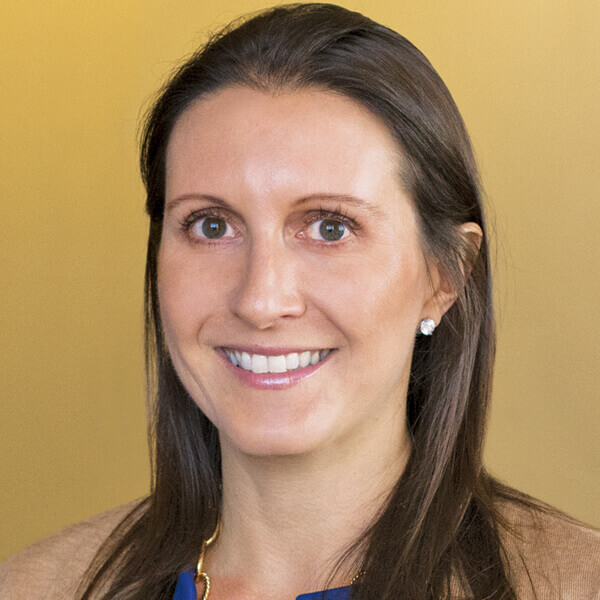
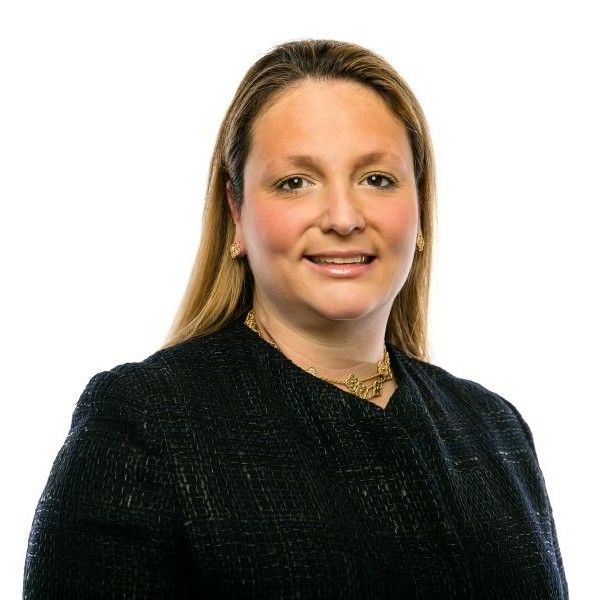
Speaker - Alisa Wood, Partner and Co-CEO of KKR Private Equity Conglomerate (K-PEC)
Alisa: Thank you.
Speaker - Jessica Spaly, Principal investment officer at Capital Group
Jessica: Thank you.
Holly: In recent years, evergreen vehicles have shifted the landscape providing broader access to individuals across private markets. With this evolution in mind, can you talk about what it means for managers and investors alike?
Alisa: Sure. I think most folks understand what it means to invest in public equities, right? You buy shares and publicly traded businesses that are typically traded on an exchange. In the private space, it’s very different, right? These are companies that are, could be at all different sizes, can be at all different parts of their life cycle, but are not readily accessible to the vast majority of the public. But they could still be great opportunities to make an investment. And when you make an investment in those businesses, you're typically gaining control, right? So, when you get that control, what do you do with it? So, you try to influence management teams, make sure you have top-tier talent. You're trying to make sure that the profitability of the business and you're investing behind the growth of the business is best in class and you can do that in a whole number of different ways. Investing in the private space really comes down to making sure you're finding a good company but you're doing those things you're pulling those levers to make it great, right? It's a growth story, it's a profitability story, and at the end of the day, that's what creates that long-term- capital appreciation and that illiquidity premium that you typically get when you're investing in the private space.
Holly: Jessica, how does that compare or differ from how we think at Capital Group about public equity investing?
Jessica: So, when we invest in public companies, as Elisa said, we don't have control. We are buying a share of a company. So, we need to feel confident not only in the business, the industry, but we need to really believe in the existing management team and their existing execution path. That's a little different than what KKR is able to do in private equity, which is they can make changes to those things. They can actually control how they decide the company should execute in its industry. We need to really invest in the whole picture we have to really pick and choose where we see alignment in all of the factors that make an investment attractive.
Holly: So, we're finding greatness and you're building or delivering greatness. [laugh]
Let's talk a bit about why our two organizations came together, because the partnership is such a critical element of this relationship and ultimately, the fund. Why did we think about partnering in this space and the importance for our clients?
Jessica: Well, these are two asset classes that have really delivered, you know, great returns to investors over the long term, but they're really very, very different skill sets you know, we have built over many decades, the ability to deliver excess returns in public investing. We don't pretend that we could go and build what KKR has done over their decades of experience. It's really quite different, you know, what the core elements of those investing processes are. There's a lot of synergy and a lot of overlap and things we think about, but there's a lot of differences as well, and the details of how you deliver that value. So, via partnership, we think that's the best opportunity to bring clients, the best of both worlds, you know, demonstrated long-term track record of both firms in those respective asset classes.
Holly: Can you share a little bit about your role in designing this fund, the Capital Group, KKR U.S. Equity+?
Jessica: Yeah, absolutely. We spent, you know, many months designing what we felt would deliver excess returns we hope to shareholders with an appropriate amount of consideration given to risk and liquidity. For this particular, you know, investor base, we thought about three different sleeves within the fund, to deliver that profile. So, we have a public sleeve, which is very similar to, you know, our existing public equity funds. That's going to be a core U.S. equity sleeve that we hope can, you know, deliver excess returns over the S&P 500. And then 40% of the fund is invested in private equity in two different sleeves. The majority of that will be in K-PEC. We think that's a really attractive vehicle that shareholders in the fund will access private equity. But we also have up to 10% in a co-invest sleeve where we will more directly be making decisions on what investments that KKR is making that we will invest directly into the fund. And what that allows us to do is really have a cohesive approach. One of the ways we can have a cohesive approach to managing this fund and thinking about things like sector exposure, geographic exposure within the co-investment sleeve, that's a nice lever to be able to manage this as one holistic vehicle for shareholders.
Holly: Excellent. Alisa, can you talk a little bit about K-PEC, what it is and why you think it's a great way to access KKR's private equity?
Alisa: So, what we tried to create when we formed K-PEC was a one stop shop into everything we do in private equity, right? So, acting as if you were a large pension plan or you were a large endowment and you were accessing all we do. Now, when we buy good companies that we make great, we buy them at all different sizes. We buy small companies, mid-size companies, large companies, we buy businesses in all over the world. We also invest in different companies’ lifecycles, right? More mature companies, earlier stage companies, not venture, not true early stage, but earlier in the life of the growth of a business. And at all of those points of a company's lifecycle, you can create value, right? Top-tiering management, product extensions profitability, growth, bottom line growth in just how the company operates. That same toolkit is applied regardless of what the business is. Now, we are also think that and how we can think about the world and what we invest in, right? And that is all coming through in K-PEC in that single access point. So, when you think about the benefits of it, it's great diversification. You're not choosing just a single part of the private equity landscape that we're investing in, but you're taking a piece of all of it and you're in together and out together with the largest institutional investors. And I think that is very important. So, in the simplest form, you get the same deal at the same time as our institutional partners. And, and it's really that similar type of approach.
Holly: That institutional experience is so important as we think about extending access into the wealth marketplace. Jessica, can you share a little bit about that co-invest sleeve and how you're thinking about tailoring that to complement what you're building on the public equity side?
Jessica: The co-invest sleeve really just gives us a lever to make sure that the portfolio overall has balance, and it's not the only lever. Obviously, within the public side, you know, we have levers as well, you know, similar to how we manage all of our funds and looking at risk and overall exposure. We may find from a bottoms up standpoint, investors across both public and private equity are really excited about a particular industry. But we may decide that the overall exposure at the fund is at a level where we don't want to take more risk and more exposure in that industry. And so we can use that co-invest to manage that, to make sure that the overall risk and exposure at a level we feel is appropriate for shareholders.
Holly: With public private solutions, now, more investors can consider private markets as part of the core of their portfolio. What is the future for equity, both public and private as an asset class in a diversified portfolio?
Alisa: I think there's a blending, right? Because I think companies are living, breathing, you know, beings, right? Where at different points in their life cycle, they need different type of capital. And as an investor, what you want to do, and I think we all focus on this, is how do you compound in a long-dated nature, right? And in order to do that, you bring both the public and private side to helping grow a business. That's how you get outsized returns if you do it the right way. In just focusing on a siloed approach to, in investing in both private and public equity, I don't think you, you have the holistic view of a company. And I also don't think you have a holistic view of the market. So, this is a very complementary type of pairing or marriage of the two. I do believe this is where the world is going, and to be able to do it in a single place and to not have to do it in different parts of your portfolio is important. Now, we say this a lot and it's, I think, the key in all of this: it's the who and the how, not the what that makes the something good or something great, right? And making sure that you have skill sets and resources and people who are best in class on both sides of that, both on the public side and the private side, I think that's what makes this pairing so differentiated and so unique is the fact that we are bringing those resources.
Holly: I think this marrying is so helpful in thinking about equities as a continuum.
Alisa: This will be for the first time allowing a much broader group of investors to be able to have access to a lot of that secret sauce, but to do it in a very, I think complementary way to what they're used to or are already investing in and that's exciting.
Jessica: Yeah, we think this is a great way for investors to access potentially higher returns that private equity can deliver, but the combination of public and private together also allows us to manage risk and exposure in a holistic way that we think is additive for the broader group of investors.
Holly: Thank you both so much. It has been so wonderful to hear your perspectives, and I really hope our viewers feel the same.
Alisa and Jessica: Thank you.
[upbeat music]