On Memorial Day, the New York Stock Exchange and Capital Group’s U.S. offices will be closed.

In observance of the Memorial Day federal holiday, the New York Stock Exchange and Capital Group’s U.S. offices will be closed on Monday, May 25.

Retirement Plan Advising How to convert plan participants into wealth clients

Imagine you're meeting with a plan participant and his wife when the employee mentions he has an old IRA with a balance of about $600,000 and his wife has a few hundred thousand in an old 403(b).


As it turns out, finding close to $1 million to manage is not unusual. According to a 2025 Retirement Leadership Forum report, every 10 participant meetings reveals a $400,000 prospect in a small plan, and a $1 million prospect in a large plan.


What should be unusual is that the employees had never before met with a financial professional.

Why employees may not reach out for financial guidance

How is it that these employees went years without ever connecting with a financial professional from not just one, but two, separate retirement plans?


The answer is that the employees probably sat through the type of retirement discussions everyone dreads: generic plan overviews that can be so impersonal as to feel irrelevant. The type of meeting that probably does little to inspire confidence that the financial professional leading the meeting could provide valuable guidance for assets, whether in-plan or out.


It does not have to be this way.


Offering general (but not generic) education meetings along with more focused discussions and one-on-one meetings can help employees get more from their benefits and help plan professionals cultivate relationships that can extend beyond an employee’s working years.


To identify small-group topics or individuals you may want to meet, consider using agentic AI if your company’s AI policy allows it. Agentic AI can help perform specific tasks, like parsing recordkeeper data for specific information. In this instance, agents could sift through a plan’s demographic information and identify individuals who could be prospects for wealth discussions.


11 ideas to help you get started

These tips can help you create more meaningful interactions and help turn plan participants into wealth clients over time.

  1. Create an education policy statement that outlines topics you want to discuss throughout the year with different age groups and how often you want to meet with employees.
  2. Get plan sponsor support. Ask employers to highlight financial guidance as a work benefit and to take advantage of it. Requiring attendance can also help.
  3. Use a game show format. Let teams compete to answer questions about retirement, retirement plans or any other topic.
  4. Hold after-hours events for those near retirement. Invite employees to bring their partners to discuss topics like retirement income, IRAs and Social Security. This approach could help you lock in the plan's rollover business.
  5. Bring groups together based on balances and age to discuss options. For example: near-retirement employees with $1 million or under-30s with at least $5,000.
  6. Develop small-group discussions based on age and gender.
  7. Hold meetings online, in-person or both.
  8. Create and share short, single-topic videos that will resonate with different age groups.
  9. Host online office hours. Employees can book time in advance.
  10. Use personalized marketing. Emails for young professionals, for example, can mention that you understand they could be juggling student debt along with other financial challenges and your discussion will cover how to navigate them.
  11. Contact Capital Group. We can help you get organized, identify messaging opportunities and find resources and tools that can help you create meetings with impact.

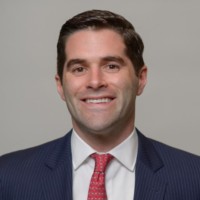
Pat Campbell is a retirement plan counselor at Capital Group, home of American Funds, covering West Michigan and Northwest Ohio. He has 13 years of industry experience (as of 12/31/2025) and has been with Capital Group for five years. He holds a bachelor's degree in English from The Ohio State University. He also holds the Chartered Retirement Plans Specialist® designation. 

Investments are not FDIC-insured, nor are they deposits of or guaranteed by a bank or any other entity, so they may lose value.
Investors should carefully consider investment objectives, risks, charges and expenses. This and other important information is contained in the mutual fund prospectuses and summary prospectuses, which can be obtained from a financial professional and should be read carefully before investing.
Statements attributed to an individual represent the opinions of that individual as of the date published and do not necessarily reflect the opinions of Capital Group or its affiliates. This information is intended to highlight issues and should not be considered advice, an endorsement or a recommendation.
All Capital Group trademarks mentioned are owned by The Capital Group Companies, Inc., an affiliated company or fund. All other company and product names mentioned are the property of their respective companies.
Use of this website is intended for U.S. residents only. Use of this website and materials is also subject to approval by your home office.
Capital Client Group, Inc.
This content, developed by Capital Group, home of American Funds, should not be used as a primary basis for investment decisions and is not intended to serve as impartial investment or fiduciary advice.