

Featuring:
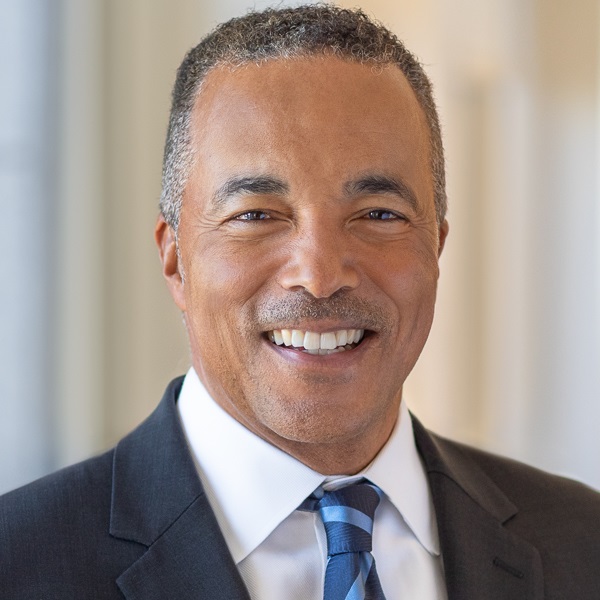
Martin Jacobs
Equity Portfolio Manager

Chitrang Purani
Fixed Income Portfolio Manager
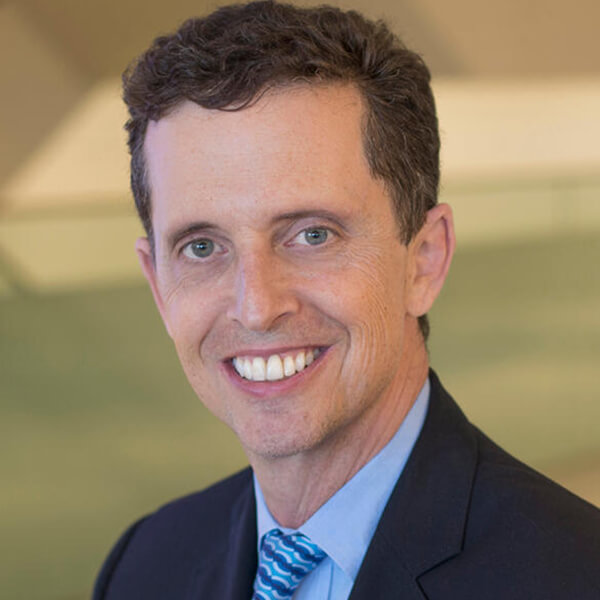
Will McKenna
Content Director

Will McKenna: Hello, everybody. Welcome to the Capital Ideas webinar series. I'm your host, Will McKenna. I want to thank you all for joining us today. Really delighted to be with you. And listen, I hope everybody's having a great summer so far. Our topic today is Capital Group's Midyear Outlook. And boy, a lot has changed since the beginning of the year. It seems like the investment environment just keeps getting even more complex.
But fortunately, we do have two great speakers, two of our veteran portfolio managers with us here today to help us make sense of it all, to answer your questions and really help understand what it all means for your portfolios.
Now let me introduce our speakers. Martin Jacobs is with us. He is an equity portfolio manager on our flagship dividend value strategy among other responsibilities. Martin has 38 years of investment industry experience. He's been with Capital for 25 years. Earlier in his career as an analyst, he covered U.S. industrial companies, so you'll probably hear about that theme as we go forward. He's got his MBA from Wharton and a bachelor’s in industrial engineering from USC. He also holds the Chartered Financial Analyst designation, and he's based right here in Los Angeles.
Chit Purani is a fixed income portfolio manager. He's the principal investment officer on our core bond strategy, and he has 22 years of investment industry experience. Been with Capital for 4 years. Prior to that, he held similar roles at PIMCO. He got his MBA from the University of Chicago and a bachelor’s in finance from Northern Illinois. He too holds the Chartered Financial Analyst designation, and I do not. Chit is based in New York, but he is joining us here. It's great to have you here in person.
And Martin, we have so much to cover. I'd love to just start with you. If you can give us your big picture outlook on the markets and economy, where are we today and where do you see us going from here?
Martin Jacobs: Yeah. Well, thanks, Will. It's a pleasure to be here. I think that there's always things to worry about in the equity markets and today is no exception. Certainly for most of the year we are very concerned about activities in Iran, and our hope is that we're now at the end of that journey, if you will, with oil prices essentially almost completely retracing their path since this whole engagement began. But that's something that we'll continue to watch.
Here at home, I would have to characterize the consumer as a mixed story. On the one hand in the aggregate, consumer spending looks fine, but we know that certainly for the lower income and middle income consumers, they're facing affordability challenges. No doubt sticky and persistent inflation has continued to be a big part of that, as well as very high rates for mortgages for instance. And then on top of that, we continue to struggle with the tariffs that were put in place last year, which not only has contributed to inflation, but as we meet with particularly industrial manufacturing companies, they continue to struggle from a margin standpoint, and also they're all looking at somehow retooling their supply chains.
And then if that's not enough, then we've got this incredibly polarized political backdrop as we face the midterm elections later this year. Now having said that, as you mentioned, markets are doing well, right? And I think the number one factor is this booming AI economy. Hyperscaler spending's up 80% this year, 750 billion. It was up 73% last year. And so there's been some great work that I've seen from Empirical Research Partners where they've kind of peeled back the stocks that have really been contributing to the strong performance we've seen not only this year, but the last few years. And they've identified these kind of 68 of what I call “magical AI stocks” if you will. And those stocks represent 42% of the market cap of the S&P 500 today.
And they've been compounding earnings in the mid 30s, whereas most of the rest of the companies outside of that group have been growing their earnings roughly mid single digits. So this is really the singular nature of what's driving the market today. And the beneficiaries are certainly at the top of the list. We've got the semiconductor sector, which went from 6 to 7% of the S&P just 3 years ago to 19% today. And some of those companies have literally been hyperbolic. We had Micron report earnings today. Their gross margins have gone from 39% a year ago to 85% to 86% this year. And their stock has basically increased over 300% this year.
And so that's kind of a poster child of what we're seeing out there in the AI space. But along with that, you've got storage companies like Western Digital and Seagate. You've got companies that participate on the power side like Constellation Energy or our good friends in Peoria at Caterpillar who make both backup and prime power that go into the AI data centers, as well as a number of others.
You've got all the folks that supply the semiconductor equipment companies like in Applied Materials and ASML. So it's a long list. Now it's interesting as we reflect, if you go back to say 2011, Marc Andreessen of Andreessen Horowitz, this very successful, private equity venture capital firm, he famously quoted this notion that “AI is eating the world,” right?
Will McKenna: Yeah, “software is eating the world.”
Martin Jacobs: Yeah. “Software is eating the world.” And today that's been totally flipped on its head. So basically AI is not only eating software, but it's eating everything else in its way. And so there's a lot of AI victims out there, as you will. There's consulting, there's cybersecurity, wealth management platforms, office outsourcing, payments, insurance, logistics. And then these platform companies like Uber and DoorDash, bookings.com, Airbnb and so on. And so, as we look to invest outside of the AI sphere, if you will, it's been difficult, right? You've had to be very selective.
And so when I kind of sum that all up, I am cautiously optimistic because on the one hand where a lot of the performance has been so concentrated at the same time, many of us believe that artificial intelligence will be the most significant technological development of our lifetime. And so that is not lost on all of us. And we see easily $3 trillion of spending going into AI data centers over the next few years and that will continue to bode well for the compute companies, the infrastructure companies as well.
But at the same time, we're mindful that this is definitely a market that is driven by momentum, and that brings its own set of risks around volatility. There certainly will be more scrutiny around the return on investment of all of this AI capital, and that in turn will also probably contribute to some volatility. And our mandate is really a dual mandate: to not only drive superior absolute results relative to the benchmarks of our funds, but also to be mindful of risks via diversification. And that's a challenge in what is a highly concentrated single statement market today, but that's our mandate.
Will McKenna: Well, that's a great start and there's so many things I want to follow up on there, which we'll dig into. That whole idea of how do you achieve diversification when the market is so concentrated and you like some of those companies that are in that concentration. To our audience: Magical 68, you heard it first here or here and Empirical, but don't be surprised if you hear more about that. That's a great start.
Chit, similar question for you. As a bond manager, what's your outlook on the macro environment? And maybe including things that are up your alley like inflation, interest rates and so on.
Chitrang Purani: Yeah. First of all, thanks for having me here. I'm sensing a theme from you. Last year, I joined you here after the tariffs, this year after the war and a regime shift at the Fed. So I'll be-
Will McKenna: You're our crisis guy.
Chitrang Purani: Yeah.
Will McKenna: When there's a problem, we call Chit.
Chitrang Purani: I'm looking forward to the next calamity with you. But for now, the macro environment is quite interesting, right? Because despite all the headline risks, growth is indeed resilient. And I do expect that growth in the base case will be in line with trend. And when I say trend, it's like 2% of GDP growth, give or take. But my bigger focus is on the growing imbalances, right? There are at least a few and Martin spoke about some of these, right? So we all know about the K-shaped economy, which is very prominent in the headlines. It is the case that the top decile of income earners are lifting spending to a greater degree than in the past. Whether that's equity market momentum or just wage growth.
Whereas the bottom income cohorts are static in nominal wages, declining in real wages and drawing down savings. So that's the first part of the imbalance that may have struggled persisting, especially in the face of equity market volatility.
Second, investment is highly bifurcated. Again, Martin talked about this, but with AI CapEx spend and AI linked spending generating roughly a 50 basis point contribution to GDP, maybe higher depending on your assumption. Once you strip that out, the rest of the business environment in terms of CapEx is quite sluggish, right? So how far, how long can that persist? Because to grow in that level of contribution, you have to have disproportionate growth every year in terms of that spend.
Even the labor market's imbalanced, right? Over the last couple of years, the concentration of job growth has been predominantly in two areas. First is healthcare services. Second is leisure and hospitality, which is more cyclical. And so the takeaway is that the underpinnings for growth are resilient. And I'm not fearful of an imminent collapse in growth or pronounced slowdown, but I do think that these imbalances are underappreciated by risk markets, both equities and fixed income, right?
So let's talk about inflation. We are unlikely to see core PCE or CPI get close to the Fed's target anytime soon. And we all know the reasons for that. Whether it's tariffs, whether it's the energy price shock, resilient consumer, and even some AI CapEx spillover that's feeding into PCE. But the good news for bond investors is we are seeing some pressure ease in terms of headline inflation with the close to 20% drop in energy prices month to date, which could ease any pass-through to core goods inflation.
Second, inflation expectations are pretty benign. If you look at the TIPS market, what's priced in terms of long run inflation expectations has been stable to even lower since the start of the year, depending on what part of the curve you're looking at.
Third, two-thirds of our economy is consumption and wages are steady. And as I mentioned before, real wages are declining, savings are going lower. And so long as that's the case, it reduces the possibility that inflation, which is currently more supply-side driven, will transition to the risk of a demand-driven inflationary factor. And so, all of this tells me that while I do expect a gradual disinflation trend over time, it's likely that if we don't see soon enough progress, the Fed might hike interest rates.
Now, we already have that priced into the market with just shy of two hikes priced by the end of next year. So there's some margin for error. So bringing it all together, I'm constructive on growth, but I'm increasingly cautious about the imbalances. I'm constructive about the direction of inflation, but the path could be bumpy and slow. And I'm really constructive on yields and fixed income because the solution to higher yields is often higher yields, which is what we've seen year to date. And for fixed income investors, that provides attractive return potential and diversification.
Will McKenna: Yeah, that's great. And I'm going to pin you down to the exact level of Fed funds rate later in the show. So we'll come back to you on that. You both mentioned the term “resilience” and Martin, you talked about this idea of the Magical 68, but certainly the AI momentum really driving a pretty narrow market. We have seen markets be incredibly resilient given everything that's going on in the world, not just in the U.S., but outside the U.S., markets are doing even better and in emerging markets.
Do you expect that to continue? Are you starting to worry a little bit about frothiness? We are seeing volatility kind of rear its head a little more recently. How are you thinking about the state of the markets we're in today and how you're navigating through that?
Martin Jacobs: Yeah. Well, the resilience theme I think has several components. I mean, first when you look at the U.S., normally when you've got a big oil price spike, you would expect to see a lot of economic calamity here and abroad. But in the U.S., over the last 15 years we've benefited from this shale revolution. So as a result, we're now an independent basically self-sufficient energy provider. And so it has less of an impact from that standpoint. Also, over the last 30 years, our oil intensity across our economy has basically been cut in half. So the lesson there is that we're much more resilient, relative to oil price shocks. And I think there's some element of that that's true both in Europe and Asia as well. We saw a lot of demand elasticity, for instance, out of China that really helped to mute what otherwise would have been a much, much higher oil price. The U.S. consumer as much as at the low end, is suffering from affordability.
Will McKenna: This kind of K-shaped economy.
Martin Jacobs: Yeah, exactly. And that cohort is actually very healthy, fully employed, and also benefiting from the wealth effect that's going on in the markets. Another factor I'd throw in there is that we've had a great improvement in productivity since COVID. Prior to COVID, productivity growth ran about 1.5% a year and currently, it's been running about 2.1% per year and that should continue as we continue to see the benefits of AI more broadly across lots of different-
Will McKenna: This is the Claude factor and ChatGPT and all that.
Martin Jacobs: Yeah, exactly. And then lastly, I would say, and probably the biggest factor is just this boom that we've seen in capital spending, which first and foremost is being driven by this big pickup in AI spending, but it's broader than that. It's in semiconductors, it's in infrastructure, it is in onshoring by a lot of companies that are retooling their supply chain.
Will McKenna: Supply chains. Yep.
Martin Jacobs: Yeah. And so when we look at the kind of megaproject backlog, that's pretty broad across a lot of different parts of the economy and that continues to provide a lot of tailwind for continued economic growth and this continued kind of resilience theme that we're seeing in the markets today.
Will McKenna: Okay. So huge tailwinds. We're going to dig into some of the specifics of that and where you're finding specific opportunities. All right, Chit: crystal ball time. I'm going to pin you down here. I know we have a rates team that thinks deeply about this beyond that you're a part of. At the start of the year, again, things have changed a lot. It was a foregone conclusion I think that we would be cutting rates this year. But now with inflation on the rise, we've now got Kevin Warsh in the chair, that seems to be going in a different direction. So, how are you and the team thinking about that and where do you see things panning out by the end of the year and beyond?
Chitrang Purani: Yeah, the Fed has certainly been a hot topic for the bond markets this year, given the recent change in leadership. And Kevin Warsh, in his first meeting and his press conference, was certainly interpreted as way more hawkish than the markets anticipated for at least a few reasons. The first is he made price stability central to his messaging, even referenced the fact that inflation is above target or has been above target for more than 5 years. Second, he backed away from forward guidance and decided to not submit a dot plot projection, which was expected by the markets, but it simply validates that the Fed reaction function is less certain going forward. And third, he announced some independent task forces that would do a range of things such as analyze how the Fed communicates, how they use their balance sheet, how they measure the economy and all these potential changes create uncertainty that injects volatility in the market.
Now, what's not uncertain is that the emphasis will shift more towards the data, which means that upon shifts in the data or surprises in the data, we're likely to see more treasury market volatility. And as a result, as you alluded to, we went from pricing in two cuts by the end of this year, about a handful of months ago, to now pricing in a little bit more than one hike. And in my view, I think that represents a market that is balancing between a couple scenarios. The first scenario is one where the Fed is patiently waiting as they monitor how the data evolves and to make a decision whether or not monetary policy is tight or not.
The other scenario is, in the absence of any improvement in inflation or weakening in labor market data, it's a Fed that's going to reengage into a hiking cycle. I fall personally into the former camp. I do believe that the Fed is going to want to remain patient and see how the data evolves, particularly whether the inflation, which we know is higher and stickier this year, has a little bit more of that supply-side effect as opposed to demand-driven inflation. And whether labor markets which have witnessed this low-hire, low-fire dynamic, whether that creates enough tightening where the unemployment rate itself falls or wages start to show upward pressure. Either of those scenarios, which I'm paying close attention to, would make me change my view, but for now I believe that they'll remain patient.
Will McKenna: Any credence to the idea that any change would come after the midterms in November or...
Chitrang Purani: I think it's quite clear with this FOMC that they're going to be homed in on the data and not letting political decisions drive their views.
Will McKenna: Got it. That's a great point. Okay. Get ready in the audience. We've got our first poll for you and those who have joined this event before will know what is coming and that is help us understand where in the world is the lighthouse on our Outlook cover. So I expect to see some very creative guesses out there. Please, do not use ChatGPT to reverse engineer your answer and we'll provide the reveal toward the end of the show.
Okay, Martin, let's dig into some of the specific investment opportunities you and the team are focused on. You've been talking so far about, obviously, the great or potential opportunities all around the AI theme and also interested in hearing where we're finding things outside of that, whether that's the picks and shovels that are suppliers or the, I've heard them called “the AI roadkill” who are kind of left for dead. But take us into your thought process. Where are you and the team finding those interesting opportunities?
Martin Jacobs: Yeah. Well, I think the AI participants are well known and as I mentioned before, this group has a lot of momentum behind them. So as much as it feels uncomfortable, that is a group that is really well positioned for this continued spending boom that we will see for many years. And then that brings us to the question around these AI victims, if you will. And with that, our analysts are taking a hard look at a bunch of different areas because we know that there's definitely been some indiscriminate selling in those areas. And so maybe let me share a couple of examples that look interesting from our standpoint.
One might be a company like, say, MasterCard. This is a quintessential deep moat company with powerful network effects, global scale, and strong long-term growth from the continued just digitization of money everywhere in the world. Their network is difficult if not impossible to duplicate. It provides both sides of the network integrity and reliability for both consumers and merchants. And so there's some concerns around stablecoin and AI disruption, but a company like that, for instance, looks very interesting to us.
Another example might be a company like Uber. Uber falls in this class of companies that are what we call “platform companies” like Airbnb, bookings.com, DoorDash, those type of companies, and they've all come under a lot of pressure. And like MasterCard, Uber has this very competitive two-side network between drivers and consumers. They've got this advanced real-time algorithm that is very efficient and it's really unmatched in terms of the network and the user experience as a business where demand really is only limited by the number of drivers, right? And we're going to see a lot more of these autonomous fleets come into the marketplace that are partnering with Uber. So, a company like that looks very interesting. I'll leave it there, but those are a couple of examples-
Will McKenna: And a very dynamic CEO, right?
Martin Jacobs: Absolutely.
Will McKenna: They're very smart and they're doing interesting things.
Martin Jacobs: Yeah.
Will McKenna: Is the autonomous piece of that coming to bear at Uber anytime soon or where do they stand on the... I'm a big fan of Waymo out here in Los Angeles, use that all the time, but where are they on the autonomous piece?
Martin Jacobs: Yeah. So they have a partnership with Waymo in varying degrees, but they are also partnering with a list of 14 different autonomous vehicle startups because their mentality is, “we're not sure who exactly is going to be the winner, but all of these companies have good technology and processes and so we want to make sure we have a partnership with all of them.” And as I mentioned before, the only limitation on their growth are really drivers. And so as these new fleets come into the marketplace, it only helps to enhance their growth profile.
Will McKenna: And take us a little deeper into this idea of, you talked about the dual mandate. How are you thinking about achieving that mix of, “yes, we want to be engaged in this important theme,” but also diversify beyond that. Is that a conversation among the team? Are you really looking for those opportunities? You mentioned a couple of examples here. Are there other areas where you all are pursuing that kind of diversification?
Martin Jacobs: Yeah. Well, it's a tough task for us because, just by virtue of the 40 Act, we can't even hold a lot of these companies in the size that are represented in the various indices.
Exactly. Right. And then in addition to that, obviously, there's a level of diversification that we would like to have across our funds, particularly in our growth and income funds and income funds. And so that continues to be the character of the building blocks and the process behind which we build these portfolios.
So, we have to find that narrow window of opportunities that are not AI companies, that are in the potentially “AI roadkill camp,” if you will, but are unjustifiably down. And then, this whole third category where there's interesting companies that exist just because they have some great kind of idiosyncratic type of opportunity. So companies like a Starbucks, where we have a new fantastic, dynamic CEO-
Will McKenna: Like a turnaround, Brian Niccol, yeah.
Martin Jacobs: ... that's turning the company around or a company like GE Aerospace, which operates in the commercial aerospace engine market, and they have also a dynamic CEO that's turned the company around and they participate in a great market with a leading market position. So those are the types of things that we look at. And so we're always making sure that we're picking ideas from both baskets, the AI basket as well as the non-AI basket. And then once again, right now, very intriguing is this whole basket of companies that fall in this kind of AI victims' basket as well.
Will McKenna: Right. And with GE Aerospace, I've heard the phrase, “you can't vibe code a jet engine.”
Martin Jacobs: Yes, that's right. That's right.
Will McKenna: There's this whole idea of the physical economy that is sort of immune from AI in a way. Let's go over to you, Chit. I think a similar kind of question, maybe start with credit markets broadly. What are the themes there that you are interested in and focused on?
Chitrang Purani: Sure. There's a lot to unpack here, but when I think about opportunities in fixed income credit markets, there are a few observations that are particular to today's environment that formulate where I find value and where I don't. So the first observation is, yes, of course, valuations are tight across the board, but if you think about a company and the investments as a capital structure, they're also very compressed across that capital structure. So, equity risk premium, right? If you flip the P/E ratio into the earnings yield, compared to bonds, it's at historically low levels looking back over the last 20, 25 years. Within bonds, if you look at high yield spreads, the credit risk premium that you earn from buying high yield bonds versus investment grade bonds, that's also at a historically compressed level over the last couple decades. Same thing within investment grade if you look at BBB-rated bonds versus single-A.
So, the point that I'm making here is that moving up in quality is a cheap hedge currently in the market. So that's observation number one. Number two, it's interesting that the tight credit spreads that we're seeing, yes, it's in part strong credit fundamentals, but it's also a byproduct of the higher nominal yields that we've seen bringing in yield-based buyers.
And so the takeaway there is focusing on credit risk premium and bonds where we're being adequately compensated for the credit risk, as opposed to just liking the all-in yields.
And the third observation, it's not necessarily a new one, but with the growth and flows into some passive fixed income strategies, you're seeing more money channeled into a narrower universe of eligible investment grade credit. And so, for us, that means we're finding more value that lives outside of the index, especially given our ability to go deep and broad across markets. So those three themes permeate the way we think about sector allocation and security selection.
Will McKenna: Can you just briefly explain a little bit more? So, moving up in quality, give us a sense of exactly what you mean by that and the mechanics of that.
Chitrang Purani: Yeah. So, historically, if one expected a certain number of basis points to go from a BBB-type risk or a single-A-type risk, or in some cases single-A corporates versus AAA-rated securitized product, which is a sector that we like and I can get into more detail, you would expect proper and proportionate risk premium for moving down that capital structure or that quality curve. Nowadays, it's compressed to anywhere from one to two standard deviations tighter than it historically has been.
So, as an investor, if you're defensive on the market due to valuations, you have simplistically two options: Either you hold cash and wait for a better entry point, or you could take advantage of the attractive yields but move up in quality because it increases-
Will McKenna: A higher rated bond.
Chitrang Purani: Right. A higher rated bond is less economically sensitive. It increases the resilience of the portfolio, and it gives you some risk of dry powder in case you do see volatility and you can reengage further down the quality spectrum.
Will McKenna: Got it.
Chitrang Purani: Yeah. And so that's what the cheap hedge comes from.
Will McKenna: I'm going to come back to you in a minute around getting into some of the specific sectors, but one of the audience questions that's coming through, Martin. It appears that we're in a hot IPO season.
Martin Jacobs: Yes. Yes.
Will McKenna: Not just with SpaceX, but I know others coming down the path. You've been around this business for a long time and seen other periods like this. How are you thinking about this IPO season? Maybe start with SpaceX and think about some of the others coming.
Martin Jacobs: Yeah. It's an interesting market for IPOs, both in terms of magnitude as well as the number of new issues that are coming to the market. And now with SpaceX, which is already a $2 trillion market cap company. We've still got Anthropic and OpenAI. So those are two of the three big model builders that potentially each could come to market at trillion-dollar-plus valuations. And so this is the environment that we're seeing. A lot of people are worried that that will move funds out of the current market into these new hot IPO issues.
Will McKenna: People selling other holdings to fund their purchase of SpaceX.
Martin Jacobs: Exactly. Right. Yeah. But on the other hand, there's more than $8 trillion of money market cash sitting on the sideline that potentially could move into a lot of these new issues. Historically, when IPO markets have been very hot, it typically is the potential sign that we're nearing a market top.
Will McKenna: That's what I was wondering. I think that's what our crowd was asking.
Martin Jacobs: Yeah. So that goes along with the concerns around momentum and higher valuation levels, and all of those factors are certainly something that we look at and we are vigilant about trying to mitigate some of the downside risk associated with that. And we look back to the fact that a lot of us were around during the tech bubble in the late '90s and there's a lot of parallels there, but there's a lot of differences as well. There's some stark contrast between the level of profitability underlying these big mega-cap companies and what we saw back then, as well as the level of debt, which was much more abundant back in those days.
Will McKenna: Yeah, debt funded.
Martin Jacobs: Exactly.
Will McKenna: A Global Crossing and places like that.
Martin Jacobs: Yeah. So it's a much healthier market financially, if you will, despite all the concerns we're seeing around private credit. So, these are hard questions, but these are kind of discussions that we have every day in our investment calls to kind of figure out what the right strategy is.
Will McKenna: I liked how you framed it though, this idea of a dual mandate. In other words, what we're trying to do is participate in some of those exciting themes and that potential upside while also trying to protect by diversifying into other areas that may not be as frothy given our approach.
So, all right, let me read out some of the fun answers we got around the lighthouse location. There was quite a few kind of Upper East Coast, Nova Scotia, Maine. We had some in Europe, Norway, UK, Ireland. John offered the idea “Skillagalee,” I'm probably not saying that correctly, “Island in Michigan.” And then we had a couple of, I'm not sure how serious these were, but fun answers. One was just “near the beach.” That's a good guess. That's probably right, by the way. So you may be a co-winner. And then of course, Crystal offered this idea, “Taylor Swift's property in Maine.” So you may know more about Taylor than we do, but we'll come back with the right answer when we get there.
Chit, I want to come back to you because you covered credit at a broader level but take us a little deeper into some of the other parts of the market, the sectors where you and the team are finding interesting opportunities.
Chitrang Purani: Sure. So anchoring off the themes that I mentioned earlier and starting in the corporate bond space, first off, I've been focusing on corporate bonds that are less economically sensitive, given some of the valuation concerns and imbalances that I talked about earlier. Examples would be bonds in the pharmaceutical space, select insurance names, utilities as well, essentially consistent with that up-in-quality theme.
However, there's a part of the corporate bond market that's often talked about, which is this sizable issuance of AI linked debt, hyperscalers, data centers, etcetera. I'm often asked the question whether this represents an opportunity or a risk and the answer is yes. So the reality is the growth has been tremendous.
And with that growth, it's important to know that the market is not a monolith. When we look at different deals, we're highly selective on isolating unique credit risks in the deals, the potential for re-leasing risk. If it's a data center deal that has a finite term of the underlying lessees, the residual value risks of the data centers, to the extent that we're exposed to that, as well as embedded options, because a lot of these structures are somewhat unique and bespoke. Once we adjust for all of those risks, we are finding value selectively in the space. So that's also been a growing part of the portfolios in addition to that defensive theme in corporate space.
Moving away from corporates, there's a lot of value that I find as well in securitized credit sectors, also consistent with the up-in-quality theme where we look at highly rated securitized product backed by a diversified range of collateral. So, think auto loans, non-agency commercial backed, and residential mortgage backed securities, CLOs, even aircraft finance and some other types of collateral where the common theme is that our analysts are comfortable with the underwriting, they're comfortable with the structure itself and the structural protections, and of course, we like the price. And so that's a great segment of diversification to the portfolio that also provides yield where we think that we're getting paid an adequate credit risk premium. It's not just the all-in yields are good.
And speaking of unique bond structures, even our Muni team is finding value across tax-exempt space in structures that have more nuance, like housing PACs or housing-backed bonds that have amortization profiles in the tax-exempt market, as well as corporate-linked debt related to gas prepayment purchases. So in these sectors, including securitized, including AI, there's a common theme where we prefer harvesting attractive yields in parts of the market where you do have to roll up your sleeves and do the credit work, but they're not typically parts of the market that have a high degree of sponsorship from passive investing. And so because of that, we can extract a little bit more premium.
Will McKenna: That's great. Interesting mix there. I want to come back to you in a minute around the whole area of private credit. Some questions coming in from the audience and look, fair amount of concern as we've seen in the media, and I'm interpreting some of that here in the questions. So let me prep you for that, but let me come to you, Martin. Dividends are an important part of the mandate you help to run, dividend value. You may have already hit on this in some of the examples you use, but where are you and the team finding interesting opportunities in the dividend part of the market? And is that a part of that diversification strategy? But where are you seeing good stuff? Give us some examples of that.
Martin Jacobs: Yeah. Yeah. No, thanks for the question, Will. Well, as you know, dividend yielding companies, particularly high dividend yielding companies, tend to lag in bull market environments, but they provide an important risk mitigation factor for a lot of our growth and income funds, which investors really appreciate. And you certainly saw that in 2022 in a fund like CGDV, a fund like AMF, Washington Mutual, ICA, and so forth.
And so, for us, that's always an important fishing pond. And so, there's maybe a couple of areas I'll highlight. We like the tobacco sector, which has had a high representation across most of those funds. And the rationale is, first, these companies have been massively free cashflow generative, and the free cash flows tend to be very stable as well and they've always had a lot of pricing power.
But the thing that's changed is they now have much more of a growth profile as a result of all these new products, the e-cigarettes, the nicotine-free, the heat-not-burn products like IQOS and so on. And so, as a result, they've been kind of holding their own even in this market environment. So that would be one example.
Maybe on the other spectrum, you look at a company like Stanley Works, right? They have been under tremendous pressure over the last several years from a confluence of factors around tariffs, both in Trump 1.0 and Trump 2.0. They got hit both times. They also had a huge overhang of inventory after COVID, based on all that DIY demand when everybody was at home fixing up their houses, right?
Will McKenna: Right.
Martin Jacobs: And so they built up a lot of inventory as a result, and so that's hurt them as well. And then, just generally, they've seen intensified competition across a number of their key markets.
And so now, the inventory overhang is behind them. They've made some important changes to their portfolio where they're really focusing on a few core brands like DEWALT, Stanley, Black & Decker, and CRAFTSMAN, and they've ushered in these lean management practices to really drive better inventory and working capital management as well as driving better cost control. And so their setup now is very good in a recovering economy, whether the housing market comes back or not, they're kind of well positioned. But that would be another example of a higher-yielding type of stock that we would like to hold in a fund like CGDV.
Will McKenna: I love that. I knew you would get back to your industrial roots at some point in the program. And, admittedly, I'm not at Home Depot every weekend picking up these tools, but that's great to hear they're doing well.
I want to shift to talk about the portfolio implications here and how you guys are thinking about your portfolios. And Chit, maybe I'll start with you and then we'll come back to you, Martin. But as you think about positioning for core portfolios in this current environment, take us through your thought process. And maybe, I think a simple framing for us is, in a typical 60/40 portfolio where 40% is in bonds, what might the character of that be in terms of the different holdings within that?
Chitrang Purani: Sure. So first, it's worth explaining, when I think about fixed income portfolio construction, it's not necessarily a collection of bonds as opposed to a collection of risk factors that drive the majority of the excess returns and total returns for the bonds. And at the most basic level, those risk factors include interest rate risk and credit risk of the portfolio. So I'm going to answer your question along those two risk factors, starting with interest rate risk positioning.
Currently, I'm quite constructive on short and intermediate treasury yields, and more of a neutral stance on longer maturity treasury yields and perhaps more defensive over the long run. So the reason for this, we've talked a lot about it. Rising inflation in a constructive growth outlook justifies the moves higher that we've seen in yields year to date. But there are some offsets. The drivers of growth are uneven, which creates some fragility. Much of the increase in inflation has been supply-driven. And third, repricing of yields higher in interest rates does increase the margin for error. So it gives a little bit more of a positive asymmetry towards the front end of the curve and attractive income in a more of a steady-state scenario. So that's the interest rate risk positioning, constructive on the front end, a little bit more defensive on the back end, especially due to long-term debt dynamics, which we've yet to talk about.
Credit risk positioning, I've talked a lot about these themes earlier. Buying less economically sensitive credits, which can provide more stable excess returns consistent with that moving-up-in-quality theme. Also, scaling into a diversified basket of securitized credit as well as AI linked debt, in general, exposures that are outside the typical passive index where there's a little bit more complexity and we can harvest a little bit more yield premium as long as we could roll up our sleeves and do the credit work. And then lastly, when we talk about classic bond portfolios, it's important to emphasize that active management is the most critical ingredient.
When you look at the “classic” bond index, which is the U.S. Aggregate Index, core fixed income index, over the last couple of decades, U.S. Treasuries have gone from about 25% of that index to 46%. So, if you're taking a passive approach, you're simply replicating those rates. What we like to do instead is pull on different levers for more diversified portfolios.
Will McKenna: Got it. And just give us kind of a brief view around private credit. I know there's some questions around that. Is it fair to say not all private credit is created equal? What's your perspective on this as you look at that part of the market?
Chitrang Purani: Yeah, I think it's fair to say that, but taking a step back, the evolution of private credit, which really started growing in the low interest rate era, comes with a lot of growing pains. Part of those growing pains is that the initial middle market loans were to more levered companies and at perhaps more favorable terms. And so when you look at the last couple of years, defaults and distressed exchanges in general across private credit has been trending higher than your traditional broadly syndicated loan market as well as your public high yield markets. So, that's been an understandable evolution with growth. Then, we have the idiosyncratic risks with software loans linked to AI debt facing some acute stress. Whether or not that stress is warranted is still to be seen, but it's increased the concerns around private credit above and beyond some of the cracks that we're seeing from the easier underwriting standards.
But to what you just stated, it's not a homogenous market. There are differences between asset-based lending, direct middle market lending, and all different types of variations. And so like most credit cycles for products, the emphasis should be more about looking at private credit in the context of broader diversified portfolios and emphasizing the relative value opportunities when you shift between public and private and different markets, which by the way, is exactly what we do with our public-private credit solutions, and our partnership with KKR.
Will McKenna: And presumably, KKR does it a little differently than many other firms. And I would just encourage those of you in the audience, reach out to your Capital Group team if you have more questions in that area. Martin, you've kind of touched on a lot of this, but when you think about the dividend value strategy, which is one of our more popular, how is that positioned as you look ahead to the rest of this year and into '27 and beyond?
Martin Jacobs: Yeah. Well, it is a core growth and income fund. So, let me first start with the growth side. And so, for many of us, we continue to have an attraction to have exposure around this AI data center theme, if you will. And so that would be mainly focused around the picks and shovel companies that are benefiting from all the spending that's happening. So at the top of that list would be the compute side, so the semiconductor companies, as well as the semiconductor suppliers like an Applied Materials. That would also include networking companies like a Cisco or an Arista. Would also include other kind of ancillary players like a Corning, which makes the optical fiber that goes into all of these AI data centers. So that I think is kind of a core part of the portfolio. But then there's also the growth companies that might fall, let's say, kind of outside of the typical AI realm, if you will.
So that would include a company like Eli Lilly, which is basically like an island in the storm of a very difficult healthcare sector. But this is a company that is the dominant player in these obesity drugs, and they have all of these other beneficial healthcare benefits around dementia and sleep apnea and all these other things that we're learning about. And today, the obesity market itself is only 3% penetrated globally. So there's huge growth runway for them. And so that would be an example of something that might fall outside of the AI realm.
Another company I might highlight would be a company like Viking Products. Viking is the cruise line company, came public a few years ago. Cruising is a great vacation experience for a lot of people. It has a very high repeat rate. This is a cruise company that tends to kind of cater to the discerning, kind of more senior cruiser. And if you look at the baby boomer generation, these folks are sitting on $90 trillion of savings and they want to participate in experiences, and all these folks are retiring. So cruising sounds like a really great opportunity for them. So that would be an example.
And then finally, we moved to the income basket and we touched on tobacco. So that would be companies like British American Tobacco and Philip Morris and Altria to name a few. We talked about Stanley Works, but I'd also highlight International Paper in the paper and forest products industry that's run by a dynamic new CEO who's making some changes to the cost structure and that business is getting better with more concentration and discipline. And then finally, I would touch on Starbucks again, which was actually a very attractively yielding company and it's run also by a dynamic new CEO.
So, it's a lot of idiosyncratic opportunities, if you will. As much as there might be a few top-down themes, they're a lot more accidental than intentional, but what bubbles out of that is you'd still see certainly a favorable disposition to AI data spend, if you will, but particularly around the picks and shovels companies. And then beyond that, it really does get down to-
Will McKenna: Company by company. Yeah.
Martin Jacobs: ... stock by stock selections. Yeah.
Will McKenna: I love hearing about some of these sort of analog examples. I think your colleague, Chris Buchbinder said about cruising, “AI is not going to disrupt cruising anytime soon.” So again, a lot of opportunities beyond in sort of that dual approach. What I'd love to do now in the 8 minutes we have remaining is maybe pivot to some of our closing fun ideas. But first, drum roll. Imagine a drum roll in your mind, and let's reveal, where is that lighthouse? There it is.
This is Peggy's Cove Lighthouse in Nova Scotia. So a big shout-out to our friends in Canada up there. We often have viewers joining us from Canada, and many of you were right that you had chosen Nova Scotia. I can't say that Taylor Swift has anything to do with that one, but that's a nice lighthouse. So let's do this. And sticking with that kind of lighter note, we know our folks love hearing kind of book and podcast recommendations from you guys. Start us off, Martin. Anything on your bed stand or in your podcast feed that you'd like to share?
Martin Jacobs: Yeah. So just last week, I finished a book called “The Rise of Theodore Roosevelt” by Edmund Morris. It's actually the first of a trilogy. For what it's worth, the next book wasn't written for another 20 years, so it gives you an idea that he obviously spent a lot of time researching Teddy Roosevelt, but it's 600 pages so it's not a quick read. But for those of you that really are big fans of U.S. history, it's a great read because it not only obviously talks about Teddy Roosevelt, but it talks about the times as well. Teddy existed in office in the early 1900s and that was a time when we had what I would call kind of “arm-to-arm conflict” in politics. So it feels kind of familiar, right? And then at the same time, it was kind of the Gilded Age where you had a lot of these big monopolies that had kind of huge, massive power and not only in industrial markets, but also in the political theater as well. So while it doesn't exactly mirror the current situation-
Will McKenna: So parallel to... Yeah.
Martin Jacobs: ... there's a lot of parallels.
Will McKenna: We forget that some things have been similar, right?
Martin Jacobs: Yeah. But through it all, our democracy survived, so-
Will McKenna: Indeed.
Martin Jacobs: ... it was encouraging.
Will McKenna: Indeed. Okay, great. Chit, what about for you? What's in your feed these days?
Chitrang Purani: Will, I've realized that over the years, my reading list has been dominated by financial market books, books about famous people or historical events, books about investor or consumer psychology. I decided to do a 180 recently and take the recommendation from my wife and read a book called “Remarkably Bright Creatures” by Shelby Van Pelt. And it was just a book about people and relationships, and I thought it was a nice little change of pace. I really enjoyed the character development. It even had a perspective from an octopus, which was a little bit different. And the best part is I didn't have to glean any bond market insights from the book. So it allowed me to just detach.
Will McKenna: Get a break from bond math.
Chitrang Purani: Yeah. So yeah, I recommend doing that every once in a while if you're really ingrained in the markets.
Will McKenna: That's great. So just to repeat this for folks, “The Rise of Theodore Roosevelt,” which is maybe not a beach read, but an enlightening one at 600 pages. Hey, guys. Speaking of books, I want to give you maybe a little teaser for something that's coming later this year. We're actually putting together a book of what we're calling “Lessons from Veteran Investors” like these two here, some of the best stories and lessons learned, insights from the careers of our veteran portfolio managers that we're putting together for you, our clients, and quite excited about this. I've got a galley copy here and I think it's shaping up nicely. It's going to be a couple of more months, so be patient, but we're going to whet your appetite and hopefully get you copies of that later in the year. With that, man, this has been a great event. Appreciate you guys. Before you do sign off, I do want to remind everybody to mark your calendar for our next event, which is on July 23rd.
We're going to dig into this idea of U.S., international and emerging market stocks. We often get questions from the audience about, "Hey, where are the relative opportunities across those different parts of the markets?" And we've got a couple of great speakers for that. And then, megatrends from AI to space and beyond. That sounds fun. That's in September. So we'll go away and think about that in August. Listen, great engagement today. Thanks, everybody. A lot of good questions and a lot of good input there. It's really because of you all that Capital Group was voted number one for thought leadership for the sixth time. Finally, let me thank these guys, Martin and Chit, for your great insights. Hope everybody found this as interesting and enlightening as I did, and thanks again. Enjoy the rest of your day and your summer. Take care.
1 hour CE credit for CFP, IWI and IAR*
Markets are navigating a complex mix of geopolitical conflicts, uneven growth and shifting trade policies. Our Midyear Outlook cuts through the noise to help you focus on what matters most to investors.
Join portfolio managers Martin Jacobs and Chitrang Purani as they examine the complex forces shaping the investment landscape in 2026, as well as their long-term views on the economy and markets.
Earn CE credit and gain practical insights into economic and market trends.
Event date:June 25, 2026
Martin Jacobs is an equity portfolio manager with 38 years of investment industry experience (as of 12/31/2025). He holds an MBA from Wharton and a bachelor's degree from the University of Southern California. He also holds the Chartered Financial Analyst® designation and is a member of the CFA Institute.
Chitrang Purani is a fixed income portfolio manager with 22 years of investment industry experience (as of 12/31/2025). He holds an MBA from the University of Chicago and a bachelor's degree in finance from Northern Illinois University. He also holds the Chartered Financial Analyst® designation.