FINANCIAL PLANNING ABLE accounts: An underutilized tool that can have a big impact

Long-term financial planning can present unique challenges for families impacted by a disability, and for many financial professionals, ABLE accounts remain an underutilized tool for addressing them. Whether you’re new to ABLE accounts or already incorporate them into your practice, recent legislation and growing eligibility make this an opportune time to dive in and ensure you fully understand all they have to offer.


Similar to how 529 savings accounts can help individuals save for qualified education expenses, ABLE accounts provide a tax-advantaged way for individuals with a qualifying disability to save for disability-related expenses without negatively impacting their benefits. (Tax-advantaged treatment applies to savings used for qualified disability expenses. State tax treatment varies.) When thoughtfully incorporated, ABLE accounts can support financial planning while reinforcing your role as a trusted resource for families navigating a disability.


The ABLE opportunity


Research from the National Disability Institute (NDI) estimates that in 2025 there were 8 million individuals eligible for an ABLE account. However, ISS Market Intelligence reported only about 230,000 active accounts as of December 31, 2025, leaving a profound gap between eligibility and utilization. As of January 1, 2026, NDI estimates that gap has nearly doubled with an additional 6 million individuals, including 1.2 million veterans, becoming newly eligible thanks to the ABLE Age Adjustment Act, which increased the age limit for disability onset from 26 to 46.
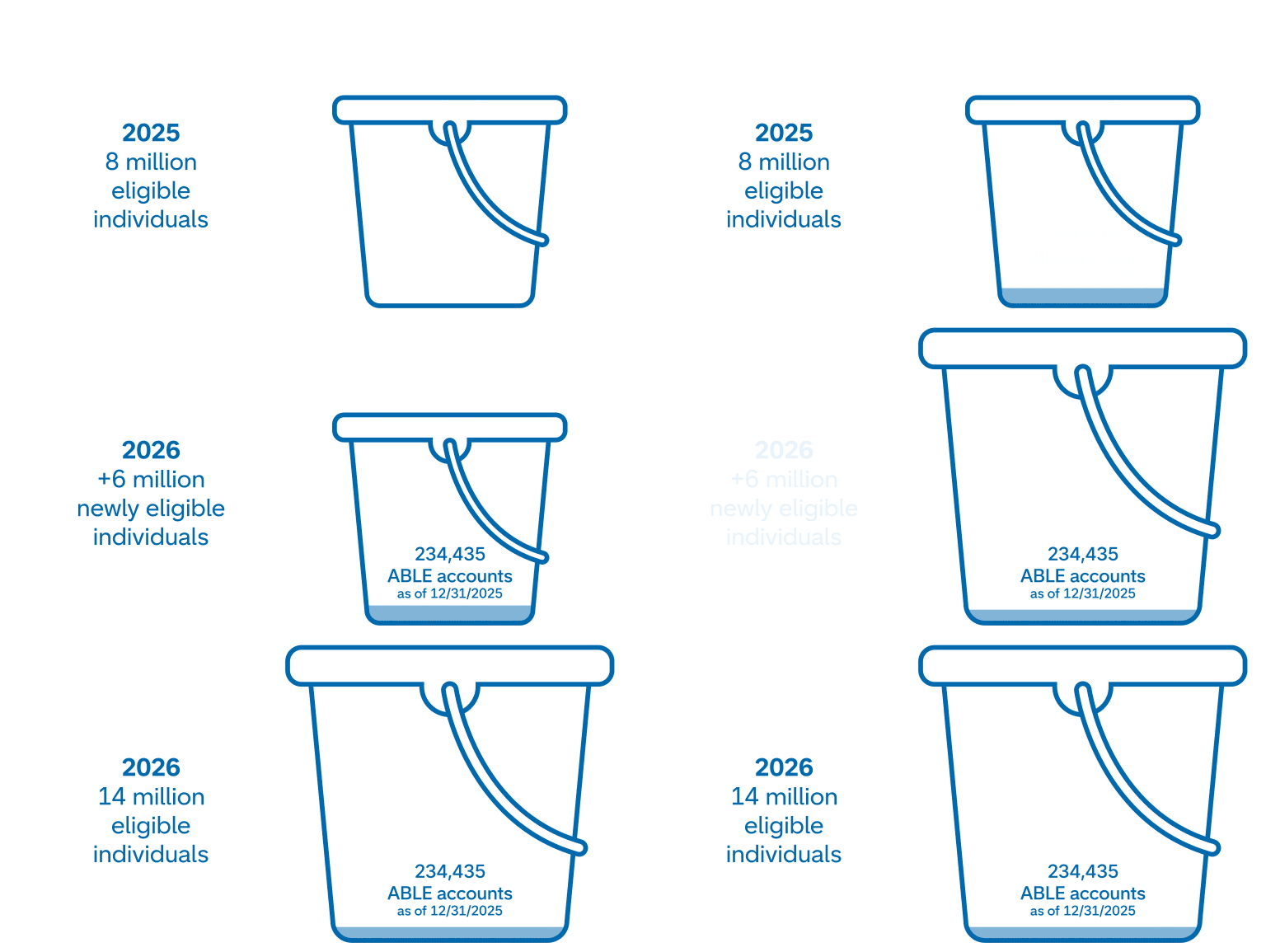
A drop in the bucket

Animation demonstrating that in 2025 there were 8 million people eligible for ABLE accounts. And as of December 31, 2025, there were 234,435 ABLE accounts. The number of eligible individuals increased by 6 million in 2026, meaning 14 million individuals are now eligible.

Active ABLE accounts are a drop in the bucket compared to the number of individuals who qualify for an ABLE account.

As eligibility broadens and awareness grows, ABLE accounts are increasingly relevant within comprehensive financial plans. Understanding how they work, and where they may add value, can help financial professionals engage more effectively with clients impacted by disability.

Know who may be eligible

The word disability covers a multitude of conditions, ranging from physical to developmental to psychiatric — some beginning at birth or during childhood and some later in life. You may be surprised by how broad eligibility can be, encompassing conditions such as vision and/or hearing impairment, neurological conditions, limb differences, autoimmune disease and mental health conditions.


To qualify for an ABLE account, an individual must meet at least one of the following criteria:
 

  • Be entitled to receive Supplemental Security Income (SSI) or Social Security Disability Insurance (SSDI) because of their blindness or disability.
  • Have a signed licensed physician’s diagnosis that certifies they have a qualifying disability.


In either case, the applicable blindness or disability must have occurred before age 46.


Although 46 is the cutoff for diagnosis, there is no age limit for opening or owning an ABLE account. You may have existing clients who don’t realize they could benefit from such an account, and reviewing your client list with a critical eye could spark important conversations.

ABLE account basics

ABLE accounts were first introduced in 2014 as a means for individuals with a disability to be able to save for the future without putting their benefits at risk. Since then, additional legislation has expanded the ways they can benefit account holders.


  • Multiple tax benefits. Although ABLE contributions are made with after-tax dollars, investments grow on a tax-deferred basis, and withdrawals used for qualified disability expenses are not taxed.
     
  • Anyone can contribute. For 2026, the annual contribution limit is $20,000, and anyone can deposit funds on behalf of the beneficiary. This makes ABLE contributions a gift option or meaningful way to recognize milestones or major life events.
     
  • Additional contributions with the ABLE to Work Act. A working beneficiary can contribute beyond the standard annual ABLE contribution limit ($20,000 for 2026) if they or their employer do not contribute to a defined contribution plan such as a 401(k) or 403(b) plan. These contributions can be made up to the beneficiary’s gross income for the tax year or the federal poverty line for a one-person household for the previous calendar year, whichever is less.
     
  • Saver’s Credit eligibility. Qualifying account holders who make ABLE contributions on their own behalf may be eligible to claim the Saver’s Credit.
     
  • Increased saving potential. Typically, an individual can only have $2,000 in savings to qualify for SSI; however, with an ABLE account, the first $100,000 in savings is not counted against the beneficiary. Additionally, balances up to the account maximum do not impact SSDI, Medicare, Medicaid or other means-tested benefits.
     
  • 529 to ABLE rollovers. The One Big Beautiful Bill Act permanently extended a provision that also enables families to make tax-free rollovers to an ABLE account from a 529 savings plan for the same beneficiary or a different beneficiary within the same family. Rollovers can be made up to the annual contribution limit.

Putting ABLE funds to use

On average, those with a disability report that out-of-pocket disability-related expenses equal approximately 20% of their household income, according to research published in the Disability and Health Journal. ABLE accounts may be able to help ease this financial burden, as funds can be used for a number of qualified disability expenses. (While qualified withdrawals are tax-free, if withdrawals are used for purposes other than qualified disability expenses, the earnings will be subject to a 10% federal tax penalty in addition to federal and, if applicable, state income tax.)

Qualified disability expenses include, but are not limited to, the following:

Qualified disability expenses include, but are not limited to, the following: basic living expenses, health and wellness, housing, financial management, transportation, education and employment training, assistive technology, legal fees, professional services, and final expenses.

Including ABLE accounts in your practice presents you with the unique opportunity to potentially grow your business while also providing individuals and families impacted by disability an important tool to help increase their saving potential.

New to special needs planning?
Learn why it’s important and how to make it part of your practice.

Investments are not FDIC-insured, nor are they deposits of or guaranteed by a bank or any other entity, so they may lose value.
Investors should carefully consider investment objectives, risks, charges and expenses. This and other important information is contained in the mutual fund prospectuses and summary prospectuses, which can be obtained from a financial professional and should be read carefully before investing.
This material does not constitute legal or tax advice. Investors should consult with their legal or tax advisors.
Statements attributed to an individual represent the opinions of that individual as of the date published and do not necessarily reflect the opinions of Capital Group or its affiliates. This information is intended to highlight issues and should not be considered advice, an endorsement or a recommendation.
All Capital Group trademarks mentioned are owned by The Capital Group Companies, Inc., an affiliated company or fund. All other company and product names mentioned are the property of their respective companies.
Use of this website is intended for U.S. residents only. Use of this website and materials is also subject to approval by your home office.
Capital Client Group, Inc.
This content, developed by Capital Group, home of American Funds, should not be used as a primary basis for investment decisions and is not intended to serve as impartial investment or fiduciary advice.