CLIENT RELATIONSHIP & SERVICE 5 tax strategies advisors can share with clients now

13 MIN ARTICLE

For many people, tax planning is a once‑a‑year scramble with an accountant to meet a filing deadline. But smart tax optimization isn’t just about squeezing down this year’s tax bill. It’s about minimizing taxes over a client’s lifetime.

That requires a holistic, year‑round approach. A more durable framing — one that many advisory teams have adopted — is to treat tax planning as an annual planning cycle with three checkpoints: a spring “post‑mortem” after filing, a midyear projection and a year‑end implementation window. Advisors who can coordinate this effort can potentially deepen client relationships and add measurable value, in the form of tax savings.

“You don’t need to be a tax expert,” says Leslie Geller, senior wealth strategist at Capital Group. “By acting as your client’s quarterback — aligning the accountant and other professionals so they’re working in sync — you can help deliver a better tax plan.”

The real leverage comes when advisors help clients rethink taxes as an ongoing strategy, not an annual chore. “When you reframe how clients think about taxes year‑round,” Geller says, “you naturally become the center of gravity in their financial lives.”

A good place to start is understanding the five planning themes that have become increasingly relevant as provisions of the One Big Beautiful Bill Act (OBBBA) take effect. 

1. Get reacquainted with the alternative minimum tax (AMT)


Since the passing of the 2017 Tax Cuts and Jobs Act (TCJA), the AMT has been largely irrelevant for many high‑income households. The TCJA dramatically raised AMT exemption amounts and — just as importantly — pushed the phase‑out thresholds so high that even affluent taxpayers rarely crossed them. As a result, AMT planning faded from routine advisor workflows.


That changes for 2026, as a result of the OBBBA.


While the OBBBA permanently extends the higher AMT exemption amounts introduced under TCJA, it quietly rewinds the phase‑out mechanics to something much closer to pre‑2018 law. In other words, the exemption survives — but it evaporates far more quickly as income rises.


The result is not a return to universal AMT exposure but a renewed and very real risk for a familiar subset of clients — particularly in years when income is uneven, concentrated or accelerated.


Why AMT becomes a problem again in 2026


The AMT is a parallel tax system with a broader tax base and fewer allowable deductions. Taxpayers calculate their liability twice — once under the regular tax code and once under AMT rules — and pay whichever is higher. The “problem” arises not from AMT itself, but from how easily taxpayers fall into it.


Under the TCJA framework through 2025, AMT exemption amounts were high, and exemptions phased out slowly (at a 25% rate) and only at very high income levels.


Beginning in 2026 under the OBBBA, the higher exemption amounts remain, but phase‑out thresholds reset to $500,000 for single filers and $1,000,000 for married couples filing jointly, indexed thereafter.  The phase‑out rate doubles to 50%.


Practically, that means each additional dollar of income above the threshold eliminates exemption value twice as fast as it did under TCJA. Clients who comfortably avoided AMT in previous tax years may find themselves squarely back in it — especially in “lumpy” income years.


“Our analysis suggests significantly more people will be paying AMT,” says Lauren Liebes, a wealth strategist at Capital Group. “Not because they suddenly became wealthier, but because the margin for error narrowed.”


Who has the highest AMT risk?


In 2026, AMT exposure risk will concentrate among clients with specific characteristics — many of whom have not needed active AMT planning in recent years:


  • Clients in high‑tax states
    State and local tax (SALT) deductions remain disallowed under AMT, making high earners in states like California, New York and New Jersey perennial candidates once phase‑outs accelerate.
  • Employees with incentive stock options (ISOs)
    ISO exercises remain one of the most common AMT triggers. A single large exercise — especially when layered on top of already high W‑2 income — can wipe out the AMT exemption entirely.
  • Clients with large capital events
    Business sales, concentrated stock liquidation or real estate gains can push income above the reset phase‑out thresholds in a single year, even if baseline income is otherwise manageable.
  • Investors with private‑activity municipal (muni) bond income
    Interest from certain muni bonds is tax‑free for regular tax purposes but taxable under AMT, quietly increasing AMT income relative to adjusted gross income (AGI).


In short, this is not about “ultra high‑net‑worth” households only. It is about upper‑middle and upper‑income clients whose income arrives unevenly — and whose planning assumptions are still anchored to the TCJA era.


How advisors can help

The most important shift for advisors is not technical — it is procedural. AMT needs to move back into proactive planning, not post‑filing cleanup.


  • Model AMT before the client makes the move. High earners should run AMT projections with their accountants. “AMT is not a back‑of‑the‑envelope calculation,” Liebes says. ISO exercises, large capital gain realizations and business liquidity events can create avoidable AMT surprises without projections.
  • Plan in multiyear blocks, not single-year snapshots. Because AMT is highly sensitive to income concentration, spreading ISO exercises, gain recognition or deferred compensation payouts across multiple tax years can materially reduce exemption erosion and avoid AMT “spike” years.
  • Treat SALT and other AMT add-backs as part of the plan.  AMT income is frequently higher than AGI due to disallowed deductions and preference items. SALT, miscellaneous itemized deductions and private‑activity bond interest should be incorporated into projections — not treated as footnotes.
  • Re‑educate clients who think AMT is “behind them.” Many clients mentally closed the book on AMT after 2018. Advisors should explicitly reset expectations: The rules changed again, and past experience is no longer a reliable guide.

The takeaway is straightforward: AMT is not universally punitive, but it is newly relevant. In 2026 and beyond, the risk lies less in marginal tax rates and more in exemption erosion — making timing, modeling and coordination more valuable than they’ve been in years.

2. Treat the new SALT cap as temporary relief — and keep the pass‑through entity tax (PTET) in the toolkit


OBBBA temporarily raises the SALT itemized deduction cap to $40,400 for the 2026 tax year (with annual 1% increases through 2029) and then reverts to $10,000 in 2030. While that sounds like a win for wealthy taxpayers in high‑tax states, many won’t benefit.


Where things get complicated is the income-based phase out. Once income goes over roughly $505,000 of modified adjusted gross income (MAGI), the tax break starts shrinking, until it drops back down to $10,000 at about $600,000 of MAGI. The taxpayers with income in the roughly $505,000 to $600,000 range can face an elevated effective marginal rate because additional income simultaneously increases tax and erodes the SALT deduction.

Where PTET fits

Many states allow eligible pass‑throughs (partnerships and S corporations) to elect into a PTET. Conceptually, PTET shifts state income tax from the owner to the entity, allowing the payment to be treated as a deductible business expense at the entity level for federal purposes — potentially sidestepping the individual SALT cap. (State regimes vary widely and require careful modeling.)


How advisors can help

  • Clients earning under $505,000: The higher SALT deduction may be sufficient — especially if itemizing is likely. 
  • Clients earning between $505,000 and $600,000: Consider increasing pretax contributions to 401(k) and health savings accounts (HSAs), deferring income and making qualified charitable distributions (QCDs) to minimize MAGI.
  • Clients earning more than $600,000: Encourage clients to have their accountants and tax advisors compare personal SALT benefits versus potential PTET elections and to explore possible income management strategies. 

3. Consider Roth, HSA and conversion planning as multiyear tax rate arbitrage


Retirement accounts are often managed as a checklist: “Max out the 401(k) and you’re done.” Once high earners max out 401(k) contributions — $24,500 in 2026 — they should consider looking for ways to shift additional savings into tax-advantaged accounts.  For high-net-worth households, there’s additional focus on the lifetime mix of tax‑deferred, tax‑free and taxable assets, and the timing of recognition events.


Roth individual retirement accounts (IRAs) allow after‑tax contributions of up to $7,500 in 2026 and $8,600 for those 50 or older. Though modest at first glance, those dollars can compound into meaningful, tax‑free retirement income for qualified distributions — and aren’t subject to required minimum distributions.


Many high earners assume Roths are off‑limits because of income caps. But there are workarounds.


The backdoor Roth IRA strategy could be useful to high earners as they may not be able to fully deduct traditional IRA contributions, or  contribute directly to a Roth IRA due to income limits. The strategy involves making nondeductible contributions up to the annual limit (for 2026 - $7,500 or $8,600 if you're age 50 or older) to a traditional IRA and then converting it to a Roth IRA. It's important to understand the tax implications as the conversion isn't always tax-free. You may want to encourage clients to review the potential tax impacts with a qualified tax professional.


The mega backdoor Roth

Some 401(k) plans allow after‑tax contributions and in‑plan Roth conversions. The IRS permits up to $72,000 in total contributions (both employer and employee) to a 401(k) in 2026.


Using the mega backdoor strategy, a client could:

  • Contribute $24,500 in pretax or Roth elective deferrals.
  • Make additional after‑tax contributions up to the remaining space under the $72,000 limit (for example, up to $47,500 if no employer contributions are made).
  • Convert those after‑tax amounts to a Roth account through an in‑plan Roth conversion. The converted amounts are not taxed again, and any future earnings may be distributed tax‑free if the distribution is qualified.


Roth conversions are generally most effective when done in low‑income years or during market downturns. “You get more bang for your buck when asset values are lower,” Liebes says.

HSAs are another underused tool. HSAs still offer the rare “triple tax” benefit: deductible contributions, tax‑free growth and tax‑free qualified medical distributions.


For 2026, HSA contribution limits are $4,400 for individuals and $8,750 for families, plus a $1,000 catch‑up for those 55 and older.

How advisors can help

  • Frame Roth conversions as marginal-rate decisions.  Consider converting in lower-income years, market drawdowns or years with unusually high deductions.
  • Check the plan.  Backdoor Roth and mega backdoor Roth strategies are plan‑ and fact‑specific (e.g., whether a 401(k) allows after‑tax contributions and in‑plan Roth conversions) and require certified public accountant (CPA) coordination to manage pro‑rata aggregation rules.


Don’t forget the new mandatory Roth catch-up contribution rules for employer-sponsored retirement plans: Beginning in 2026, catch-up contributions for individuals whose Social Security wages (Form W-2 Box 3) from the employer sponsoring the plan for the prior year exceed $150,000 must be made as after-tax Roth contributions.

4. Don’t overlook tax benefits for small businesses


Many small‑business owners aren’t aware of recent changes that affect them.


Qualified business income (QBI)

The §199A QBI deduction allows eligible owners of pass‑through businesses — sole proprietorships, partnerships and S corporations — to deduct up to 20% of qualified business income, subject to a series of income‑based limitations. Beginning in 2026, the OBBBA makes the deduction permanent, providing long‑term certainty for pass‑through planning and shifting the focus from sunset management to structural optimization.


For specified service trades or businesses (SSTBs) — including fields such as health, law, accounting, consulting and financial services — the rules are more restrictive. While SSTB owners are fully eligible for the QBI deduction below the applicable income threshold, the deduction begins to phase out once taxable income enters the SSTB phase‑in range and is eliminated once income exceeds the top of that range. Unlike non‑SSTBs, SSTBs do not merely see the deduction capped by wages or property; beyond the phase‑out, they lose access to the deduction entirely.


Bonus depreciation (100% is back)

OBBBA restores a permanent 100% additional first‑year depreciation deduction for qualified property acquired and placed in service after January 19, 2025.


Qualified small business stock (QSBS)

The OBBBA materially enhances the tax benefits available under Section 1202 for stock acquired after July 4, 2025, significantly increasing the planning relevance of QSBS for founders, early investors and advisory teams supporting business exits.


For QSBS issued after July 4, 2025, OBBBA makes three notable improvements:

  • Higher gross‑asset ceiling: The corporate gross‑asset test increases from $50 million to $75 million, allowing larger — and later‑stage — companies to qualify.
  • Larger capital gain exclusion cap: The per‑issuer gain exclusion increases from $10 million to $15 million (or 10x basis, if greater), meaning more exit proceeds can be permanently excluded from federal capital gain tax.
  • Earlier access to partial exclusion: While the traditional five‑year holding period remains the benchmark for a full exclusion, OBBBA introduces the ability to claim a partial QSBS exclusion after as little as three years, improving liquidity flexibility and reducing “all‑or‑nothing” timing risk around exits.


Collectively, these changes expand QSBS from a niche founder benefit into a broader pre‑liquidity and pre‑exit planning tool for a wider set of operating businesses.

How advisors can help

  • Revisit entity choice and compensation strategy to optimize QBI. QBI eligibility depends heavily on how income is characterized. Advisors should team with a client’s CPA and other advisors to periodically reassess whether an S corporation, partnership or sole proprietorship structure still optimizes after‑tax outcomes — particularly as income grows. For S corporation owners, the balance between reasonable compensation and pass‑through income directly affects the size of the QBI deduction.
  • Identify specified service trades or businesses (SSTBs) exposure and consider operationally separating business lines where appropriate. Advisors should work with CPAs to determine whether all client activities fall under SSTB rules, or whether distinct lines of business generate non‑SSTB income.  Where there is genuine operational separation — such as product sales, licensing, management services or other non‑service activities — advisors can evaluate whether carving out those components into a separate entity preserves QBI eligibility for that income stream. This is not a paper exercise: The IRS expects economic substance, separate books and real business purpose. When structured correctly, however, separating service and non‑service income can materially expand the client’s QBI deduction while reducing exposure to SSTB phaseouts.
  • Consider whether passive capital can be repositioned into active QBI‑eligible businesses.  While interest, dividends and other passive income streams are excluded from QBI, advisors should work with a client’s tax professional to explore whether excess capital can be reinvested into operating businesses where the client materially participates. When structured properly, this can convert future returns into QBI‑eligible income — though material participation, economic substance and SSTB limitations must be carefully evaluated.
  • Proactively screen for QSBS eligibility years before an exit. For any client who may sell a business (or business interest) in the next several years, advisors should work with the client’s tax and legal professionals to evaluate whether the client’s stake can qualify for QSBS treatment and, if not, whether it could with pre‑planning (for example, converting to a C corporation, restructuring to satisfy the gross‑assets test, or cleaning up ineligible assets/activities). In many cases, QSBS is achievable, but only when the eligibility review starts early enough to shape the structure before deal terms harden.
  • Use trust planning to multiply QSBS exclusions: Because the QSBS exclusion is applied per taxpayer, irrevocable trust planning may significantly increase the amount of gain excluded.

5. Update charitable planning for 2026: new floors and reduced top‑bracket value


Charitable giving remains a powerful tax tool, but new rules are more restrictive.


Beginning in 2026, itemizers generally can deduct charitable contributions only to the extent aggregate contributions exceed 0.5% of the taxpayer’s contribution base (generally AGI). Taxpayers in the top bracket also face a 35% cap on the value of itemized deductions, reducing the marginal value of charitable deductions from 37 cents on the dollar to 35 cents.


OBBBA also created a limited above‑the‑line deduction for non-itemizers beginning in 2026: up to $1,000 (single) and $2,000 (joint) for cash gifts to qualified charities.


How advisors can help

  • Bunching becomes more important. Encourage clients to bunch donations into tax years to clear the 0.5% AGI floor.  Donor‑advised funds can allow a large deduction in one year while maintaining a multiyear giving cadence.
  • Asset selection matters. Long-term appreciated securities (and other capital gain property) can reduce embedded gains while preserving deductibility.
  • Qualified charitable distributions (QCDs) remain a standout. For IRA owners aged 70-and-a-half and over, QCDs do not count towards AGI and may help manage Medicare premiums regardless of itemization. QCDs count toward an individual’s required minimum distributions. QCDs also bypass the new 0.5% AGI floor as well as the new 35% cap for high-income taxpayers.

Consistent planning and a team approach

When the tax law changes, clients tend to act on headlines. With a consistent planning cadence and a team approach, you can help clients feel less reactive and more reassured.

 “The goal is creating a repeatable tax planning ‘operating system’ that connects three teams — investments, tax and estate,” says Liebes. “That way, decisions can be evaluated through the same lens and coordinated.”

The OBBBA creates both opportunity and complexity: larger SALT caps (but with phase‑outs), restored 100% bonus depreciation, meaningful charitable rule changes and a higher likelihood of AMT for certain high-income clients. For advisors, the differentiator rarely comes from knowing the rule in isolation — it’s integrating the rule into a multiyear plan, with the CPA and attorney aligned and the investment implementation timed correctly.

“Leading a structured, ongoing tax-planning process makes you indispensable,” Geller says.

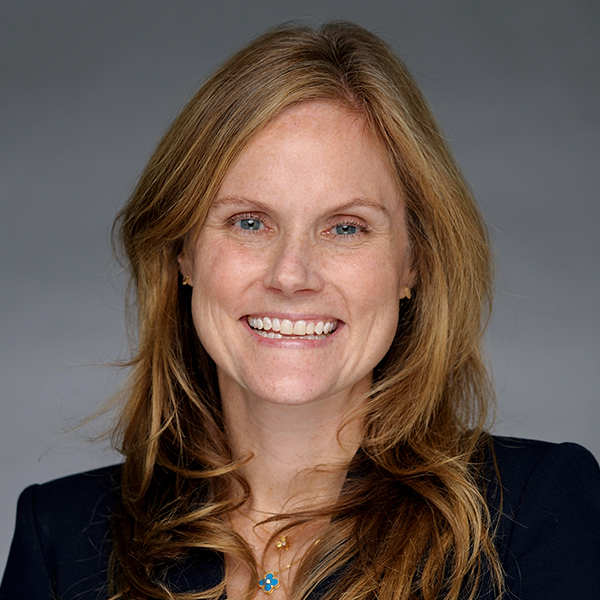
Leslie Geller is a wealth strategist at Capital Group. She has 19 years of related industry experience and has been with Capital Group for seven years. Prior to joining Capital, Leslie was a partner at Elkins Kalt Weintraub Reuben Gartside LLP where she advised high- and ultra high-net-worth clients on all matters related to taxation, wealth transfer and family governance. Before that, she was an associate at Cleary Gottlieb. She received an LLM in taxation from New York University School of Law, a juris doctor from Boston College Law School and a bachelor’s degree from Washington and Lee University. Leslie is based in Los Angeles.

Lauren C. Liebes is a wealth strategist at Capital Group. She has 18 years of related industry experience and has been with Capital Group for one year. Prior to joining Capital, Lauren worked as a wealth planner at Citi Private Bank. Before that, she worked as an attorney with the Tax and Estate Planning Practice Group at Sheppard Mullin Richter & Hampton LLP. She received an LLM in taxation and certificate in estate planning from Georgetown University Law Center, a juris doctor from Southwestern Law School and a bachelor's degree from Boston University. Lauren is based in Washington, D.C.

Past results are not predictive of results in future periods.

Private market data may be less standardized and less frequently updated than public market data.

Investments are not FDIC-insured, nor are they deposits of or guaranteed by a bank or any other entity, so they may lose value.
Statements attributed to an individual represent the opinions of that individual as of the date published and do not necessarily reflect the opinions of Capital Group or its affiliates. This information is intended to highlight issues and should not be considered advice, an endorsement or a recommendation.
All Capital Group trademarks mentioned are owned by The Capital Group Companies, Inc., an affiliated company or fund. All other company and product names mentioned are the property of their respective companies.
Use of this website is intended for U.S. residents only. Use of this website and materials is also subject to approval by your home office.
Capital Client Group, Inc.
This content, developed by Capital Group, home of American Funds, should not be used as a primary basis for investment decisions and is not intended to serve as impartial investment or fiduciary advice.