

Featuring:
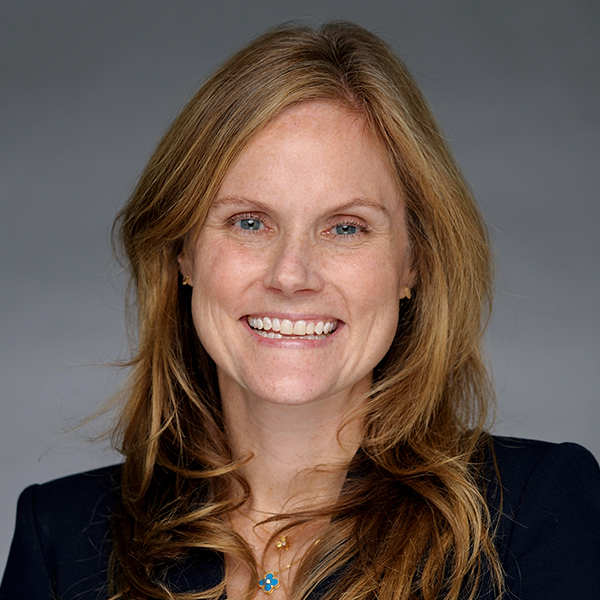
Leslie Geller
Senior Wealth Strategist
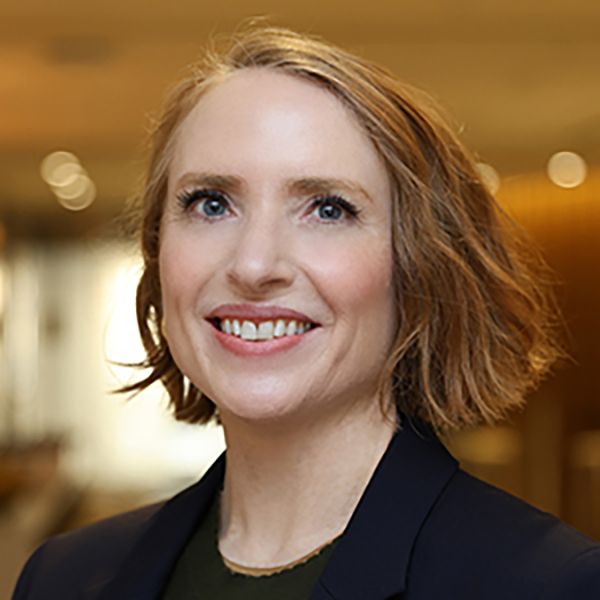
Katelyn Wheeler
Senior Trust, Estate and Fiduciary Strategist
Lauren Liebes
Wealth Strategist

Leslie Geller: Hello and welcome to Capital Group's Practice Lab webinar series. I want to thank everybody for joining us.
It's great to be with you. Our topic today is From cradle to college: Saving and planning for kids and grandkids. I'm Leslie Geller and I'll be joined today by my Capital Group colleagues, Lauren Liebes and Katelyn Wheeler.
And we're really looking forward to talking with you today about how advisors can get in on the ground floor of generational wealth planning by helping their clients save and plan for kids and grandkids. Before we dive in, let me cover some housekeeping like we always do.
If you look in the upper right corner of your webinar player, you'll find everything you need, including slides for today's event. One quick reminder on CE credit. In order to get credit for this webinar, you need to stay on this call for at least 50 minutes.
That's five zero, not 15. And you should receive your credit by email within five business days. Lastly, before we begin, we love getting your questions. That's what makes this session really dynamic. Throughout the event, we'll try to answer as many as we can. You'll find the Q&A tab in that same upper right section of your screen. So with that, let's bring Lauren and Katelyn in.
Lauren Liebes right here to my left is a wealth strategist here at Capital Group. She's also an attorney with an LLM in taxation. Katelyn Wheeler is a senior trust estate and fiduciary strategist at Capital Group Private Client Services focusing on trust, estate, tax and personal planning matters. Like Lauren, Katelyn also has an LLM in taxation. And I should add that I'm a wealth strategist here at Capital. And like Lauren and Katelyn, I am also an attorney with an LLM in taxation.
So we can really nerd out a little bit on the tax stuff. So we definitely have you covered on taxes from every possible angle. Let's dive in.
Before we get to the substance here, let's take a step back and look at the bigger picture. We always kind of like to set the stage, why are we talking about this right now?
And the context for this is this massive transfer of wealth that's underway, which Cerulli estimates at around $124 trillion that's moving from baby boomers to younger generations. And that's just from the boomers. Concurrently with this wealth transfer, we're also seeing this trend of giving while living accelerating. A shift from this one time giving at death to this more incremental year by year, stage by stage giving. There was a Wall Street Journal article at the beginning of June that talked all about this perfect timing, perfect setup for this session.
And there's a lot of forces driving this trend that we're seeing among them affordability for younger generations, particularly around housing, big issue here in California. People are living longer. Tax planning has become a big focus. And also grandparents and parents, the members of these older generations, they want to see kids and grandkids enjoy the wealth and learn to manage the wealth while they're still around. And because of this shift to lifetime giving, we're seeing this ever growing interest from the clients themselves around planning for these wealth transfers, planning for saving for kids and grandkids, starting off from birth sometimes even before. And this may seem obvious, but we really want to be clear here, why does this matter to advisors?
And basically, and we're going to talk a little bit more about this before we get into the meat of this webinar, this is a giant opportunity for advisors to build and grow their businesses with the clients and families that they already serve by organically connecting to those next generations.
So let's bring Lauren in here. I'm going to start with you. We get challenged regularly both here and in the field that a lot of times these kids' accounts start out small, right? They're insignificant. There's not a ton for advisors to do from a management or advice perspective, but why are we still so conflicted around the business opportunity here?
Lauren Liebes: Yeah. So I think as you're leading me to, I think it's a huge opportunity for advisors. And I think what we've seen in the field is that often clients will come in and say, "I just read an article, for example, on Trump accounts. Do I need one of those? And let's talk about it." And that is a great place to start, but the opportunity is that that's really opening the door for the advisor to talk about all the other account types because you can't just talk about one of these savings accounts for minors in a vacuum. We really have to compare and look at the different attributes, the pros and cons, the limitations. And so it's really just opening the door to this larger conversation with families, deepening their relationship and figuring out what their goals are. And sometimes they don't know when they come in and just ask, "Hey, do I need a 529?" So that's the first thing.
I think in terms of thinking about the next generation, these accounts, as you said, generally start small. Some of them were $5,000 a year, $7,500 a year. Over time they grow. And it's a great place to start for the advisor to, as you said, organically get to know the next generation and use that as an opportunity to really educate on, “What is an investment? What are our ideas around investments? What happens when you turn 18? Will you get the keys to this account? And what are we going to do then?” And so it's a great way to really interact with the next generation. And then finally, I think in terms of kind of ongoing, once you get the account set up and maybe they're being funded, if the advisor knows that this is a goal of the family, they want to put X amount of money into a 529 every year or a Trump account, it's just a great, easy touch point to say, "Hey, it's December.
You haven't done this account. Are you interested?" Just a great way to just be in touch and be helpful to clients.
Leslie Geller: The incremental giving provides that natural opportunity for regular contact engagement and support. And we'll talk a little bit more about this when we get into the substance, but using the Trump accounts as an example, it's not a lot of money that can go in there on an annual basis, but from an interest perspective, we are seeing a tremendous amount of it. And it's sophistication and wealth level agnostic. Everyone is asking about these. So it's not just the actual advisor opportunity. It's the mirror conversation around it that's really presenting the opportunity. Okay, Katelyn. So working directly with high net worth and a lot of ultra high net worth families like you do and their advisors, you see how advisor relationships transition or don't across generations. How have you seen these early conversations with kids, grandkids and around saving and transferring wealth to them? How have you seen that actually help advisors maintain and grow those assets across those generational wealth transfers?
Katelyn Wheeler: I mean, it's a great question. It's exactly what Lauren said. Starting the conversation, really being able to engage with them on what their priorities are, seeing the impact of saving and spending habits over time is a great way for that engagement. Moreover, it helps the advisors get to know who the next generation is and know what their priorities are, know what they're interested in and engage with them on these educational aspects throughout their lives.
Leslie Geller: And do you see clients really being receptive to this type of conversation and early engagement? Is this something that's easy to do?
Katelyn Wheeler: It tends to be because it's a conversation that's harder for the client to have with their own child and have the child listen to them. And so to bring in that third party, that trusted advisor. And then just as you were saying, the visuals of the compounding, the growth, it helps them understand what those really long-term planning and saving strategies and benefits are.
Leslie Geller: And we all have little kids and we all know that a lot of times your children won't listen to you about something, but if you bring in a neutral third party, all of a sudden they're all ears. Exactly.
Makes sense. All right. Let's get into the real substance here. We've broken up the remainder of this webinar into two parts. In the first we're going to compare and contrast the various vehicles to save for kids and grandkids. Usually those are the smaller, more incremental ways to help younger generations build wealth. In the second part, we're going to transition to discussing strategies that facilitate those larger wealth transfer down generations from paying for college directly all the way to the more complex estate freeze techniques. You are not going to discuss all of these techniques with every client, right? But we are going to give you something for everyone hopefully. So let's jump in. We're going to start with quick... Actually, before we start with Trump accounts, I want to quickly show you this resource that we have on all these vehicles. We don't usually link to resources like these in these webinars, but we really felt like this one is a great one.
We're seeing a ton of uptake in the field. It's a PDF you can download in the resources tab of the webinar and it contains a side-by-side comparison of these key savings vehicles for minors, including tax treatment, how much flexibility is built in. Highly, highly recommend that you take this and use it with your clients. It's approved for public use. And like Lauren was alluding to earlier, you can't talk about one of these accounts in a vacuum without talking about the others. So that's why we presented this in kind of this four-part comparison. So it's really, really fantastic. I encourage you to take a look. All right. So let's jump in here with the Trump accounts, the newest vehicle. And these are brand, brand new.
Lauren Liebes: Brand new.
Leslie Geller: Brand new. They launched this month. We've known about them for a long time, a year, but you could actually start funding them as of July 4th? Yes. Was it as of last week? And they're basically an early retirement savings vehicle for children. We've seen, as I said before, so much interest in these since they were first introduced. What are some of the things that everyone is talking about around these accounts? Why are they so interesting to people right now?
Lauren Liebes: Yeah. So there's a few things that I think keep coming up a lot, either questions from advisors or from the field. The first is that thinking, okay, we're going to open this account and it is tax advantaged, but what would be kind of the long-term strategy with this type of account? And doing a Roth conversion either at age 18 or after college has gotten a lot of press. It's important to think about getting out of that “kiddie tax” zone to make sure you don't run into that for the unearned income. But that is something that's seeing a lot of play. In addition, I think it's important to think about when you do the Roth conversion,
what will happen with the related tax bill? And if possible, if parents or other family members are willing to help contribute to the tax bill, that could really-
Leslie Geller: Supercharge-
Lauren Liebes: The Roth. So that's coming up a lot and can be really helpful, as Katelyn said, when looking at those projections, to also do a Roth conversion projection with the client and think about kind of long-term, what's our strategy before we start to fund the account. So that's coming up a lot. I'm also seeing a lot of questions. People are just confused about the newborn.
Leslie Geller: Yes.
Lauren Liebes: The-
Leslie Geller: Contribution.
Lauren Liebes: The contribution for the government. If someone had a baby from 2025 through 2028, that baby qualifies for $1,000 of contribution from the government. You have to make sure you check the box and ask for the money when you open the account. And that's a great benefit, but we're seeing that some clients and some advisors too are confused. They think this is just a newborn savings account and it's not. It can be open for anyone who's 17 and younger. So that's a little confusing too. Additionally, I think a trend that we're seeing in lots of other areas of wealth planning that I know we talk about a lot is what's happening at the state level with these accounts. So there are at least seven states right now that have either proposed or are planning to tax these accounts at the state level every year.
Leslie Geller: Okay.
Lauren Liebes: So that is a twist different than how these are taxed federally, which is that they're tax deferred. So that doesn't mean that maybe these aren't the right accounts for certain clients, but it is something to really keep an eye on and just be mindful about when these accounts are open and funded. And then finally, we've seen some kinks. We've got some feedback about just the account opening process has been, it's a whole new account type. It needs to be opened with the U.S. Treasury. And that's a whole new experience for I think a lot of people. There is an app now that you can use to open the account and manage it, but there's been some feedback that maybe that's bumpy for some people and I think those kinks are still getting worked out. And then we've also seen that some of the wrinkles have gotten ironed out as we kind of go.
And so kind of the biggest discussion we found, at least in the estate planning world -
Leslie Geller: The gift tax return.
Lauren Liebes: Yes. Whether or not these would qualify for the gift tax return. And the good news is we just received guidance from Treasury I think last week that just came out. And now generally speaking, these accounts do qualify if you don't go over the threshold.
Leslie Geller: For an annual exclusion gift.
Lauren Liebes: Yes, they can hold an annual exclusion gift generally speaking.
Leslie Geller: And just a reminder, annual exclusion is 19,000. $19,000-
Lauren Liebes: Per person per donee. And that does-
Leslie Geller: Not eat into your lifetime exemption. Correct. Okay.
Lauren Liebes: Great.
Leslie Geller: And do you have to file a gift tax return? That's the real implication there. No.
Lauren Liebes: So if it qualifies for the annual exclusion gift, as long as you are under that 19,000, you do not have to file a gift tax return.
Leslie Geller: And this was a big area of concern because filing a gift tax return can be a gnarly process. Yeah, it's another-
Lauren Liebes: Step.
Leslie Geller: Yeah. It's more… If you forget-
Lauren Liebes: To do it, there could be penalties. Yes.
Leslie Geller: And so people were worried that if they were making these little $5,000 gifts, that they were going to have to go through the whole process of filing these gift tax returns. So now we know unless they're making other big gifts, they're not-
Lauren Liebes: Required-
Leslie Geller: To file. Generally. Okay.
Lauren Liebes: Yeah. So good news there.
Leslie Geller: Okay. We could talk about Trump accounts for a long time, but we've got to move on. So moving along to what you might call the “workhorse” of saving for kids, this one has been around for a really long time 529 accounts. 529s, I know Katelyn, are one of our favorites, we call them “gateway gifting strategies.” They're simple, they're effective. You get people on board really easily, even those who haven't gifted previously. How do you see high net worth and ultra high net worth families using 529s most effectively these days?
Katelyn Wheeler: Yeah. So one of the things is not to be afraid of new things like Trump accounts, but 529 accounts have been around for so long. We're really comfortable with how they're used, how they're taxed.
And one of the earliest ways we see families get involved is through what we call front loading a 529 account. So supercharging it. You can do five years of that annual gift exclusion, so 19,000 times five into a 529 account at birth and then essentially fund that child's college the day they're born. And for married couples, they can double that. Moreover, anybody else can contribute to that 529 account also. And so it's a great way for many members of a family to get involved and help saving for college right away.
Leslie Geller: That's great. And quick question here. We're going to take our first one from the audience before we move on to the next two accounts. Trump accounts raise an interesting issue. When should you start saving for your kids' retirement? For a lot of clients, their children's retirement seems a really long way off. How do you approach this issue of saving for a toddler's retirement? And it's interesting. I'm just going to give a quick answer and then I want to hear what you have to say. Clients are interested in this. They're actually aware that funding a 529 because of the rollover that is also not just saving for college, but it's also a very early retirement saving vehicle. But maybe for some families who aren't that progressive around their thinking or aren't that proactive, how are you talking or how are you seeing advisors talk to the clients about a toddler's retirement plan?
Right.
Lauren Liebes: Yeah. It does seem kind of funny when you put it that way, Leslie. I think this really just goes back to what Katelyn said about communicating and asking clients what are their goals? What keeps them up at night? And I think it's different for every family. And for some people, maybe they've had different experiences paying for college and that's their value. And for some parents, maybe they're more focused on retirement as they're approaching closer to retirement. Maybe for them, they worry about their children having the ability to fully save. So I think it's so personal. There's no right or wrong. And it's really just opening up the conversation and thinking about chronologically the lifespan of the child and what are the big things that are going to come up and how do we want to help pay for those or not? Yeah.
Leslie Geller: And I think this is another question that just came in, which is a nice little corollary here. If you open a Trump account for someone who's 16, do they still get the $1,000 from the government or is the $1,000 only for newborns? Let's clarify that first and then I have another one. Great-
Lauren Liebes: Question. I think highlights how some of this is so confusing as well. So the $1,000 from the…Just for-
Leslie Geller: Babies. From-
Lauren Liebes: The federal government is just for babies that were born in 2025 through 2028. So if someone is currently 16, they wouldn't qualify
Leslie Geller: For that. Okay. And then here's that deeper question. We're getting a lot. The question, do I contribute to a 529 or a Trump account? Is that like a false choice?
Lauren Liebes: Yeah. So I think that's totally false. It goes back to what we were just talking about, that it's so client driven.
Leslie Geller: They're not mutually exclusive. No mutually-
Lauren Liebes: Exclusive.
Leslie Geller: Totally depends.
Lauren Liebes: Different goals, different profiles of the account, different drawbacks. And I think particularly in the high net worth and the ultra high net worth space, they'll fund them all, those clients. Yeah.
Leslie Geller: I think there's a lot of the high net worth families are just like, okay, great. Another way to save for my kids. Yeah, it's
Lauren Liebes: Another-
Leslie Geller: Bucket.
Leslie Geller: Yeah. It's not that much money. $5,000. It's not like the be all end all solution to-
Lauren Liebes: Wealth-
Leslie Geller: Transitions, but it's helpful.
Lauren Liebes: I think even for the clients that say, "Hey, I'm really not worried about retirement. I'm worried about college." Even those clients should consider opening an account if they have babies that fall within those lucky years where they get the “free money.” But there's other charities and some state governments are contributing too. So there may be other so-called “free money” that you could get for your child, even if maybe that's not your priority.
Leslie Geller: Yep. Okay. Custodial IRAs, and Lauren, we'll stick with you. It's a really interesting product with an important requirement. You have to have earned income or rather the child has to have earned income. And we hear about these accounts all the time as kind of this cool way to save money for kids if you're a business owner. But how are you seeing them used actually in real life? Not some of these crazy ideas. Off the wall planning strategies. Yeah.
Lauren Liebes: Yes. So I think particularly for the business owner clients, if you have legitimate actual work that your child is able to help you with, then you can hire your child. You want to make sure it's all documented. And that is a great way for them to have earned income. My favorite example of this is a client I worked with in practice. She has a photography business. She has three kids. And when they were little, she hired them as models and they were employed, all documented. And she used those pictures and she had them. And then those kids, now they're all in their 20s actually, and she started custodial IRAs for her kids. So you can really get creative. And I think for advisors it is another place where advisors can come in and help find creative but meaningful ways for the kids to help.
Leslie Geller: And the other area I think we're seeing a lot of this is kids helping with social media.
Lauren Liebes: Yes.
Leslie Geller: Marketing, digital marketing, that sort of thing. But even something as simple as office work.
Lauren Liebes: Right help file. People still have paper files. They need help with those. Exactly. But I think the other strategy, even if you don't have business owner clients, if there are kids that are at summertime, they're working as camp counselors, they're scooping ice cream, then this is… They can still do it. Yeah. And this is a great place for the advisor to come in and say, "Hey, here's this opportunity for your child." And I think one strategy that can work is that maybe the 16-year-old isn't that excited about putting their money from scooping ice cream into this retirement account that they shouldn't touch until they're 60. But if mom and dad are up to supporting this idea, I have seen programs where parents say, "Okay, we're going to put $1,000 in from the ice cream job into the custodial Roth, do it as a Roth because we're at a very low tax bracket.
And then mom and dad make the child whole and give the child $1,000. And that is an interesting program if people are into that and can help encourage savings.
Leslie Geller: That's a great idea.
Lauren Liebes: Get-
Leslie Geller: Everybody on board.
Lauren Liebes: Get everybody on board.
Leslie Geller: Okay. Katelyn, fourth option here or the fourth type of savings account. UTMA and UGMA accounts. With all of the different trust options out there these days, we don't see these as much as we used to. At least I don't see them nearly as much as when I first started practicing, particularly in the high net worth space. Do they still have utility in certain circumstances are you finding?
Katelyn Wheeler: Absolutely. I mean, the simplicity and the low cost barrier to setting them up is a great tool for people, especially if they're not going to be maximizing these accounts, if they're gifting small amounts or other family members are going to be gifting small amounts. We see these all the time because you can extend it out. Typically they'll pay out between the ages of 18 and 25. It caps out at 25 is the latest I've heard, but it's state specific. And it's a great way to protect those assets, watch them grow and really prioritize simplicity. Simplicity and flexibility is sort of the name of the game there.
Lauren Liebes: And I will say, I think because of the Trump account, there has been a lot of press about some of these other accounts coming out. And there was a great article a couple of weeks ago in the Wall Street Journal. I know you read it too, Leslie, about maybe the UTMA's coming back to life and people are saying, "I'm going to put all my money into the UTMA because of the flexibility." So at least some people… Around investment options. Around investment options. There's no restrictions on withdrawal once you get past 18. So maybe not for everyone, but some people are definitely giving them a second look. Yeah.
Leslie Geller: Some families really do prioritize the simplicity and flexibility. But one of the big drawbacks, and I always like to talk about this with UTMA and UGMA, is the control at majority issue, whatever age that might be. How do you, Katelyn, how do you guys deal with that for kids that reach the age of majority? And maybe it wasn't just small gifts that were put in the... Maybe all of a sudden there's millions of dollars sitting in that account that this child is now about to be in total control of.
Katelyn Wheeler: Yeah, absolutely. And this is a problem that we've seen in practice a lot where what intended was started out as a small account, sort of grew and grew and grew. And then all of a sudden that 18 year old is maybe not the most responsible, maybe not in the best place to have this flood of wealth. And so if there's not this responsibility that they're able to handle that amount of wealth at that time, we end up having to pursue court action to prohibit control. So with the flexibility and the simplicity, that's the one thing that we lose is that control. And so that's where trust often become a better option. And depending on how we see these accounts and their potential to grow, that's when we start looking at simple gifting trusts where we can really manage that control while still offering the flexibility, having it be able to pay outright at a certain age, but push that out beyond that 18, 21, 25 that we typically see with that.
Leslie Geller: Okay. A few more questions before we move on to the second part. A few more questions that have come in. Can 529 plans be used for something other than education? So if you have excess cash, everybody's gone to college, grad school, it's sitting there, what can you do with the excess? Can you use it for retirement? Can you use it for some other purpose? And we are seeing a lot of, like Katelyn was alluding to, super funding of 529. We all know the college landscape is really evolving these days. Who knows what things are going to be like in five, 10 years? What can you do with those extra 529 funds? Maybe let's start with Lauren and then we'll go to Katelyn.
Lauren Liebes: Okay. So a few things. The OBB last year did broaden the uses. So if people are interested in not just doing four year college, there's other certifications you can get and other uses. I have seen adults use them to go back to school or just further education in general. You can use it for a small amount to pay off a student loan bill, both for the beneficiary and a sibling. So if there's some remaining loans, you can use it for that. And then as you said, this great new feature that we got a few years ago where you can roll over $35,000 subject to earned income requirements, there's a few other restrictions, but you can move it over to a Roth. So after you've done all of that, which is a lot, and as you said with the cost of college, it's crazy to think anyone has money over, but I guess there are some people that do.
You can think about leaving the money because it is so precious because it's growing tax-free and you can draw it out. If there is an interest or a value in the family to save that for future generations, I'm really seeing a lot of families think about doing that now too.
Leslie Geller: Just kind of leave it alone.
Lauren Liebes: Just leave it. And one of the great things about 529s that we haven't touched on quite yet in comparison to some of the other account types where we have this age of majority issue where the young adult takes over is that the 529, the owner of the account remains in control. And they have control over the investments, distributions, beneficiary changes. And so you can really do a lot with that and respond to different changes in the family in the account.
Leslie Geller: And Katelyn, are you seeing in practice people have money left over in 529s? Is this something that you're
Katelyn Wheeler: Dealing with all the time? All of the time. All of the time. we're kind of seeing the end of those life cycles right now. And we saw these super funded 529s with a lot of excess funds. There's a lot of cash left in there. And so we are approached with the conversation all the time on what do we do with these excess funds? How should we look at it? And I always like to remind people that it's not just tuition expenses. And so making sure you're utilizing those funds for all of those educational expenses that are codified. Moreover, we've seen the expansion of being able to use some of these funds for lower school education as well, private school tuition.
Leslie Geller: Yeah. It's significant. It was doubled from 10,000 to 20,000. That's a very, very large jump when you're paying and very beneficial jump when you're paying for private schools. And also too, I mean we see my oldest is getting closer to thinking about college and seeing what families are spending on college counseling and SAT test prep, all of those things. AP prep now qualify as expenses or things that you can spend or take distributions from the 529. So there's a lot of different ways to use it. Like you said, it's not just for tuition. Okay. Katelyn, just quickly before we move on, is one of these accounts better than another Of these four, I know we've really covered this for the most part. It totally depends. Are there any particular themes, client profiles that you're seeing really gravitate towards one over the other? Are high net worth families basically doing as many of them as they can?
What are you seeing?
Katelyn Wheeler: I'm seeing a broad usage. Sometimes I'm seeing where grandparents are super funding the 529 account, parents are utilizing the UTMA. Really, they're the ones that are going to be able to have that visibility when they turn 18. Sometimes with these UTMA accounts that grow, I'm seeing and talking to a lot of parents right now about having the child create a revocable trust when they turn 18 and having the parent serve as a co-trustee on the account and then having the UTMA pour into the Rev trust and then that co-trustee kind of situation. Again, it's not for every kid and it's not for every parent, but I think that there's utility in all of these and it's not a pick and choose approach. It's a yes and. Let's really start that conversation. And it's all about that conversation and really finding the right fit for the right client.
Leslie Geller: And that's the utility of advisors is providing that guidance, having those discussions and really helping find the right fit for the client and their family at that time.
Okay. Onto section two. So those four different types of savings accounts for minors that we just discussed are really just the start. They're just like scratching the surface of that wealth transfer discussion for a high net worth family. So in this next section, we're going to try to capture how these conversations might evolve from an available strategy perspective. So first a family's on the younger side, they've got young kids, young grandkids. You're going to talk about these saving for retirement for a toddler, right? And then as the family wealth grows, as the kids maybe start to get older, as the family itself grows, you're going to have to start talking about those more substantive substantial wealth transfer strategies. We're not going to have a comprehensive discussion of all of the available strategies here because we could have a whole webinar just on that. So we're going to give you a sampling of what we're discussing most out in the field.
We tend to start when we're talking about these more substantial wealth transfer strategies, we tend to start with the simplest first. And again, we're really trying to track the evolution of the conversations with these families starting from these savings accounts. Then we start to get into the more complex, but of those complex, we really like to start with the easy ones first. Particularly for families that haven't done this before beyond the 529, beyond the custodial IRA or the Trump account, these are the places we would start. Lauren, we're not going to recite everything on this slide. We're not going to give a review of everything up here. Pull out the important items for us here. What resonates the most with clients right now, particularly for those that are maybe a little hesitant to start moving that wealth.
Lauren Liebes: Yeah. And I think it's true that it can be hard for clients to start giving away. And I've found also with clients, particularly business owner clients where they've been in wealth building mode for many, many years and they've built a great business and a lot of wealth. And it can be hard sometimes for clients to start thinking, okay, I'm out of that wealth building mode and now I'm into estate planning mode where I'm trying to minimize the size of my estate and start to give money away. And that can be emotional for clients to really start to think about. So when that happens, I think the easiest place to start is thinking about annual exclusion gifts. And you can work with clients to help them get on really a program where they do that every year. You can model that out and really make a difference in the size of the estate with an annual exclusion gift.
It's very easy. We highlighted direct outright gifts. You can always write the check. That's the easiest way to do it. And I think that can be a good first step to get people kind of on a program, on a plan. They get used to how that feels to give money away because it can be emotional for some clients. And I think that is where I'm finding can be the most logical place to start.
Leslie Geller: And just a reminder that that annual exclusion is 19,000 per person per year.
Lauren Liebes: Correct.
Leslie Geller: So I remember when I was practicing and you'd have matriarch, patriarch of these giant families and they were giving $19,000 to kids, spouses, grandkids, spouses, great grandkids. And you were really making a dent -
Lauren Liebes: Big dent.
Leslie Geller: In the estate on an annual basis without even having to touch that lifetime exemption. Right.
Lauren Liebes: Or file a gift tax return.
Leslie Geller: Right. It's easy. Or-
Lauren Liebes: File a gift tax return.
Leslie Geller: Why, Lauren, are 529s up here too? Because we talked about 529s on the forecast. Why do we have it here as well? Did it very deliberately?
Lauren Liebes: I think because that is a really common place where people park this annual exclusion gift. So if you don't want to do the UTMA or you don't want to write the check, so to speak, the 529 is great because as we discussed, it really has trust-like qualities without having to go to the estate planning attorney. You don't have to think too much about the different terms or how you're going to structure it. It's very easy to open up. And so that is very common. And because as Katelyn highlighted, you have the early fund where you can do five years in one year, that's really powerful and easy. And so I think that's why we included it because it's very common.
Leslie Geller: Yeah. And I think we talked about one of the driving forces of this giving while living being tax planning and 529s. Yes, they're simple, you get to maintain control, but they also provide this lovely tax deferred, often tax-free environment for you to put a bunch of money in. And just to clarify, because I know it's a great way to use annual exclusion gifts, you're not limited to your annual exclusion gift, right? Even you can go over that five year front loading as well, right?
Lauren Liebes: Yep.
Leslie Geller: So you can-
Lauren Liebes: Yeah. And then you just eat through your lifetime exclusion, which is the highest it's ever been. It's $15 million a person, 30 million if you're married. And so for most people, they won't use that entire amount. And so sometimes they're comfortable putting in more than the five-year amount.
Leslie Geller: Yeah. And I think especially for people, we're seeing a lot of usage or expansive usage, large format usage of these 529s for people who live in high tax states where the tax burden is just a knock on the head every year. It's one of those ways to get a substantial amount of funds for the family into a tax deferred environment. Oh, the direct payment of tuition, medical expenses. I just want to quick talk to me about that because that's one of those kind of table stakes that people forget about, but with the cost of college, so tremendously powerful.
Lauren Liebes: So great. And you could use it not just - For college. For college, you could use it for K through 12 as well. And for private schools that can really eat through a lot. And that doesn't use your annual exclusion amount. So no gift tax return.
Leslie Geller: Are you finding, Katelyn, is this like a table stakes way to move wealth down generations for grandparents to pay for tuition?
Katelyn Wheeler: Yes, but it's something that's very easy to mess up. And so I find that people say, "Oh, okay. I transferred the $60,000 tuition to my child to pay for their child, for my grandchild." That's it. That's a gift. That's a completed gift. You have to file a gift tax return at that point, but you must pay directly to the institution. And so that's another point of engagement where we're saying, "Before you do any of this, come talk to us. Make sure you talk to your financial advisor and we can make sure that you're doing it appropriately and there's not going to be any of those red flags that are waived."
Leslie Geller: Yeah. That's a really great point because yes, I think it seems obvious to us, but I think people accidentally
Lauren Liebes: Do-
Leslie Geller: That all the time.
Lauren Liebes: It's confusing. It's easy to mess up.
Leslie Geller: All right. A question from the audience. This is actually a good one. What are the negative implications for giving away large amounts say for a down payment on a residence? And this is something that we're seeing all over the place right now. Outright gift, down payment on a residence. Any drawbacks? You want to take that one?
Katelyn Wheeler: Sure. So one of the ways that I discuss this in estate planning is what happens in the event of a divorce? Whose house is this? What right of reimbursement is there? Is the gift going to both spouses? There's a lot of questions that need to be asked before this sort of big gift. Also, when there's multiple children in a family, if one down payment may not be equal to the next and understanding if you really want to equalize during lifetime gifting, making sure your estate plan accounts for that as well. And so understanding one, if they make that down payment, are they going to be able to afford the house long-term and long-term affordability issues? And so it really becomes that bigger conversation to engage that financial advisor on, on long-term. If we help them with this down payment, is this something that is going to be affordable and really be utilized long-term?
Leslie Geller: Yeah, that's a great point. So let's move on to our more complex wealth transfer strategy. So this would kind of be the next phase of discussion. As I said, these are a little more complicated. We're not going to have a comprehensive discussion about all of these. These don't represent all of the options out there, but these are the things that I think most commonly are coming up right now in that next phase. Katelyn, of these, what do you see being used the most frequently these days and by what types of families?
Katelyn Wheeler: Yeah. So this is where our fun sort of tax hats get put on and the alphabet soup of these different trusts. But one thing that I really, really love is intentionally defective grantor trusts. And again, it's these freebies. It's an Intentionally Defective-
Leslie Geller: Grantor trust. Yes. Remind us what that is please.
Katelyn Wheeler: Thank you. Is a trust that an owner, a settlor sets up for other beneficiaries and they get to pay the tax on it. So they get to see the-
Leslie Geller: The income tax.
Katelyn Wheeler: The income tax, correct. It's out of their taxable estate for estate tax purposes, but they get to continue to pay the income tax on it, which people love to hear. "Oh, I get to give money away and pay tax for it. Wonderful. But it's really that estate minimization technique. And what the grantor trust status gives you though is this super powerful power to swap assets. And so people are living for so much longer. You're putting that really low basis Apple stock into this gifting trust. And then once you are of an advanced age and maybe have more cash available, you can swap that low basis stock back into your estate, put cash into that trust and then reset the basis essentially at death for that step up in basis. So that's one key that we're really looking at a lot is that asset swap later in life.
We are still looking at dynasty trusts, SLATs, SLANTSs, completed gifts.
Leslie Geller: Remind us what, because SLATs are not up here. Remind us what a SLAT, because these come up all the time. We've talked about them in these webinars before. Remind us what a SLAT is and why they're so popular these days.
Katelyn Wheeler: SLAT is a Spousal Lifetime Access Trust. And what that is, is it is using your lifetime exclusion to fund a gift for your spouse. And it's an asset protection essentially. So you're using that money set aside in a trust. Your spouse is a beneficiary of it. So should you ever need it? We're always afraid of over gifting and then needing assets back. So if you do need it, then you're able to access those funds, but there could be multiple beneficiaries of that trust. So it's also the next generation or even the grandchildren that can be co-equal beneficiaries, though the spouse is typically the primary. And so we can access them should we need them, but typically we don't ever want to fund a SLAT if we know we're going to have to use it for the spouse.
Leslie Geller: So it's a great way to transfer money to younger generations, right? Yes. To use up the exemption amount, to get appreciated assets or pre-appreciation assets out of the estate. But you have that safety net. If you were to need those funds down the road, the spouse is a beneficiary that kind of get to have your cake and eat it too.
Katelyn Wheeler: That's correct. And now with the exemption so high, a lot of times we're not really doing as much exemption planning as we are income tax.
Leslie Geller: Which is what you were talking about earlier. I feel like we've talked about this, that with the exemption amount being at 15 million and income taxes being so high these days that we've sort of been freed up to do a little bit more focusing and planning around the income tax side of wealth transfer to get that step up in basis on debt.
Katelyn Wheeler: That's exactly right. And also doing a little bit of forum shopping on where these trusts are located for state income purposes. We can get into all of that in another episode, but there's a lot of complexity and it's just to say that a lot of estate planning now isn't just estate tax planning, it's also income tax planning.
Lauren Liebes: Yes. And I think too, to your point, it's not just the federal level. We're also thinking about the state level.
Katelyn Wheeler: Absolutely.
Lauren Liebes: Because we're really seeing all different changes at the state level with taxes. And so it does matter if you have a choice of where you're going to put that trust. Yeah.
Katelyn Wheeler: And a lot of different states, we always think of Delaware and Nevada and South Dakota, some of these other states, we see them as being these great venues because they have very flexible trust laws. Because that's the other thing is when we're doing comprehensive tax planning, we're also bumping against rigidity. So we want to allow that flexibility for long-term wealth and growth and acknowledging that beneficiaries change and beneficiaries' needs change.
Leslie Geller: Yep. How much wealth we've talked about sort of the progression from simple, smaller to larger, more substantial, more complex. How much wealth does a family need to have to start thinking about the second tranche of wealth transfer strategies that we just went over?
Katelyn Wheeler: Yeah. So that is a great question and that is where I love working with financial advisors. I will not run a Monte Carlo simulation on what the projected value is going to be. But that's the important part is not to start this planning when you have a tax problem. You want to start this planning projecting out what it is going to look like in the long term. Are you going to be surpassing that taxable amount and what kind of planning do we need now? So it's not necessarily a single net worth number that we're looking at. Here in California and nationwide, we're also looking at a lot of people at companies that are about to go public.
Leslie Geller: Yes.
Katelyn Wheeler: So all of that pre-planning that we can do before that tax issue comes up. The worst thing is when our phone rings and they're like, "I just sold my business. What can I do? " Not much.
Leslie Geller: Yeah, exactly. Question from the audience. “Shouldn't you give annual exclusion gifts in appreciated stock as opposed to giving cash? What are your thoughts on that?”
Lauren Liebes: So you can, that's an option. But if it's appreciated, one thing to think about is that the recipient of that gift receives carryover basis. So it's really giving a gift with an embedded gain. And so maybe that child or the recipient would be in a lower tax bracket. So that's maybe something to think about. But you also want to be mindful of that there ultimately may be some taxes owed at some point.
Leslie Geller: And I think too, what sometimes we see for families that are using their annual exclusion gifts for more complex planning is they'll give pieces or membership interests or shares in a holding company that they've applied a discount to. So yes, they're giving $19,000 of gift, but the actual value of what they're getting out far exceeds that 19,000. But that really gets into far more complex-
Lauren Liebes: Complicated-
Leslie Geller: Valuation issues. Complicated valuation issues. Don't get us started. Which we're not going to discuss today. All right. So last thing we'll cover a big part of the planning for these transfers to kids and grandkids is managing control and access while they're younger, while the family's figuring out how responsible they are, what they're going to do for a living, where they're going to live, and allowing for flexibility and evolution around this. You don't know what your toddler's going to be like, when they're going to retire, all of that. And a lot of this flexibility and control planning is done through trusts as we've been talking about. So we thought we'd spend the last few minutes touching on some of the irrevocable trust terms and concepts and some of the key considerations that you should take into account, particularly when the beneficiaries, kids and grandkids are younger.
So when they are the beneficiaries of this trust, Katelyn said it earlier, we want to build in the flexibility for as they grow, as situations change. And none of these things are concepts that you as an advisor need to be able to dive into the weeds on. Really just great things to be conversational around. Bring up, ask a question, show you know what you're talking about. So how do you see high net worth and ultra high net worth families manage these control issues in practice? Just a couple of examples. Let's start with Lauren and then we'll go to Katelyn.
Lauren Liebes: So one thing I really like is that if the ultimate goal is that the child or young adult will ultimately take the reins, is to try to work on a program where they are educated, both from the advisor as we talked about, but also on trust administration. And I think a great way to do that is to have them serve as a co-trustee with another trusted adult and then eventually set a time where they can choose if they want to have the other trustee step down and become sole trustee. And sometimes that set of ages where you say maybe 30 or 35, obviously really different depending on the family and the amount of wealth and the situations for that family. But I think that can have a lot of flexibility to get everyone up to speed. And then if things aren't maybe going according to plan, you can include trustee removal provisions as well if we need some additional support in the way things are going.
Leslie Geller: Katelyn?
Katelyn Wheeler: Yeah, I think that's exactly right. I love sort of the belt and suspenders approach of really making sure that we're preparing people for taking over and not throwing them in blind. I really like the co-trustee approach, but I also really like the flexibility of introducing what management looks like and keeping those guardrails in there. Most of the conversations that we're having now, especially with control is how do I not ruin my children? And really wanting to make sure that they're prepared for it. And then it's a lot of client management because when people want to retain control, they also don't realize that they're holding on to something that they're not going to have control over in the long term anyway. And they're going to be asking for litigation down the road with far too much rigidity.
Leslie Geller: And I think we've seen that trend where people are shifting or high net worth families are shifting from focusing on these rigid distribution provisions in trusts to really focusing on that gradual control access for kids, grandkids at certain ages. So whereas it used to be, we would talk about at what ages do you want your kids or grandkids to get distributions now for asset protection reasons, for marriage reasons? Things are in the distribution provisions, it's lifetime trusts. There's no mandatory distributions, but they get control and management and greater forms of it at certain ages. Yeah.
Lauren Liebes: Yeah. And I also think that that structure, I agree with you, is really becoming more popular. But if you have clients that are really interested in making sure funds are available to start a business or if they're really interested in having a certain amount of money available for a wedding or if there's certain types of goals that they want, you can also put in additional specific distributions in addition alongside that flexible pot. And I think that can make people feel good too about how the money's going to be used long term.
Katelyn Wheeler: Yep. Yeah. We see a lot of that planning with generation skipping versus non-exempt versus non-exempt and kind of two pools of money to pay out of. But it's important not to forget retirement accounts and how those pay out as well.
Leslie Geller: Yeah. Yes. And like you referenced this generation skipping versus not. And is it for grandkids? Is it for further generations? That really affects what those trust provisions will look like, but all require a really great estate planning attorney and a very involved advisor. So this has been so great. The time always flies. We covered a lot of ground today. Let's see if we can wrap things up with some high level takeaways like we always do closing thoughts. Lauren, you first, then Katelyn.
Lauren Liebes: Okay. So my takeaway is to just start the conversation. And I think speaking with clients about saving for kids, the vehicle matters much less, I think, than the fact that clients are getting in the habit of doing that and thinking about it and having their values passed down to their kids if that's important to them. So just start today is my takeaway.
Leslie Geller: Great.
Katelyn Wheeler: Yeah. Yeah. I echo that communication is important and engagement. And then I really, in all of my planning and conversations, I lean into knowing the person and flexibility. And the flexibility that is important for these long-term structures that we're setting up. Perhaps there is no G4, perhaps people are not having children. And so really understanding what we can do with estates that grow so large, but with a very, very small pool of people.
Leslie Geller: Right. And oftentimes, and I think this is very relevant to both of your final thoughts, the advisor is the person that knows the family and the client the best. They know the personalities, the dynamics, and they are absolutely essential, like you just said in that planning engagement.
Katelyn Wheeler: Yeah. And especially with advisor succession as well, bringing up those younger advisors with you who know the families and who you can kind of have that continuity of the same sort of goals and engagement.
Leslie Geller: Yeah. And institutional knowledge around family.
Katelyn Wheeler: Absolutely.
Leslie Geller: All right. A few quick notes in closing. We have a lot more insight and thought leadership available from Capital Group.
This slide up here gives you some links to additional content on generational wealth planning. Our content is awesome. We've been focusing on a lot of client public approved stuff, so take advantage of it. I want to thank everybody for your engagement and great questions today.
As always, they were wonderful. And it's because of you that Capital was voted number one for thought leadership since 2019. And finally, I want to thank my fantastic guests, Lauren and Katelyn. It was Katelyn's maiden voyage on this and we'll be definitely having her back. Yes. Thank you for your great insights and dynamic conversation. I hope all of you found this as interesting as we did. Thanks again and enjoy the rest of your day.
1 hour CE credit for CFP, IWI and IAR*
How do Trump Accounts fit into your plans for kids and grandkids?
Join us for an exclusive webinar on saving and planning for kids and grandkids. As parents and grandparents live longer and want to help younger generations, “giving while living” has taken on a bigger role in wealth planning. We look at ways parents and grandparents can help children save – whether for college, retirement or to build their own nest egg. We also look at trust and estate strategies.
Event date:July 9, 2026
Leslie Geller is a senior wealth strategist at Capital Group. She has 19 years of related industry experience and has been with Capital Group for seven years. Prior to joining Capital, Leslie was a partner at Elkins Kalt Weintraub Reuben Gartside LLP where she advised high- and ultra-high-net-worth clients on all matters related to taxation, wealth transfer and family governance. Before that, she was an associate at Cleary Gottlieb. She received an LLM in taxation from New York University School of Law, a juris doctor from Boston College Law School and a bachelor’s degree from Washington and Lee University. Leslie is based in Los Angeles.
Katelyn Wheeler is a senior trust, estate and fiduciary strategist at Capital Group Private Client Services, focusing on trust, estate, tax and personal planning matters. Prior to joining Capital Group, she practiced trust and estate law with firms including Spears & Shelf and Leland, Parachini, Steinberg, Matzger & Melnick. Katelyn has a bachelor’s degree in history from UCLA, a J.D. from the University of California College of the Law, and an LLM in taxation from the University of San Francisco. Katelyn is based in San Francisco.
Lauren Liebes is a wealth strategist at Capital Group. She has 18 years of related industry experience and has been with Capital Group for one year. Prior to joining Capital, Lauren worked as a wealth planner at Citi Private Bank. Before that, she worked as an attorney with the Tax and Estate Planning Practice Group at Sheppard Mullin Richter & Hampton LLP. She received an LLM in taxation and a certificate in estate planning from Georgetown University Law Center, a juris doctor from Southwestern Law School and a bachelor's degree from Boston University. Lauren is based in Washington, D.C.