

Featuring:

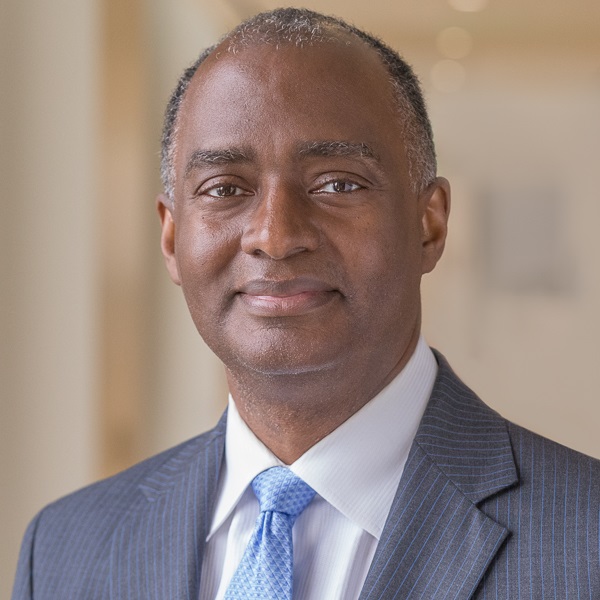
Rob Lovelace
Equity Portfolio Manager and Chair, Capital International, Inc.
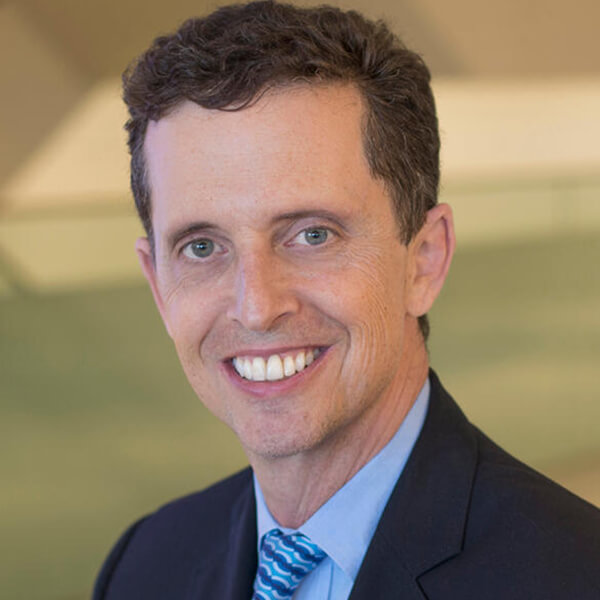
Alan Wilson
Equity Portfolio Manager
Will McKenna
Content Director

Will McKenna: Hello, and welcome to the Capital Ideas Webinar series. I want to thank everybody for joining us today. Great to be with you. And we are really excited for our topic today, which is “The world in 2031: Megatrends to watch.” And to help us think about what’s in store for the future, we have two of our veteran portfolio managers with us today, Rob Lovelace and Alan Wilson. Rob Lovelace recently celebrated his 40th anniversary with Capital Group. Congrats, Rob. Rob is a principal investment officer on New Perspective Fund and a portfolio manager on Capital Group’s New Geography ETF, among other responsibilities. And we’ll be talking about those strategies later in the show. Alan Wilson has 35 years of experience, hot on Rob’s tail, with Capital Group. He is the principal investment officer of the Capital Group Growth ETF, CGGR, among his other responsibilities. And that ETF recently celebrated its fourth anniversary. Easy to remember, since it was launched on 2/22/22. Thanks, guys, for both being with us. And Alan, I wanted to start with you, because a big picture... You’re known around the shop as somebody who likes to think about and try to live three years in the future. And I’d love to... Well, we should have called this “the world in 2029” probably for you, but can you talk about the framework that you use and the process that you use to imagine the future, and how that fits into your investment approach?
Alan Wilson: Sure. Happy to do it, and thanks for having me here today. So, when you think about the future, first of all, one of the most important things to do for me is to step back from the present, regardless of which direction I go. And one of the things about thinking about the future is, what things can you kind of count on? There are a few things you know, things like there are election cycles. There are certain things that are typical levels of progression. There are levels of things like Moore’s law. I think right now with AI, you’re starting to see some pretty consistent patterns in terms of capability growth. And so, some part of it is just saying, “if a lot of the things that I know will happen occur, what does that imply for the world going forward?”
Will McKenna: Okay. And as I understand it, you also have an interesting process where you, as you say, you want to step away from the present, but you go off, do a little mini-sabbatical in the summertime, and think about these things. Give us a little color on that process.
Alan Wilson: Yeah. So, I try to take three or four consecutive weeks off. Again, the most important thing is to step away from the present. It takes about four or five days just to stop, just to let things settle out. And the first thing is to... I just see where my curiosity takes me, what kinds of things I’m probing, and I do a bit of a wander. And then it sounds pretty organic, but I just see what things connect. And I’ll typically have some curiosities, and I’ll pursue some things.
I guess what is interesting about this past summer is that instead of thinking a lot more about the future, I actually spent a lot more time going backward. I think one of the challenges, and we’ll probably get to this later, but one of the challenges of the world is we have this conflict between some technologies that might offer us extraordinary abundance and our challenges as various societies about how we typically share. And a lot of the history of how we have behaved in those periods is as informative as thinking about the future. So, I had a pretty different reading list than I’ve had historically, but I even went this far back to one of the first books that was recommended to me by Don Conlan, who was... Rob would remember Don. Don was an economist here and he recommended Will and Ariel Durant’s “The Lessons of History”…
Will McKenna: Oh, right.
Alan Wilson: ... which I hadn’t read.
Will McKenna: Classic.
Alan Wilson: And going back to revisit that, it’s been a big part of at least last summer’s and current thinking, quite honestly.
Will McKenna: Great. Well, we’re going to dig into that. So, abundance versus sharing and maybe “The Lessons of History” informing how you think about AI and other things today. Rob, I think you’re known as someone around here who tends to have a very long average holding period. If your turnover is low teens, that’s kind of an eight-year holding period. Help the audience understand why you approach it that way and how do you think so far over the horizon as you put your portfolios together.
Rob Lovelace: Well, let me also start by saying thanks and great to be here with both of you as well as our audience. It’s similar to what Alan said. I think we’re all trying to find ways to get out of the noise. And certainly, the conversation today is going to be a lot about the noise, because the markets have gotten very noisy recently. And you used the word “veteran” for those of us that are experienced in this. We’ve witnessed that the noise usually isn’t very helpful in identifying those investment trends or the specific investments that you want to find. So, how do you pull yourself back from that? Alan takes that time to ruminate on the past and where the future might go. For me, it’s just consistently pushing our analysts and my own investment thinking to say, “Okay, great, but is this thing durable for that several-year period?”
If you get out seven or eight years, you tend to get yourself out of the cycles, whether they’re presidential cycles or business cycles or... So, it allows you to continue to be excited about growth cyclicals, so companies that have cycles, but through it all, they’re still growing. Like our industry, the financial services tends to be growth cyclical. And really say which companies are well-run. It gets you very focused on people and the people running the companies and the culture of those companies. It gets you very focused on cash and how they’re going to be able to fund that growth going forward.
So I find it to just be a great rubric to help get you out of the noise and find those companies that are going to find their way through, not because they can already tell me what they’re going to look like in 10 years. To Alan’s point, I can do some extrapolation, but it’s also, as the world changes, which we know... The only thing for sure is that the world we’re trying to imagine even five years from now, we’re not going to be right. Who’s going to navigate those new changes that come along that we’re not expecting?
Will McKenna: Got it. Because it seems like the speed at which things are changing now, it’s almost hard to even imagine eight years out. But your point is, what are the things we can look at? The quality of the people running it, the durability of the franchise, how well run it is. Okay, we’re going to get into all that. That’s a good start. So, Alan, let’s dig into what are those investment opportunities and ideas that are coming up for you that you’re excited about when you have gone off, thought about the future, studied the past. What’s coming up for you as you look to the future?
Alan Wilson: So the area that, for me, that feels... predictable is not the right word, but that feels the least disruptable, has to do with healthcare and drugs. Now, we can talk about the way we’re going to pay for those, which is an important part of the economics for those firms, but just for a moment, let’s talk about what’s happening with the combination of having a much better understanding of the human body and the chemistry around it and genetically how things work and being able to then do digital calculus as to which things might make different things happen. We are seeing an explosion in terms of the types of interventions. Obviously, everyone is familiar with GLP-1s and the various things it can do and how it might really transform some of the real chronic challenges. And so, there is just a lot of terrific investment research that we have internally, a lot of very good opportunities identified. And it’s the largest part of my portfolios, almost a quarter companies that are, to varying degrees, exploiting those things in ways that seem very protectable.Will McKenna: Okay. And you’re, fair to say, fairly deep in the science of that, or through our analysts who are…
Alan Wilson: Yeah, let’s just be very clear. I’ve got very smart friends. And actually…
Will McKenna: You phone a friend for…
Alan Wilson: ... not only are they very smart, but they’re very able to take their wisdom and convert it to someone who’s not smart. I was an MIT undergrad, and I had lots of professors who were brilliant. And they would get up, and they would say things that were completely not understandable to me. There were too many IQ differences of points between us. I have a set of colleagues here, especially on the pharma side, who have that delta, but they can also communicate with me in a way that can dumb it down for me to understand it.
Will McKenna: Got it. Well, an obvious follow-up, but to what extent is AI accelerating that or not, as you and your colleagues here are thinking about that and looking at that?
Alan Wilson: Accelerating my process, or accelerating-
Will McKenna: The drug development and discovery and all of that.
Alan Wilson: Well, as I said, if you go back to... Look, a lot of what you’re experiencing now, and we throw around the term AI, but what’s really happening is the ability to put digital assets together in a way to extract patterns that gives you new insight. What’s happened with ChatGPT is we’ve been able to take the patterns of language. And there’s been this magical output of things being able to communicate in a way and we can really interface with that intelligence. But this ability to use digital assets and mathematics to just go through large quantities of ideas and find the ones that work…
Will McKenna: Molecules and all that good stuff.
Alan Wilson: Yeah, exactly. Exactly. And that’s what we’re really experiencing now. And by the way, one of the first places we experienced that was, at this point, crazy enough... Was it five years ago in COVID?
Will McKenna: Right.
Alan Wilson: Going from a virus that…
Will McKenna: Warp Speed, yeah.
Alan Wilson: ... no one really understood to being able to have a vaccine that was producible and out and impactful. That was, I think, the opening salvo of the era that we’re in.
Will McKenna: That’s very cool. And I’m sure we’ll return to some other themes as well. Rob, for you, what’s on your mind as you look far out on the horizon, those investment trends or ideas, opportunities?
Rob Lovelace: Well, I’ll share and echo Alan’s comments about healthcare, drug, pharmaceuticals. It’s such an exciting area, and it’s a big part of my portfolio too. So then to add on the other obvious piece, which is going to be technology, I think there’s a lot going on that you have to be excited about. It’s fascinating that in the last three or four weeks, we’ve lost our enthusiasm…
Will McKenna: Right.
Rob Lovelace: ... and now it’s sort of the what are the grim realities of it. So, I enjoyed the party while it lasted. But using my long timeframe, it allows you to actually step back and say, “Okay, this is going to be transformational.” And sorting out the long term winners and losers is hard to do, but we can do some of it. History’s a bit of a prologue to this. History is a good guide. Alan and I were both there in the late ‘90s, when the internet was going to change everything and people got very excited about that. So, it’s really interesting for me to go back and think that almost none of the companies that existed in the late ‘90s, none of them were the winners, like AOL Time Warner. Now, they didn’t all go away, but I’m just saying none of them ended up being the definitional companies.
Microsoft changed and became something else that allowed... But it was a new... But credit to them. They’re probably one of the few that found their way through it. So, in that regard, that helps me right now calm down about which of these is the one I want to be with. It’s, how am I staying flexible and focused on that long term time horizon that this will change things, it will make things better, it will make us more efficient. And that, as a society, I’m pretty comfortable we’ll be able to deal with the shift in employment. Doesn’t mean there isn’t going to be pain, as we saw with immigration, as we saw with technology, as it’s evolved in mining and other areas, that there aren’t sectors where it’s impossible for us to retrain. But then in general, things will work out, and we, as a society, will force it to work out.
So within that, I tend to look more at the technology stack. So as opposed to just the companies that are running AI or those that are... The next level down would be those that are producing the chips and the hardware, which is going to be required. The next related step around that is, “Oh, that’s going to take a lot of electricity.” “Oh, that’s going to require a lot of cooling.” “Oh, in fact, the technology right now that they’re working on most in chips is no longer about making them smaller. It’s about making them cooler and more efficient, so we don’t use as much electricity.” So, all the predictions about electricity used right now is... Reminds me, someone back in the 1800s had done a study about why humankind couldn’t grow anymore, because the amount of horse poop that was going to be generated would fill the cities.
Will McKenna: Right.
Rob Lovelace: So therefore, you couldn’t grow anymore. So, again, we got the electricity consumed. It’s clearly going to be so much that we have to be in outer space and that’s all great. And what’s going to happen is someone’s going to figure out a way to make the chips more efficient and we’ll be able to do this and even more at the same amount of power requirement or lower. But right now, we need a lot of air conditioning and we need a lot of electricity. And all those pieces are what I tend to focus my attention on. And rather than trying, again with history as prologue, rather than trying to say it’s going to be this or that, and I have clarity, I invest in all of it. A little bit here and there because that keeps me fresh and on top of it and understanding what’s going on and those companies that I think have some durability.
Will McKenna: And staying flexible. For the audience, Rob mentioned briefly there an insight about the chips at TSMC, going from sort of hitting up against the barrier of Moore’s Law and getting ever smaller, but now pivoting to think more about energy consumption and battery consumption and heat temperature so that they could work better in smaller devices. And that that gave you some confidence that this momentum could continue. So, go back and listen to that, but not right now, after the show is over.
Alan, one of the other, in addition to healthcare, we were talking about this earlier, but one of my favorite recent reports from you came from your trip to the Consumer Electronics Show, which I understand you’ve been going to for a bunch of years, as sort of related to this process that you use. Let me just quote Alan to himself a little bit here. “It’s become a small ritual for me to start the year by wandering the Consumer Electronics Show for a couple of days. No agenda, no hunting for a theme, just walking the floor and letting the signal find me. Like stretching before a long workout, it wakes up the muscles I use to monitor and refine my world model.”
But you then go on to talk about your insights from this year. Tell us about some of those and some of the cool products that may or may not become commercially successful in the years ahead.
Alan Wilson: So first of all, the first thing that’s interesting is just, the history of CES is that this is the time of year when if you were owning a consumer electronics store, you’ve just had all your stuff cleared out and what you’re looking for is the orders that you need to place-
Will McKenna: New stuff.
Alan Wilson: ... that will arrive for next Christm--. And so that’s why it exists in the month that it exists in. And so, the first thing that struck me was the number, and in the first years you went, you would go and you’d see a bunch of stuff. It was almost like the auto show. You’d see stuff that, well, no, you can’t buy this today or this is just a concept. What was interesting was more of, there’s more stuff that was on sale on the floor, right? Yeah. You know what, you’ve got this…
Will McKenna: Like right now, it’s ready to go…
Alan Wilson: Here’s a QR code and we’ll drop ship you from Amazon. So that was an interesting thing, just to look at the difference.
I think the thing that stood out for me the most, my big aha, was when… Oh, one of the other great things at this point is that now that my wife has retired, she’s been joining me for the last couple of years. And so not only do I get to see it through my eyes, but I get to see her ask, “Why is this?” or, “What’s that?” et cetera. Two things stood out.
One, it was about 30 minutes into it, we said, “What is going on with all the karaoke?” There were like eight or nine karaoke booths around. And it turns out that now with artificial intelligence, you can take any song, you can strip out the words, you can adjust the pitch. And so it was in cars, it was in boomboxes and a bunch of things, but that was not to do anything investment-wise with that, but it was just kind of, huh, okay, it’s getting applied to karaoke. To me, the biggest thing that made me think, that solidified some ideas around investing, was experiencing an exoskeleton. So it was a very small device. Again, buyable on the show floor, 15 bucks. You could have given them the credit card. They had a little case, you could take it home. And it just wraps around your lower body, around your waist and around each thigh. And it provides just a little bit of lift. The thing I would compare it to is if you’ve ever ridden an electric bicycle and just had the electric assist mode on, you’re still pedaling, but you attack hills, you do a bunch of things that are different.
And it dawned on me, I will bet you a nickel, that if you go out 10 years, or certainly five years, we’re talking about 2031, we won’t be amazed by Optimus robots running around all the factories and there are no people in it, but it will be routine. So rather than spending $50,000 for an Optimus robot, that you take $2,000 and spread it across 25 people and each person has just a little bit of an assist on the arms and the legs. It helps them do the jobs and perform much better. And that was my big aha from what was the signal that hit. That was probably the biggest one.
Will McKenna: That’s cool. I want to come back to one other thing you saw there, but we’ll come back to that. Rob, as you think about any of the other trends that are capturing your attention, what else is on your mind or that you are picking up from the analysts that they’re excited about?
Rob Lovelace: Maybe it’s just because having given my comments about not getting caught up in the moment, but maybe because of the moment, I have to say that my mind right now is focusing on, there are so many companies that are being taken down because AI is the end of them.
Will McKenna: This is like the SaaS apocalypse, the software industry getting the disruption treatment in SaaS, Software as a Service, for our audience.
Rob Lovelace: So most software producers are getting hit hard in any way, shape, or form, because it concerns about whether the moats will still be there. It used to be that systems couldn’t talk to each other. It’s now easier to create overlays that allow systems to talk to each other. So that removes moats, it lowers switching costs. So I think the market’s been pretty rational up until now. Now it’s feeling a little more indiscriminate in terms of, if you’re in that area, we’re just going to sell now and talk later.
So that’s got my attention because, as I’ve looked at it through our analyst’s eyes, there definitely seem to be some companies that I don’t think are going away. So whether it’s the RELX that owns LexisNexis in the legal area, Claude comes out and it’s got its own legal front end. My wife happens to be a lawyer. If you’re on, shout out. And I know she uses to help just do forms and things. I mean, that’s already out there in terms of being able to get some basic things done. But I know that the courthouse has already issued a thing that if you come in and cite a lawsuit that didn’t actually happen, because that was what was happening with AI at this stage, the penalties for the lawyers are huge, as they should be. So, if anyone thinks there are going to be fewer lawyers, I think this will help a lot of pieces of their process. But that ability to have that legal database and the searchability of that database is still a moat that you can create. So, ownership of data I still think is as valuable, or maybe even more valuable now than it was. That’ll be interesting, whether people can maintain that.
And then there’s the Accentures of the world that are, these are the…
Will McKenna: Consultants-
Rob Lovelace: Consultants who come in and help you set your databases up or move to the cloud or fill in the blank. And again, somehow everyone thinks like, “Oh, I’ll just have AI move me to the cloud.” And maybe for parts of it, but when I talk to our chief technology officer and others at other companies, they’re saying, “I’m not laying anybody off at this point because I’m just moving them from here to worrying about getting the whole AI thing working and getting our people being able to use it and double checking that the coding is written right and making sure that all the footnotes are correct and all the changes that we’re making, et cetera, et cetera.”
So I believe that there’s displacement. I believe there’s going to be change. But do I imagine that suddenly all this stuff is automated and we’re going to get this big layoff? No, I don’t follow that. The CEOs are logically, right now, of almost every company are saying, “Don’t hire because I just don’t know and maybe we’re going to be smaller or maybe we’re going to be flat going out.” So that’s creating this hiccup that I think has got everyone’s attention.
I’ll take the other side of that and say, I think most of these companies are going to be bigger in terms of the number of people. Yes, AI is going to have this big impact, but I just don’t see it as, “yeah, no one’s going to be doing that anymore, or no one’s going to be double checking that anymore, or it’s going to be fine, I’ll just take a machine that I know has about 85 to 90% accuracy and I’m going to run with that.”
Will McKenna: Right. Right. Especially enterprises where security and accuracy are so important, they may need even more help from those consultants. Is it fair to say this is that AI roadkill idea, that people think some of these companies are just going to be steamrolled? And I know that’s sort of a nickname term out there, but that seems how some of these companies are being characterized.
Rob Lovelace: Yeah, I think up until now I’ve been really impressed at how the market didn’t get carried away with the optimism around AI. So, it is interesting to me at how violently it’s getting caught up in the pessimism, both at a macro level, that somehow we’re going to have 20% fewer employees, so that’s spilling over into the real economy because no one’s going to use credit cards and no one’s going to eat dinner because they won’t have any money. And it’s interesting, the negative spin got a lot more energy than the positive spin.
And so it’s been more indiscriminate in terms of whole sectors are getting hit. And that’s exciting for me just because, again, I already know these are well run companies. The management saw this coming and was beginning to be able to change for it and they’re as stunned as anyone else. So yeah, roadkill, it’s a good graphic description of how this feels right now.
Alan Wilson: So I agree with you, Rob. Those are roadkill. I think what I’ve been observing, and I think the markets are describing them as roadkill, but I think the stocks have been behaving as if the duration of advantage may be permanently shortened. And that actually may be true.
To me if, there’s a concern... So, I gave you all this great news about drug discovery. What’s one of my hidden concerns, it is also now easier to say, “You know what, these guys have a great drug that does it this way. I need you to try to do the same thing with a different mechanism. Now go try a million different times.”
So to me, what’s challenging about this future is that your duration of advantage may be shorter than ever, which typically should make your multiples contract. And that’s a lot of what I see. So, I think people are misdescribing this as saying, “Oh, this company’s going away.” I’m going to go out on a limb, Accenture will be here, Workday will be here, Service, these will all be here. But before this started, they were priced as though you could look out and they’ll be doing the same thing just as well 10 years from now. And if you go back to 1999, it wasn’t as though Cisco and Lucent and those companies went away. It’s just at the time they were priced as though they had a straight line runway for the next nine years and it took a decade for them to get back because the runway was-
Will McKenna: They were re-rated. Yep. I got you. That makes a lot of sense. Great question has come in from one of our folks. From Alexander. “How do you see AI impacting the landscape for financial planners and asset managers?”
Rob Lovelace: Well, this is the same tale of two cities that we just talked about. The ability to more rapidly stay connected to people, understand what their needs are, keep all that straight so that before you’re going into the meeting you know all the relevant details. But do I think that that’s going to replace someone wanting to sit down and talk to their financial planner? Could they go online and get the same advice? Yeah. Is that really going to capture how you’re feeling about it? I don’t think so.
Will McKenna: We can’t replace human relationships.
Rob Lovelace: So I think that many firms, for a long time now, financial planners and others, have been emphasizing the relationship side of the business. The nice thing about what’s happening is this will tighten up and improve the ability of someone that has a good relationship to then deliver good advice. Because in the past, that was an issue in the industry, that not all of the advisors that had great relationship were necessarily giving the most effective advice in that timeframe. So the value of advice is constant. The value of the relationship has gone up. The ability to strip out a lot of the headache stuff, the accounting, the day-to-day, that goes away. So, you could actually increase your book to see people.
Will McKenna: Increase your value.
Rob Lovelace: But will there be workarounds and people can go straight to, I mean, again, Alan and I, when Schwab came into business, when Robinhood came…
Alan Wilson: There was a lot of concern.
Rob Lovelace: It’s like, “Hey, why do I…” And there are a lot of people who want to go direct and they don’t need that advice usually until their first bear market.
Alan Wilson: Yeah.
Rob Lovelace: And then they’re like, “Oh, now I know why I need advice and I need help.” But that’s a life cycle that’s been around for my entire 40 year career.
Will McKenna: Right. There have been other scares like that. Alan, I want to come back to you because in your trip to the Consumer Show, there was another product that maybe struck you as not quite as pragmatic.
Alan Wilson: Don’t mention the name.
Will McKenna: Can you... I’m going to let you mention the name and-
Alan Wilson: I’m not going to mention the name because, I went to this place, Betsy and I were in different parts of the show and I looked at this thing and said, “This doesn’t make any sense.” So I said, “Hey Betsy, go to this booth and see what you think.” And we both had the same idea. So, the idea was if you’ve got a dog out there, sort of imagine that everyone needs to get their dog cleaned. And so they had this AI enabled dog wash. And the idea is that it’s a small box, it’s about the size of maybe a crate that you put the dog in and it’s got the little bristles like you would see at the car wash.
Will McKenna: Like your car wash for dogs.
Will McKenna: I like it. Well, we consider all kinds of things about the future. Exoskeleton, perhaps yes. Joe’s Dog Wash, no.
Alan Wilson: The AI enabled dog wash was not it.
Will McKenna: I don’t know, Rob, you sort of perked up around that idea. I don’t know if you plan to invest in it but…
Alan Wilson: Rob’s bought one. So that’s...
Rob Lovelace: It’s the contrarian in me.
Alan Wilson: He’s got a moonwalking dog though, backing in-
Will McKenna: I like it. Well, maybe one, often we ask our audience for some poll questions. I was thinking earlier when you were describing the hall, we should ask our audience, “Hey, should we do any karaoke segments here on the program?” But I don’t want to do that. But...
Alan Wilson: Yeah, you really don’t.
Will McKenna: What other themes or investment ideas, opportunities are any of you thinking about other than the ones we’ve talked about here that are interesting to you that you can let us know about and write those into the comments and we’ll revisit those. That’s great. Maybe to wrap this section up and then we’ll pivot and talk a little bit more about portfolios and looking ahead. But yeah… And I’ve seen a couple of questions come in from the audience, Rob, around the trend we’re seeing now where in some ways finally after the U.S. really dominating markets for about a decade plus, you’re seeing a change in inflection point, call it what you will. But markets outside the U.S. have been in the lead over, well, last year and into this year. You’ve been a global investor for many years. You’ve watched this very closely. How are you thinking about this? Is this something you expect to continue? Give us your view on where we are today, where you see it going.
Rob Lovelace: Coming out of the great financial crisis, 2008, 2009, I certainly wouldn’t have been one to say, “Well, for the next decade plus the U.S. is going to dominate the landscape in terms of investing.” Now, a big part of that story was technology. There’s more to it than that, but a big part of that was technology. And so post COVID, when you sat down and looked at it and looked at the power of U.S.-based companies relative to the internet, relative to the technology stack that I referred to earlier in general, it was pretty clear how we got there and actually how sustainable it was because it wasn’t on dreams. This is real cash flow. These are companies that are doing well.
And so the underpinnings of the U.S. market were great. The multiple was expanding in the U.S. in a way that put it at a... The expectations of how sustainable that was was definitely priced in, but it almost seemed impossible, which is always the great flag that goes up in an investor’s mind when you can’t even figure out how the non-U.S. markets could possibly…
Will McKenna: Reverse…
Rob Lovelace: … catch up because this is earnings-based, like this is fundamental bottom up powerful. And the answer is a complete regime change in the world order. Okay, that will do it.
Alan Wilson: Yeah.
Rob Lovelace: And that’s what we’ve had. And right or wrong, good or bad, doesn’t matter. We have currently got a complete reorganization of the world order. And a big part of that with the tariffs is in the U.S.’s desire to be more independent and self-sustaining is that everyone else has to be more independent and self-sustaining and other parts of the world have to move faster than we have to move to get there. So, their incentives to invest have gone way up. And that is driving a whole series of companies that weren’t getting the U.S.’s optimism about where the earnings going to be, how are they going to be sustained. They didn’t even have earnings. Now it’s like, “Oh, I know how they’re going to have earnings,” because there’s going to be all this investment in making Europe sustainable, in making Japan sustainable. And so those areas now have a catalyst and they started from lower multiples.
So they have this combination of those two aspects and we’re still in transition in the global framework. So, there are companies that sort of are winning both ways. They still have things that the U.S. needs and so they’re exporting and the world has realized that they have things that they need. So TSMC, the Taiwan Semiconductor, is building plants in Germany. It’s building a plant in Japan, it’s building a plant in the U.S. and it’s building five plants in Taiwan of the latest cutting edge. And so, it’s sort of a win-win-win-win. They’re feeding each of these regions’s needs to have control of cutting edge technology. But even when the plants are done here and there’s going to be follow on additional construction, the best stuff is still in Taiwan.
Will McKenna: Right.
Rob Lovelace: So it‘s interesting to see these companies that are doing well that you wouldn’t have expected. In Japan, on top of all this, the Japanese companies are at a stage where their corporate governance is improving. After decades of looking at it and thinking about it, they really are more committed to share buybacks, to understanding why having a huge amount of cash on the balance sheet may not be the best idea and caring about what the minority shareholders have to say. So, in addition to everything I just said about Japan remilitarizing, about Japan thinking about how it’s going to get its chips and deal with the AI technology, it also has companies that are being better run.
Will McKenna: Right.
Rob Lovelace: So that’s leading to a lot of enthusiasm. So Japan, I think, over the last 18 months or so is up more than 30% and it still looks attractive and even with those types of moves. So that’s just a microcosm of what you’re seeing across Europe and the continuing enthusiasm for places like India that have sustained growth. And you can sort of see where it’s coming from.
Will McKenna: So some real catalysts beyond just valuations…
Rob Lovelace: Yes.
Will McKenna: … are improving. Let me just touch on a couple of the comments that came in. First of all, folks were asking, I guess Lisa asked, “What was the title of the book?” It’s “Lessons of History.” Will and Ariel Durant, I think. Husband and wife?
Rob Lovelace: Yes. Team. Yes.
Will McKenna: Yeah. So that’s a great one. That’s a classic. And then what was that product at CS? I don’t know that it has a name. It’s an exoskeleton. So…
Alan Wilson: Yeah.
Will McKenna: That may or may not hit the market…
Alan Wilson: Well it actually did have a name and I have the brochure, but actually, first of all, there were several makers. I mean, they’re…
Will McKenna: So that’s coming.
Alan Wilson: That’s the other thing. No, it’s here.
Will McKenna: It’s here.
Alan Wilson: If I’d given them my credit card, I could have worn it in today. Right?
Will McKenna: Oh, man. You should have.
Rob Lovelace: You would’ve taken the stairs.
Alan Wilson: I would’ve taken the stairs. Exactly. Yeah, there’s several of them.
Will McKenna: That’s great. And a couple of you guys asked just in terms of future trends, Benjamin asked about, “What about AI piloting airplanes?” And then Douglas about “What’s driving going to look like?” I was just telling these two before we got started today out in LA, Waymo is pretty ubiquitous and my wife and I took Waymo to and from dinner and it’s great. I got to say it’s really impressive. So I can imagine that coming faster than when we think.
Alan Wilson: It’s here.
Will McKenna: Little by little and then all at once as the saying goes.
Alan Wilson: Especially in the cargo business, right? So, look, there are some things... People like seeing a person sitting in the cabin before they get on the plane to leave.
Will McKenna: Right.
Alan Wilson: But if you’re moving cargo from Anchorage out to the outer regions of Alaska, surprise, surprise. My wife was running an air cargo business before she retired. Yeah. There’s no reason a person has to fly that stuff out there.
Will McKenna: Right.
Alan Wilson: So it’s here.
Will McKenna: That’s coming. Let’s pivot and talk about your portfolios that you’re responsible for that you look after. So, Alan, in your case, principal investment officer, Capital Group Growth ETF, CGGR. Talk about how’s that portfolio positioned, kind of, today in the world, whether it’s three years, five years out. How are you and the team thinking about that?
Alan Wilson: So, enthusiastic about the positioning, unsurprisingly. What is interesting is, and you’ve heard two of the big positions. You’ve heard me talk about healthcare. As Rob described, kind of the entire chain that benefits, you have a lot of that in the portfolio. I think, to me, the best component and what’s really interesting is how well the research portfolio is doing right now. And the great thing is that the research portfolio has the analysts in it. And so you typically get ideas from across the spectrum. In a world where the market believes, “Oh, there’s only going to be six winners only need to own, or seven stocks if you will.” Very, very narrow markets tend to make it a lot harder for managers in general, but certainly a research portfolio that has all the analysts across. As the market has broadened, the RP is doing really well. And importantly, it has all of these ideas that give us other opportunities in other places. And so I’m not only excited about the portfolio, but the way that particular manager is doing exactly what you’d want it to do, which is to resurface a lot of the corners that people aren’t thinking about.
Will McKenna: And just to, you kind of defined it. But to clarify for our audience, the fund, the ETF might be, is it four, five PMs in there?
Alan Wilson: Yes.
Will McKenna: So each of them has a, think of a slice, and then the research analysts who contribute have their own slice.
Alan Wilson: Yes.
Will McKenna: Within that, they each have a skinny slice. And you’re talking about that collectively has such an interesting dynamic right now.
Alan Wilson: Yes. Yes.
Will McKenna: For those who don’t quite know the research portfolio as well, but is it fair to say too, in that strategy that there’s some flexibility built in for you all? And what benefit, if any, do you get from having a little bit of that flexibility to try things that may or may not fit a classic growth bucket?
Alan Wilson: Well, so we focus on growth of capital, right? And so, to me it’s whether a stock is, if it’s going to go up, it doesn’t have to be a “Oh, my God, this is a consistent top line grower from here until the end of time.” It could be, “This is an extraordinarily depressed stock. Nobody wants to buy a material stock right now.” We have a, one of our portfolio managers is doing very well right now. He has a lot of gold. Right? And because especially, the gold streamers, those were very depressed given the way he thought gold was relative to traditional currencies. And that has turned out to be a very prescient positioning. And so that was a growth of capital owning that type of stock. I don’t know that you would look at a gold streamer and think, “Oh, that is a classic growth,” but that’s our definition of growth, is growth of capital. There’s a stock going up.
Will McKenna: Great example. Great example. Rob, somewhat similar question, as you think about either New Perspective or Capital Group, New Geography or both. You talked earlier about some of these catalysts. Maybe take us into those portfolios to talk about how they’re positioned for some of those trends.
Rob Lovelace: Well, both of those portfolios are designed to focus on changing trade patterns.
Will McKenna: Which we’re having a few.
Rob Lovelace: We’re definitely having a few. And it’s interesting because New Perspective as a strategy has been around since the ‘70s, so more than 50 years. And we get a lot of questions saying, “Wow, this environment must make it tough for you.” And I say, “No, actually the opposite.” Both tend to focus on multinational companies. And two big things about a changing environment. First of all, in any change, there’s winners and losers. So our job is just to figure and sort that out. That was our whole conversation earlier about the technology stack. There’s no way we come out of this and everyone’s losing. There’s always somebody that’s benefiting from it. So that’s a big part of what we do.
But the second thing is, in these changing environments, especially that are rules-based, in other words tariffs or other trade barriers, multinationals are much better positioned to deal with it because they have systems that they’ve designed. So, if I can’t make it here, I make it there. And I already have the supplier, I can shift it around. If the drug manufacturers are moving certain things inside the U.S. border, they already have the plant. They’re just repurposing them, set up in Puerto Rico or whatever, they repurpose it and you’re good to go. If you’re a single country person and you count on the import of ... I know that the farmers are getting worried about this, right now, relative to soy and soy products. If I switch over to a different supply stream that happens to be 30% more expensive, which is why I’d gone outside to get it, my cost just went up 30% and I have no choice. I don’t have a workaround, I don’t have a different way to work it out.
So the multinationals actually tend to be much more durable through this type of process and exactly where you want to be. But in general, you need to step back and think about who the winners and losers are going to be in it.
So, it’s an exciting time to be in the strategies, but if I had to pick a global strategy, by the way, totally biased, if I had to pick a strategy, it would be one that focuses on these multinational companies that have a demonstrated track record of dealing with these types of changes. They’re used to working in multiple currencies and they’re able to adjust more quickly than the single country affiliates. The concept of New Geography, which is in there, is that just because a company’s based in the U.S., it doesn’t tell you that they do most of their business here or just because they’re based in Europe. The concept of New Geography was pay attention to where companies do business, not where they’re domiciled or which stock exchange they’re listed on.
Will McKenna: That’s great. And I would just encourage folks in the audience, reach out to your Capital Group team if you want to go deeper on any of these strategies that our two speakers are part of today, because there’s a lot that they could go into with you, which would be great. Let me pause here for a minute and just give a quick introduction of a new service that we’re offering. It’s called Chart Stories and I want to draw it to everybody’s attention. This is essentially a collection of our best chart ideas, client ready charts that you can download and use in your own communications. And there’s great little key takeaways in there to help guide your conversations. New charts will be added monthly. And I know we’ve got a QR code there. There’s a link in your webinar player that you can link over to. We find that these charts really are the currency of the realm when you talk about investing. And they’re the most popular kinds of content that we put together, because they just bring to life some of these complex topics and can help investors have those aha moments. So we really built this for you all in the audience to take it and use it. So please go check that out. I think you’re going to get a lot out of it. And again, this will come out every month for you as we go down the path.
Hey, let’s pivot to talk about some of our final thoughts here before we wrap up. And this is often some of our audience’s favorite section where we hear about books you all are reading or podcasts that you’re into. I know, Rob, you were regaling me with a couple of your ideas as we were walking in, but one of them may have come from your daughter, but what’s on your book stand these days?
Rob Lovelace: Well, the one you’re referring to is a book called “Shade” by Sam Bloch. And shocker, it’s about shade. I know, I know.
Will McKenna: Okay.
Rob Lovelace: So, she’s an environmental scientist here in Los Angeles. Actually, we have a particular issue with shade because I think we have the smallest amount of park and open spaces in the city itself. And so, there’s a lack of shade. It was interesting reading about the history of what happened with buildings. I hadn’t realized that setbacks in buildings was about health concerns and a belief, and I think it’s somewhat proven, but that sunlight was a great healing element. And so they were against shade that, in fact, sunlight was critical. And so big glass buildings with setbacks, that’s all great for the people in the buildings, but it’s not so great for the people not in the buildings. And it talked about old architecture and how breezes were a big part of keeping things cool. Right now, we have a lot of air conditioning. So these all work unless you’re not in the air conditioned building. It’s interesting to look in the Middle East and other places that are creating ... I was in an outside mall in Qatar and it’s air conditioned. They just pump cold air. They have so much energy, they’re just pumping cold air up out of vents into the open air market. So that’s one model. We’ll take a lot of electricity back to cooling and electricity. But “Shade” talks a lot about other ways of getting at it and it is very economically focused. If you don’t have the money to air condition, it’s hard. So it was a really interesting treatise, but especially powerful for those of us that live in LA.
Will McKenna: Where it’s beautiful today, but in the summer, it can get little rough out there.
Rob Lovelace: Yep.
Will McKenna: How about for you? What is capturing your attention? Whether books, podcasts, TV shows, what else?
Alan Wilson: It’s one that everyone’s reading, but I just finished “1929” and…
Will McKenna: Andrew Ross Sorkin’s treatise.
Alan Wilson: Again, in my sort of looking back to look forward, the parallels are extraordinary. And a lot of Capital’s history, its formative history was sort of around this period. And I’ve always heard Capital’s formation story. We were in 1931, but this gave me such a much better context for that of what was going on. And I think as, I’m sure most of the audience and much of the audience has read it, the parallels are really very striking.
Will McKenna: Say more about that. What parallels caught your eye?
Alan Wilson: Well, so first of all, there was kind of this gilded age leading up to it. There was sort of this widespread level of gambling and betting on everything. The White Sox scandal came in there. People used to go and bet on whether the next tick was going. I mean…
Will McKenna: That sounds familiar.
Alan Wilson: Yeah, exactly. There’s just these different, I don’t call them manias, but sort of these different rhythms that society goes through periodically.
Will McKenna: Income inequality.
Alan Wilson: Exactly. And some part of it was people using these venues as ways to kind of catch up economically. And you’re starting to see some young people today talk about the markets and that’s why they’re interested in crypto, because it’s the only way you can even conceive of getting ahead of the train that’s already left the station a little bit. So, it’s really provocative. I was not blessed with great history teachers in school. A great history teacher can kind of make the world come alive. And sort of refinding that in the last 12 to 18 months has been pretty cool.
Will McKenna: And I think that one’s written in kind of an interesting narrative form with a lot of personal stories about the key players in that era.
Alan Wilson: Yep.
Will McKenna: Yeah. That’s great. Couple of good ideas for you all. “Shade,” which is about shade and “1929,” which is a little closer to what we do. Those are awesome. Well, let’s do this. Let’s leave our audience with a couple of key takeaways to help summarize your thoughts as you look to the future. Alan, start us off. What are the key messages you would want to leave with our audience today?
Alan Wilson: There’s a lot of uncertainty right now. One of the ways it shows up in my portfolio, I typically, just as my natural rhythm, I sort of roll between 25 to 35 holdings in my portfolio. Right now I’m about 37. I actually have 6 or 7% cash. I don’t do that as a declaration, it’s just I do actions. I go, “Oh my God, look, my cash is building up.” That is typically a time when I’m broadening because I don’t quite know what to do next necessarily. And so this feels like a time when you really, rather than having one idea that you want to stand on, you really want to have 75 friends out and about turning over stones and coming back and telling you what they see. So I am really very happy that I am here at a time like this one.
Will McKenna: Love it. Phone a friend. Phone 75 friends.
Alan Wilson: Phone 75 friends.
Will McKenna: Rob, take us home with your final thoughts.
Rob Lovelace: Well, this is certainly a period of uncertainty, but I will reflect that as much as everyone wants to think right now is more uncertain than any time in the past, I’ve been through so many of these, I’ll tell you, these are not that uncommon. The biggest mistake that people make in these periods of uncertainty is to get frozen, to get locked up. Or worse yet, to panic and pull out of the markets. It’s very hard when you look at your portfolio and an individual holding is down 50% and you’re hearing about AI roadkill and the duration of my investment may not be as good. This is all what’s out there right now.
But to my earlier comment about trying to just, and Alan’s too, stepping out of the moment and thinking about where the world’s going to be in five years, in 2031, or in 10 years. I think it’s going to be a much better place. The history of it is it has always been a better place and it was very messy getting there. But the other thing for sure, through all that, was stay invested. And in this type of environment in particular, you need help. Alan’s got his 30 something friends he’s going to call. You’ve got us.
Will McKenna: That’s right.
Rob Lovelace: Right? We’re here to navigate those twists and turns in this that we may not even have the names of the big winners over the next decade. They may not even exist today, or they’re a new company that’s going to emerge or something’s going to get put into a conglomerate and it’ll be a new thing. So this is a time when you need help and advice. This is a time, though, to stay invested and don’t let these short term events shake you out of the market. And if you need it, we’ll do a webcast for you and we’ll reassure you.
Will McKenna: Yeah, exactly.
Rob Lovelace: We’ll tell you about dog washers and exoskeletons…
Will McKenna: And shade.
Rob Lovelace: ... and that’s what we’re here for.
Will McKenna: Well, that’s a great way to end. And I would add to that, because I’m seeing some questions come in with follow ups about CGGR and the New Geography ETF, please do connect with your Capital Group team. They can help you go deeper on those strategies and how those might fit in a portfolio and answer any questions you have.
Hey, before we sign off, let me just remind folks to mark your calendars. We’ve got a couple of upcoming events. The next one is April 2nd, which is the first anniversary of Liberation Day, but it’s on the topic of “AI bulls versus bears.” You all know we like to get a good debate happening here at Capital Group, so that should be a fun one with Chris Buchbinder and Jared Franz. In May, we dig into geopolitics and give a bit of a preview on the U.S. midterms. And then in June, we’ll have our classic kind of Midyear Outlook event, which we have every year.
Hey, let me thank everybody for your engagement. We’ve got a lot of great questions. It’s really because of you that Capital has been voted number one for thought leadership for the sixth time and we thank you for that. And then let me thank these two, Rob and Alan, for great insights, great conversation today. Great fun in hearing about and thinking about the future. Exoskeletons, dog washers and karaoke, and many other real things like AI and healthcare. I hope everybody found this as interesting as I did and I hope you have a great rest of your day. Thanks for joining us.
1 hour CE credit for CFP, IWI and IAR*
How might advances in AI, drug discovery and industrial innovation reshape health care, manufacturing and everyday life?
Look five years into the future with equity portfolio managers Rob Lovelace and Alan Wilson for a big-picture discussion of the trends likely to influence markets and economies in the years ahead — and why a long-term perspective still matters in a rapidly evolving world.
Earn CE credit — and a look at what the future may hold.
Event date:February 26, 2026
Rob Lovelace is an equity portfolio manager and chair of Capital International, Inc. He has 40 years of investment industry experience (as of 12/31/2025). He holds a bachelor’s degree in mineral economics from Princeton. He also holds the Chartered Financial Analyst® designation.
Alan Wilson is an equity portfolio manager with 35 years of investment industry experience (as of 12/31/2025). He holds an MBA from Harvard and a bachelor’s degree in civil engineering from Massachusetts Institute of Technology.