

Featuring:
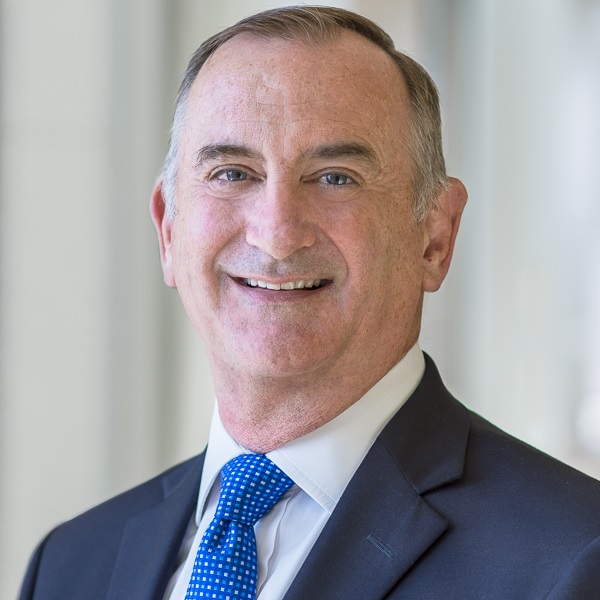
John Queen
Fixed Income Portfolio Manager

Paula Campbell Roberts
Chief Investment Strategist, Global Wealth, KKR

Apu Sikri
Content Director

Apu Sikri: Hello and welcome to our webinar on the macro and fixed income outlook for markets. I'm your host, Apu Sikri, Content Director at Capital Group. Today we will discuss both public and private markets, and joining me are two of our esteemed speakers. Paula Campbell Roberts, who's joining us from New York. She's the Chief Investment strategist for the Global Wealth Channel at KKR. And John Queen, Fixed Income Portfolio Manager at Capital Group, who's here with me in the studios in Los Angeles. Welcome both.
Capital Group and KKR early this year came together as partners to offer our clients investment vehicles that invest in both public and private markets. So we'll discuss both public and private markets here today.
So with that, let's get started. John, let's come to you first. The entire fixed income team wrapped up a two-day meeting where the entire bond group comes together, takes stock of what's happened over the last six, eight months, and sort of looks out. What were some of the themes that emerged from that meeting?
John Queen: Thanks, Apu. And thank you all for being here, and nice to see you, Paula. You're referring to our portfolio strategy group forum that, as you described it, is really all of our global fixed income team coming together, as well as our colleagues on the equity side and our Capital strategy research economists and political economists. And as you point out, the goal is to really come up with some thematic views. What's going on in the U.S. economy and globally, and what will that mean for markets?
The themes were that we view, in the U.S., that the growth is probably decelerating a bit, that there's going to be a bit of concern over lower markets and growth in the U.S. economy. Not that it's going to slow dramatically, but it's going to go from a very, quite robust level to maybe something a little bit more moderate. There is fair amount of support coming from significant AI and infrastructure spending, as well as ongoing fiscal support, although how long the government shutdown goes on may have some effect on that.
At the same time, you're also probably seeing a little bit easier Federal Reserve than you might otherwise see in what is the current inflation environment of slightly sticky inflation above the Fed's 2% target. So the theme in the U.S. is robust growth but maybe decelerating a bit. Sticky inflation above the Fed's target perhaps, but still a Fed that is maybe a little bit easier, a little more accommodative than you might otherwise expect there.
Outside of the U.S., China appears to be doing pretty well here, and Europe actually may see some fiscal stimulus, a little more debt taken on. So some positives in global growth, although nothing looks dramatic either way.
Within fixed income in the U.S. in particular, valuations broadly look expensive. Not terrible, but expensive, and we can go into some more details on that.
Apu Sikri: John, so picking up on some of the details, speak to us specifically about interest rate, where you see the Fed path and what does that mean for rates in our positioning or our thinking on positioning on interest rates?
John Queen: Yeah, it's pretty interesting because as I say, we see some moderating growth, but still robust growth, which would suggest rates would stay probably about where they are. We also see a little bit sticky inflation that might generally push Fed to be a little bit more restrictive, keep rates a little bit higher.
On the other hand, we do have that slowing in the labor market, which is a concern for the Fed. And as long as inflation stays within a band, the Fed is probably willing to be a little more accommodative to support the labor market and growth. So, as we look at markets right now, we think that broadly rates are probably a bit range bound. We're around 4% today in the 10-year. Maybe that can be a little bit lower, a little bit higher than that over time. Directionally, hard to tell if it's going to go anywhere in particular, but we think that's a bit of a range bound rate. On the other hand, the shape of the yield curve is a little bit more interesting. Traditionally, high inflation would suggest that the longer end of the yield curve would be pushing higher. At the same time, the Fed tends to control the short end. So if you have an easier Fed pushing short rates down, inflation may be skewing longer rates higher, you have what we call steepening of the yield curve. We think that's a fairly high conviction view that, as you can see in the chart that's up now, the yield curve has moved off of its flattest, it's most inverted, but it's in no way particularly steep right now. So there's more room for that to continue to steepen. We think rates look attractive, but again, with a higher inflation and a stickier inflation, we don't think that rates broadly are likely to come down a lot. So relatively neutral view on rates, but definitely a view that the Fed is likely to be a little easier, inflation is likely to be a little stickier. So the yield curve is likely to steepen a bit from here.
Apu Sikri: And steepen probably at the front end of the curve?
John Queen: Well, front end may come down a bit more as the Fed eases. Depending on what happens with inflation, long rates may stay where they are or may actually kick up a little bit.
Apu Sikri: That's great, John. And just to push you a little bit more on that, what's the risk to that view? Did you guys discuss that? What is the risk to this view in that meeting?
John Queen: Of course, as bond people, we're pessimists and so we're always thinking about how we're going to be wrong. There's a couple of standard risks in any interest rate view. One is the economy's weaker than expected, and that's really something that's there front and center. We've seen real weakening in some of the labor numbers up until the Federal shutdown. Now we're not getting those numbers on a regular basis anymore, so we're trying to look at other sources of information. But if in fact that is much weaker, we see a real downturn in the economy, that would be a risk to the view and broadly rates come much lower. We don't think that's likely because of the fiscal spending that, assuming we come out of the government shutdown, will continue. And because of the AI spend that we know is pretty well baked in, but always a risk.
On the other hand, sticky inflation, easier Fed, fiscal easing... That could lead to a big push up in inflation. And that really would probably be the more likely risk that you would see. A bit of a steepening of the curve, inflation starts to really pick up above 2 to 3% and go higher. Then rates would start to go higher. You'd probably see concerns in the equity market, concerns in credit markets, etc.
So those are your two main risks. Both of them are on the radar screens. Neither one is completely out of left field, but we don't think either is the most likely outcome here.
Apu Sikri: Great. Thanks, John. Paula, coming to you with the same question. Since that is the top most question in markets, which is, what is your view and KKR's view on the Fed's path, the trajectory for inflation, and what that means for interest rates?
Paula Campbell Roberts: Thanks so much for the question, Apu, and thanks to all of you for having me. On behalf of KKR, we're grateful for the partnership and excited for all the things we are doing together and will do together.
To answer your question about the path of inflation and rates, I'd first frame it to be similar to John's framing, but slightly different, especially in terms of how we're positioned vis-a-vis interest rates. I'd say we've been pleasantly surprised at how stable global growth has been, which is, to John's point, similar. But within global growth, the U.S. has been the unfortunate outlier where we've seen actually growth slow more than what you're seeing in some of our other counterparts.
That said, with the slowing of growth, which is sort of counter to some of the revisions we've seen in GDP the slowing of growth actually gives the Fed enough support to begin cutting rates. And that's exactly what we saw. So the Fed cut once so far. We believe the Fed will cut two more times this year. And then perhaps counter to the Capital Group view, we think the Fed will actually continue to cut next year against the backdrop of weakness that we are seeing most clearly in labor markets. And so that's a total of six cuts getting closer to a 3% neutral is where we believe the short end will trend.
What that means for inflation, we think inflation remains contained, but it does tick up a little bit on the back of the Fed cuts, as well as the support of fiscal stimulus. So we think inflation trends from 2.7 this year to 2.9 next year., So controlled, but still ticking up. So that's the picture I would paint overall.
In terms of, the last point I'll make is on the 10-year. We actually, and there are probability weightings or scenarios around this, but our view is that we stay around 4% this year and stay around 4% next year as well. So some steepening but mostly driven at the short end by rates coming down.
Apu Sikri: Great. Thanks for that, Paula. John, anything to add to that on the rates question?
John Queen: I would only add that what that really shows is the value of our partnership beyond just looking at these portfolios together. Our ability to have discussions about the economy and how we're seeing our parts of the economy, Capital Group obviously much more focused on big public companies and the kinds of areas we look at, getting the insights from our partners at KKR on obviously the overall economy as well, but the private side and smaller companies is really valuable in building a better mosaic, a better picture of the overall economy U.S. and globally, and I think makes us better investors. So it's fun to have the back and forth because it really shows the multiple inputs that are coming into the process.
Apu Sikri: Great. So John, let's move to credit, which is going to be a chunk of the discussion here. What are some of the themes that emerged as they relate to credit from that meeting, both in terms of investment grade and high yield?
John Queen: Well, the obvious headline theme is that spreads are very tight. So for most investors now, these are as tight as investment grade spreads on corporates have ever been, spread being the difference in yield between an investment grade corporate and an equivalent treasury. So, in theory, kind of that premium you're getting for the credit risk involved as well as slightly lower liquidity that credit tends to have. So that spread is quite tight historically. Now, I did manage money in the '90s back when spreads were tighter than this, but that was a long time ago in a slightly different environment. So as we look at the markets currently, both high-yield and investment-grade credit looks relatively unattractive on a valuation basis.
On the other hand, while, as Paula pointed out, and we talked about, we do see some slowing in the economy, we also see sufficient support both in corporate spending, in fiscal spending, and also in the Fed, that we think the fundamentals are actually pretty good for most companies, particularly the kinds of companies that are issuing in the broad credit markets on the public side.
And so you have tight valuations, but you also have good fundamentals. Technicals are also pretty good. Yield levels, even though spreads look tight, yield levels on investment-grade credit, particularly as you go further out the curve where pension plans and insurance companies and others are buying, actually look relatively attractive compared to the past 20 years or so. So there's some reasons that people are buying, there's some support for the fundamentals. Valuations don't look terribly attractive. So we're focused on diversifying sources of income, diversifying sources of risk, but not trying to be too afraid, too conservative at risk. We're looking for multiple areas to build in portfolio yield and building in, we think, attractive return opportunities. But we're not being too aggressive either, because, as I say, valuations are not terribly attractive here.
Apu Sikri: When you say yield levels are attractive, there's enough income there, for those that don't follow credit markets every day, give us a sense of what the yield levels are.
John Queen: Sure. If you thought about like a 10-year bond, around 4% on the Treasury, as Paula pointed out, we're probably thinking about high fours to low fives depending on credit quality of the investment-grade bond you're buying. Some people are going out to 30 years, you're getting almost a 4.60 on the Treasury there. You're getting additional spread on top of that, so 5- and-a-half to 6% on some of those. Those are not unattractive yields in the long run. You're still getting six-plus percent on high yield. Again, attractive yield levels, depending on where you are in credit quality on those, compared to recent history. Again, it doesn't mean they're a big buy. We're running in and saying, "Hey, this is something we should love here," but it does offer a little bit of counterpoint to that spread valuation piece that would be the first step at looking at credit.
Apu Sikri: And anything between investment-grade and high yield, that spectrum, John?
John Queen: I would say right now with spreads, the way we're looking at them and the fundamentals in the economy, we actually probably like investment-grade slightly better. But we also think that in the long run, you want to have exposure to both. And so that's sort of how we're thinking about it currently.
Apu Sikri: Thanks. Paula, what's your view on credit? As John said, spreads are very tight and across the credit spectrum, right? And some say actually in bubble territory, there is that view in market out there, especially in private credit, which has been in the headlines lately as well. Talk to us about your view on that and how KKR is thinking through some of those scenarios.
Paula Campbell Roberts: Absolutely. I'll start off by underscoring one of the important points that I think John made, which is that in a rate environment where the Fed is cutting, that is supportive of already pretty resilient fundamentals, and I think that's good for credit writ large.
The other point I'll make about private credit is just framing that remember that private credit came into the fore post-GFC as traditional banks retrenched. And so that demand, that backdrop still remains, and so from that perspective, I'm still very excited about private credit.
I think vis-a-vis the yield picture, you're absolutely right that especially in recent years as base rates climbed significantly, there was a lot of capital that was chasing this opportunity, and so you saw some spread compression.
That said, where base rates are still provides enough all-in yield so that on top of what John has just described, on a total return basis you're still doing well in places like direct lending.
That said, there are other areas of private credit. Most people focused on just the direct lending aspect, but there are other areas of private credit that one could argue are as or even more attractive than direct lending, especially as rates come down because they offer more fixed rate exposure versus what you're getting in direct lending, which at KKR we're lending to senior, high-quality companies, but that rate is floating, which served us well in 2022, for example.
Now as rates are coming down, having more exposure on the fixed rate end, it's very compelling. And so putting that all together, I'm still quite constructive on private credit.
Apu Sikri: Great. I will push you on that just a little bit, Paula.
Paula Campbell Roberts: Please.
Apu Sikri: So we do take questions from our audience. We get one from Harold who says, "How significant are the problems of Tricolor and for straight to private credit?" And while I don't expect you to speak to specific credits as such, what is the spectrum of underwriting standards that you are seeing in the private credit space?
KKR, clearly big investor, due diligence, all the... But the space broadly, how wide is the spectrum in terms of tight lending standards to very loose lending standards, and how do you think about the space and are there any sort of dangers that the public may not be aware of in that space?
Paula Campbell Roberts: Absolutely. I'd first start out by saying that the recent events in credits, the defaults that we're seeing, we view as idiosyncratic in nature and very commonplace at this stage of the cycle. As you can imagine, the credit box generally widening on the consumer side or late cycle behavior lending to lower-quality managers, it's typical to see that kind of default activity.
That said, we're talking about a tick up in default activity after record-low levels. And so we see this as largely idiosyncratic and reflective of where we are in the cycle versus anything that would be systemic. So I'd make that point first.
The second is with regard to your point about the different tranches or underwriting standards within private credit, many people think of direct lending only for a certain category of company, but there are different tranches from senior to sort of mid-level to lower level and sort of akin to subprime.
We operate at KKR only at that senior secured level. So those are larger companies, higher-quality companies where underwriting looks very similar to what you'd find in traditional markets.
And so an example of that is a $3 billion financing deal we did with Thoma Bravo and Flexera. So that's an example of what you would get at that level of company or that level of the market. That is very different from a smaller sub-$50 million debt deal that might occur with other managers.
So to your point, Apu, there is a spectrum. KKR stays at the higher end of the spectrum and we have a ton of experience and expertise doing so.
Apu Sikri: Great. Thanks, Paula.
John, one other question I'll ask about investment-grade high-yield, and this comes from Alexander who says, "What is the logic behind high-yield credit spreads being so close?" And I'm not sure I followed the full tenor of it, but I think the question would be are high-yield spreads too tight to investment-grade today relative to the risk? And I know we talk about how the quality of the high-yield market has improved a lot, right? Warranting some of that. But any color you can shed on that?
John Queen: Well, yeah, I mean, I would first say of course they're not too tight. The market's always right for the moment, and then it'll have proven to be wrong later on.
But I think the real answer here is what you were saying in your latter point which is you have a combination of things. And one really important piece of that is that the quality of what is the high-yield public market now is the best it's ever been if you look at number of companies in there that are double B versus single B versus triple C, et cetera. Real answer here is what you were saying in your latter point which is you have a combination of things. One and one really important piece of that is that the quality of what is the high-yield public market now is the best it's ever been. If you look at number of companies in there that are BB versus single B versus CCC, etc.
I mean, Paula was talking about post-GFC banks moving away and that's why private credit grew up. Before that you've had leveraged loans. You've had this ongoing move out of banks first into public high-yield markets and then into other markets.
And as companies have had more opportunities to finance themselves, you've seen movement of the lower-quality high-yield market out of public markets into different kinds of other markets. And so Paula mentioned there's senior all the way down to quite low-quality lending in that broad area, and so what that's led to is a relatively high-quality high-yield market.
At the same time, if you look at the high-grade corporate market by rating, it's pretty close to the lowest quality it's ever been. Now, I don't think that's an accurate description of the companies in there. Most of them have made intentional decisions to be BBB, to have more debt outstanding, because debt was very attractive. But the quality gap between those two is the lowest it's ever been. And at the same time, investment-grade credit is pretty long duration now. There's been more borrowing out the curve.
So, again, there's good reason that they are closer together than we would've historically seen. Is it too close together? Only time will tell, but I would say they don't seem unreasonable.
As I mentioned, our view from a portfolio strategy group level is we probably like IG a little bit more than high-yield here, relatively speaking, but there's internally plenty of idiosyncratic opportunities we see in both, and we want to make sure that we're invested in both across portfolios where that's appropriate.
Apu Sikri: That's great, John. And you make a good point that the high-yield market has gotten actually shorter and shorter in duration and the investment-grade market has gotten longer and longer, duration being the average of interest rate sensitivity.
John Queen: Yeah. And so you do get your money back faster in high yield, right? And so different risk profiles.
Apu Sikri: Which brings me to another question, Paula, which I had for you later, but I'm going to ask it now, because I also see it on the screen a little bit, which is how do companies decide when they're going to finance in public markets versus private markets and high-yield versus private markets?
That'll also tie it a little bit to the history of private markets, private credit markets, as to how it is that they grew so much. What is it that companies are getting there and how are they deciding this is where I'm going to get my money ?
Paula Campbell Roberts: It's a great question and the question is quite broad and not just related to private credit. Private markets have been around for decades, and KKR is credited as being one of the first, especially on the formal end of the private market, one of the first sort of LBO or private equity managers out there. I'd say in terms of private credit, it really has come into the fore post-GFC, as I mentioned earlier.
And with private credit, when you think about companies choosing to remain private or to seek financing in private markets, it really has to do with several factors. One, it's the fact that the private credit markets have actually become more robust and institutionalized so there's actually a lot of capital available. Two, that comes alongside the fact that, as I said earlier, banks have retrenched, so there's been an absence of capital on the one end and private credit managers have sort of filled the gap.
The other aspect of this, of course, is many companies, both on the private equity side or private credit side, many companies are just choosing to stay private for longer, and that's because in private markets you can focus on long-term value creation as opposed to being tied to sort of quarterly reporting, which takes you away from your core.
And so given that there are robust financing opportunities available in private markets, you're seeing companies decide then to remain private, get capital there, especially given that it's institutional and you can have as a counterparty on the other side a firm like KKR. So I think that's how a company might choose to do so. And then later on, once and if they decide to go public, they would seek financing then in some of the other markets.
John Queen: And correct me if I'm wrong though, Paula, you also have a number of companies that are public companies, have public financing, and want to do a project, say, that they don't necessarily want publicized in the same way with the full transparency that a public market might require. So they might partner with a KKR to do a private financing for some things and public financing for others.
Paula Campbell Roberts: That's exactly right.
Apu Sikri: Is that what's asset-based finance then, John? When they would tie it to a specific project per se?
John Queen: It could be a variety of things, and Paula probably better positioned to answer a lot of it, but asset-based finance doesn't necessarily mean it's a project, but it means there's a set of cash flows that they are-
Apu Sikri: associating
John Queen: ... securitizing and financing in a private form rather than a public form. And as I say, Paula could probably give a more complete answer on that.
Apu Sikri: Yeah, Paula, so just staying on that, I mean, the two main areas in private credit markets are direct lending and asset-based finance, right?
How much of each comprises the universe, if you have a sense of that, on a percentage, broad percentage basis? And then what are the pros and cons of investing in each area? If a person is taking a client into private credit investments, to have a sense of what it is, how much would it be asset-based finance and how much would be typically direct lending, and how are they different? What are the pros and cons of each?
Paula Campbell Roberts: There are lots of questions in there, Apu. I'll try to take them in-
Apu Sikri: Sorry, that was a lot. That was a lot. That was a lot.
Paula Campbell Roberts: No, no worries at all. So direct lending, just to set the stage, is largely a floating rate, you're lending directly to companies. As I mentioned, we operate at the senior secure level of direct lending.
On the other hand, you have asset-based finance, which is a newer tranche or newer area of private credit which is largely fixed rate, though it's more two-thirds fixed, one-third floating. And in that space, the lending is backed by a hard asset. So to give you a tangible example, I think a year or so ago we acquired, financed PayPal's Buy Now Pay Later book. This allowed consumers, for example, to finance their purchases with multiple installments. PayPal wanted to take that off of their balance sheet, so we acquired that book. That's an example of an asset-based finance sort of type of arrangement or deal.
In terms of how to think about them in the portfolio, I think they actually work well in tandem. As I mentioned earlier, in 2022, direct lending when stocks and bonds were underperforming, direct lending did quite well, right? Again, the backdrop I was talking about, the absence of traditional capital and the downside protection that direct lending offered. And as rates were moving up quickly, you benefited from being in a floating rate vehicle.
I'd say today where we're seeing rates come down over the next 12 months, having more exposure to fixed rate makes a ton of sense. So in a portfolio, I would say altogether it would make sense to have exposure to both and be able to lean into one or the other so that you can have exposure to fixed or floating depending on what the environment requires.
Apu Sikri: That's great. And couple of questions I'm getting as you're talking about this is, Jim for example asks, “What is the liquidity in these deals?” So to the extent that we're offering these in interval funds, which we can describe a little bit later what they are, but what is the liquidity and should that be a concern for an investor?
Paula Campbell Roberts: So when you think about private markets altogether, there is a spectrum of liquidity. So you have private equity on the one hand where you're in a traditional vehicle, that capital or that investment has a 5- to 7-year horizon. When you're thinking about liquidity of some of these deals, it can range, they're closer though to sort of 3to 5years versus on the private equity end of 5to 7.
And I wouldn't frame it as a concern. When we're working with financial advisors or with our partners, the benefit of being an investor in any of these vehicles is that you're getting an illiquidity premium. You're being compensated for locking your capital up, number one. Number two, you're getting exposure to parts of the economy that you're less and less able to get exposure to in just public vehicles. And so the way I would think about it for an investor is as you are mapping out your cash flow needs, your balance sheets, your income statement, if there's capital that you are able to have tied up for 3years, for 5years, for 7 years in some cases, you can then look at that capital to invest in those areas and obtain, therefore, excess return or superior return or an illiquidity premium for locking up that capital. So I actually think of it as a value proposition for incorporating private markets into your portfolio.
Apu Sikri: Great.
John Queen: I would say, in other words ...
It's a fever, not a bug, right? I mean, anytime you invest in any way outside of the risk-free rate, you're taking some kind of risk and deciding that the return on that is appropriate. Whether it's credit risk, loss, volatility, liquidity. What we want to do is make sure that we're giving our clients and shareholders an opportunity to avail themselves of all of those. And that's the beauty of this partnership is one of those we didn't really have access to and now we do.
Apu Sikri: That's a good way of putting it, John. You're saying you get a premium for taking credit risk about the risk-free rate and this is just another premium you earn.
Paula Campbell Roberts: Liquidity risk, exactly.
Apu Sikri: Yeah, yeah. Okay. That was more about credit markets than I think we've ever done on our webinar. So let's switch to equities for a few minutes. So John, you're a portfolio manager in our balance strategies and so you have a 360 view of financial markets and equity markets are very robust, seem to just want to continue to climb against a wall of any kind of news, but we are starting to see some softness in the economy as you alluded to in your opening remarks. How are portfolio managers in our balance strategies calibrating relative value between stocks and bonds, broadly speaking?
John Queen: Well, I think process-wise we're doing it the same way we always do, which is think about relative valuations of the two, the goals and objectives of the particular clients in a particular fund. The nature of the equities and fixed income we're buying in those. So if we're thinking about a more traditional balanced fund, certainly equities have been very strong. Valuations broadly don't look super attractive, so we're probably going to skew a little bit conservative there. On the other hand, the valuation level has been driven largely by AI and related investing. Other parts of the market don't look unattractive. And so again, depending on which kind of equities that fund is buying or is supposed to be buying, is heavily skewed to, that will adjust that view somewhat where the fixed income is, so is it more broad-based investment grade? Does it include some high yield? What are we doing on both sides of that? So we're going to calibrate relative valuations of those few things.
As I say broadly right now, valuations at the top level of the equity market look a little bit stretched, or more depending on which stocks you're looking at, and so we're probably going to err a little on the conservative side on that valuation, stocks versus bonds, but only a little bit. Again, we've got significant AI investment that's really baked in for a while now. We've got fiscal support, as Paula and I have both said. We've got the fed likely to be easing. Those are all good for risk assets. And so we don't see some kind of catastrophe coming. We just want to respect valuations and adjust portfolios a bit accordingly.
Apu Sikri: Great. So depending on the strategy, if growthy, then you barbell it with more fixed income. Otherwise ...
John Queen: Potentially, depending on the nature of the investment strategy, right.
Apu Sikri: Great. Thanks, John. Paula, I asked John the question about his view on public markets where valuations may be broadly speaking and visibly fixed income. I want to ask you about private markets and your vantage point on private equity markets. What are you observing there if you can speak on both? The dynamics valuations in the classic sense may not be the right question, but the health of those markets and what you're seeing.
Paula Campbell Roberts: Absolutely, and I think it's actually a good idea to start on valuations. We undertake a pretty robust process of understanding expected returns so we look at how asset classes on the public side, as well as on the private side, have performed over the preceding 5 years and how we expect them to perform over the next 5 years. What I'd note, I agree completely with John, is over the past 5 years, public equities have delivered, especially US public equities. But because valuations are so high today, because we're talking about a new investment regime where we expect higher for longer, inflation volatility remains higher, rates remain higher, and the reliance on multiples will be more difficult going forward.
Apu, I think this is what you're leaning into. There have been a lot of questions over the past year about DPI or private equity monetizations and the IPO market and whether that was going to constrain PE's ability to deliver those returns. And I'd say a couple of things. One, even though we've had a lot of volatility in markets throughout this year, we've seen PE-backed exits increase 70%+ year-over-year so that is a big change. I'd also say even beginning this summer, we've seen the IPO market really begin to thaw. And so that's good for all managers and for private equity overall, but I'd also say that for a manager like KKR, only 20% of our exits actually rely on IPOs. I do think it's a good thing, though, that overall the market is healthy and supportive of PE.
And then maybe the final point that I'd make is with regard to the point that John and I are both making, which is as rates are coming down, that's supportive for a number of asset classes and private equity is certainly at the center of that where rates coming down is supportive of more M&A activity, both the acquisition and on the exit side. So it will be a good time to be leaning in, I think, to private equity for some of those reasons.
Apu Sikri: Thanks, Paula. You said the IPO market is thawing or has thawed a bit. We saw one that was popular, Circle, come to market. Also, we continue to see Electronic Arts in the reverse direction, a very large company going private. To the extent that as you look out over the next couple of years, does private equity need to release some of these companies to exit to use the capital for other investments, or is there enough of a flow of capital that that's not an issue? Give us a sense of that dynamic.
Paula Campbell Roberts: Absolutely, Apu. And I think that brings to light an assertion that we try to make very clearly at KKR is that many people paint private equity with a broad brush, but there are so many different types of private equity firms. Elisa Wood often says there are more private equity firms than there are McDonald's franchises. But all that to say is that there's a huge dispersion in how private equity firms have come to market and will come to market. What I'll walk you through is I think in 2021 when interest rates were essentially at 0% and there was a lot of exuberance in the market, there were a lot of acquisitions during that time at pretty high valuation levels. What people, what managers who over-invested during that time believed was that multiples would allow them to grow their way out or to perform their way out of making those high-priced acquisitions.
Fast-forward, those managers are finding it difficult to exit because they acquired at such high levels. So what I see happening over the next few years in terms of trends is that those managers are going to be pressured, so forced sellers because their PE funds are nearing the end of their term, and so they're going to have to be forced to sell those companies at valuations that are lower than they would've liked. The good news is that managers who have a great deal of capital and have been more disciplined will be able to acquire those companies where there is still a value creation playbook to be implemented.
So I think you're going to see, putting that all together, a bit of a shakeup. I think this, in sum, will be a good vintage for those managers who have good capital, an abundance of capital, who are able to discern good companies that are being sold at valuations that may not be desirable for the seller, but where the bones of the company make it a good acquisition and are able to apply a playbook to it. And managers who are able to do that are going to deliver well for their investors and those who are for sellers, of course, won't do as well. So all that to say is that there will be dispersion in PE performance over the next 5 years, so manager selection becomes even more important than what we've said historically.
Apu Sikri: Great. Anything you would add to that, John?
John Queen: No, I think Paula summed that quite well.
Apu Sikri: Yeah. Very well, Paula. Thank you. Yeah, yeah. A persistent question I'm getting on the tape here is people worry still, John, that is there a bubble in the markets. And things have been going well, but there are so many exogenous factors that should any one strain of factors get too far stretched, be it inflation, be it tariffs, be it something else, are there factors that could lead to a little bit of a correction in this market?
John Queen: Well, to your last question, yes. Of course. There are. That's always the case. I mean, one of the things that pops up regularly in meetings that I have is people ask the question, "Well, things are so uncertain right now." And I ask them if they could remind me when things were certain because that would be really helpful for me to know. I don't recall that time. The fact is, yes, valuations are stretched. When valuations are stretched necessarily, you have a bit more risk that those valuations are overestimating what will happen fundamentally, in technicals, whatever. And so the chances go up a bit for something to happen. That is very different from saying there's a bubble.
To have a bubble, you have to have not only a misallocation of capital, but it has to be done in such a levered way that it really creates potential systemic issues coming out of that. I don't think we see that right now. So on the public side, you have incredibly highly valued companies. Some people are comparing it back to the dot-com bubble. The difference is that the most highly valued companies right now are also the most profitable companies in the history of the world. And so maybe the valuations are still too high, but they're not companies that we're hoping will make money someday. They are companies that are doing incredibly well right now. And so if those revenue streams are overestimated and valuations are too high, prices can come down. That is not the same as saying there's a bubble and things will collapse. So yes, there are risks. There are many risks. We talked in the beginning about a couple of the risks of the bond market. There are additional risks, always geopolitical risks, always policy risks, always some exogenous factor, and it is never the thing that most people were concerned about. So yes, that's always the case. If it wasn't, we wouldn't have a market. But I don't think there's a bubble. I think there's good reason to think there's not a bubble. And it's not to say that stocks will keep going up at 16% a year. That's not the same as saying there's a bubble and they'll collapse.
Apu Sikri: That's very helpful, John. And Paula in the private equity space as well, the companies that are getting financing are business models that are sustainable on the way to profit-making. How would you characterize that broadly? I guess there's a little bit of nervousness around also some of the venture capital and sort of financing where a model... where the growth is future out. It's all a matter of how far out you need to project those cash flows to make the assumptions on returns.
Paula Campbell Roberts: Well, that is where I would definitely distinguish between venture capital and private equity. In venture capital, you have a great deal more risk, and perhaps an unclear path to profitability. Where we operate in private equity, there's a very clear path, cash flowing, positive, mid-sized to larger firms. So that's not an issue. And that means the risk is much lower. So that's less of an issue. The other thing that we do, and we've developed a robust process around, starting decades ago, is we're not taking shots in the dark when we're looking at investing in companies. We're doing a bottoms-up and top-down analysis of every company we invest behind. So we count on our private equity managers, our PMs, who are experts in their fields and are looking at companies that have an unlocked potential if they are taken private or have access to the playbook that a firm like KKR can offer to make a good company even better.
So we've done that time and time again over a 50-year period. That is really where we're focused on versus taking a shot in the dark. And then the other thing, in addition to the sort of the PM selection process, we also have a very robust team that does top-down analysis of every deal that KKR does. So we're looking at working in partnership with our portfolio managers. The team would like to make this acquisition. How does that face... Making that acquisition, what do we think about GDP growth or interest growth? And what is that belief? Does that impact what price we should pay for that company? Do we need to hedge currency or interest rate risk? We're evaluating geopolitical risk to make sure that even though this might look like a great investment as a standalone, that in the broader context of what's going on around the world, there isn't some risk that we haven't taken into consideration.
Apu Sikri: Great. That's very helpful, Paula. Thanks. John, I'm going to ask a baseline question as we start to make our way towards the end of this webinar, which is that, why does Capital Group think it's important to make private markets accessible to our clients? What sort of outcomes should investors expect?
John Queen: Well, I think if you look at what institutional investors have done for decades, the largest university endowments, pension plans, etc. There has been a large investment in alternatives, and particularly in private markets. They're not stupid. There's a good reason they've done that. As we talked about earlier, because of the combination of credit and liquidity premium, you get an excess return expectation from private markets versus public markets. They are less liquid, so you're getting that premium there, but also you're getting a different behavior, different pricing behavior along the way. So you're getting return and you're getting diversification benefits from being in private markets broadly.
And so as we've looked at what our clients and shareholders can take advantage of, it appeared to be a clear gap that if the most sophisticated investors are buying these things, why shouldn't our clients be able to do the same thing? And so it's been a really intentional process here to think about how to do that. And starting with the private credit, now as you've pointed out, we've announced the public equity side. We're continuing to broaden that access. We think it's beneficial to their long-term success in their portfolios.
Apu Sikri: Great. That's helpful, John. Finally, let me come to the structure of the public-private market-
Paula Campbell Roberts: Apu, may I add one more to John's point?
Apu Sikri: Yeah, sure, Paula.
Paula Campbell Roberts: Which is the one critical piece that we haven't talked about, though we talked about this in the prep call, John, is just this new macro environment where we're talking about higher inflation, higher inflation volatility, and higher rates, that fundamentally changes the relationship between stocks and bonds. John and I have talked about higher correlations. What we're talking about is offering another way to win. So when stocks and bonds are highly correlated and moving in the same direction, have access to another type of strategy that allows you to achieve your goals even when stocks and bonds are underperforming. So what we're talking about and why I think we're making this available to advisors is really just equipping end clients and advisors with more ways to win and more ways to achieve goals. So just didn't want to miss that point because I think that's a critical reason why we're doing this.
John Queen: Yeah, incredibly valuable point. Thanks for bringing that back up. There was a long stretch where stocks and bonds were super negatively correlated. It was an easy hedge. As Paula pointed, 2022 changed that. I don't think we're in a '22 environment, but we're not in that long stretch, super negatively correlated environment either. So another way to win, as Paula put it is exactly right.
Apu Sikri: Round out the risk profile as it were.
John Queen: Yep.
Apu Sikri: And then John, why in an interval fund, what is it about the structure of that fund that makes it amenable to a private-public?
John Queen: Yeah, so when we put together... And I'll focus on the credit side here because obviously I'm not involved on the equity one, but the combination of public and private doesn't get rid of the fact that the 40% of the portfolio that's in private doesn't have easy daily liquidity or any real liquidity to sell in a normal sense. So what we wanted to do is create a combination that where one plus one equals three. We have the benefit of liquidity from the public side. We have the benefit of the illiquidity premium from the private side as well as the expertise of KKR in managing that. And putting those two things together gives us, we think, a better whole.
That said, if you had a normal mutual fund construct, the need for daily liquidity is a little bit tricky when you have 40% of your portfolio that doesn't have that kind of liquidity. The interval structure gives us a little more rigor around how we can take care of the profile of the fund, the liquidity of the fund, meet the needs of our shareholders when they need to take money out, but also keep the overall structure looking the way it's supposed to. So we've put together what we think is a still quite liquid opportunity with more than normal liquidity from a normal interval fund, but takes advantage of the public-private combination.
Apu Sikri: Great. Paula, what would you add to that?
Paula Campbell Roberts: I think this has been one of the biggest innovations in financial markets in the past 5 or 10 years, which is to make available, to use John's point, the types of investments that endowments and foundations have relied upon for decades to make it available to individual and wealth investors. And so the innovation and the portfolio construction that's gone into thinking about combining, in this case, public credit and private credit, allowing for sufficient liquidity to meet the needs of investors, I think is outstanding because it allows for broader access to some of these vehicles so that individuals can benefit from the illiquidity premium, from the diversification and the yield. So I think that's a win-win across the board. So that's all I would add to John's point.
Apu Sikri: Great. Thanks for that. So I'm going to ask each of you a question that is a tradition in our webinars, which is, Paula I'll ask you first, what is an interesting book or podcast that you've enjoyed recently?
Paula Campbell Roberts: I'm reading a book on longevity, which talks about data-driven approaches to extending your life, because I want to live forever. And I highly recommend it. I actually wrote down the name, I think it's the Age of Longevity, but I highly recommend it because it gives sort of tactical ways to lead a healthier life while we're all doing our best to deliver for our firms and our families.
Apu Sikri: The Age of Longevity?
Paula Campbell Roberts: Yes, I think that's what it's called.
Apu Sikri: And the author, if you'll give it to us, will put it in our-
Paula Campbell Roberts: It's called Super Agers by Eric Topol.
Apu Sikri: Super Agers by Eric Topol. Okay, thank you for that. John?
John Queen: Well, I'm reading, actually in the middle of it, so I haven't finished it yet, but I'm reading The Wager. It was a recommendation from Karl Zeile, who I work with at Fixed Income, by David Grann. If the name doesn't get you right away, the subtitle, A Tale of Shipwreck, Mutiny and Murder should pull you in. So perhaps a little less personally useful than Paula's recommendation, but a fun read.
Apu Sikri: That's nice. And then final question for each of you. What are the three questions then investors should ask when allocating to the combination of public and private markets?
Paula Campbell Roberts: I'd say first, how much liquidity can you give up? So being realistic about that, going through that cash management exercise. I then would also say being clear on what goals you have in mind. Are you looking to increase yield? Are you looking to protect against the downside? Are you maximizing return? Because that will inform the how you invest in private markets. And then finally, I would say, what themes are you looking to get exposure to? Do you have high conviction on a particular region or a particular sector? Being very clear on all three of those so that when you're investing or choosing a vehicle, you're sure that you're getting both the... You're addressing the goal as well as the access that you're looking to solve for.
Apu Sikri: Thank you, Paula. John?
John Queen: I would largely echo Paula's comments. I think what is my current portfolio structure and where would a public-private partnership fit in there? What needs do I have? What's my horizon, et cetera? The usual questions I think you would ask in looking at a portfolio. And then where can the extra yield or return expectation and liquidity premium come in most handy? I would add my third one, who's managing them? And I think-
Apu Sikri: That's nice, John.
John Queen: ... that's a really important and... Incredibly important part of the question.
Paula Campbell Roberts: I completely agree.
Apu Sikri: Great. Thank you and thanks for a great discussion both of you. Paula, thanks for joining us at Capital Group. John, thanks for your thoughts. I think what we heard was that macro risks are always there. Inflation could be a little bit sticky. Growth could slow a little bit more, but corporate fundamentals remain strong and that's what underpins both private and public markets in that evaluations are high. Maybe you get a little bit of a pullback, but we are not seeing any bubble because companies that are strong and are highly valued are delivering on those earnings and profits. So with that, we will close it out. Thanks. That's all we have for today. Hope you enjoyed the webinar.
And if you want to learn more about private markets, you can access some very good course materials on our website at capitalgroup.com and in the URL provided in the resource section. And as a reminder that if you would like CE credit, please fill out the form, which is in the top link in the documents tab, in the upper right of your webinar player. Finally, please don't forget to join our 2026 Outlook webinar on December 18, hosted by my colleague Will McKenna, and it features chief investment officer Martin Romo and fixed income portfolio manager Pramod Atluri. That's always a good one. And then in January, on January 15, we'll bring live our CEO Mike Gitlin, who will discuss the future of industry and market trends. So please mark those on your calendars. And that's all we have today. For any questions or comments, please contact your relationship manager. Have a great day.
1 hour CE credit for CFP, IWI and IAR*
Investors are reassessing traditional portfolio allocation strategies as their private market access expands. With macroeconomic uncertainty clouding the horizon, how should investors approach public and private allocations?
Join John Queen, fixed income portfolio manager at Capital Group, and Paula Campbell Roberts, Chief Investment Strategist of KKR's Global Wealth business, for a candid discussion on the future of public and private markets. They will also share their outlook for the U.S. economy, interest rates and inflation. Stay for a live Q&A and bring your toughest questions. You will hear about:
- The outlook for credit markets as we head into 2026
- How public and private market assets can help meet portfolio objectives
- Why private credit can complement high-yield bonds
- Considerations for public-private investments and investor risk profiles
Don’t miss this chance to hear directly from our investment professionals. Ask them questions and earn 1 hour of CE credit. Register now to save your seat.
Event date:October 23, 2025
John Queen is a fixed income portfolio manager with 36 years of investment industry experience (as of 12/31/2025). He holds a bachelor's degree in industrial management from Purdue University. He also holds the Chartered Financial Analyst® designation.
Apu Sikri is a content director at Capital Group with 32 years of investment industry experience (as of 12/31/2025). She holds an MBA in finance from New York University and a bachelor’s degree in marketing and communications from the City University of New York.