

Featuring:
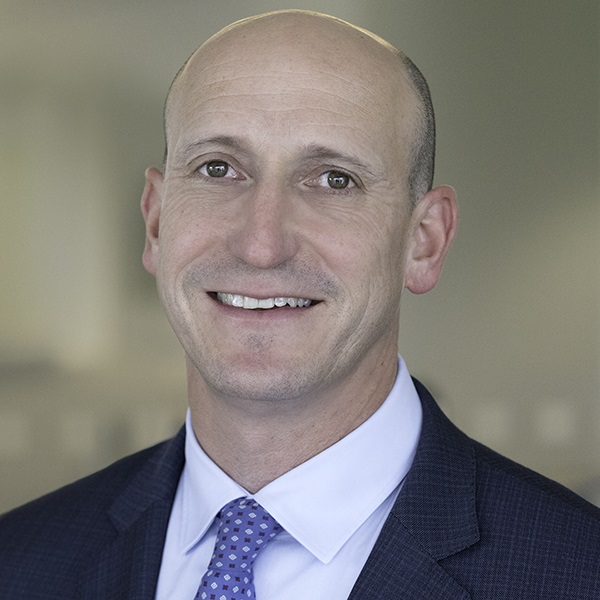
Mike Gitlin
President and Chief Executive Officer
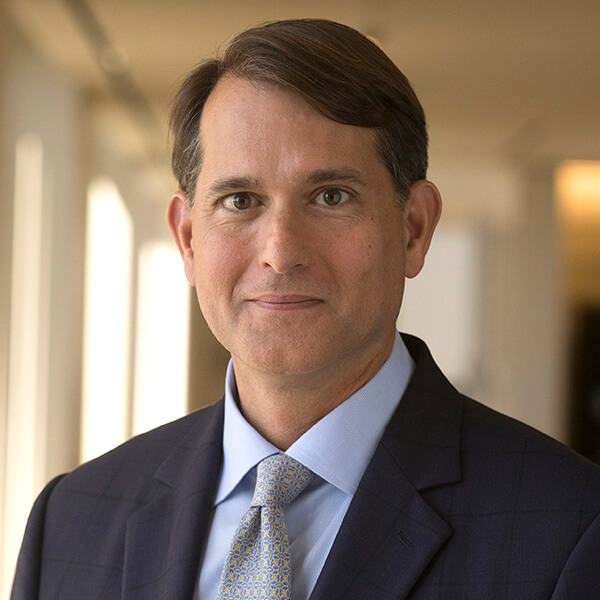
Greg Miliotes
Portfolio Manager, Investment Group Chair
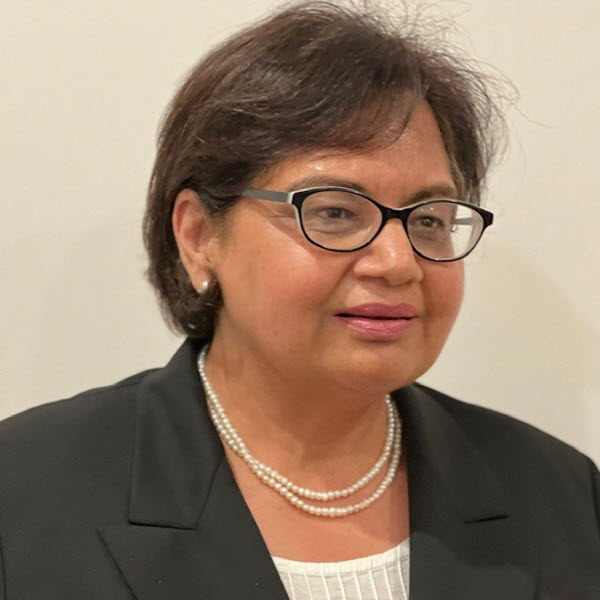
Apu Sikri
Content Director

Apu Sikri: Hello, and welcome to our webinar on future industry and market trends. As you may know, stock and bond markets have delivered impressive returns in 2025, even as the geopolitical environment remains challenging. Meanwhile, the asset management industry is undergoing a transformation, and it is embracing new trends and realities. To discuss what's in store for the future and the major trends that they are seeing in markets and in our industry, we have with us today Capital Group President and CEO, Mike Gitlin, and portfolio manager Greg Miliotes. Mike and Greg are both members of the Capital Group Management Committee. I'm Apu Sikri, content director at Capital Group, and I will be your host today. We'll cover three major areas, the asset management industry, what we are seeing in capital markets, and finally, Capital Group's own strategic initiatives and plans. Mike, let's get started with you. You have traveled extensively in this past year in the U.S., across Europe and Asia. What is on top of mind for clients globally?
Mike Gitlin: Well, Apu, always great to be with you. I think what I hear most from our clients is the need to diversify away from concentrated benchmarks. And it's not just the S&P 500. It's benchmarks in different geographies as well. They're looking for active management for diversification. It's a reminder that there are 50,597 public companies in the world. Over 50,000, a lot more than just seven. Some of those seven companies are exceptional companies. We own many of them, and in good size as well. But then, there's the big and, so what else? In this broadening, there's so many opportunities. Just look back to last year. If you look at MSCI Europe, and how Europe did, if you assume you had the appreciation of the euro as well, the stock market was up 35%, twice the return of the S&P 500. Emerging markets, very similar. Korea was up 100%.
Korea and Japan are going through this massive corporate governance change. There are tons of opportunities in individual stocks, in Korea, in Japan. Europe, as I mentioned, the return, it's not just the return, it's the fiscal stimulus. You think about the fiscal stimulus we're seeing in Europe, and it's a game changer for several industries and companies. India, tons of opportunity. The median age in India is 29 years old. There's going to be opportunity. The median age in the U.S., by the way, is 40. In China, it's 40. India, it’s 29. The secular growth that you can see in India is also interesting. The message is they're looking at a broadening and lots of opportunities around the world.
Apu Sikri: It's a great start, Mike. Thank you. Greg, let's come to you. You are a leader in the Investment Group and you also meet a lot of companies as a portfolio manager. Can you give us a sense of what is top of mind for corporate managements as they calibrate this changing investment and economic landscape?
Greg Miliotes: Sure. I think there are three major macroeconomic and geopolitical topics that are really top of mind for companies. First, start with tariffs. Going back to 2025, it was a period of real uncertainty. Companies were struggling to understand what were the tariffs, what would be the impact on their business. There wasn't a clear landing spot. Companies were far more conservative in how they thought about their spending patterns. You fast-forward to today, policy clarity's improved, so we have certainty on the rate itself, and the rate is less than feared. We're about roughly 11.5% average tariff rates versus headlines of maybe 18% six or eight months ago, so tariffs are still there, but they're now understood. And it's more about adapting in 2026.
The second is around geopolitical tensions. And we're likely to see continued regional conflicts, continued trade tensions. This increases the costs and the complexities for companies. Certainly, we've seen the level of uncertainty come down year over year, but that overhang will continue to exist. What comes next? You're always going to be thinking about what's around the corner. Companies are increasingly considering it just part of working in today's global environment. And similar to the tariffs topic, how best should they adapt?
And then, the last one is really on global inflation and interest rates. We're clearly higher than we were in the past decade, pressuring margins. Increasingly, companies are being forced to rethink their sourcing and their production strategies. And to address those pressures, how do we get the operational efficiency we need? And oftentimes thinking about increased cost to customers and consumers.
But, despite all those challenges, it's really important to talk about corporate earnings. And corporate earnings are reaccelerating in 2026. And when you look across the globe, Europe and China, earnings growth are expected to be close to 11%. Again, we're always looking for those strong management teams, differentiated products and strong moats. I think in 2026 in particular, there's a real focus on those globally flexible companies who will be best positioned to navigate this kind of environment.
Apu Sikri: So tariffs, geopolitical tensions, inflation, and interest rates, not a surprise what's on top of mind of management. But, you're saying that the corporate earnings will remain strong, and companies know how to navigate this environment. Any example you would highlight that with, Greg?
Greg Miliotes: Yeah. Thinking about companies that are nimble in this environment, what comes to mind is Eli Lilly, and really on two fronts. I think the Trump administration on the first front has been very focused on reshoring, bringing back that U.S. manufacturing to the U.S. And what we're finding is that Eli Lilly spent maybe $23 billion in total CapEx through 2020 through 2024. Knowing that that was an investment that the U.S. government wanted to see, and it aligned with their business practices, they committed an additional $27 billion in U.S. manufacturing. Doubling their original commitment in response to government focus, that would be one element.
Secondarily, we know the Trump administration's focused on U.S. drug pricing. And in November, together with the U.S. government, Eli Lilly announced a way to reduce prices and expend access for patients. In particular, they're reducing the cash costs for their weight loss drugs, and the U.S. government is committing to ensure that Medicare patients are eligible for those Eli Lilly weight loss drugs. When we're thinking about thoughtful management teams, this is the kind of approach that we want to see, given all the policy uncertainty that exists.
Apu Sikri: That's great, Greg. I want to stay for a minute on the asset management industry. Mike, every survey suggests that the asset management industry will consolidate in the years ahead. What are you seeing, and how does it potentially impact clients?
Mike Gitlin: Well, it's interesting. Over the last five years, all the surveys said that. We're seeing it in the numbers now, real numbers. If you look at 2025, it was a record year for M&A for U.S. asset managers. There were almost $40 billion in transactions, twice the level of last year, and there were 378 deals. That's the most number of deals in asset management in the last 45 years, so in a single year. The point is it's real, it's happening. The big are getting bigger. We are seeing consolidation. I don't think there's a single partner of ours who's not shrinking the lists of partners they have.
And they're finding the 118th asset manager that they have in their portfolio isn't necessarily adding to returns, so they're shrinking the list, and then they're asking more from us. It's not just investment solutions, it's also business partner, and how we can help them manage their business. If you think about passive, the top five market share in passive is about 90%. Ninety percent from five participants in passive. In active, the top 10 are 60%. That has grown consistently over the last 20 years. If you ask me, I think in the next five, 10 years, the top 10 active managers will probably be closer to 65 or 70%. The big are getting bigger. Our market share in the U.S., when you look at mutual funds and ETFs combined for active, is 17%.
And I want to be clear, we measure ourselves by our investment results, not our market share, but with the big getting bigger, adding more resources, being more relevant to their clients, delivering more services, there's no reason that wouldn't be 20 or 25%. As a lot of our partners say, I have a limited number of passive partners, and I'm going to limit the number of active partners I have as well. Again, our focus, when I spend time with financial advisors around the country, around the world, I love to hear we're rated number one in trust. That's a U.S. stat. We're rated number one in thought leadership. You and others help in that. And we're also rated number one in practice management, how to make financial advisors even better at what they do. If we can continue that and avoid expensive hobbies, I think we'll be in pretty good shape.
Apu Sikri: That's great, Mike. Fewer partners and the expectation is that in addition to results, you also deliver on a host of services and the needs of our clients.
Mike Gitlin: Absolutely.
Apu Sikri: Yeah. Let's come to capital markets. Greg, global markets have been in a bull run for the last three years or so, and technology companies have been in the lead in the U.S. Outside the U.S., the value stocks have been in the vanguard. Now, things are changing a little bit. Interest rates are rising from a decade low. How would you describe your outlook for public equity markets?
Greg Miliotes: Yeah. And as you look back at last year, we had a year that had uncertainty in the market. We saw slowing growth. As we come into 2026, I think the focus will be more about resilience. And we're very constructive on 2026 overall, but we think there really is a need to be highly selective in terms of investments. When you think about the Magnificent 7 in 2025, only Nvidia and Alphabet outperformed them, were in the top 100 of S&P 500 stocks. So less dominance by those mega caps. Looking across, 60% of stocks are now trading above their 200-day moving average, so increased breadth and equities. You combine that less dominance by the mega cap and increased breadth, that really argues for, stock selection will continue to matter in 2026. And then thinking about themes, I think there are three major themes that all fit under that umbrella of resilience.
First, participating with growth. We are expecting to see solid earnings growth globally. If you look at the S&P 500 EPS, we grew 11% in 2025, and we're seeing that double-digit growth in many international markets. Some of the tailwinds that are helping, obviously lower interest rates are helping. We're seeing a boost from the One Big Beautiful Bill, in particular for those companies in the U.S. We're seeing post-tariff certainty, and we're seeing elements of productivity boosts from AI.
A second major theme, really thinking about defending with dividends. Dividend payers look very compelling today. And we're seeing a broad availability of yield outside the U.S. If you look back over time, dividends have been historically resilient. Look back at 1999 through 2002. This is where we found we got positive returns. The market overall was negative, so clearly not calling for a bubble in '26, but recognizing the appeal of dividend payers within equity portfolios. The third is to diversify internationally. We talked a little about that strong growth that we're seeing, that double-digit growth internationally. And you're getting valuations that are more attractive than the U.S. Europe's trading at 15 times, emerging markets at 13 times for that very strong 18% growth, Japan at 16 times versus the S&P 500 today at a roughly 22 times. For that solid growth exposure internationally, you're getting very compelling valuations.
Mike Gitlin: Yeah. The one other thing that I would just add is you're also getting non-dollar exposure.
Greg Miliotes: Yeah.
Apu Sikri: Yeah.
Mike Gitlin: And non-dollar currency exposure is very good to have. I think that's a little bit of a secular trend where you want to have more non-dollar exposure in the next few years than you did probably over the last decade, so that's an added advantage.
Apu Sikri: And that currency translation can be quite a bit.
Mike Gitlin: Well, back to the euro, that was a huge boost to your total returns is buying the euro to buy the stocks in Europe. You won twice last year. I think there's still some appreciation we can see in non-dollar currencies.
Apu Sikri: Yeah. And Greg, the markets are broadening, you said, and participate in the growth that you're seeing in the U.S., defend with the dividends, and then, the international diversification that Mike also highlighted. A few questions I'm seeing on the screen here is around headline risk. Obviously on top of mind of investors, Venezuela was the headline at the beginning of the year. We're seeing a few headlines on Iran right now. How do you think about headline risk, geopolitical or otherwise in today's markets? Greg, if you can take that.
Greg Miliotes: Sure. There's always going to be headline risk. I think our focus needs to be on what are the long-term impacts of them, so maybe take Venezuela first. Near term, primarily going to be driven by political and humanitarian dynamics. There's relatively limited economic fundamentals to be discussing. Outside of oil, they don't have a lot of trade and global financial integration, and even within oil, it's worth remembering, yes, they have extraordinarily large reserves, but relatively low volume production.
So, we think it's a relatively limited long-term impact from Venezuela, but I think as you said, Apu, there are some lessons to be discussed. As we think about geopolitics in particular, we are in a period of elevated valuations. We have lingering inflation, public debt concerns. In that environment, there's always going to be something to cause concern, and it leads to an argument to be made, we can get periodic pullbacks. We've seen S&P pullbacks of 10% or more every 16 months or so. In fact, the last one was in the first half of '25. So, knowing that valuations are elevated, it is possible to see those pullbacks and just recognizing the environment we're in, but still see lots of constructive opportunity longer term.
Mike Gitlin: Yeah. The only thing I would add to that is, somewhere in our content library, we have a great slide that shows the last 100 years and all of the geopolitical events that have occurred, the big ones over that century, and the chart behind it is the S&P 500. Trying to trade geopolitical events is a really bad idea, and so acknowledging there have always been, are, and will always be these major events around the world, how do I think of great companies that have built moats around their businesses and are growing earnings, rather, than can I try to trade one of these news stories, is a much better long-term plan.
Apu Sikri: Yeah, and we get a lot of requests for that chart too.
Mike Gitlin: Yeah. It's a good chart.
Apu Sikri: Yeah. Greg, another question that we get a lot from our clients is around the enormous spending that we have on capital expenditure, especially as it relates to AI, artificial intelligence. The spending by the Mag Seven, the investment in the data centers, and then the funding that is required of that in the capital markets. And some say it's a necessity of the times as we move to the next chapter of technological developments, but there's quite a few that say, are we in a bubble? That's the question that we get, really, and so it would be helpful to get your thoughts on that and see what you make of it.
Greg Miliotes: Yeah, and this is really the question today. Our belief is no, it's not a bubble, but clearly a signpost to watch. I think the important part for really discussing this is having a thoughtful framing, so maybe taking two different approaches. From a fundamental aspect, AI demand is greater than supply. I mean, as we see token growth doubling every two to three months, which is really the volume of AI in the marketplace, you're seeing demand currently outstripping supply. Additionally, you're seeing adoption rates that are very high, almost 40% on average for many companies, and in some industries, upwards of 80% adoption rates. Additionally, the returns on investment are there, and I think that's very important as you think about these investments being put out. Nearly $2.40 in savings for every dollar spent, according to our economists, so you're getting very good returns on those dollars.
Then, finally, the companies that are putting these investments to work, they're highly cash-generative, so they have that cash to invest. Take that frame and compare it to the 1990s, where we see the most amount of comparisons. It was very different, sometimes actually the inverse of what we just talked about. Adoption was low in the very early days of the internet. ROIs were very poor, and many of these companies were not cash-generative or making any cash at all, so it feels very different to where we are today from a fundamental aspect. I think another way to look at is from an investment cycle. So, we look at all of our tech investments: hardware, software, data centers, R&D. Taking them all together, look at their growth rates. They compare quite favorably to the earlier mid ‘90s, as opposed to the late ‘90s, so there could be a lot of runway here from AI, looking at it from both the fundamental aspects, but also from investment cycles.
I think, obviously, you talked about it in your first question, Apu, but there are really places we want to watch, and I think four places in particular come to mind. The technology needs to continue to get better. So, seeing that innovation, seeing on product cycle on product cycle increased impact, very important. Second, really think thoughtfully about debt financing. That's where you find you're getting bubbles. They typically involve leverage. We're not seeing it yet, but you want to watch to see if they're taking on additional debt for that spending. Third is around economic cycles. Typically, bubbles have occurred in late economic cycles, which are very vulnerable to shocks. Then, fourth and finally, you put them all together. Where you find the most vulnerability is getting leverage, late-cycle economies, and you get into a monetary tightening cycle. And that's really when bubbles burst.
Apu Sikri: It's a classic bubble. Yeah.
Greg Miliotes: Exactly.
Apu Sikri: Yeah.
Greg Miliotes: So bottom line, we don't see any similarities today. We still see a lot of runway, but clearly something to watch.
Mike Gitlin: And this slide that we have up, people should print out that slide, the one that shows the difference between the dot-com bubble and today, because people will ask, "Is this another dot-com bubble?" The answer is it is dramatically different. That's not meant to be a speech in support of AI. It's meant to say they're just dramatically different. Greg talked a bit about that, so print this out and say, look, AI is, in all likelihood, a general purpose technology. There will be long-term adoption. There'll be ups and downs in how the market values AI, but is it like the dot-com bubble? Not even close. In terms of the earnings and the maturity of the companies, they're just dramatically different.
Apu Sikri: That's helpful, Mike. Greg, any risks? Any near-term risks that you see to this outlook?
Greg Miliotes: Well, I think if you look back at the bubble that everyone's concerned about, the internet bubble of the 1990s that Mike was referring to, that's the one we make the most amount of similarities. I think we need to recognize that AI today is transformative. It considers one of the most compelling opportunities we have for investments longer term, yet if you want to make that comparison to the 1990s to where we are today, I think there are going to be still amazing opportunities, even if you make the argument that we may have a valuation bubble. Maybe as an example, Amazon was, if you bought it at the very highest rate, at the highest price in 1999, and you held it all the way through until today, the return would be close to 4,200%.
Apu Sikri: That's huge.
Greg Miliotes: Yeah. So this is our job. You find that once-in-a-generation technology, you find and hold those long-term winners. So even if there was a bubble, and which again, we don't think there is, but even if there was, we still think there are highly compelling opportunities, given that long-term perspective.
Mike Gitlin: Yeah. The funny thing about that Amazon example is, from 1999 to 2001, it just shows, is it the right long-term business, and do you want to hold it for the long term, regardless of parts of the cycle that you may be in terms of the share price?
Apu Sikri: Yeah. Mike, along those lines, I mean, there is still a regime shift we're seeing in markets, right? Especially what you've seen in the couple of years in the post-COVID era, and people talk about the public debt. I mean, I'm just zooming out a little bit and talking at the macro level, the public debt and the fiscal deficits we're doing, it's again, a question we get a lot about. And so, public debt, rising fiscal deficits, what's your perspective on that general theme, and how would you talk to our clients about it?
Mike Gitlin: It's something everybody watches and for good reason. The one thing I always caution people, when they look at the absolute level of debt and deficits, is try to do it more in the function of a ratio, because as economies grow, your debt stock is going to grow, the stock of debt you have outstanding.
Apu Sikri: In absolute numbers.
Mike Gitlin: In absolute numbers. So that's why I like to look at debt to GDP and deficit to GDP and not the absolute level. The economy's growing. There is fiscal stimulus in the U.S., in Europe, in China. Just look at Germany. Germany might have a $500 billion fiscal stimulus plan. If you think about that, relative to GDP, that's greater than 10% of their GDP, so that will help companies like Schneider Electric, Siemens, Rolls-Royce, but then you talk about debt to GDP, Japan and the U.S. are high. Japan has always been high. There's a low cost of debt, low inflation, low growth.
Over 90% of Japanese debt is owned by people in Japan or institutions in Japan, so there's no risk of capital flight. In terms of the U.S. debt, the GDP, it's been rising. That is concerning that the ratio is going up, and deficit to GDP is about 6%. So how much more we're spending than we're taking in, divided by the overall GDP, that's about 6%. If you think about that, to come down, you need one of two things to happen. You need to spend less or grow more. I don't think there's a ton of appetite in both sides of the aisle in the U.S. to spend a lot less, so the way you'll shrink a deficit-to-GDP percentage is higher growth. I think most people are thinking the U.S. may grow one and a half, 2% this year. If a lot of the pro-growth things that Greg talked about come to fruition, and you start seeing that tailwind and you get GDP growth up at 3%, which you've heard the Treasury Secretary talk about, if that happens, I think you can see deficit to GDP come down from six-ish to five-ish. But the debt to GDP in the U.S. over 100% has been happening for a few years now, and we'll have to watch that. The last thing I would say is, in the rest of the world, and particularly the developed world, debt to GDP is basically lower than 100%. That's a reasonable level.
Apu Sikri: The rest of the world is less than 100%.
Mike Gitlin: Yeah. It's Japan that's been higher forever, and then the U.S. has been rising. I am not giving a free pass to the politicians for spending. We do need to get our spending under control and our absolute level of deficit down, but right now, I think part of the strategy is to grow our way out of some of these ratio challenges. We'll see if these policies can generate that.
Apu Sikri: And what would be the impact on bond markets? How do you think about that?
Mike Gitlin: Well, look, bond markets, last year, if we were to rewind the clock 12 months, people were worried that spreads were tight, and what should I do in the bond markets? Core bonds returned about 7% last year, and even if you look today, all-in yields are still relatively attractive, 4, 5, 6%. If your long-term capital market assumptions are seven, and you can get 4, 5, 6 in bonds, you're not doing too poorly. One of the things you can do is go up in credit quality, so that is important. In times where spreads are super tight, we're doing that, others are doing that, go up in credit quality. Then, the market is supported by some of the growth that we talked about, positive GDP growth, moderate inflation, supportive fiscal policy, accommodative monetary policy.
All of these things help the bond market. So, what should we expect? Generally, five-year, forward-looking returns in the bond market look something like current yields, so if we're at the 4, 5, 6-percent level, what can be plausible expectations for the next five years? That 4 or 5 or 6%. Usually there's a reversion to the mean. We've seen that historically, so I wouldn't be shocked to see munis a bit stronger this year. If you look at the taxable equivalent yields, if you're in the highest tax bracket, you can have a 6% yield. That's a pretty good thing to have. The very, very final thing I'll say on bonds, and this is a pet peeve, so I'll just jump in and say it.
In 2022, you can look at news stories, and there were thousands of news stories that claimed the death of 60/40. That death was greatly exaggerated. Our flagship bond strategy, American Balanced, in 2025, returned over 18%. That's a 60/40 benchmark strategy, and the strategy beat that benchmark by over 400 basis points. The 30-year annualized return for that strategy is 8.7%. So public markets, 60/40 are far from dead. Transparent, cheap, diversified, ballast from the bond portfolio. There's a lot of good to own a 60/40 portfolio for the very long term, and I think that narrative was lost a little bit after 2022, and that was a tough year, but rates very rarely go up 500 basis points in a very short period of time.
Apu Sikri: 8.7% annualized over a 30-year period.
Mike Gitlin: Yeah, and why I pick a 30-year period is because you don't want to cherry-pick time periods. When you pick 30 years, you have to include the 50% decline during the dot-com burst and you have to include the 50% decline in the S&P during the global financial crisis, so in that 30-year period, two times, the S&P 500 dropped 50%.
That's pretty remarkable. Two times, it dropped over 50% and you have your balanced return over that entire period, 8.7% annualized. It's pretty remarkable.
Apu Sikri: Yeah. Mike, I want to stay on capital markets, and I want to come to a question around a narrative that's dominated markets for the last couple of years. And that is that public equity markets are shrinking and are being dominated by fewer and fewer companies. What's your point of view on that?
Mike Gitlin: Yeah, there's one fact in there that's true and plenty that are false. So the one true statement is the number of publicly listed companies in the U.S. has declined. That is a true statement. And there are a lot of things we can do on the regulatory front to make that better.
A lot of the rest of the narrative is misleading. There are over 50,000 public companies in the world. That is a big number, a big opportunity set. And I think that gets lost in the narrative.
We talked about a balanced strategy and its 30-year returns. The S&P 500, if you reinvested dividends over that same 30-year period, the S&P 500 returned 10% annualized. Cheap, transparent, liquid, great public companies that are in that S&P 500. So if you can own that over 30 years and have 10% annualized returns, that's fantastic. If you can have a manager who can beat the benchmark after fees, that's even better.
The last thing I would say is alternatives can be a diversifier. There's absolutely no doubt, depends on the client and the right percentage for everybody, but the narrative that public markets are broken to support that alternative narrative, it's not true. It's unnecessary. Public markets are plenty healthy.
Apu Sikri: Plenty healthy. Greg, as you think about the outlook for markets in 2026, are there a few areas where you see opportunities that you're most excited about?
Greg Miliotes: Yeah, I think there are three worth highlighting. I think to start with, we talked a little bit earlier, AI investments will continue. I think this is the transformative technology of our generation. The long-term opportunities will be exceptional.
Maybe to give some numbers, AI hyperscaler CapEx was up 60% in 2025, reached nearly $365 billion. So that's an extraordinary number, and we're expecting another 30% increase in 2026. So continued investment cycle around AI, given those opportunities and impacts and they'll be broad ranging.
The first order, clearly boosting semiconductors and hyperscalers, but we'll see further boosts across the economy: materials, utilities, industrials. So this is clearly going to be a long-term theme with investment implications across many sectors.
The second area that's interesting is industrials, and in particular, aerospace. We're still working through the supply-demand shocks post-COVID, which is kind of amazing when you think about it. Global air travel is up about 10% since 2019, but it's still about 15% below trend. So we have still a good amount of growth on the demand side.
And yet when you look at supply, order backlogs for new planes, they're over 10 years. So new plane production is now below 2018 levels. If you were to double them, they may still be too low for the demand that we see coming.
Mike Gitlin: I think there was some stat that 15% of the global population has flown.
Greg Miliotes: Yeah. The breadth of the global impact, yeah.
Mike Gitlin: So the amount of folks that have never been on an airplane as economies develop, you can see why that backlog exists. So many more people are coming to that space, taking their first flight around the world. I think that's just going to double and triple over the next decade.
Greg Miliotes: Yeah. It's a great runway for the aerospace industry and for engine manufacturers in particular.
Mike Gitlin: Runway?
Greg Miliotes: There you go. All right. And then lastly, health care. Health care is one where we've had real headwinds. Look at the focus on lower drug pricing. That's been a headwind. You look at the changes at the FDA, the CDC, the NIH, also a headwind. And that's been a real concern for health care stocks.
And they've underperformed one, three, five years. It's been a real headwind. This kind of belies the underlying growth and advances that you're seeing in medicine. We've seen proteomics, genomics, personalized medicine, real advances making the safety, efficacy, the specificity much better for these new drugs, and yet you're getting these companies at cheaper valuations.
And then what's interesting as well is there's a whole other frontier that's possible. Health care has not really been an AI theme. There's really not been much focus here and —
Mike Gitlin: It could be.
Greg Miliotes: It could be. It's a very data-rich domain, high complexities, high costs, a lot of proprietary data, optimal for AI intervention. So this could be another frontier, but there's really limited AI optionality in the stocks. Makes it very attractive.
Priced for the valuation discount that we see, yet you get the optionality that you may see AI intervention get better in terms of drug innovation.
Apu Sikri: And you're seeing the adoption, I see the analyst notes, they probe the health care companies on that quite a bit.
Greg Miliotes: Yeah. I think there's that theory, right? You have that proprietary data. You have this complex cost. If we were to find ourselves at a place where they could help find the better targets and the better drugs, that could really help in terms of innovation.
So those are the three themes. I think AI, aerospace, health care, all of them, good companies and sectors for 2026.
Apu Sikri: Yeah. Mike, I'm going to.... Thanks for that, Greg. I'm going to come back to you on the bond markets for a minute.
In terms of the themes, you spoke about the up in credit quality and a little bit on the rate side, on the yield curve steepener. Now, just give us a little bit more on that as to how the portfolio managers are thinking along those themes.
Mike Gitlin: Yeah. I think in the simplest of terms, and I do this for me, not others, when you're thinking of that yield curve steepener, what's the difference between your two-year yield and your 10-year yield, and is that going up or down?
When it's going up, that delta is going up, the yield curve is steepening. And that's because people feel like the Fed may be accommodative, there may be further rate cuts, there may be pressure at the front end of the curve, but at the long end of the curve, you worry about debt and deficits, and you have some of that long-term concern about the sustainability of both.
We have seen the yield curve steepen. We continue to see that. We continue to position the portfolios that way. Everyone makes their own individual decisions at Capital Group, as folks know, but largely that's the strategy guidance from our Portfolio Strategy Group.
So go up in credit quality, make sure you're right in credit selection as well, and listen to the analysts on credit selection, and then put on the steepener to take advantage of a couple more cuts that we expect from the Federal Reserve, and at the same time, some pressure on the long end from debt and deficit sustainability.
Apu Sikri: That's great. That was a good roundup of capital markets. Thank you, both.
Let's come to Capital Group and how we as a firm are evolving in response to the needs of our clients as the markets and the industry change.
So staying on public and private markets, Mike, last year we launched two public-private credit funds in collaboration with KKR. What else do you expect us to do in terms of expanding on this paradigm of public and private partnerships?
Mike Gitlin: Yeah, maybe if, okay, I'll take a little bit of a step backwards to the why. So why did we form a partnership with KKR? KKR is a 50-year-old company that has exceptional results in private markets over the last half a century.
When we were thinking of what to do in private markets, again, the diversification, exposure and opportunity and alternatives is real. There is an opportunity for clients to have a weighting. They will work with their advisors to figure out how much. Institutions have been in this space for decades. Wealth management and financial advisors are getting into this space now in the democratization of alternatives. Someone may have 3%, 5%, 10%. How does that evolve over time?
But our decision was, do we want to buy something, someone, another company? We're not big into acquisition. There's a lot of disruption to culture, and so we're hesitant to do that. Build our own capability. We may do that one day, but it takes 10 years to establish a 10-year track record, and we don't want to practice on our clients.
So taking KKR who does this for a living, has good results, how do we bring them into our ecosystem as a partner and create a 60/40 solution where clients benefit from a public-private hybrid solution? That's what we did. We brought two public-private credit strategies to the market last year. We have about $550 million of assets combined in these two strategies.
We're going to make them available outside the U.S. In the U.S., we're also working with KKR on public-private equity, public-private real assets, models, both non-accredited and accredited models, target date, putting alternatives into a new series, not our existing series, but a new series that combines active, passive and alternatives, not to push people to that selection, but to offer choice.
And lastly, we're going to help KKR and their own insurance business in Global Atlantic with our public market fixed income capabilities, help with their general account. So there's a lot happening in that space, but remember, we lead with education and we provide choice.
The CEO, one of the co-CEOs of KKR, Scott Nuttall, and I, we wrote an op-ed together that I posted on LinkedIn in the middle of last year. And I think it's important for people to look at in that it talks about choice and education, not product pushing. And I think that's super important as we look at the democratization of alternatives.
Greg Miliotes: This is one I'm actually very excited about, personal-level. You think about the strong cultural alignment. I think Mike talked a little about that.
And then from an investment perspective, such highly complementary knowledge. You have deep public market expertise we have through The Capital System™ and all the exposure we have to companies, and then KKR, looking, deep private market knowledge.
So we together have a much more holistic picture. We're looking at stocks, we're looking at sectors, coming at it from two different directions. It's extraordinarily exciting.
Apu Sikri: That's great. And Mike, thanks for providing that roadmap on how you're thinking about products along the road. I'm sure our clients will appreciate that.
We talked about how I said in my opening remarks the asset management industry is changing. And one of the ways that it's changing is that I see advisors are increasingly turning to more holistic solutions, so whether it's models for the wealth segment and target date for the retirement assets.
You spoke about some of the thoughts you have around target date and how we're thinking of our product roadmap. What is your assessment of how this evolves further, how the industry adapts further, and how we're managing a business for that change?
Mike Gitlin: Yeah. Well, let me talk about that in a few different ways.
One, you talk about financial advisors. They have a really tough job. Their clients are asking them for so much more than they ever have, and they're constantly having to evolve their own capabilities. Whenever I meet with a financial advisor, I remind them portfolio management is one of their many hats that they need to wear, but they're a small business owner, and they have to think of the branding of their business, succession planning within their business, the services they're providing their clients, how relevant they are to their clients.
So they can't spend 100% of their time managing the portfolio. They need to use models, they need to use investment solutions more and more to spend some time helping their clients in more ways: gifting, tax planning, building succession. They have to think about these things with their clients.
So they are using more models than they ever have before. That’s accelerating model adoption: active and passive hybrid model adoption, active-only, active ETF models. These are all new services and solutions that they're utilizing.
And then you add in alternatives, where we're going to make some models available with active, active-passive, and active-passive-and-alternatives. So model adoption, target date solutions. And we still launched a blended active-passive target date solution. Why? There's some folks that want that fee consideration. You get that through a blended solution. It's just another opportunity to have choice.
So it's really important for us to provide it: how each different advisor uses it, how each different institution who's looking in the 401k space to have a target date manager in their plan. All of this is predicated on them having choice to choose from. They can't choose something that doesn't exist.
Apu Sikri: Yeah. And I personally was amazed at the adoption of the blend strategy too, Mike. It just says, if you have the right solution at the right time for the client base, they will come to it.
Mike Gitlin: Yeah, and you explain the benefits of both.
Our active strategy has beaten passive over the long term. There's a benefit in owning that. And when you blend in passive, which is super inexpensive beta, you take the overall fee down a bit, and some folks are driven by fee. You give them the option. Do you want some more excess return at a slightly higher fee, maybe a little bit less excess return at a lower fee? Let the plan sponsor make that decision for their participants, but make sure you're showing them the benefits of both.
Apu Sikri: That's great. And you said that the solutions adoption is because people want to spend a bit more time on the other aspects of the business?
Mike Gitlin: If you're a financial advisor, someone's coming to you and saying, "What should I do in my banking account? What should I do for insurance? What should I think about for my kids? What about a 529 plan? What about a Roth IRA?" You're having to answer so many questions. You are their expert for everything in the world of their finances. They're coming from a very different world. They have a different subject matter expertise. They need someone to guide them through that forest and you're getting asked to guide them in a much more densely populated forest. You need to spend time on that. So then you're going to bring in broader investment solutions and maybe pick less individual securities and funds, either mutual funds or ETFs, use models a bit more.
Apu Sikri: Greg, Mike spoke about the expansion of vehicles and solutions that Capital Group offers. As we offer these multiple vehicles and the choice, choice being the operative word, how do you make sure that the Investment Group, the analysts specifically, stay focused on what we do best, which is bottom-up fundamental research? And we do this review of the Investment Group every, I'd say five years or so to say, "Okay, what's working? Where we need to amplify?" And I know we just finished one recently. What are the aspects of research that you're looking at to make sure, A, they stay focused and B, how do we evolve that research?
Greg Miliotes: Yeah. I mean, The Capital System, of course, sits at the core of our investment process. This is our investment philosophy. It's our strategic advantage, but the clear necessity here is that it's dynamic. So as we think about evolving it, AI is probably one of the more important areas that we're focusing on to ensure it integrates into The Capital System. And maybe to remind the three pillars of The Capital System, just quickly. Long-term approach: we want to ensure that long-term results align with clients. Collaborative research: seeing those 400 analysts and portfolio managers going out and visiting 22,000 companies, coming back, sharing, debating, discussing them across the firm, that collaborative research, very important pillar.
Mike Gitlin: 22,000 companies in one year.
Greg Miliotes: Yeah.
Mike Gitlin: I mean, it's a remarkable statistic.
Greg Miliotes: It's 84 a day.
Mike Gitlin: 84 companies —
Greg Miliotes: A day.
Mike Gitlin: — a day, our teams are seeing. Pretty amazing.
Apu Sikri: For what? 400? What is our Investment Group number?
Mike Gitlin: 400 people seeing 22,000 companies a year.
Greg Miliotes: Yeah.
Mike Gitlin: Pretty incredible.
Greg Miliotes: So that leads to the last pillar, which is diverse perspectives. So each of those analysts and portfolio managers has their own style and focus. So the beauty of the system is they come and they have their highest conviction ideas represented for the client. And for the clients, they get exposure to the diversity of different approaches. So The Capital System, again, the three pillars. What's very important for us to do is think about how best do we integrate AI into The Capital System. It's a key focus area for us. And I say it in two different fronts. One on the generative AI side, giving the productivity tools that we need for the investors to see benefit. If we look at our internal database, this is where we have our wealth of proprietary data, all the research and models and decisions going back decades. We're leveraging AI to enable investors to interact with that data in new ways.
So to search it, to query it, to learn from it, this gives our proprietary data even more emphasis and impact. We're also giving investors more tools to get productivity. So in terms of maybe AI summaries, we're ensuring that as you go into those databases, you get to see all these summaries before you dive into the research. What we found is super interesting is actually people read more of the deep research than less when they get the summaries. So it's actually increasing not only productivity, but giving more depth of knowledge. So we really want to ensure our investors are very fluent in AI, and generative is very helpful. The last piece is on agentic. And agentic AI we think is a real opportunity for us in The Capital System. We have all this proprietary data and we have a Capital System that's based upon learning from each other.
So there's real alignment to bring new AI investor capabilities into that system. As an example, we're exploring agentic investor capabilities and we're considering building portfolios from both public and proprietary data. And we're using our own capital to start to do some early experimentation and validation, and the results are quite promising. So again, looking at generative and agentic AI, we feel they're very complementary to The Capital System, and this is a system based upon collaborating and learning from each other.
Mike Gitlin: Yeah. The only thing when Greg said we're using our own capital on that, I think it's really important because it reminds folks we're not experimenting with our client's assets. And that's important. We want to keep developing and innovating and trying to get smarter and smarter, and we'll do that as we practice on our own assets and not theirs.
Apu Sikri: That makes sense. And I think when he spoke about The Capital System, one of the things that's interesting is you don't have that one star manager, right? And you're not having an agent replicate the star manager, you're sort of bringing that into the fold.
Greg Miliotes: Yeah. When you have a community that's based on collaboration, bringing in a new element can be very additive to the system in general.
Apu Sikri: Yeah. I go into that database CapConnect as well, Greg. And what's fascinating to me is that on each company, we have like 40 years, 50 years of active research on a single company, and it pulls up what the analyst wrote 40 years ago even, and it sort of brings back, and those connection points are fascinating.
Mike Gitlin: The data's also helpful in other ways if you think about it. I mean, we have so much data. Because our analysts manage money, we have data on them when they become, and if they become, a diversified portfolio manager, we have data on that person for their 40-year career. So how as I, as an individual investor, how do I do in this kind of environment where rates are around 4% and valuations are X and this is where we are in the cycle? What are the mistakes I've made in the past? What are the good decisions I've made? You have so much data around individuals and the decisions they've made in different environments, it helps gives you a sense for where we are in the cycle and where they may be beneficial in different portfolios.
Apu Sikri: Great. So as you said, beginning of AI for everybody, and there'll be much more to come. Great. Good roundup of how we're thinking at Capital Group. Let's come to the final round, which is the fun one.
Mike Gitlin: It's all been fun, Apu.
Apu Sikri: It's all been fun.
Mike Gitlin: Okay.
Apu Sikri: So we have a tradition in our webinar that we ask our guests to pick a favorite book or podcast. I'll come to you on that, Greg, but I want to ask Mike a slightly different question, because he hosts a podcast. You may or may not have heard them, but he does one every other week. And he features a portfolio manager or analyst. And you've also started, Mike, a limited series called The Power of Advice, which is slightly different. How long have you been doing this now? A year and a half or something?
Mike Gitlin: Something like that. I think the why in this is super important. By the way, I didn't always think that I would host a podcast. So I didn't know if I had signed up for that, but why I think it's really important is the why. Our investment professionals, and I think it's 40 episodes so far, of our analysts and portfolio managers— I will never disparage someone's choice to go to business school. I think it can be incredibly valuable and the vast majority of our investment professionals have. And if you watch or listen to these 40 episodes where I interview our portfolio managers and analysts, it is probably the best way to get an education on investing. It is a master's class in investing.
And you hear the secret sauce, like for Greg, and I think Greg's coming up soon. For Greg, what's his investment edge? What are the lessons he's learned? How did he get to Capital Group? How does he work with others here? How has he been successful and how does he suggest to others to be successful? I've learned so much about our own investment professionals, and I get so many notes from our clients saying, wow, it's so interesting to them. Not because of how I host but because of the answers our investment professional share.
On The Power of Advice, it is a reminder to individuals that you are best served through a financial advisor. Advice matters. From your doctor, advice matters in terms of your medical situation and for your finances, advice matters from a financial advisor. So we meet with folks and ask them to share their advice and their lessons learned in their careers. Larry Fitzgerald was our first Arizona Cardinal retired football player, but that massively understates what he is. He's an entrepreneur, he's a philanthropist. He's incredibly successful and incredibly impressive. So that was fun. Larry Culp, GE Aerospace. He transformed Danaher and then GE. He was great. And then Andy Jassy, which will come out soon, CEO of Amazon, I had the opportunity to sit down with him just recently. So we're trying to remind people how important the power of advice is.
Apu Sikri: Yeah, I've enjoyed those. Greg, is there a book you've read recently that you've enjoyed?
Greg Miliotes: Yeah. I really enjoy some of the financial history. And in particular, I look at the market crash of 1929. Hugely impactful. I think generations of investors were impacted from it. And in fact, it was how Capital was founded. Our founder, Jonathan Bell Lovelace, foresaw this crash and founded Capital in 1931. So tons of interest. And recently learned that Andrew Ross Sorkin published his new book, which is actually entitled 1929. And it's a deep dive into the personal stories and the circumstances that went into that 1929 crash. Incredibly interesting parallels, differences people debated. I think they'll focus on speculation and leverage in the markets. I thought it was super interesting the difference in the regulatory environment. Very stark differences to where they were in the 1920s to where we are today. But won't spoil it. I think for anyone interested in past markets or in history in general, it's a great read.
Apu Sikri: That's great. 1929 by Andrew Ross —
Greg Miliotes: Ross Sorkin.
Apu Sikri: — Sorkin. We publish a list of favorite books of our portfolio managers or books that they like to read. So we'll sort of include that in our next article. Thanks for that suggestion. Mike, final question for you. So in our meetings that we have at CG, you often talk about the need to continue to scale. That may seem counterintuitive, but it would be good to get your thoughts on why you think scale becomes important.
Mike Gitlin: Yeah. It's not about scaling our own assets under management. Today we manage $3.4 trillion. It's about scaling resources for clients. And that is absolutely what we are trying to do. Because as the big get bigger, they're going to look to us to do more for them. It's not a free ride. And so how can we continue to invest in our business to provide the right investment solutions and be the best business partner we can be? When I meet with clients and they're seeing so much happen with M&A and folks being distracted and what have they bought? Are they selling themselves?
We're so quiet and stable in that regard. I try to tell them we are a constant in a sea of variables. Don't get stressed out when you think about us. Know we're investing in our business. Know we're investing to add services to you to make you more successful, even more successful in what you do. Avoid expensive hobbies and focus, focus, focus on the clients.
Apu Sikri: That's a great way to close it, Mike. We'll end it there. Mike, Greg, thanks for being with us. Thanks for your time and for your insights on the industry, on capital markets, on CG's plans. Really appreciate it. To our clients, I'd like to bring your attention to our 2026 Outlook, which you can download from the documents tab of your webinar player. You'll also find there the link to the podcast that Mike hosts every other week. You'll find there the charts that they referenced during the webinar. And finally, please mark your calendars for our next webinar on February 26th. My colleague, Will McKenna, will host portfolio managers, Rob Lovelace and Alan Wilson. And the topic is Megatrends to watch: The world in 2031. That's all we have for today. Thanks for your interest and your participation. Have a great day.
1 hour CE credit for CFP, IWI and IAR*
Join CEO Mike Gitlin and portfolio manager Greg Miliotes as they discuss major shifts in the investment landscape, share their market outlook and assess important trends in the financial industry. They'll also outline Capital Group's strategic vision as it seeks to meet the needs of clients in 2026 and beyond.
Get the insights that matter most and earn CE credit.
Event date:January 15, 2026
Mike Gitlin is president and chief executive officer of Capital Group. He is also the chair of the Capital Group Management Committee. Mike has 32 years of investment industry experience (as of 12/31/2025). He holds a bachelor's degree from Colgate University.
Greg Miliotes is an equity portfolio manager with 28 years of investment industry experience (as of 12/31/2025). Greg holds a master’s degree and certificate in global management and public management from Stanford and a bachelor’s degree in mechanical engineering from the Massachusetts Institute of Technology.
Apu Sikri is a content director at Capital Group with 32 years of investment industry experience (as of 12/31/2025). She holds an MBA in finance from New York University and a bachelor’s degree in marketing and communications from the City University of New York.