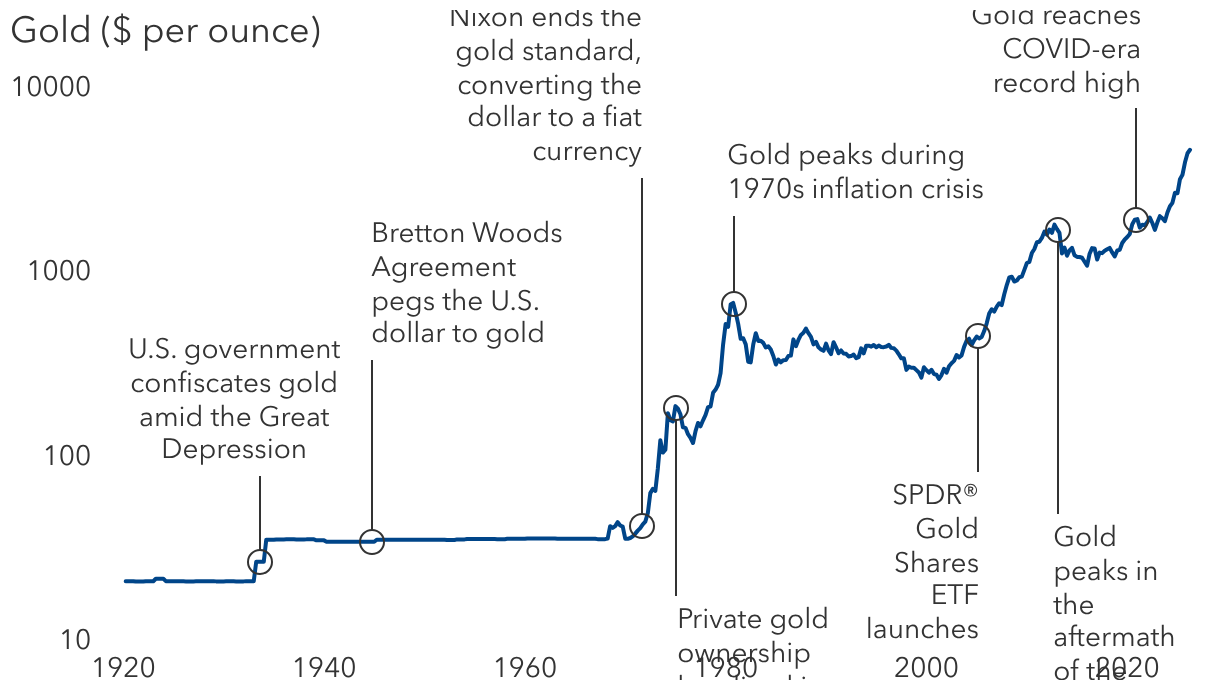
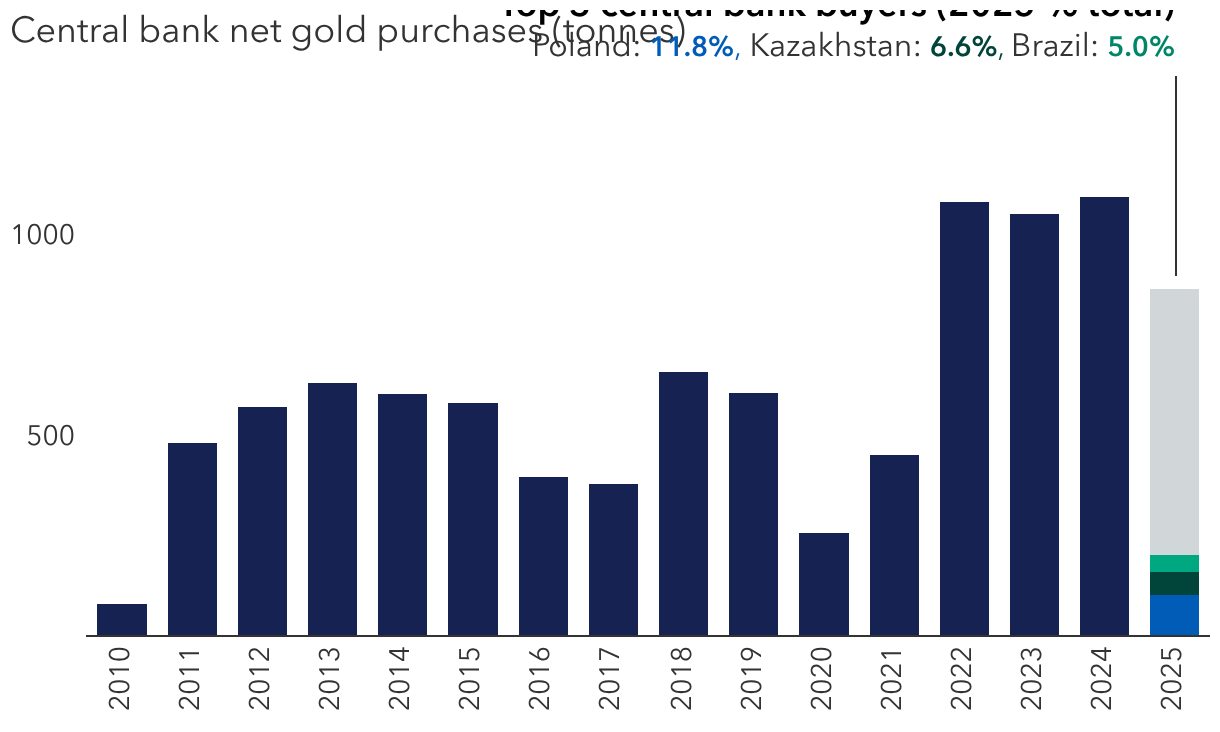
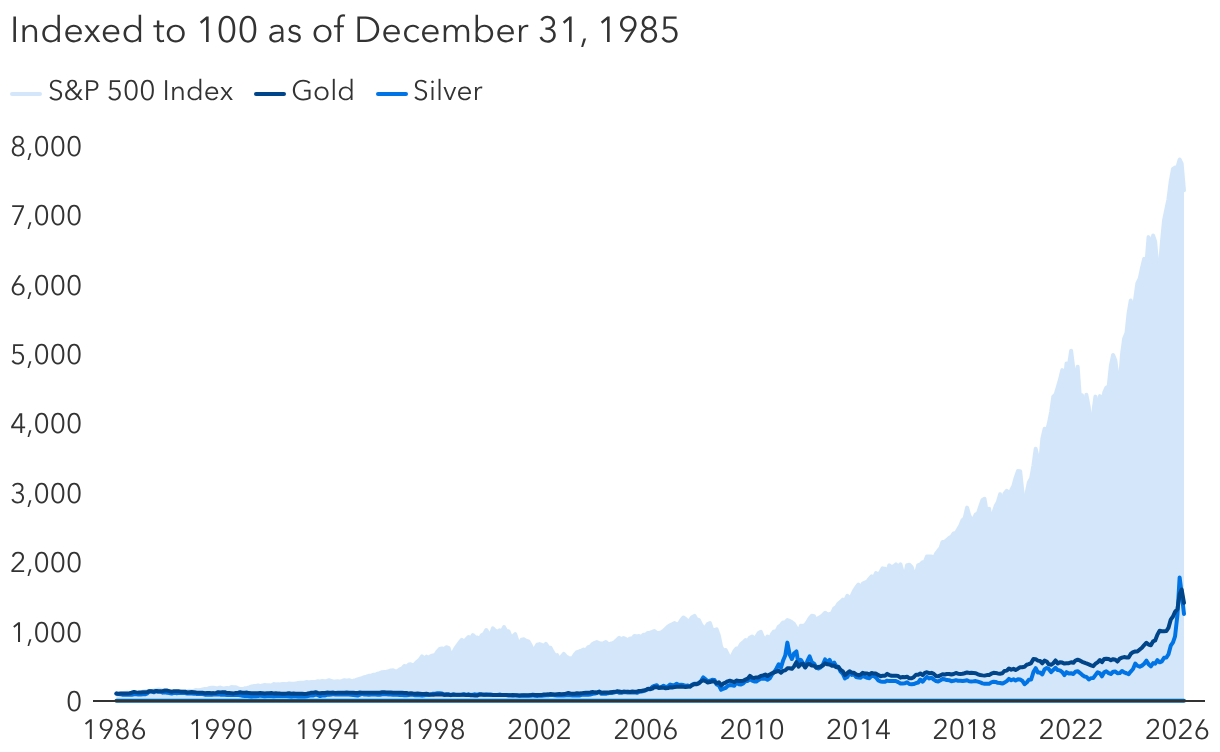
With gold prices rising to record highs over the past three years, investors have increasingly turned their attention to this ancient store of wealth. What’s driving the rapid increases, especially at a time when stocks and bonds have also generally done well?
The war in Iran halted gold’s rise for a time, as investors worried that higher oil prices might drive up inflation and thus lead to higher interest rates. Gold and interest rates have historically moved in opposite directions. But with this week’s cease-fire agreement, volatile gold prices have stabilized in the range of $4,600 to $4,700 an ounce. While that’s below the record high around $5,300 in January, it’s still far above where it was when this remarkable rally began in early 2022 — when gold was trading below $1,800.
Where the price goes from here is a subject of vigorous debate. Was January the peak? Or does it have more room to run? And, regardless of its short-term direction, what role should gold play in a long-term investment portfolio? With those questions in mind, three Capital Group portfolio managers offer their views.