Interest rate policy: BOJ policy normalization, or the gradual move to abandon its negative rate stance, remains on track and has been occurring gradually. If real wages happen to rebound in the second half of 2025, I anticipate a rate hike before year-end, and a terminal rate near/above 1.5%. Japan’s benchmark rate was 0.5% as of July 31.
Inflation and wages: As for the others, the latest Consumer Price Index data confirms a slowing in cost-push inflation, which is needed for nominal wage growth to catch up and real wages to begin rising. Meanwhile, companies still have capacity to raise wages in 2025 and 2026.
Market underappreciates odds of political change
After overseeing two national election defeats, Japanese Prime Minister Ishiba is under pressure from voters despite achieving a U.S. trade deal. His Liberal Democratic Party (LDP) remains the largest bloc in parliament but now leads a minority coalition in both the Upper and Lower chambers. The party may need to choose new leaders, set policy directions and decide whether to govern as a minority or seek coalition partners.
July’s upper house election result had more impact in fixed income markets, where Japanese 10-year government bond yields rose to their highest levels since 2008 in July. Meanwhile, the yen has weakened in recent months stemming from a combination of monetary policy expectations along with economic headwinds.
Bottom line
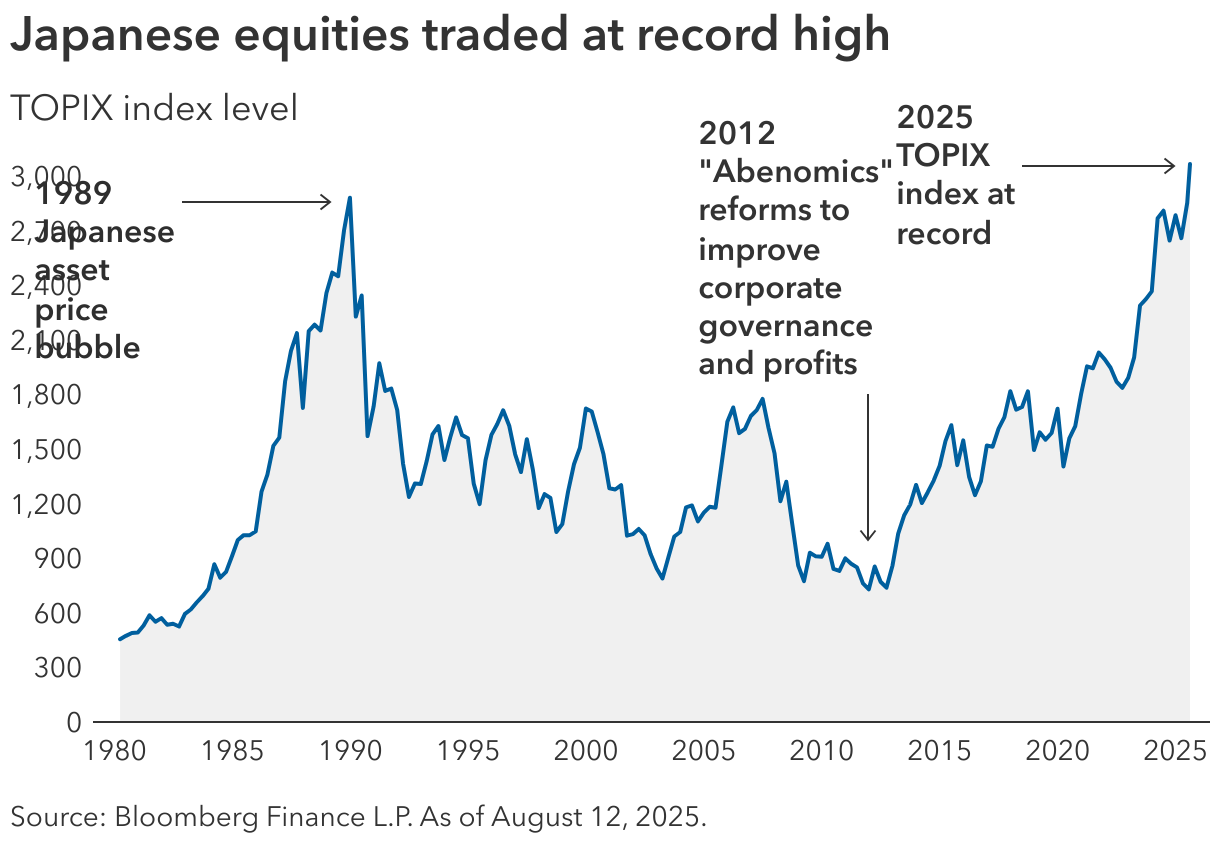
While political instability and other potential policy changes bring fresh longer term risks, the structural changes in Japan should continue.
Portfolio managers in our international and global strategies remain positive on the ongoing trend of Japanese firms improving their corporate governance, with companies focusing more on better capital allocation, improving profit margins and reducing cross-shareholder holdings in other companies. Furthermore, Japanese firms contain unique technologies in niche markets, building durable businesses with highly defensible moats. They are positioned to capitalize on global supply chain shifts amid heightened geopolitical tensions as companies and countries seek multiple sources for supplies.
Read more on Japan:
Japan is at record levels: How high can the stock market go?
Japan: Will reforms unlock stock valuations?