Why are private markets so rare in DC plans?
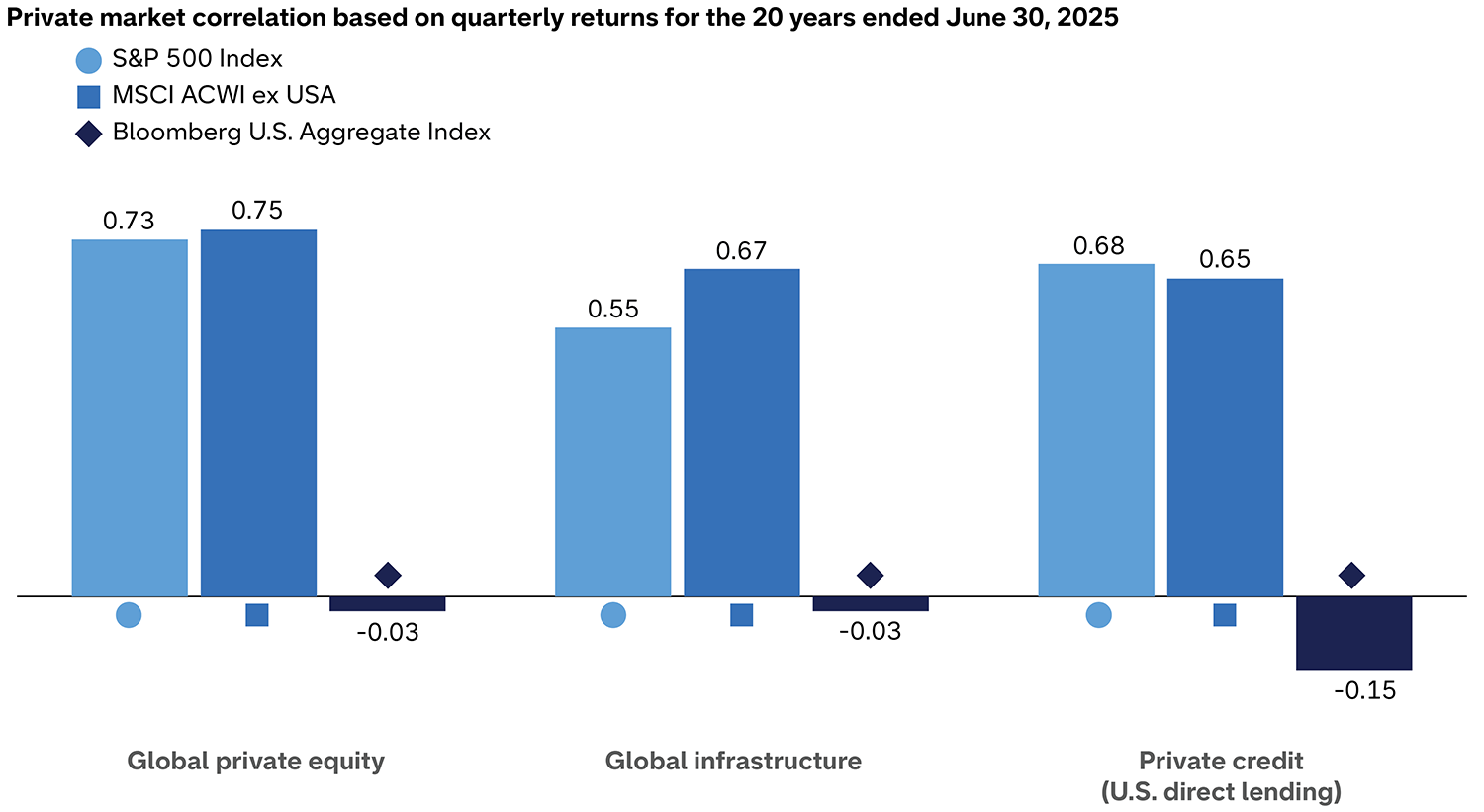
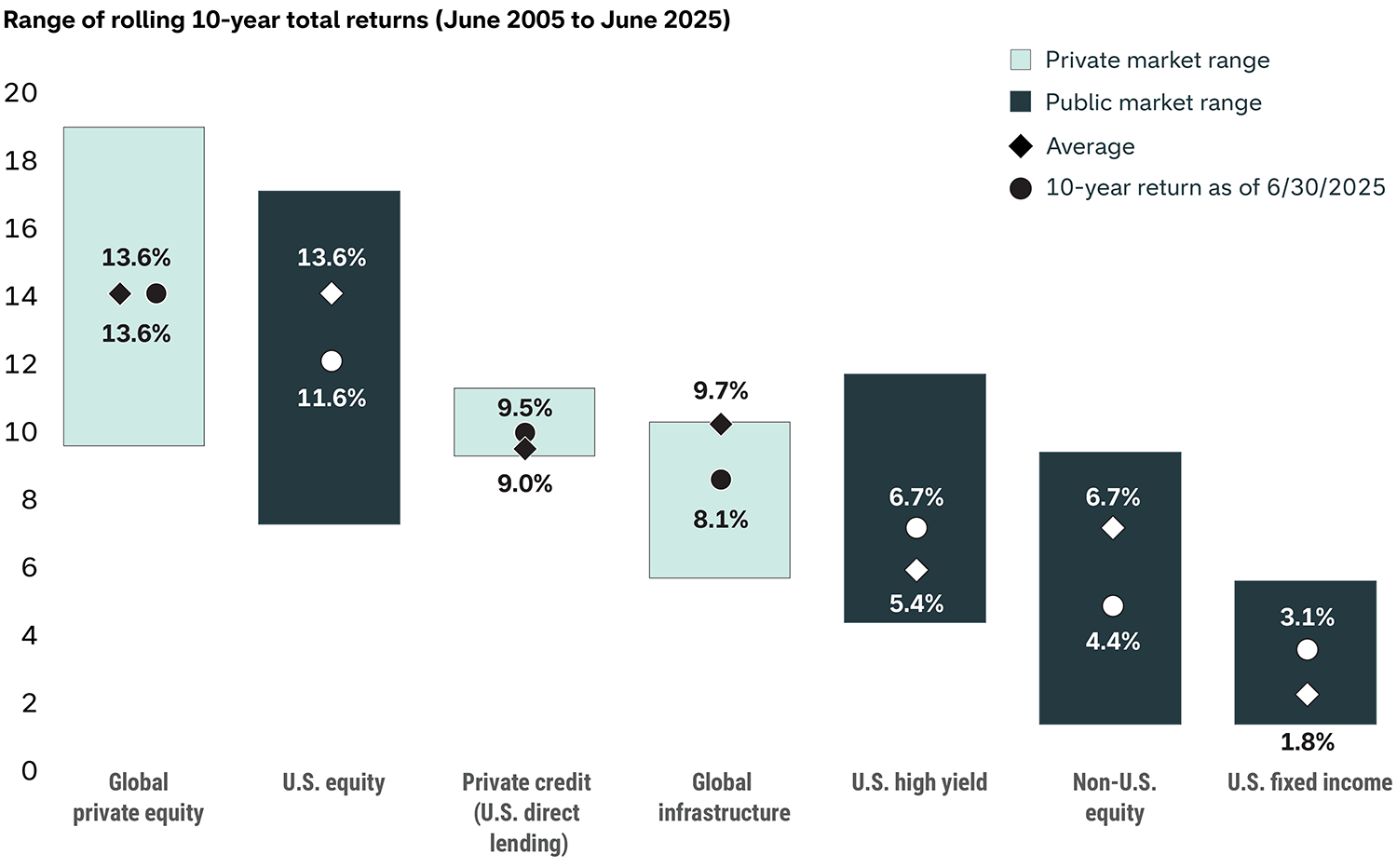
Private market investments have long been used in DB plans as a potential source of diversification and compelling returns, yet adoption in DC plans has remained limited for several reasons.
Whereas pension plans are professionally managed and have predictable cash needs, DC plans are participant-directed and typically require daily liquidity. Unlike in DB plans, DC plan participants bear the brunt of investment risk for private markets investments. Combined with the generally higher fees associated with private asset strategies, this can expose DC plan sponsors to greater litigation risk. Private market investments may also require extensive participant and plan sponsor education, adding another layer of complexity to adoption.
What's changing?
The barriers that once kept private markets largely out of DC plans are beginning to ease.
Start with regulation; in August 2025, President Trump signed an executive order directing the Department of Labor (DOL) and the U.S. Securities and Exchange Commission (SEC) to facilitate access to alternative assets in retirement plans. More recently, the DOL issued a proposed regulation confirming that there is no per se prohibition on including alternative investments in defined contribution (DC) plans, and that this holds true even when those assets sit inside a Qualified Default Investment Alternative (QDIA) such as a target date fund. The proposal adopts a principles-based, asset-neutral Framework. It neither favors nor disfavors any particular asset class or investment strategy. Instead, it identifies six factors fiduciaries should consider when selecting any investment option — expected risk-adjusted performance, fees, liquidity, valuation, benchmarking and complexity — reinforcing ERISA’s longstanding emphasis on process rather than outcomes. We expect the Department to release its final rule later this year or early 2027.
Two other longstanding challenges are also becoming easier to address: how private market exposure is delivered to participants and how liquidity is maintained within the portfolio.
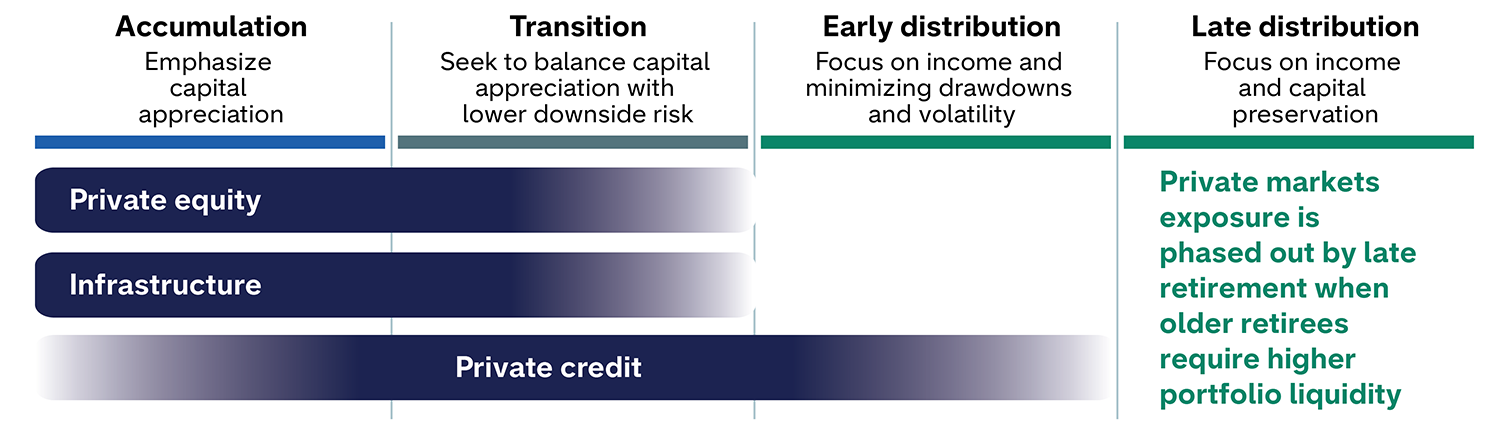
Offering standalone private markets options on a DC menu would be problematic given their complexity and liquidity limitations. Private markets exposure, therefore, would make more sense in a professionally managed, diversified portfolio like target date funds, which can also serve as a plan's qualified default investment alternative (QDIA).
Moreover, product innovation is helping to bridge the gap between the liquidity needs of DC plans and the traditionally illiquid nature of private market investments. Many DB plan sponsors are familiar with drawdown funds, where liquidity can be locked up for several years. These funds require a commitment of capital deployed over a multi-year period with distributions occurring late in the fund’s life, likely preventing them from being well suited for target date portfolios. But newer evergreen and interval fund structures offer varying degrees of periodic liquidity, potentially making private market exposure more practical within a target date portfolio. Interval funds with predictable liquidity can also be useful in parts of the glide path where liquidity needs are higher.
Liquidity terms can vary considerably across private investments
Example | Private evergreen fund | Registered interval fund* |
|---|---|---|
Quarterly liquidity | May offer less than 5% at the manager’s discretion | 5% to 10% |
Annual liquidity | From zero up to 20% | 5% to 20% |
For illustrative purposes only.
Private markets are expanding and maturing
Private market assets continue to grow, totaling $16.1 trillion in 2024† and spanning different asset classes and structures.
- Private equity: Involves investing directly in private companies or taking public companies private
- Real assets: Ranges from infrastructure (essential physical systems like transportation, energy, utilities and data centers) to real estate (direct ownership or development of property, and loans backed by property)
- Private debt: Investors make loans outside of traditional banking channels, either directly to companies or via asset-backed structures
Private markets are an expanding opportunity set
Growth in private markets has been driven by a variety of trends. Many companies are staying private longer and going public later in their life cycle — if ever. In part, this is because they can often meet their capital needs in private markets and may prefer the flexibility of avoiding short-term scrutiny from quarterly earnings reporting. The global energy transition and rising adoption of artificial intelligence are fueling demand for infrastructure investment, particularly in areas such as data centers and electric grid power generation. Private credit has also grown due to factors such as tighter bank regulation in traditional financing channels and increased flexibility in the terms and structure of private debt.