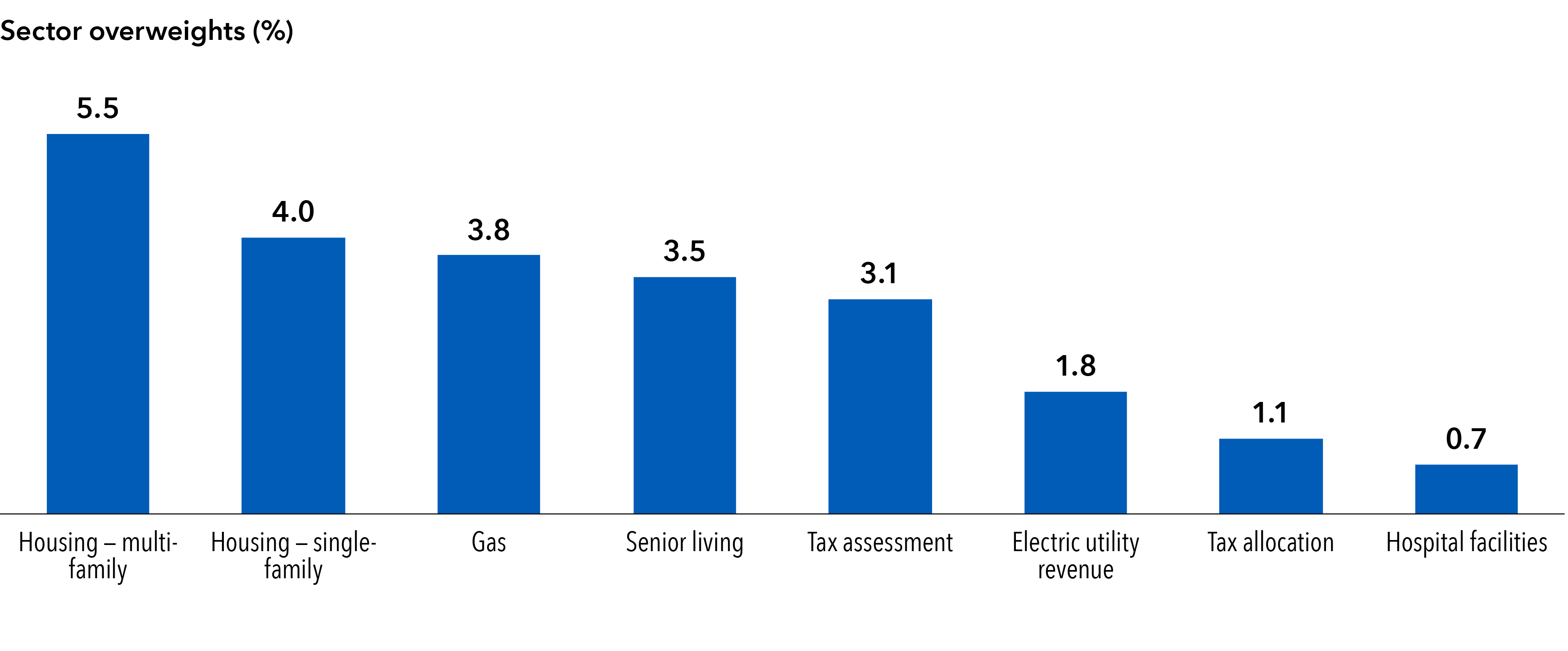
Uncertainty permeates today’s market. From economic growth to interest rates to inflation, investors face a multitude of questions. Today’s challenges may not be conducive to a passive “set it and forget it” investment style: research can sometimes provide answers or clarity. Currently, our active municipal (muni) bond managers seek to leverage ambiguity and find value in key areas including positioning along the muni yield curve, selective security exposure in tax assessment/tax allocation bonds and out-of-index subsectors like prepaid gas.
Assessing value along the yield curve
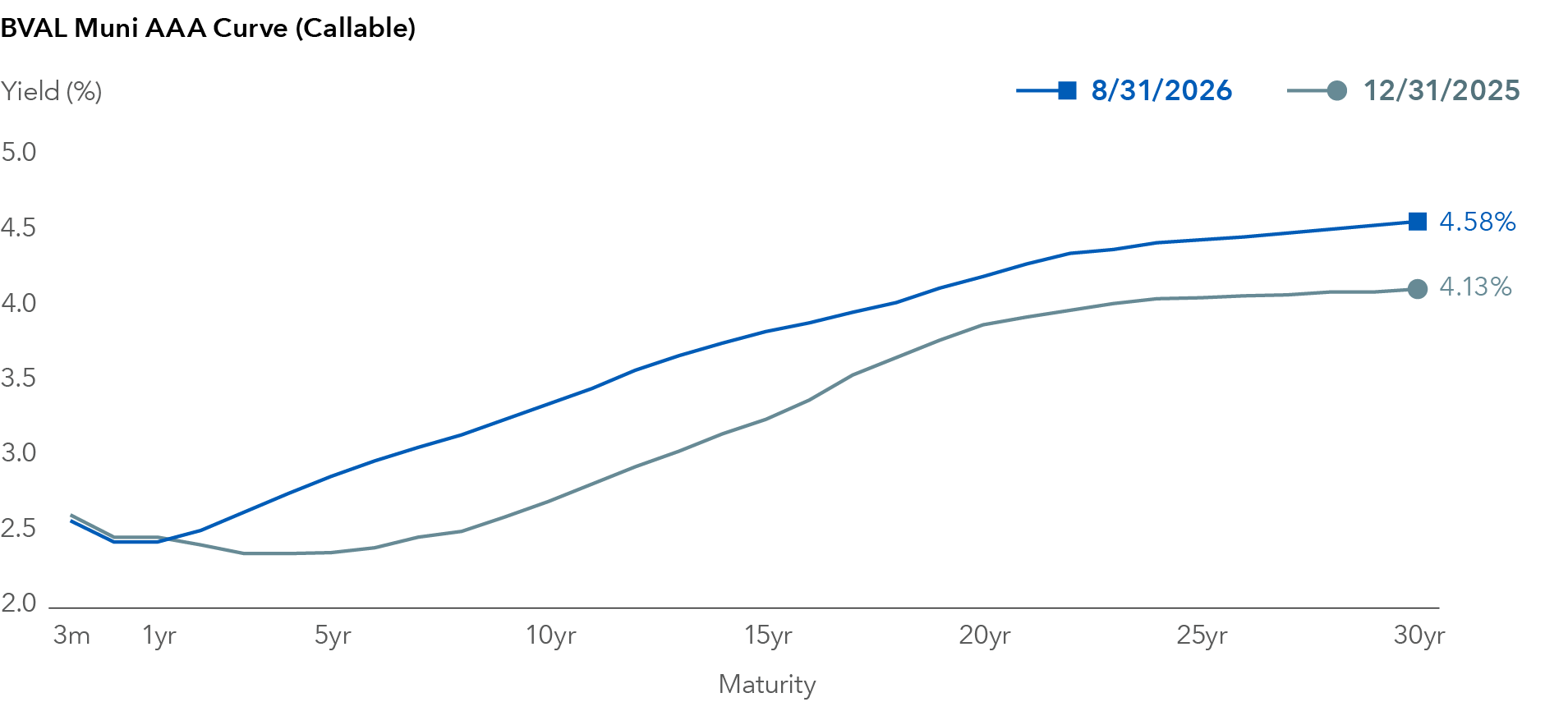
Over the past few years, we had noted that some parts of the muni yield curve were inverted, wherein some shorter term yields were higher than some longer term yields. When it inverted, we invested around the conviction that the curve would normalize in time as has historically been the case. This played out over time, with longer term yields eventually rising relative to shorter term yields. In contrast, passive strategies are tied to the curve and duration (the sensitivity of a bond to changes in interest rates) exposure of the index they track.
As active managers, we also work to understand how and when the rates move. Recently, we have been focusing on the 5- to 10-year segment of the curve. Historically, exposure was structurally expensive here as investors favored this maturity segment. Capital Group managers often took a barbell approach, taking positions on shorter and longer bonds, and avoiding the “belly” of the curve because it was less compelling. Supply dynamics played in here: For years, roughly 80% of the muni supply was 10 years and longer, with less than 20% inside of 10 years. However, the market was hit with a surprise this year – 40% of the issuance has been 10 years or less. This additional supply improved valuation dynamics, cheapening the opportunity to own bonds with these intermediate exposures. We believe demand will support higher prices when that supply normalizes to lower levels. This is an example of how active management provides flexibility to react when the yield curve shifts.