Defined Benefit

Pension Risk Transfer (PRT) transaction volume in the U.S. declined in 2025 versus 2024, with buy-out activity in particular down sharply. The most common explanation for this decline is that pending jumbo transactions are temporarily on hold until elevated legal uncertainty is resolved. A recent spate of lawsuits accusing large corporations of fiduciary shortcomings in securing the safest available annuity has resulted in conflicting court rulings on motions to dismiss, leading to a pause in robust activity. Whether and when that uncertainty will dissipate is challenging to predict.
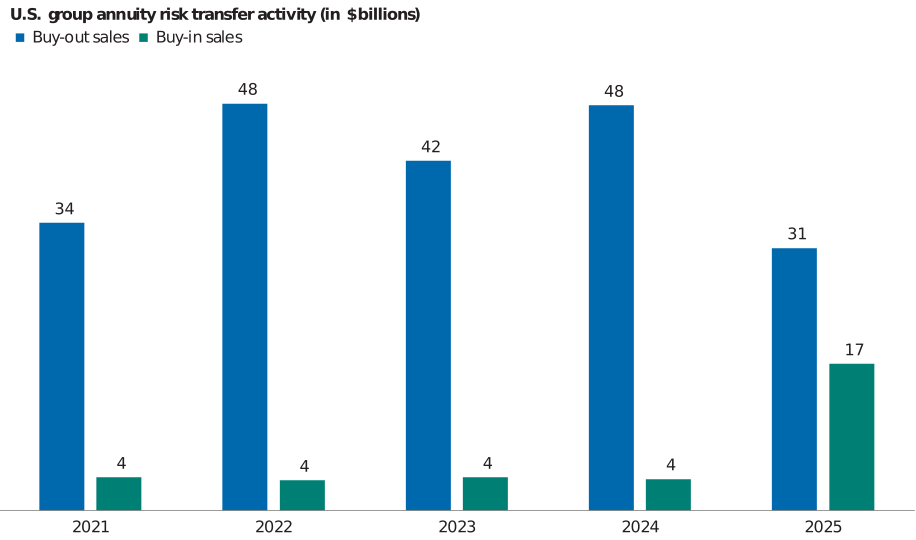
Source: LIMRA Fact Tank, as of March 18, 2026.
In the meantime, the data raises the question: What factors other than fiduciary/legal risks are at play in the downward trend in PRT transaction volume, and how likely are they to have lasting consequences?
A closer look at the evolving pension landscape suggests that the value proposition of PRT may be deteriorating, which could result in a persistent structural slowdown in PRT transaction volume. This finding is at odds with the conventional wisdom that the dip is likely transitory. (See Appendix 1 in the downloadable white paper version for additional insights on buy-in transactions.)
Pension risk transfer remains a useful tool for plan sponsors in the right circumstances. Note that the focus here is on annuity purchases via an insurer. With regard to bulk lump sum windows, we would anticipate the biggest drivers to continue to be: 1) interest rates (i.e., due to lookback/stability period rules, sponsors may offer voluntary lump sums on plan-favorable terms in certain cases when rates drop significantly), and 2) lump sums as part of the termination process, which we address below but with a greater focus on annuity purchases than lump sum offerings.
Let’s consider three specific use cases for which PRT is arguably most impactful in meeting sponsor objectives:
- Small benefit transfers for significantly underfunded plans to save big on costs
- Trimming pension exposure when it becomes large relative to the broader business
- Plan termination following the loss of defined benefit (DB) operational scale
Each one is losing relevance for different reasons. Considering each use case in turn:
1. Large funding deficits: As they dwindle, so do PRT-related premium savings
For sponsors of significantly underfunded plans, transferring participants out of the plan can generate annual Pension Benefit Guaranty Corporation (PBGC) premium savings of $862 per head (and growing each year), based on 2026 premium rates. This represents substantial savings and has been a key driver (quite possibly THE key driver) of pension risk transfer demand in recent years.
If this maximum applicable premium burden continues its upward march due to indexing, is it reasonable to anticipate the demand for this sort of PRT to continue its rise?
No. Quite the opposite, as the number of plans eligible for these savings has dropped dramatically in recent years. Plans must be underfunded to an ever-greater extent to achieve full savings, while instead, plan funding levels are broadly improving (refer to Appendix 2 in the downloadable white paper version). Even when a sponsor can generate full savings, future changes in PBGC premiums are likely to reduce the number of years it can capture those savings.
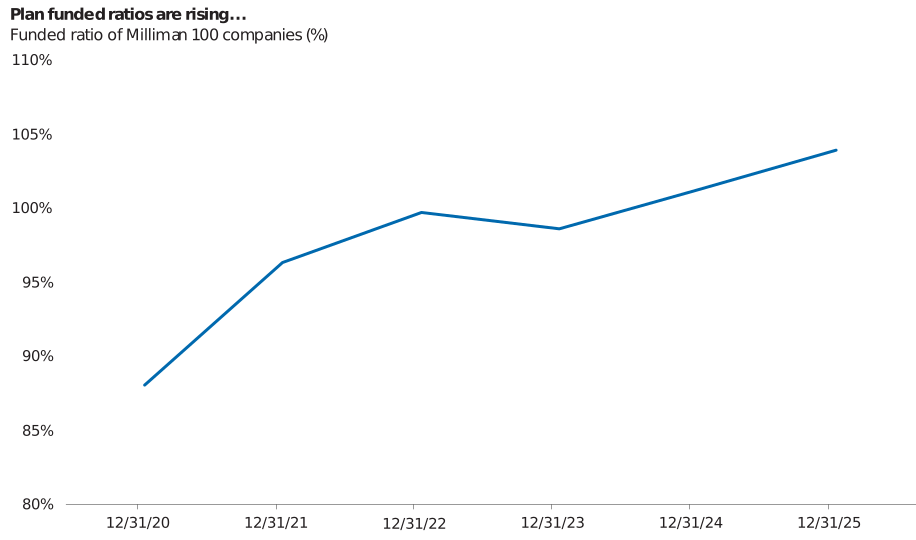
Source: Milliman 2026 Corporate Pension Funding Study. The Milliman 100 companies are the 100 U.S. public companies with the largest DB pension plan assets for which a 2025 annual report was released by March 10, 2026.
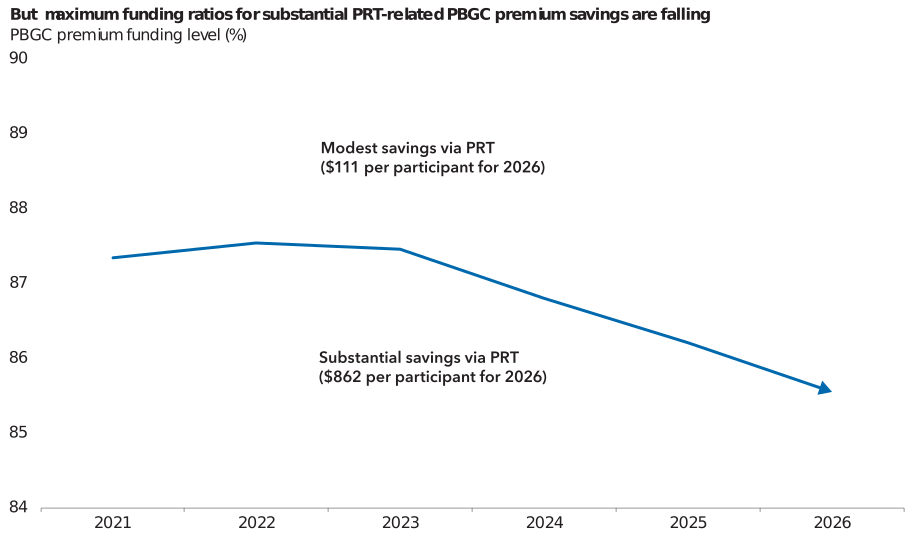
Sources: Pension Benefit Guaranty Corporation, Capital Group. Data as of October 27, 2025. Funding ratios have declined and, under current premium indexing rules, are expected to remain under pressure absent legislative change. Funding ratios are per PBGC guidelines for calculation of premiums and assume a static PBGC Premium Funding Target (i.e., liability) per Participant of $100,000. Refer to Appendix 2 in the downloadable white paper version for additional details.
Once plans are sufficiently funded that they are no longer subject to the per-participant cap on variable-rate premiums, the achievable savings fall off an 87% cliff, to only $111 annually. Still a savings, but perhaps insufficient to justify the costs and risks associated with completing an irrevocable PRT transaction. In many cases, a more effective and durable way to reduce PBGC premiums is to achieve — and maintain — full funding. Even when pricing is at par, PRT transactions tend to impede full funding, all else equal.
As sponsors better understand these mechanics, and as fewer plans are underfunded enough to qualify for full premium savings, this once dominant driver of PRT demand increasingly appears to have passed its heyday.
2. Pension overexposure: As its prevalence wanes, so does PRT’s appeal
In the wake of the global financial crisis of 2008, many CFOs spent considerable time addressing financial analyst questions about pension risk and its impact on broader corporate financials. As these executives looked for opportunities to reduce the size and visibility of pension obligations, interest in PRT spiked.
Since then, the size of corporate pension liabilities has shrunk in relation to the scale of broader company financials across a range of measures. For example, the ratio of pension liabilities to sponsor market capitalization has fallen dramatically over the past five years, due to both 1) a major downward repricing of pension liabilities from higher discount rates, particularly during the first half of the period, and 2) expanding market capitalizations as equity prices reached new heights, particularly during the latter half of the period.
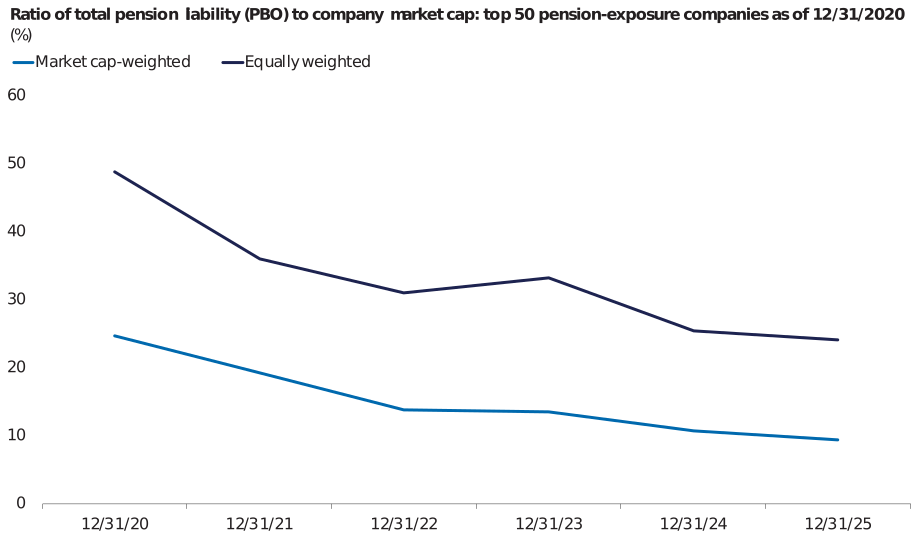
Sources: S&P Capital IQ, Capital Group
This shift is attributable to a range of underlying reasons, including plan freezes, pension risk transfer, market movements, inflation, economic growth, etc. Meanwhile, within pension balance sheets, funding level improvements and the predominance of Liability Driven Investing (LDI) strategies have further lessened the perception of outsized DB risks.
As a result, CFOs might field fewer questions about their DB plans today than a decade ago. Certain sponsors still see plan-specific opportunities to reduce risk through PRT where pricing is favorable, though they increasingly appreciate that such pricing is only offered on those most desirable risks, such as lift-outs of retiree benefits without unusual rights and features. Sponsors should consider either retaining such risks within the plan or demanding a premium from an insurer for the privilege of accessing the longevity risk that life insurers potentially find valuable in hedging their own mortality exposure.
Altogether, this historical driver of PRT demand is not entirely obsolete but it appears to have lost much of its luster.
3. The ultimate endgame: Termination faces stiffer competition due to innovation
At some point, a frozen plan reaches a level of maturity where the fixed and semi-fixed costs associated with the plan no longer justify the benefits of maintaining it. At this stage, an insurer may take on any remaining obligations via a full plan termination to reestablish scale by effectively merging its operation with that of other transferred plans. Of course, a partial risk transfer would generally be scale-destroying from the sponsor’s perspective.
That said, the market has evolved in ways that allow sponsors to maintain smaller plans on the balance sheet more efficiently. For example, the growth of outsourced chief investment officer (OCIO) services and collective investment trusts (CITs) has given sponsors new tools to manage costs and preserve scale.
Moreover, when sponsors reflect on the objectives they associate with termination, they may find the final act of executing the plan termination to be an extraneous step. The very achievement of a funding level sufficient to terminate, assuming a sensible and prudent investment strategy, typically accomplishes many key goals.
Sponsor objectives achievable without plan termination:
- Eliminating required plan sponsor contributions
- Outgrowing PBGC variable rate premiums
- Shifting a net pension deficit to a net pension surplus for the balance sheet
- Swinging pension expense to pension income for the income statement
- Broadly mitigating most major pension-associated costs and risks
Meanwhile, emerging innovations within the corporate DB market are causing some sponsors to pause before taking any irrevocable actions that generate incremental costs or taxes.
Corporate DB innovations that are offering compelling alternatives to termination:
- Multiple jumbo plans that have reduced defined contribution (DC) employer contributions in favor of increasing DB accruals that are funded via existing pension surplus
- Legislation in the U.K. that allows for DB pension surplus to be transferred to DC accounts without termination, potentially providing a road map for future U.S. legislation
- The SECURE 2.0 Act extends and expands the ability of sponsors to transfer surplus pension assets to fund retiree health plans in certain circumstances
- The Financial Accounting Standards Board (FASB) committed to clarifying accounting rules related to market-based cash balance plans, an intriguing hybrid plan design
- Adoption of new market-based cash balance plans by multiple U.S. airlines, allowing DC-like balances to grow within a more tax-friendly DB regulatory system
Sources: Capital Group, U.S. Department of Labor, U.K. Parliament, U.S. Congress, Financial Accounting Standards Board
These innovations make it easier to envision scenarios in which pension surplus could function as a competitive advantage for those sponsors that wield it. This would represent quite a pivot from past characterizations of pensions as burdensome and underappreciated anachronisms. Such evolution plays out over decades, not months or years, but even this possibility would have been practically unimaginable just one decade ago.
Is peak PRT behind us?
Of these three common PRT use cases, the relevance of the first two appears to be in steep and possibly permanent decline as the pool of potentially interested pension plans rapidly shrinks. For the third use case, while full plan termination does appear poised to capture a greater share of PRT deal flow going forward, its appeal faces increased competition at every turn.
So ultimately, is the dip in PRT activity a brief swing of the pendulum, or the beginning of a new and robust trend? In this case, conventional wisdom may not tell the whole story. While PRT will remain an important tool in the sponsor toolkit, it is increasingly plausible that pre-2025 deal volumes may represent a durable high-water mark under current market conditions.
Our latest insights
-
-
Artificial Intelligence
-
Artificial Intelligence
-
Interest Rates
-
World Markets Review