Bonds
- We believe global growth has stabilized, underpinned by strong AI-related investments and resilience in U.S. economic data.
- The Federal Reserve’s (Fed) reaction function has become more difficult to predict in light of a planned reduction in forward guidance.
- In our view, higher starting yields provide a solid baseline for forward returns despite tight valuations across fixed income sectors. We’re focused on maintaining a conservative, diversified, higher quality posture in our portfolios.
The second quarter highlighted the competing forces shaping today’s fixed income landscape. Resilient economic growth, continued AI investment and geopolitical developments influenced markets, but shifting expectations for Federal Reserve policy remained a key driver of investor sentiment and market volatility. Even so, higher starting yields continue to provide a solid baseline for prospective returns, supporting a balanced and quality-focused approach to fixed income investing.
The Fed’s reaction function has become more difficult to predict in light of the Federal Open Market Committee’s (FOMC) changing composition. The committee’s mid-June meeting struck a more hawkish tone, and new Chairman Kevin Warsh highlighted above-target inflation while keeping his own views guarded at his first press conference.
While market and Fed expectations have already swung from cuts to hikes, less Fed transparency in the future could lead to more volatility around data prints. With energy prices falling, headwinds for consumers and relatively anchored inflation expectations, we believe the Fed may not raise rates to the extent that the market expects this year.

Sources: Capital Group, Bloomberg. As of June 30, 2026. The federal funds rate shown is the midpoint of the upper and lower bounds of the Federal Reserve’s target range for the federal funds rate. Market-implied federal funds rates are derived from federal funds futures pricing and reflect market expectations. These expectations are subject to change and may differ from actual Federal Reserve decisions.
In the U.S., economic data have surprised to the upside and the economy has shown resilience. Headline job growth and consumption have been stronger than expected, and AI-related investments continue to drive capital spending and support growth.
U.S. real income growth has driven real consumer spending
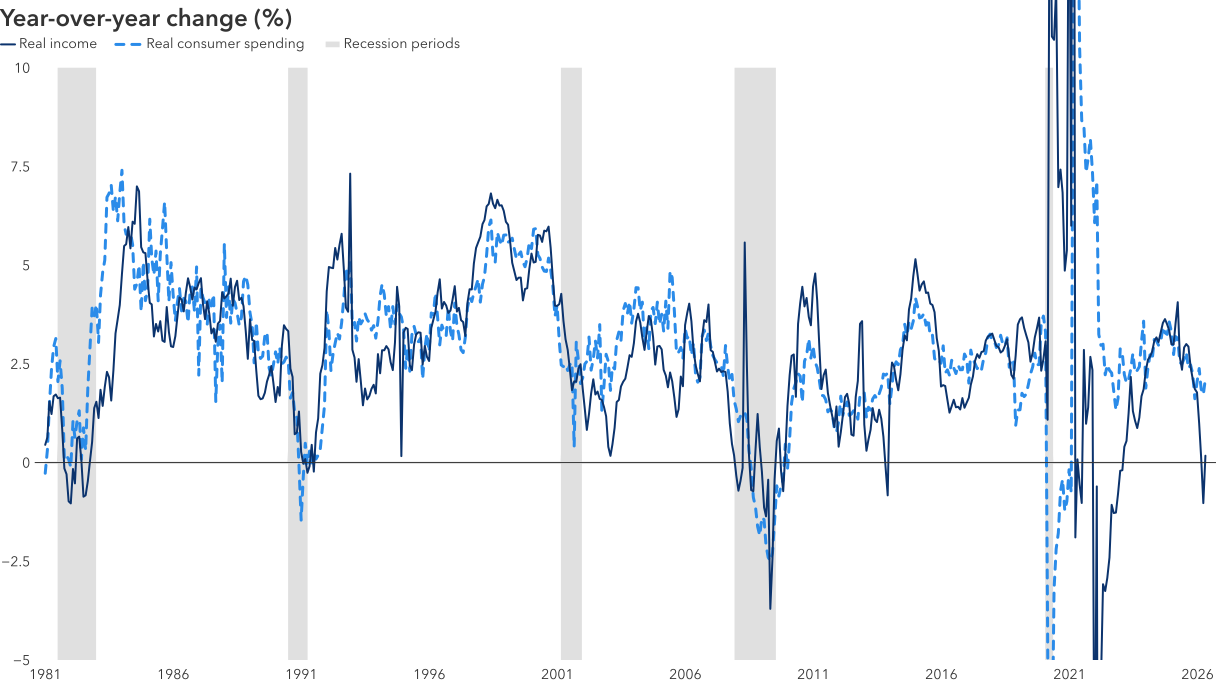
Source: Federal Reserve Bank of St. Louis. As of June 30, 2026.
However, wages have moderated and inflation remains elevated, which has resulted in negative real disposable income for consumers. In addition, savings rates have fallen significantly since their increase during the COVID-19 pandemic, leaving households with less spending capacity.
For our team’s outlook and analysis across fixed income sectors, get our full perspectives PDF.
The statements expressed represent perspectives from Capital Fixed Income Investors. The views of individual portfolio managers and analysts may differ. As of 6/30/26.
BLOOMBERG® is a trademark and service mark of Bloomberg Finance L.P. and its affiliates (collectively “Bloomberg”). Bloomberg or Bloomberg’s licensors own all proprietary rights in the Bloomberg Indices. Neither Bloomberg nor Bloomberg’s licensors approves or endorses this material, or guarantees the accuracy or completeness of any information herein, or makes any warranty, express or implied, as to the results to be obtained therefrom and, to the maximum extent allowed by law, neither shall have any liability or responsibility for injury or damages arising in connection therewith.
Our latest insights
-
-
Artificial Intelligence
-
Artificial Intelligence
-
Interest Rates
-
World Markets Review
RELATED INSIGHTS
-
Artificial Intelligence
-
Interest Rates
-
Economic Indicators
Don’t miss out
Get the Capital Ideas newsletter in your inbox every other week