Portfolio Construction
Categories
Economic Indicators
Beyond consensus: Economic conditions amid conflict
 Jared Franz
 Darrell Spence
 Bobby Esnard
April 29, 2026
Evolving geopolitical dynamics, largely driven by the U.S.-Iran war, plus upcoming U.S. midterm elections this fall, have forced investors to rethink their outlooks. Against this backdrop, our Capital Strategy Research (CSR) economists outline their U.S. views and take a deeper look at the key themes shaping the quarter.
Select macro views for the quarter: U.S. growth, inflation and productivity
The escalation in the Iran conflict has altered the near-term balance of risks for the U.S. macro outlook, reinforcing a stagflationary impulse even if hostilities do not intensify further. Energy prices remain the primary channel of these negative effects. Oil prices have risen sharply and, rather than fully retracing, may settle above pre-conflict levels. Historical sensitivities suggest that a sustained US$10 per barrel increase in oil prices typically subtracts 10 to 20 basis points from U.S. GDP growth, while adding only modestly to core inflation. However, the distribution of risks is asymmetric. Prolonged energy shocks tend to exert disproportionate downside pressure on growth and payroll dynamics.
Against this backdrop, the U.S. economy remains resilient but increasingly vulnerable. Under a scenario of extended disruption through the Strait of Hormuz, with Brent crude prices around US$100 per barrel, growth may slow toward the low 2% range in 2026, down from a pre-conflict baseline closer to 2.8%. A recession would still likely be avoided absent further escalation.
The labour market is the key swing factor. Payroll growth has stabilized, but geopolitical shocks historically tilt risk toward softer hiring and slower wage growth, raising the probability that consumer momentum could weaken if uncertainty persists.
U.S. inflation dynamics are comparatively less forgiving. Energy pass-through to headline inflation is immediate, and upstream price pressures are already evident, increasing the likelihood that inflation remains above target even as growth decelerates. In addition, disruption risk extends beyond energy. The Strait is a critical transit route for petrochemicals and industrial inputs, raising the possibility of more persistent cost pressures emerging in the second half of the year as higher chemical prices feed through to durable goods production and consumer prices.
Looking beyond near-term volatility and geopolitical shocks, however, the medium-term trajectory of U.S. growth increasingly hinges on productivity. The evolution of AI-driven efficiency gains may ultimately matter more for durability, inflation dynamics and potential growth than the current cyclical drag from energy and uncertainty.
As geopolitical uncertainty continues in 2026, we’re eyeing several themes this quarter, including AI’s continued productivity push, labour market weakness and how the U.S. Federal Reserve may view inflationary dynamics given higher energy prices.
Growth hinges on AI productivity gains despite conflict
U.S. productivity growth has reentered the discussion as a central driver of the medium-term economic outlook. Recent data points to a sustained reacceleration in nonfarm labour productivity, an outcome that has historically coincided with stronger and more durable periods of economic growth. Outside of recession recoveries, such episodes have tended to reflect structural shifts rather than late-cycle volatility, with important implications for both macro stability and market outcomes.
At a macro level, productivity represents an important driver of U.S. potential growth. The emerging view is that the economy may be experiencing an AI-centric, supply-side shock not yet fully reflected in market or policy assumptions. In this framework, productivity growth could move sustainably toward the higher end of historical experience — closer to 3% — rather than reverting to the lower post-Global Financial Crisis trend. That shift materially alters the inflation-growth trade-off. Higher productivity allows the economy to operate at a faster pace without reigniting inflationary pressures, keeping unit labour costs contained even as wage growth remains firm.
As a result, real GDP growth in the high 2% range appears plausible, despite ongoing demographic and labour market frictions. This productivity increase would have implications for markets and firms over time. By offsetting wage and input cost pressures, stronger productivity extends margin resilience and stabilizes cash flow generation when top-line momentum becomes less reliable.
How might AI productivity influence growth?
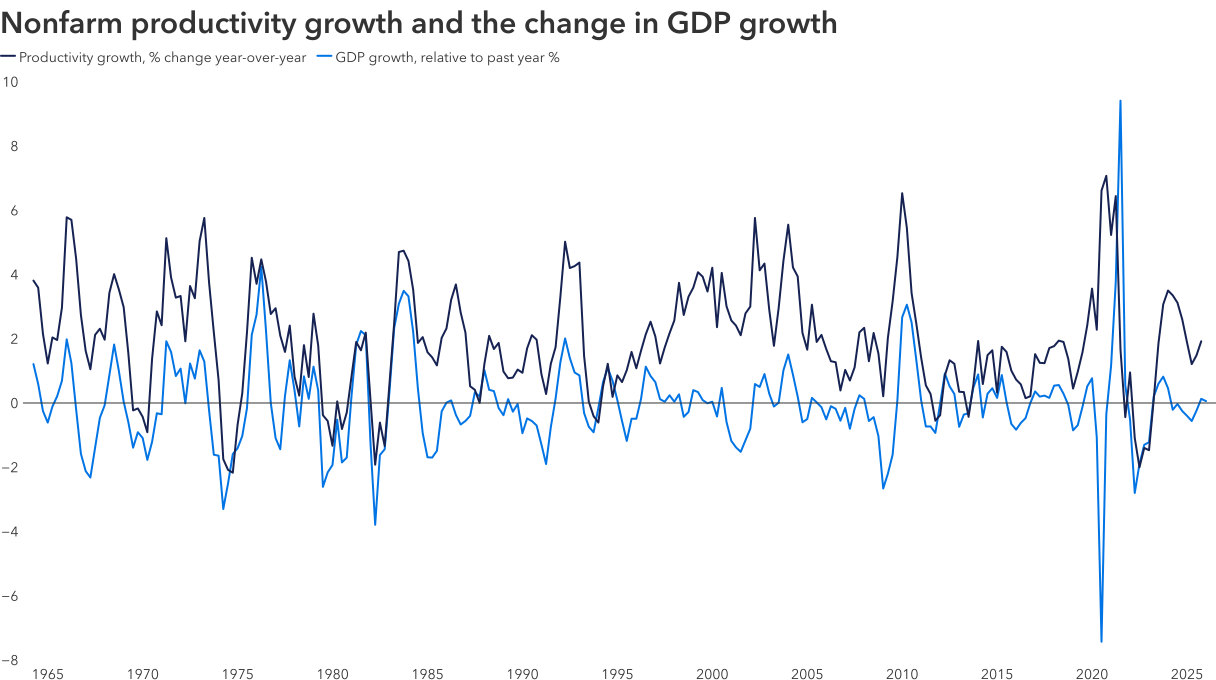
Sources: U.S. Bureau of Economic Analysis (BEA), U.S. Bureau of Labor Statistics (BLS). As of September 2025.
Still, uncertainty remains around the timing and transmission of productivity gains. Although AI-related investment represents a clear upside risk to growth, the translation from capital deepening to broad-based efficiency gains and household income support is unlikely to be immediate or uniform. The macro payoff will ultimately depend on reinvestment and effective labour absorption.
Taken together, current productivity data suggests a higher medium-term economic speed limit — one that improves inflation dynamics, underpins earnings resilience and expands the end market opportunity set.
Labour market may remain weaker from AI labour shock
The U.S. labour market is showing resilience yet remains fragile. Firms are in early innings of implementing AI practices, and cost-rationing is ongoing. Hiring momentum has slowed materially, and job growth has at times hovered near zero, even as the unemployment rate has remained relatively contained.
AI’s impact on the labour market remains concentrated rather than systemic. While select industries including tech, advertising, marketing and call centres are experiencing disruption, broader labour conditions continue to show resilience. Wage growth has stabilized near 3.5%, labour force participation remains elevated, and aggregate hours worked have held steady, indicating that AI adoption has not yet translated into widespread job losses. To date, some effects of AI have been higher productivity and support for steady GDP growth, even as localized pockets of labour market softness emerge.
The labour market is the economy’s primary vulnerability
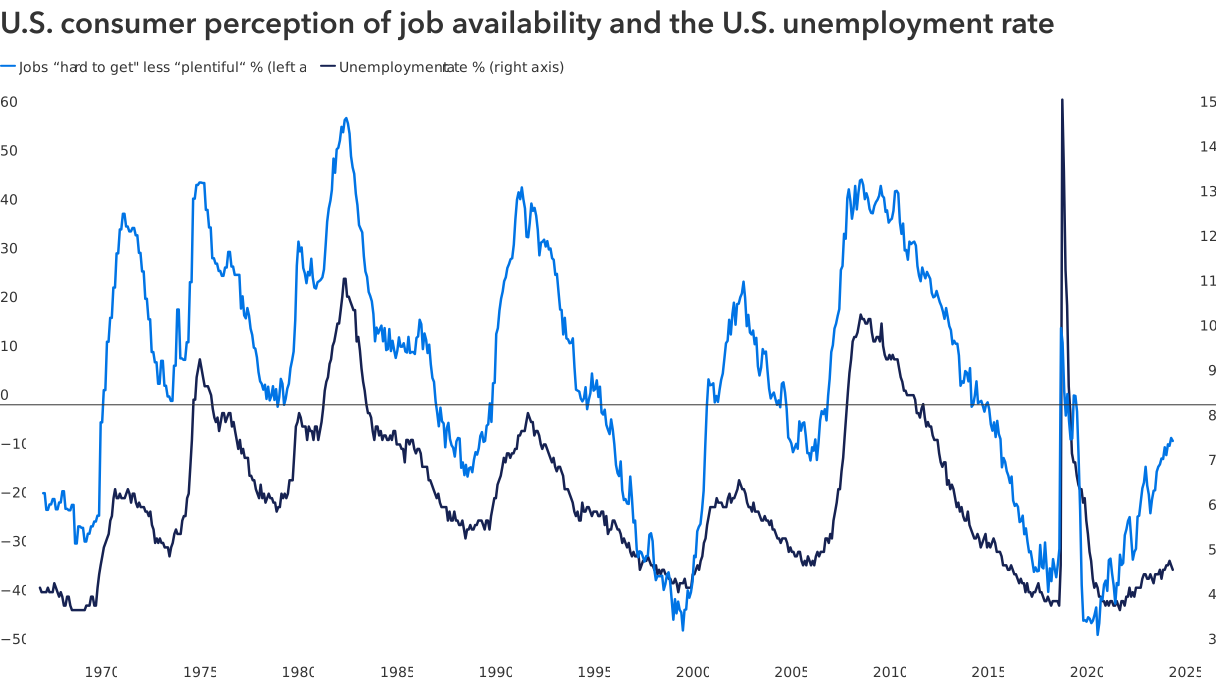
Source: U.S. Bureau of Labor Statistics (BLS). As of February 2026. Jobs line is the percent difference between U.S. consumers stating jobs are “hard to get” vs. percent stating they are “plentiful.”
Against this backdrop, CSR sees a modest risk that unemployment drifts higher as slower hiring, AI-related labour disruption and tariff- and war-related margin pressure gradually outweigh supply-driven support to the labour market.
While it’s a touch soon to quantify the flip side of the equation, AI has the potential to bring job creation over time. The speed and scale of AI adoption make it imperative to monitor these developments closely and consider policy measures to mitigate potential labour disruptions.
Inflation to linger
U.S. inflation is expected to remain contained under the base case scenario, with core inflation around 2.5%, although upside risks persist. Energy price shocks from the war and fiscal policy developments represent sources of potential inflationary pressures. While energy prices do not directly feed into core inflation, sustained increases can still exert upward pressure on prices.
Even so, the Federal Reserve is likely to tolerate a temporary rise in headline inflation, particularly when it reflects supply-driven pressures rather than renewed strength in underlying demand or wage growth. At the same time, ongoing productivity improvements are expected to help curb longer term inflation pressures.
The U.S. economy can absorb oil prices near US$100 per barrel for a limited period without triggering a broader inflationary spiral. For investors, the key risk lies in how long elevated energy prices persist and how severe those increases become, as prolonged higher costs could eventually pose a more meaningful drag on growth.
Inflation skews to the upside
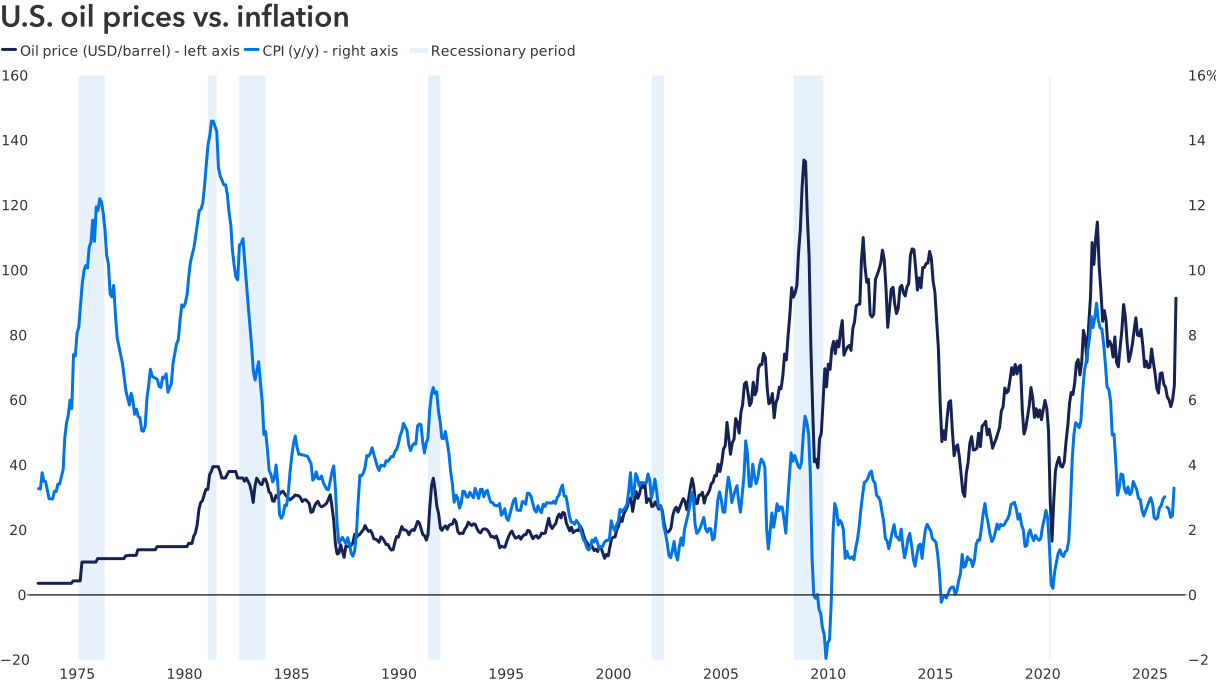
Sources: Capital Group, U.S. Bureau of Labor Statistics, National Bureau of Economic Research, U.S. Federal Reserve Bank of St. Louis. Oil prices are represented by the spot price for the West Texas Intermediate (WTI). The change in the U.S. Consumer Price Index (CPI) is for all urban consumers. Data shown is monthly, from January 1972 to March 2026. As of March 31, 2026.
Investor implications
Given the dynamic nature of the conflict, tariff policy and upcoming midterms, it is important for investors to maintain well-diversified global portfolios that focus on downside risk. While geopolitical and energy shocks are not unprecedented, each episode introduces distinct risks and transmission channels that can impact markets in different ways.
Over the longer term, the current environment appears more inflationary and is likely to drive higher capital spending, particularly among countries investing in infrastructure and energy security.
Learn more about
The Global Financial Crisis (GFC): A period around 2007–2009 featuring stress in global financial markets, stemming from a collapse in the U.S. housing market.
Our latest insights
-
-
Technology & Innovation
-
Objective-Based Investing
-
-
Active Management
RELATED INSIGHTS
Commissions, trailing commissions, management fees and expenses all may be associated with investments in investment funds. Please read the prospectus before investing. Investment funds are not guaranteed or covered by the Canada Deposit Insurance Corporation or by any other government deposit insurer. For investment funds other than money market funds, their values change frequently. For money market funds, there can be no assurances that the fund will be able to maintain its net asset value per security at a constant amount or that the full amount of your investment in the fund will be returned to you. Past performance may not be repeated.
Unless otherwise indicated, the investment professionals featured do not manage Capital Group‘s Canadian investment funds.
References to particular companies or securities, if any, are included for informational or illustrative purposes only and should not be considered as an endorsement by Capital Group. Views expressed regarding a particular company, security, industry or market sector should not be considered an indication of trading intent of any investment funds or current holdings of any investment funds. These views should not be considered as investment advice nor should they be considered a recommendation to buy or sell.
Statements attributed to an individual represent the opinions of that individual as of the date published and do not necessarily reflect the opinions of Capital Group or its affiliates. This information is intended to highlight issues and not be comprehensive or to provide advice. For informational purposes only; not intended to provide tax, legal or financial advice. Capital Group funds are available in Canada through registered dealers. For more information, please consult your financial and tax advisors for your individual situation.
Forward-looking statements are not guarantees of future performance, and actual events and results could differ materially from those expressed or implied in any forward-looking statements made herein. We encourage you to consider these and other factors carefully before making any investment decisions and we urge you to avoid placing undue reliance on forward-looking statements.
The S&P 500 Composite Index (“Index”) is a product of S&P Dow Jones Indices LLC and/or its affiliates and has been licensed for use by Capital Group. Copyright © 2026 S&P Dow Jones Indices LLC, a division of S&P Global, and/or its affiliates. All rights reserved. Redistribution or reproduction in whole or in part are prohibited without written permission of S&P Dow Jones Indices LLC.
FTSE source: London Stock Exchange Group plc and its group undertakings (collectively, the "LSE Group"). © LSE Group 2026. FTSE Russell is a trading name of certain of the LSE Group companies. "FTSE®" is a trade mark of the relevant LSE Group companies and is used by any other LSE Group company under licence. All rights in the FTSE Russell indices or data vest in the relevant LSE Group company which owns the index or the data. Neither LSE Group nor its licensors accept any liability for any errors or omissions in the indices or data and no party may rely on any indices or data contained in this communication. No further distribution of data from the LSE Group is permitted without the relevant LSE Group company's express written consent. The LSE Group does not promote, sponsor or endorse the content of this communication. The index is unmanaged and cannot be invested in directly.
BLOOMBERG® is a trademark and service mark of Bloomberg Finance L.P. and its affiliates (collectively “Bloomberg”). Bloomberg or Bloomberg’s licensors own all proprietary rights in the Bloomberg Indices. Neither Bloomberg nor Bloomberg’s licensors approves or endorses this material, or guarantees the accuracy or completeness of any information herein, or makes any warranty, express or implied, as to the results to be obtained therefrom and, to the maximum extent allowed by law, neither shall have any liability or responsibility for injury or damages arising in connection therewith.
The MSCI information may only be used for your internal use, may not be reproduced or redisseminated in any form and may not be used as a basis for or a component of any financial instruments or products or indices. None of the MSCI information is intended to constitute investment advice or a recommendation to make (or refrain from making) any kind of investment decision and may not be relied on as such. Historical data and analysis should not be taken as an indication or guarantee of any future performance analysis, forecast or prediction. The MSCI information is provided on an “as is” basis and the user of this information assumes the entire risk of any use made of this information. MSCI, each of its affiliates and each other person involved in or related to compiling, computing or creating any MSCI information (collectively, the “MSCI Parties”) expressly disclaims all warranties (including, without limitation, any warranties of originality, accuracy, completeness, timeliness, non-infringement, merchantability and fitness for a particular purpose) with respect to this information. Without limiting any of the foregoing, in no event shall any MSCI Party have any liability for any direct, indirect, special, incidental, punitive, consequential (including, without limitation, lost profits) or any other damages. (www.msci.com)
Capital believes the software and information from FactSet to be reliable. However, Capital cannot be responsible for inaccuracies, incomplete information or updating of the information furnished by FactSet. The information provided in this report is meant to give you an approximate account of the fund/manager's characteristics for the specified date. This information is not indicative of future Capital investment decisions and is not used as part of our investment decision-making process.
Indices are unmanaged and cannot be invested in directly. Returns represent past performance, are not a guarantee of future performance, and are not indicative of any specific investment.
All Capital Group trademarks are owned by The Capital Group Companies, Inc. or an affiliated company in Canada, the U.S. and other countries. All other company names mentioned are the property of their respective companies.
Capital Group funds are offered in Canada by Capital International Asset Management (Canada), Inc., part of Capital Group, a global investment management firm originating in Los Angeles, California in 1931. Capital Group manages equity assets through three investment groups. These groups make investment and proxy voting decisions independently. Fixed income investment professionals provide fixed income research and investment management across the Capital organization; however, for securities with equity characteristics, they act solely on behalf of one of the three equity investment groups.
The Capital Group funds offered on this website are available only to Canadian residents.