
Philanthropy
Three voices: Helping nonprofits go further
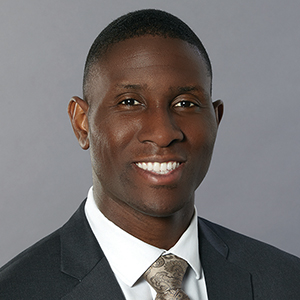 Koko Archibong
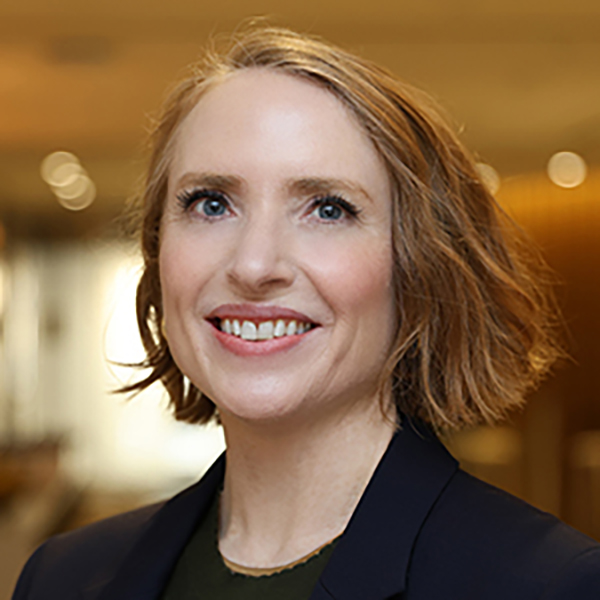 Katelyn Wheeler
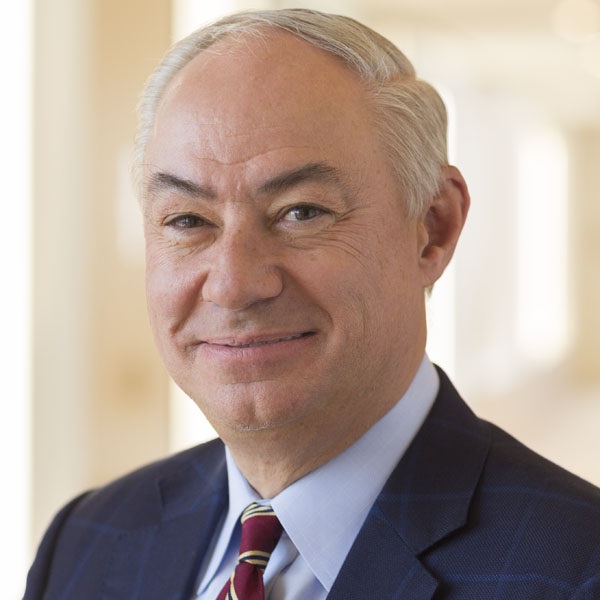 Grant Cambridge
October 21, 2026
Running a nonprofit can be deeply rewarding. But no one’s ever said it’s easy. Staying on track to meet your mission while hewing to regulations and courting donors has always been a delicate balancing act.
Enter Capital Group Private Client Services. We’ve helped hundreds of nonprofits pursue their missions, giving us extensive insights born of experience and careful analysis.
More broadly, many of the portfolio managers and analysts at our parent company, Capital Group, have served in leadership roles for philanthropic organizations — often alongside our own Private Wealth Advisors.
We sat down with three of these professionals to discuss key ways that nonprofits can better fulfill their mission: Private Wealth Advisor Koko Archibong, senior trust, estate & fiduciary strategist Katelyn Wheeler and portfolio manager Grant Cambridge.
Koko Archibong: The documents define the organization
Koko is a Private Wealth Advisor at Capital Group Private Client Services. He helps clients align their investment strategy with their sense of purpose to build lasting legacies. Koko is based in our Los Angeles office.
I think most people would expect that the no. 1 issue we’re asked to solve for nonprofits is a portfolio misallocation or some other investment challenge.
Those are core concerns, but the main thing I find nonprofit clients need is guidance around structural governance challenges.
What do I mean by that? Well, times change. Financial best practices change with them. Many of the nonprofits I work with aren’t new — in fact, many of them have been around for generations. Yet they’re still using the rules and guidelines they drafted when they were incorporated decades ago.
That doesn’t always ring alarm bells for clients, but it should. Think of the innovations in other industries over the last 30 years. Pharmaceutical drugs are so much more advanced, and doctors prescribe them in very different ways. Cars have backup cameras. The internet no longer ties up your phone line. You might not even have a phone line in your home!
Financial best practices morph in the same way. Laws are amended, ratified and struck down. Data are always improving in quality and in quantity. Even the nonprofit organizations themselves transform as their scale and objectives shift. Yet, amid all that change, their governing documents may not have shifted. They may be using older financial assumptions that were written during a different economic environment.
As a result, nonprofits and their guidelines are often out of alignment. That can force an organization into a portfolio that’s not properly designed to support its mission over the long term.
A common example: Conventional wisdom once accepted that assets would be liquidated consistently year-to-year to support a nonprofit’s work. Older guidelines would assume the same percentage would be spent every year and would set parameters on investment mixes designed to support that figure.
Today, we often consider such drawdowns over a longer period, usually a three-year rolling basis, and formulate a target average over that period. That flexibility can help us better react to market swings and choose more dynamic investment mixes.
But updates aren’t as simple as adding a few bullet points to an old document. To successfully modernize, we must work with an organization, holistically considering its goals and resources on an ongoing basis. What does a nonprofit hope to accomplish? What kind of assets does it have? What kind of a gap exists between what it has and what it needs? And how do we sensibly reflect those needs in the organization’s rules?
Armed with that knowledge and working partnership, we can update these documents to help nonprofits more effectively pursue their mission.
Katelyn Wheeler: Helping donors give more effectively
Katelyn is a senior trust, estate & fiduciary strategist at Capital Group Private Client Services. She helps clients navigate trust, estate, tax and personal planning matters. Katelyn is based in our San Francisco office.
From my perspective as an estate planning specialist, effective philanthropy starts by aligning a donor’s charitable goals, estate plan and tax strategy with the nonprofit’s ability to accept and use a proposed gift.
In short: Sizable gifts demand significant planning by everyone involved.
My role is to help donors and nonprofits evaluate their options through a coordinated planning process. For example, donors may compare a lifetime gift with a charitable bequest, beneficiary designation, donor-advised fund (DAF) or charitable trust. Nonprofits may work with their Private Wealth Advisor to align their investment strategy with the distributions they expect to make, capital projects and spending needs. Ultimately, my goal for both sides is to help the gift support the mission as intended.
My best advice is to encourage donors to evaluate their options before contributing. Working with their Private Wealth Advisors, they can identify the charitable vehicle and gift asset combination that’s likely to have the greatest impact. For example, clients can consider giving appreciated noncash assets, such as stock that’s grown since it was purchased, rather than selling them and donating the proceeds.
Publicly traded securities are often the simplest choice, but closely held business interests, real estate and other assets may also be suitable when the charity has the capacity and policies to accept them.
A properly structured direct gift of appreciated property may allow the donor to avoid capital gains taxes from a personal sale while potentially providing a charitable income tax deduction, subject to applicable limits and substantiation requirements. Additionally, this approach can direct more value to charity, as the donor is giving the entire asset, rather than selling it and donating only the after-tax proceeds.
The strongest outcomes typically result from early coordination between the donor, their Private Wealth Advisor, the nonprofit and the investment team. This collaboration can confirm the charitable structure, document the donor’s intent, address appraisal and reporting requirements, and prepare the organization to administer or liquidate the contributed asset.
For nonprofits, helping their donors think outside their checkbook can expand fundraising opportunities while reducing potential legal and administrative risk. For donors, thoughtful planning can make a charitable gift more efficient, more durable and better integrated with the donor’s broader estate plan.
Grant Cambridge: Diverse viewpoints lead to better decisions
Grant is a portfolio manager at Capital Group. He has served on several nonprofit boards and is the chairman of Salzburg Global, an Austria-based group that brings together leaders and thinkers to tackle some of the world’s most persistent problems. Grant is based in our Los Angeles office.
Almost all nonprofits are resource-constrained. That’s not just money — talent and time are also constraints. In that sense, no matter their size and reach, nonprofits all have the same opportunity: to make better, more efficient decisions. And one of the best ways to do that is to listen to a diverse group of leaders.
That’s why I recommend every nonprofit, even small ones, form a board, or at least a subcommittee or ad hoc committee. The key jobs of this group are to make the right decisions and to establish a good governance process.
Having a process around your goals is very important. Leadership is often laser-focused on executing, but the danger of too much focus is losing track of the big picture. That’s where the board comes in: It widens the group’s perspective.
A perfect example: A group I’m part of was thinking about ways to generate additional capital to support its efforts. In the financial world, we think a lot about return on invested capital, or ROIC — that is, how well you allocate your assets in the pursuit of profits. For nonprofits, ROIC can apply to how well they’re using their resources to pursue their mission.
I asked this group to also consider a more-nebulous metric: ROR, or return on reputation. How well known and respected were we, and how do we increase that level of trust? And was there a way to boost ROR and ROIC simultaneously?
After many discussions, we chose to renovate a hotel that the group is responsible for. That raised the profile of the hotel — and consequently raised the group’s profile as well.
And it was one of the shortest ROIC equations we examined — in other words, it paid for itself very quickly. We removed a lot of recurring costs by addressing some deferred maintenance, and the upgrades let us raise room rates.
It was a better experience for everyone.
It’s not the kind of question someone outside of finance might have thought to ask. I’m sure senior management would have made a great decision had they not had a board to help them think it through, but I don’t think they would have thought to formulate, let alone choose, the option we ultimately settled on as a group.
A lot of nonprofits balk at putting together a board. They worry about the expense, or think they can’t compete with the corporate world for good leaders.
My advice to them: Don’t shrink your board just because you can’t match a Fortune 500 compensation budget. Perhaps you can’t afford a senior-level executive, but that doesn’t mean you can’t get a younger person with lots of creativity and energy. They can still do things that will move you forward. A passionate group of like-minded people can really make a difference for small- and medium-sized organizations.
Explore topics
Related Insights
Related Insights
-
-
-
Asset Allocation