Participant Education
Categories
Participant Education
A blueprint for effective participant communications
Every company — and every retirement plan — is unique. But each one can offer lessons for retirement plan sponsors seeking to strengthen participant communications and support retirement outcomes. To that end, Capital Group partnered with a major employer in the health care industry to uncover ways sponsors can effectively communicate with employees. Our focus was to help workers better understand and participate in their employer’s plan.
While some findings were unique to this particular organization, several broadly apply to retirement plans and employers of any plan size. These findings may serve as a blueprint for plan sponsors to better communicate, engage and motivate their employees to save for retirement.
Through our work with this employer and many other corporate benefits teams, we have developed a program to support plan sponsors with customized participant communications. These tools reflect our dedication to understanding individual investors’ challenges and gaps in their retirement strategies and addressing those needs with clear and relevant educational materials geared to plan participants.
Case study
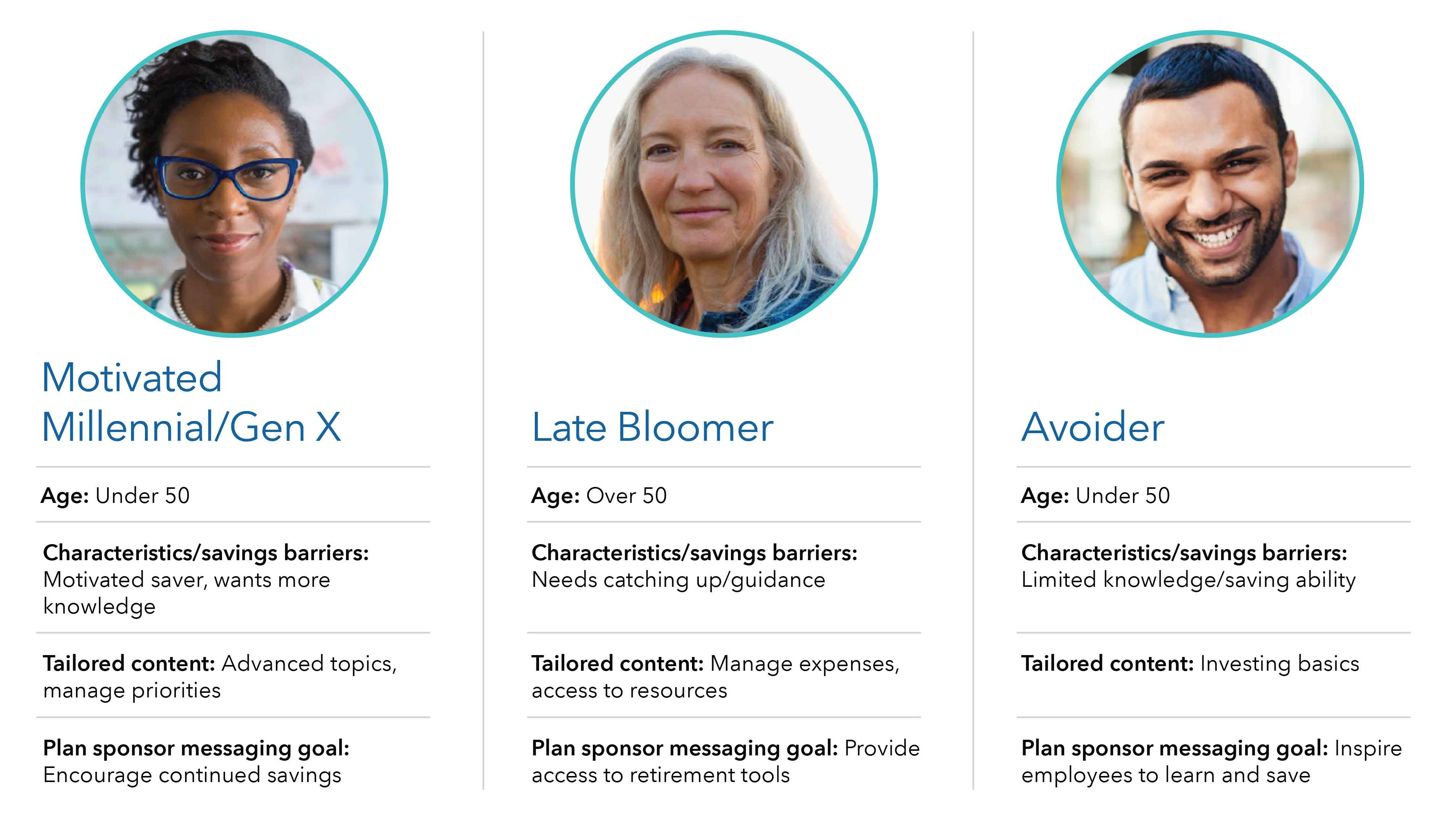
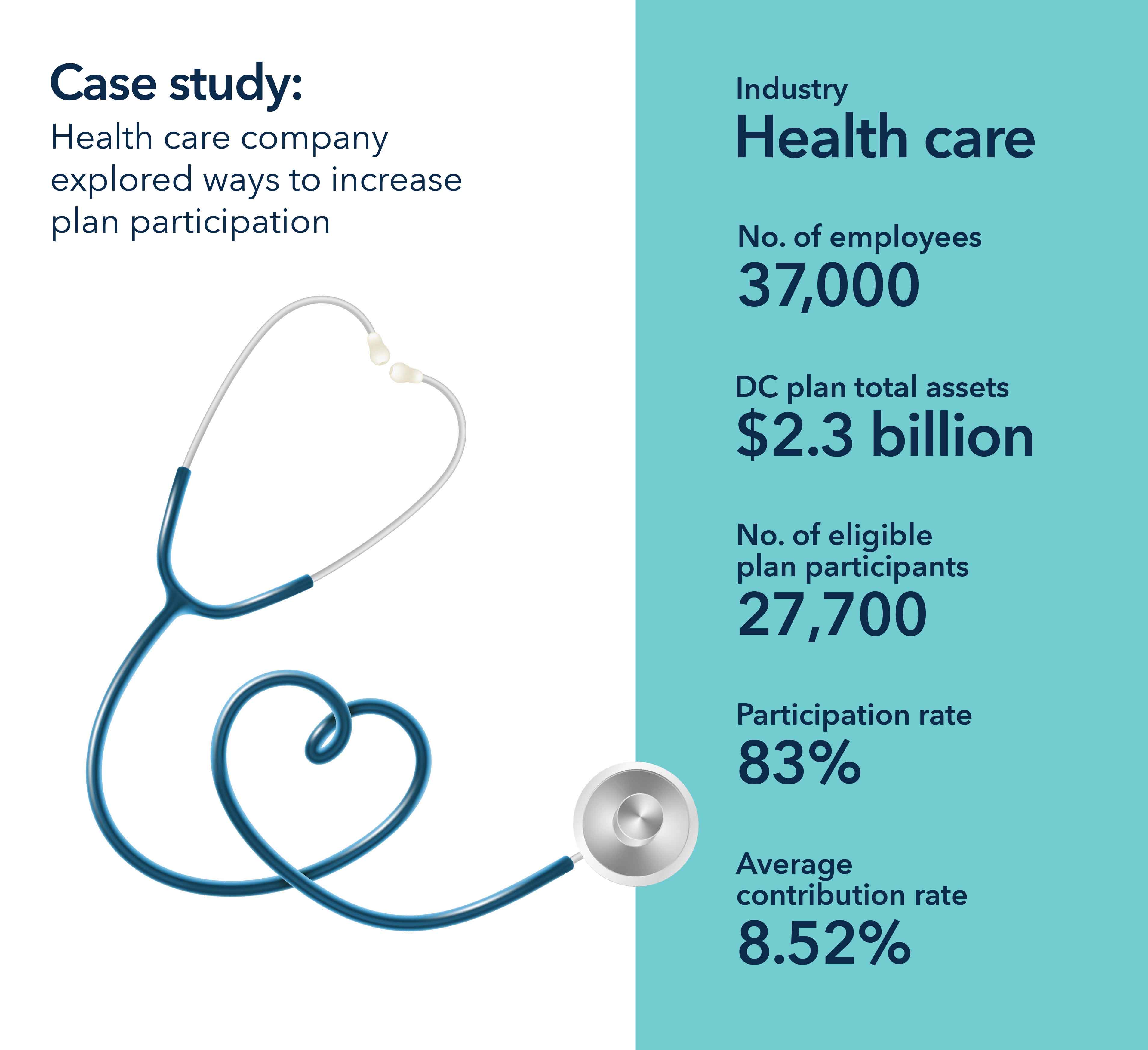
In 2019, Capital Group collaborated with a large health care provider to help understand employees’ retirement savings behavior. The case study involved more than 20 employee interviews and data analysis. Particular attention was given to the employer’s priority demographic groups, such as lower income earners (earning less than $55,000/year), employees age 55 and older and certain job roles, such as nurses. Based on insights from that work, we segmented employees into three groups:
Source: Capital Group
Next, we came up with tailored messages for each group, addressing specific barriers to saving for retirement. We found that customizing messages helped ensure that employees get relevant and relatable content.
Source: Capital Group
Of course, these personas may not apply to every employer. Plan sponsors should consider doing their own interviews and data analysis to see how to best segment their participants. However, based on our work with this company, there are three key lessons that we believe broadly apply to defined contribution (DC) plans: meet employees where they are, cut through barriers and establish trust.
Meet participants where they are
Employees’ time and attention are pulled in many directions. Finding the right moment to communicate with employees can be a complex task.
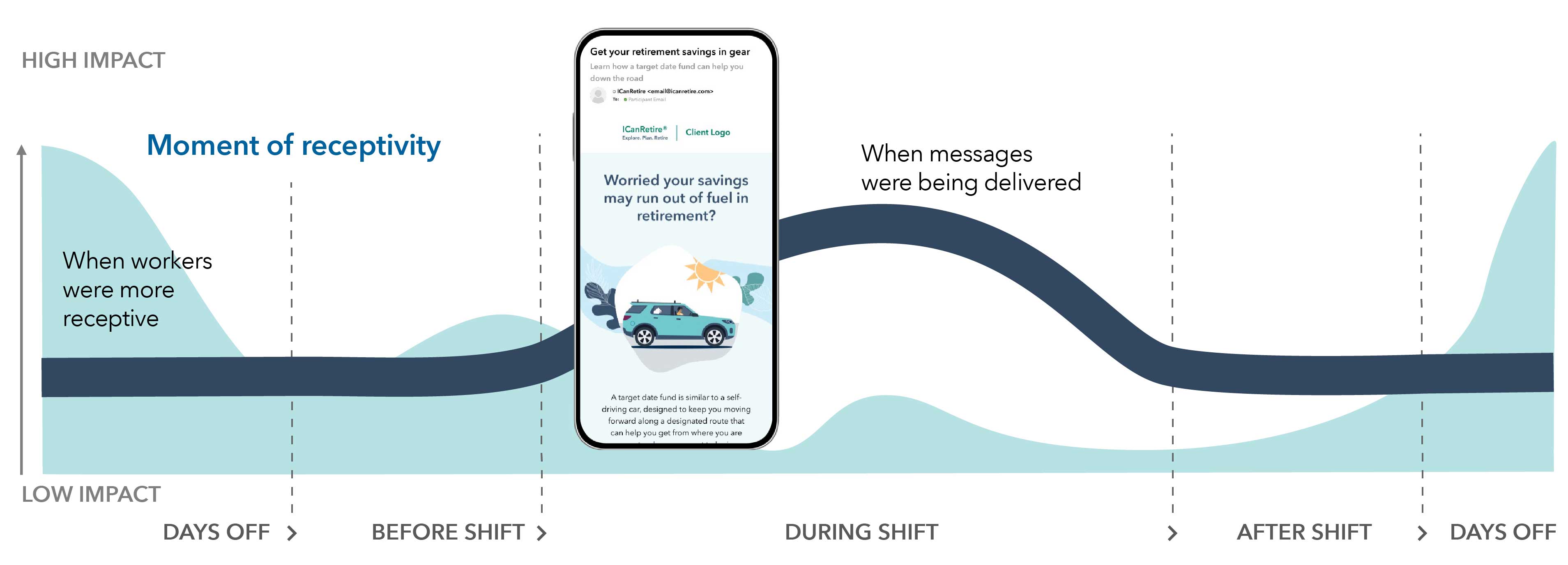
The health care firm discovered that its messages weren't being delivered at the ideal times. Most messages were being sent during working hours, even though research showed workers were more receptive during off-hours.
Many employees were nurses whose jobs were not tied to mobile-phone or computer screens. Often, they would review emails just before their shift, at lunch and in the evening. Communication that was not directly tied to their job or patient care, such as information about retirement plans, was mostly deleted or ignored. In addition, many employees did not use their employer provided email accounts. In order to be noticed, emails needed to be directed to personal accounts.
Reach employees at the right times
Source: Capital Group
Find out when your employees are most receptive to messaging. For some companies, this may be pre-shift. For others, it may be mid-afternoon or on the weekend. The key is to deliver messages that can be easily accessed from anywhere during times when employees are in the right mindset. Keep in mind too, that your goal is to capture employees’ attention and provide consistent prompts to get them to act.
Other ways to “meet employees where they are” include:
- Tailor messaging. Consider employees’ specific needs and key priorities, perhaps with the help of employee interviews or data analysis. Needs may differ based on demographics or the types of jobs. For example, sponsors can customize communications according to age group, explaining the merits of investing in age-appropriate target date funds or participating in an investment re-enrollment.
- Use different channels. Targeted content can be delivered via emails, mobile phone messages, physical and digital signage or multimedia campaigns (videos or podcasts).
- Reduce complexity. Make it seamless for employees and bring all the information together in one place. As much as possible, make messages short and action items easy to complete in a few minutes, as the employee’s attention may be limited. It may be helpful for plan sponsors to provide one online destination point to access retirement information. Content should be simply and concisely worded. It should also provide convenient links to other resources such as wellness providers, educational resources and other employee benefits. Avoid requiring passwords when possible, to help ensure employees are not overwhelmed by a complex landscape of logins and portals.
Cut through barriers
We found that resistance to retirement planning often had less to do with logistics and more to do with emotions. For example, many people expressed shame about their lack of knowledge or savings. Some feared that they were too far behind in savings to catch up. They also felt overwhelmed by competing needs, including everyday expenses, debt and family demands.
Communication that ignored these factors alienated employees. We tested participant messages using different tones and got better results with messaging that sought to speak to emotional realities, taking care not to exacerbate shame or fear. This included plain language — what we call “kitchen-table English” — and a reassuring, helpful tone that conveyed empathy.
Here are some recommendations on how sponsors can cut through barriers:
- Address emotional obstacles. Understand the emotional roadblocks your employees face so you can help them move forward.
- Speak plainly and empathetically. Use friendly, welcoming language that is easy to understand and would resonate well with employees.
- Lay out options. Content that details specific options and the pros and cons of each performed well at this organization. This can help employees quickly evaluate tradeoffs in a clear format.
Establish trust
Many employees’ trust in financial services and even in their employer is low. This is a trend recorded across industries and institutions, with trust waning as a sense of inequity and unfairness rises. As the voice of an institution, it can be challenging to convince these individuals you’re on their side. This is a significant hurdle to overcome in helping employees seek better retirement outcomes.
To increase trust, you might want to look to sources that employees do trust. You’ll also be more likely to earn trust with authentic communication that tonally matches the subject matter than with overly formal or disingenuous messaging.
Here are some recommendations on how sponsors can establish trust:
- Enlist allies. Employees have strong connections with colleagues who are part of their “circle of trust.” We found that people place a great deal of weight on advice from trusted peers, including on financial matters. It may be good to seek the help of influencers who speak the employee’s language, to reach them on an emotional level. Consider recruiting these influencers as ambassadors to help other employees understand the retirement plan and how small decisions now can have a significant long-term impact.
- Match the mood. Adjust the tone of the communications in response to internal and external events. For example, a sunny tone may be appropriate for discussing the employer match, but a somber and reassuring approach may be more effective in addressing market volatility.
Listen to your participants
Our biggest lesson from this study was that employees differ in their needs, preferences and priorities. A plan sponsor should listen to employees to find out what matters to them. We believe a message that isn’t accessible and relevant to an individual in the moment they receive it will not be effective – even if the content is helpful or important to their long-term goals. As stewards of retirement savings, plan sponsors can empower individuals. They can do this by meeting employees where they are, cutting through barriers and showing trustworthiness.
Learn more about
Participant Education
Plan Design
Long-Term Investing
Don't miss our latest insights.
Our latest insights
-
-
Participant Education
-
Plan Design
-
Participant Education
Don’t miss out
Get the Capital Ideas newsletter in your inbox every other week
Investments are not FDIC-insured, nor are they deposits of or guaranteed by a bank or any other entity, so they may lose value.
Investors should carefully consider investment objectives, risks, charges and expenses.
This and other important information is contained in the fund prospectuses and/or summary prospectuses, which can be obtained from a financial professional and should be read carefully before investing.
Although target date portfolios are managed for investors on a projected retirement date time frame, the allocation strategy does not guarantee that investors' retirement goals will be met.
All Capital Group trademarks mentioned are owned by The Capital Group Companies, Inc., an affiliated company or fund. All other company and product names mentioned are the property of their respective companies.
This content, developed by Capital Group, home of American Funds, should not be used as a primary basis for investment decisions and is not intended to serve as impartial investment or fiduciary advice.
Capital Client Group, Inc.
Use of this website is intended for U.S. residents only.