
Economic Indicators
Real Estate
When sentimental assets take center stage
We all have assets. Some are tracked meticulously, measured in basis points and performance charts. Others live more quietly on a bookshelf, beneath a stair or behind glass. Even if they never appreciate in value, they’re prized nonetheless: the teapot inherited from a grandmother, the antique chair that has been reupholstered more times than anyone can recall, the bold canvas discovered in a gallery one afternoon and carried home on a whim. These are assets of a different sort. And in many homes, they shape the rooms around them as surely as architecture or light.
That’s where interior design enters the conversation. Designers are often asked to integrate art, heirlooms and idiosyncratic collections into refined spaces. Their challenge is balance: honoring what’s meaningful while preserving cohesion.
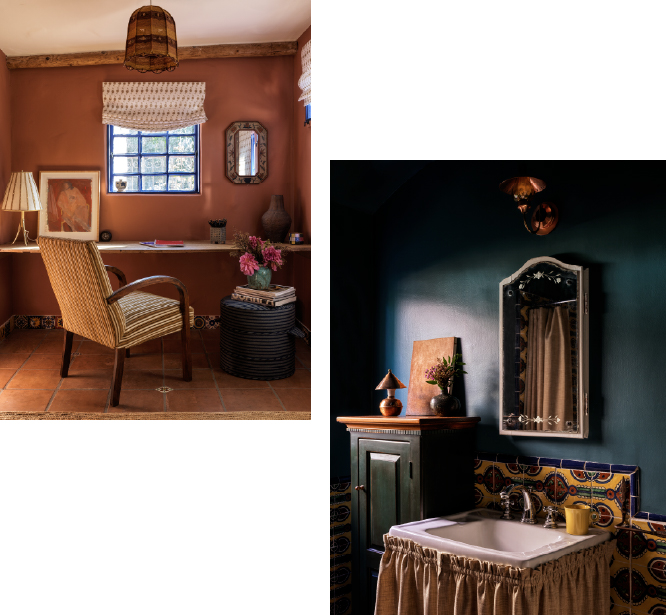
Interior by Garance Rousseau.
Photos by Chris Mottalini.
Handled poorly, these objects can feel like sentimental clutter. Handled well, they become something else entirely, elevating rooms into spaces that feel personal, deliberate and beautiful. Here’s how three leading designers approach the task.
Let collections lead, then give them structure.
Collectors tend to understand something instinctively: Uniformity is overrated. The trick, designers say, isn’t choosing furniture and objects that match perfectly, but to give them a framework that allows their differences to feel deliberate.
When a collection starts to feel unruly — inherited ceramics, decades of quirky objects gathered without a master plan — designer Garance Rousseau looks first to the architecture. Built-ins, shelving niches and cabinetry act as quiet organizing devices, grounding even the most colorful or eccentric pieces.
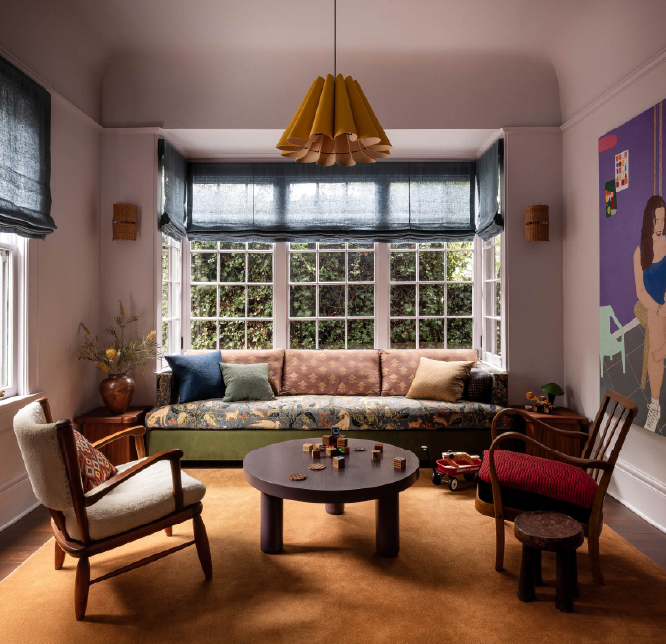
Interior by Ashley Lavonne Walker.
Photo by Harris Kenjar.
Artwork by Tiffany Alfonseca.
Rousseau recalls a New York client who inherited a full set of 1940s Fiesta dinnerware, which she describes as “chunky, colorful, a little random.” Instead of scattering it throughout the home or tucking it away, she worked with the home’s existing quirks and palette to create dedicated displays in the dining room and kitchen, resulting in a charming look.
“I love working with people that have those heirlooms,” Rousseau adds. “It’s special to be able to find ways to showcase the things that are important to them.”

Explore what matters most.
Place art along paths people actually take.
Art doesn’t need to be confined to formal rooms or reserved for moments of stillness. When placing art for her clients, designer Ashley Lavonne Walker begins by studying how people move through a home, then places art where it will be encountered naturally.
She maps the routes guests take when arriving and circulating during a gathering. Hallways, stair landings and connective walls often emerge as prime real estate.
“I think about the path a guest takes when they enter,” Lavonne Walker says. “Where are those moments where they’re moving toward a powder room or coming back out? Can an art piece elevate that experience as they pass through?”
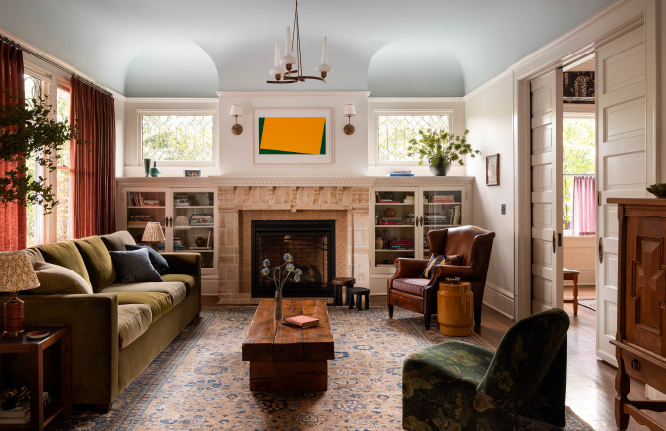
Interior by Ashley Lavonne Walker.
Photo by Harris Kenjar.
Artwork by Carmen Herrera.
That mindset leads to deceptively simple decisions: hanging a favorite piece along the route from entry to living room, anchoring the end of a long corridor with something meaningful or turning a stair wall into a quiet sequence of smaller works.
Frame with intention and protect what matters.
Once a piece of art has found its place, framing becomes the quiet but decisive act that determines how it impacts a room. Designer Suze Kaufman works with an experienced custom framer who provides both options and judgment. Seasoned framers understand how to draw out subtle tones in a work, how mat depth affects proportion and how frame thickness should shift with the scale and weight of the piece. More than decorative afterthoughts, these are compositional decisions that shape how art is perceived.
“Framing is expensive, so it’s not something you want to do more than once,” Kaufman says.
Placement also plays a role. Kaufman considers where the work will live before finalizing a frame, paying attention to how it relates to surrounding furniture. “You want to have some contrast between the frames and the furniture,” she says, recalling a piece she ultimately chose not to hang in a bedroom because the frame echoed the wood tone of the nightstands too closely.
Beyond aesthetics, protection is a practical concern, especially for high value works or rooms with abundant natural light. Museum-grade glass is often a worthwhile investment, and in particularly bright spaces, Kaufman designs window treatments with art in mind. Layered sheers make it possible to soften direct sunlight when needed, protecting the work without darkening the room too much.
Furniture placement can support the art.
Art may be the focal point, but the furniture beneath it should know its role. Kaufman often opts for low benches or pared-back consoles under large works, steering clear of pieces that crowd the composition.
“If the furniture is too tall, everything feels off,” she explains.
For salon-style hangings or collections of smaller works, sideboards around 30 inches high provide a calm horizontal anchor. In long corridors Kaufman creates a hierarchy, reserving prominent end-of-hallway positions for the most significant pieces. It’s a subtle choreography, but one that rewards repeat viewing.
Give older furniture pieces another life.
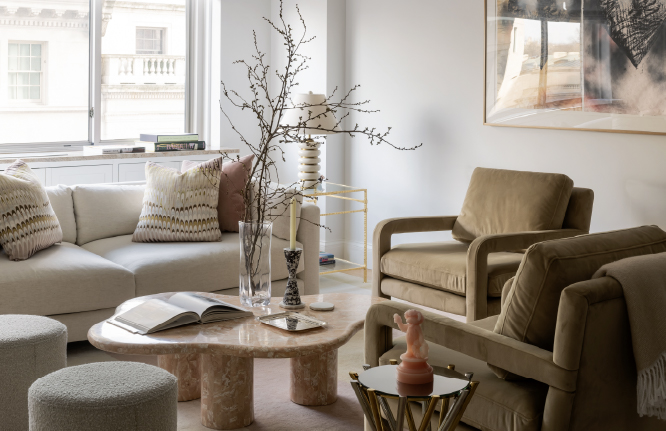
Interior by Suze Kaufman.
Photo by Matthew Williams.
Rousseau often begins projects by taking inventory, identifying furniture that can be restored, reupholstered or quietly reimagined. When an upholstered piece doesn’t neatly align with a home’s prevailing style, she favors editing and repositioning over removal, when possible. Antique chairs can gain new energy in modern textiles, and a beloved but awkward piece may simply need a different room or a different role.
She laughs about one client whose daughter’s chair has been reupholstered three times by successive designers. “We could have bought a new chair,” Rousseau says, “but I think it’s more interesting to let its life continue.”
Sometimes, the shift is less about fabric than placement. In one Beverly Hills project, Lavonne Walker worked with clients who had accumulated a dozen unusual 1940s chairs over the years — striking silhouettes, woven seats, but difficult to integrate as a set. Rather than treating them as untouchable relics, she grouped them in a casual game area, where guests would naturally gather and use them.
This approach preserves sentimental value while refreshing a home’s aesthetic, particularly when contemporary choices meet timeworn forms. The result is a home shaped not just by taste, but by time.
Explore topics