
Global Affairs
U.S. Equities
Q&A with Judith Finegold
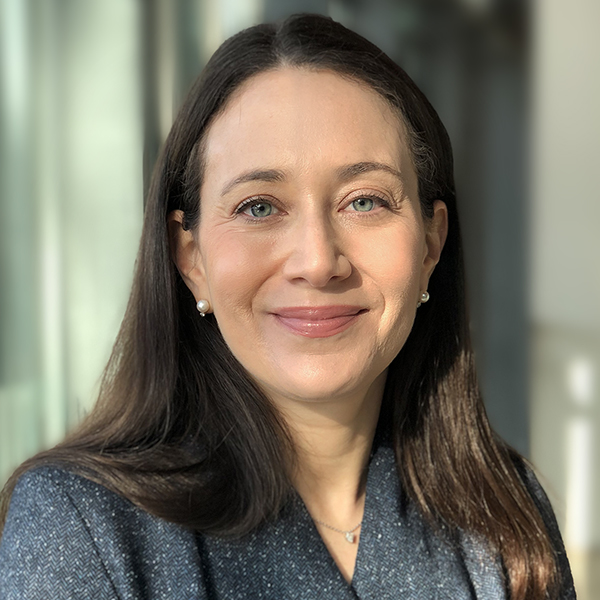 Judith Finegold
June 29, 2026
Judith Finegold is a Capital Group investment analyst and research director, covering U.S. biotechnology and pharmaceutical companies. Prior to becoming an analyst, Judith was a doctor at the National Health Service (NHS) in Britain. She holds a PhD from Imperial College London, an MBA from INSEAD and a degree in medicine from the University of Cambridge and University College London. We asked Judith about her transition from medicine to investing and areas of opportunity she’s watching closely.
If you’d like to hear more from this conversation, we invite you to watch or listen to Judith’s appearance on the Capital Conversations podcast on Apple Podcasts, Spotify or YouTube. The excerpt below has been edited slightly for clarity and brevity.
You have a very different investment edge than most analysts. Can you share that with us, please?
Before becoming an analyst, I was a doctor, specializing as a cardiologist. I was also doing clinical research and trials. I understood that the research I was doing as a physician was also very important to the investment industry, which fascinated me. It moved all my academic interest into a new realm. And I got this idea, what if I could become a healthcare investor? I call it an idea because it was a spark of enthusiasm more than a great plan.
How do you translate your background into being an investor?
It’s core to what I do. I’m a pharma and biotech investor, so I look at companies that develop treatments for diseases. At Capital Group, we do the bottom-up fundamental research — the basis of which is understanding the drugs in the pipeline and the drugs that create revenue — and understanding how that’s going to translate in the future.
My experience as a doctor helps me really understand the medications from very early stages.
So when you’re sitting at the table with these management teams, you have an edge in that you can go deep into the science.
I think so. Especially for the smaller companies that are purely science led, because that is where the real hunting ground is.
When you look at U.S. biotech today, what are some of the under-the-radar things that are on your mind?
The first one is GLP-1s, and people may think that’s old news. But do you know what the number one cause of death is in the United States? Heart disease. And one of the main causes of heart disease is, of course, obesity. So, the unmet need of this is huge.
The way we think about things at Capital Group is usually with a five-to-eight year timeframe. GLP-1s are phenomenal and the data they’ve shown is amazing, but I’m thinking about how we can improve in the next five years. Can we improve the tolerability? Is there a different mechanism that can add something else?
The second example is a target called Lp(a). You probably know about LDL cholesterol, and everyone knows that’s bad for your heart. Lots of people are on statins to treat LDL cholesterol, and there are some injectable drugs.
Lp(a) is a different kind of lipid, and it’s present in 20% of people in the world, we think. Unlike cholesterol, you can’t modify it with diet or exercise. We think it may be an independent risk factor for heart disease, but we don’t know. But we are going to know soon, because the results from the first trial are going to come out this year. And that would obviously be a huge new market. It’s something I’ve researched a lot and I’m really interested to see the results of that trial.
Is that an even bigger market than GLP-1? How should we think about that?
I think it’s going to be a massive market because, as I said, it could be present in up to 20% of the world’s population. The difference with GLP-1 versus something like Lp(a) is GLP-1 is almost a consumer market at this point, right? People are reaching out, they understand the drugs, they understand the benefits. Whereas Lp(a) is going to be on your radar if you had a cardiovascular event, or if someone in your family has to go and get screened for it.
Why are you so excited about small- and mid-cap biotech?
In general, the science and innovation is very, very rich in small and mid cap. The U.S. ecosystem of biotech is really second to none because you have this amazing pipeline of ideas combined with entrepreneurial people.
It’s also where we can get an edge. We can do differentiated research and come up with very different investment theses on these companies, and the stock moves can be outsized, both on the positive and the negative. As a Capital Group investor, it’s really where I have the edge, because we are long-term investors. These stocks can move 30% on a day with almost no news. And if you’re at a more short-term-focused company, then you may not be able to handle that volatility.
Explore topics