
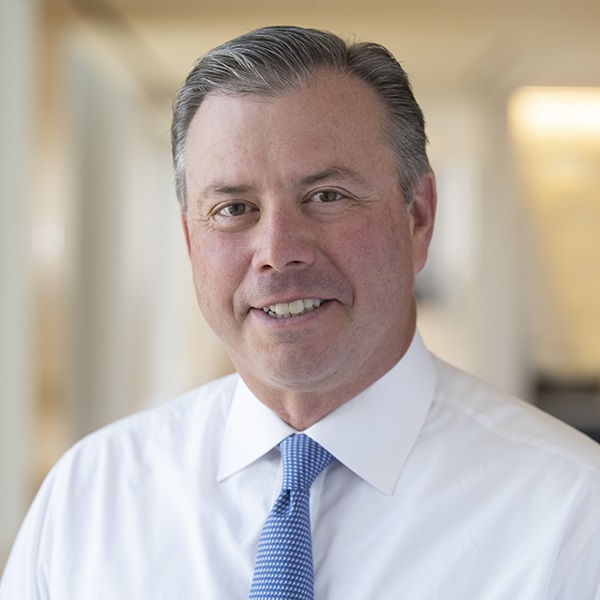
 Richmond Wolf
 Dr. Wei-Wu He
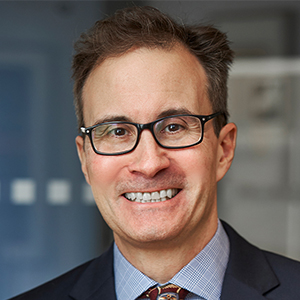 Walter Hamilton
Economic Indicators
Walter Hamilton
Hello and welcome to Health and Longevity, the Science and Strategy of Living Well Longer. I'm Walter Hamilton, editor in chief of Quarterly Insights Magazine. I want to welcome you on behalf of all of us at Capital Group Private Client Services. Well, by the standard definition, health has historically been measured in terms of lifespan. How long might you live? 70 years old, 85, a hundred. But while rising life expectancy is undoubtedly a good thing, there's a growing belief that lifespan is actually a somewhat narrow measure that brushes past a key consideration. What if you're not healthy in those extra years, or at least healthy enough to engage in activities that give our lives meaning. That can be exercise, travel and adventure, but even basics such as being pain-free or living independently. This realization has prompted a focus on what's been dubbed health span or how long you can live in relative good health to be able to enjoy life.
This subject has sparked any number of recent books, including at least two New York Times bestsellers that I know of. Now add it all up, and it's not hyperbole to say that all of this can be life altering. And it's our subject today. We'll explore what's behind this new approach to medicine, what scientific breakthroughs are enabling it, and what are the practical steps all of us can take along the way. To help us, we're joined by a pair of speakers who are deeply involved in this issue. Dr. Wei-Wu He is executive chairman of Human Longevity, Inc.. a biotechnology company focused on extending human life and health spans. His company integrates whole genome sequencing, advanced biomarkers and cutting-edge imaging to deliver personalized and preventive care. Richmond Wolf is an equity portfolio manager at Capital Group who follows U.S. medical technology companies. He has 19 years of investment industry experience, all of them with Capital Group. Gentlemen, thanks to both of you for being here today.
Dr. Wei-Wu He
Thanks for for having us.
Richmond Wolf
Thank you.
Walter Hamilton
And as always, a special thanks to all of you tuning in today who sent in questions ahead of time. We'll fuse many of them into our conversation today. OK, so with that as a preamble, let's jump in. Rich, let me start with you. As I just mentioned, we've all been programmed to think of health in terms of lifespan, but a more telling marker it seems like is actually health span, quality of life between simply length of life. Give us a sense of how we've gotten there, how this thinking is changing and why.
Richmond Wolf
Well, I would start with the three primary issues surrounding longevity in general, which is I would put them in the following buckets. The first is preventative care, so are we doing a better job of taking care of ourselves in terms of exercise and diet, but also medications like statins and other things that have increased longevity just as a result of improving our ability to not have heart attacks. The second is in diagnostics. As diagnostics have improved, and we'll get into this later, I'm sure particularly around liquid biopsy, our ability to diagnose disease much earlier has a greater impact on our ability to treat disease. And that's true for many diseases, but especially for cancer. You can detect cancer at stage one or two. It's often the difference between being in remission and not. And the last category, of course, is the advancement in medicines. So medicines have advanced to the point where we now can treat disease including later stage and metastatic disease in some cases, but we're just doing a better job of developing medicines to treat disease.
The combination of these three things, an awareness around prevention and lifestyle changes, the ability to diagnose and recognize disease earlier and the ability to then treat disease have all affected longevity dramatically. And the thing I would punctuate that with is that's probably not the end of the story. Because as you point out, as we live longer and we know that population over age 80 in the next 10 years will triple and the population over 60 will double, so considerably faster than the population under age 60. What is life going to be like for those people and what are the diseases that maybe those three things I mentioned have a harder time addressing?
Walter Hamilton
OK, so Wei-wu, this focus on health span actually sort of turns up a spotlight on a broader transformation in terms of what actually constitutes good health care in the age-old model. And let's be honest, quite frankly, it's the current-day model. Until you actually have symptoms, you don't get treatment, for example, at that point you might turn on the jets full bore, but in the best case scenario, even with that, it's scary, it's painful, it's expensive, it's long, so forth. And obviously a worst-case scenario, those symptoms don't turn up and you don't get a diagnosis until it's too late, quite frankly, at which point, it's late stage, nothing can be done. This new thinking is really proactive versus reactive. The goal is to be diagnosing things years, in some cases decades ahead of time, which is quite a concept. Give us a sense of this, how this all works.
Dr. Wei-Wu He
Yeah, no, I think there is a real revolution, technology revolution going on in the longevity space. I actually think longevity is a scientific breakthrough. 200 years ago, the average life expectancy in the whole world is only about 30 years old. But in the last 200 years, the biggest revolution is vaccine and antibiotics, which basically extended the human life expectancy to today's obviously with other innovations where in developed nation we're approaching around 80 years of average life expectancy. But there's a whole new wave of technology coming out which will probably get us to live to our genetic potential, which is over a hundred years old. We human beings are programmed live over a hundred years old. A dog is never because the longest living dog is only 30 years old, so they're genetically programmed to live maximum 30 years of age. But we human beings, there's plenty of human beings live over the age of a hundred.
So there is a technology innovation coming benefiting our current generation. And this revolution, we'll talk about it later, it's the decode of the genome and all that. And so with all these new technology, I think there is a transformative health care platform, which is we're moving from a sick care model, which we get a late-stage, stage-four colon cancer. We go get monoclonal antibody treatment, KRAS treatment versus a now a disease risk care model. So somebody is born with a genetic mutation for colon cancer like Lynch syndrome, and you detect it using liquid biopsy. You can detect the colon cancer at stage zero or stage one. Then it's a simple removal of a polyp versus a millions of dollars of late stage treatment. So I think that movement, we are the luckiest generation to witness the convergence of all these technology. And I think this is coming. It is coming. It's right now. It is like iPhone 16 is here, are you going to use it? OK, so that's the longevity coming.
Walter Hamilton
Right, it seems like it's not just coming, but it's actually here in many ways and it's going to keep coming.
Dr. Wei-Wu He
Right, exactly.
Walter Hamilton
So Rich, so let me ask you a little bit about this sort of constellation of scientific, clinical and technological breakthroughs. I mean, Wei-wu mentioned it. How are we harnessing major developments such as the mapping of the human genome? Obviously artificial intelligence plays into this. Give us a sense of what is here, if you would, and how it all works.
Richmond Wolf
It'd be impossible to do it all in one hour. Sure. There's so much happening in the area and it ranges from things that I mentioned like preventative health and just our knowledge of how diet affects the gut microbiome and how the gut microbiome affects our longevity,
all the way up to the science of aging. And there are companies out there today that are trying to understand the biophysics of what happens to our cells when we age and everything in between. So I look at it sort of the near term and the long term. What are some of the technologies that are having the greatest impact near term? The top of mind for me is liquid biopsy. So our ability to, and this has a couple of different forms, but the basic concept is we take your blood, some portion of your blood, and we can identify whether there's mutant DNA, mutated DNA like cancer, DNA in your blood. It's an incredibly difficult problem because as you might imagine, tumors shed tiny amounts of DNA and you have lots of native DNA in your blood. So it's one of the most difficult signal to noise problems there is, but it is slowly being solved and it's being solved really well and it's continuing to get better every year.
That falls into two primary buckets today. So the first bucket today is something called minimum residual disease testing or MRD. So we know today if you have a cancer, certain cancers, there are tests that you can get where we will take your tumor, we will sequence your tumor, and then we'll have a template if you will, so that three months later, six months later, nine months later, we will test you. Maybe we do it once a year to determine whether or not you've had recurrence because it turns out your prognosis if you have recurrence, is extremely bad in almost every case. The other area is in screening, and there's screening for high risk patients. So for instance, patients who have type two diabetes, new onset type two, two diabetes have a higher increased risk of pancreatic cancer. Patients who've had hepatitis A and B in particular have a higher increased risk of liver cancer.
So we can take patients that are at high risk and we can screen them for a very specific liquid biopsy panel. Or there are broad liquid biopsy panels and there's some that exist on the market today, but we take maybe 5 milliliters of your blood and we screen you for seven or eight cancers at once. So it's not that difficult to envision a period within less than 10 years or with a high degree of sensitivity and specificity. We're sampling your blood and we're detecting cancer in much earlier stages. And one of the things that I've offered to some of the biopharmaceutical companies I talked to is imagine a world where we diagnose all cancer at stage one and two and let's take a step forward. Imagine we just diagnose all autoimmune diseases in the earliest of stages. How does that change the way we do drug development?
How does that change the way we do all aspects of care? And it's obvious that with cancer, it has an enormous impact right away. So that's the technology that I think is most interesting, earliest on as we start to look at 10 years from now, what's most interesting to me is how many approaches we have to be able to treat disease. So around the time I was born in 1970, there was basically only small molecule therapeutics. That's all that existed. And then in 1980 with pretty amazing advance done at Stanford and UC Berkeley, we discovered the use of recombinant DNA and we could then make proteins which led to the biotech revolution. But from that point until about 2000, there were only a handful of biotech drugs on the market, not very many. Today we have countless number biotech drugs. Over half the approvals now are biologics. We have gene therapies, we have oligonucleotide therapies, we have cell-based therapies, and all of these platforms, all of these modalities enable us to treat disease very differently and to think differently about how we treat disease. So as I think 10 years out, I'm most excited about the fact that we can now identify the problem we want to solve and as opposed to just going to the shelf and having one vial we can pull down, we maybe have 20 different ways that we can go about doing it.
Walter Hamilton
Wow. OK. So let me stay on this a little bit. You mentioned cancer. Let me just ask you briefly and weu please jump in as well. Let me touch on a couple of the other really big, the big horsemen of this heart disease slash heart attacks, which is a big issue. Someone has a heart attack and it's a surprise, but really it's been building up for many years. What can we do on that front and then what can we do on issues of mental cognition, dementia, Alzheimer's, so forth? Rich, I'll start with you, but way we would please jump in as well.
Richmond Wolf
So we're setting aside cancer,
Walter Hamilton
Well feel free to add more on cancer, but
Richmond Wolf
I think we addressed it. But in a sense, the reason I want to highlight cancer is that that's where probably the vast majority of dollars have gone in terms of research funding. But you're right to point out that metabolic diseases and cardiovascular disease are still a massive problem, have to be addressed. Those are more difficult and probably need to be addressed on the front end, the preventative care, exercise and diet as much as they do on the back end in terms of diagnosis and therapy, and we can delve more into that if you want. When it comes to neurodegeneration, and I'm going to go back to your comment about healthspan versus lifespan. In the case of neurodegeneration, there's kind of the big four, there's ALS, Alzheimer's, Parkinson's and multiple sclerosis. Those are the big four in terms of incidence. Those are tougher.
And they're tougher because right now we have for the most part either palliative care, or in the case of Alzheimer's, which in some ways is the most difficult, a lot of these patients are very physically healthy, but obviously their cognition is not great. I suspect that probably what will happen there, these diseases are very complicated. Someone once told me that neurobiology is where intuition goes to die. So it's a difficult place to start to try to address problems. But I suspect that what we'll see is with a lot of those diseases, the cognitive diseases, we will see drugs that will help. We'll see earlier diagnosis that I think for sure will help. But I think there also probably will be a nexus of technology and health care in terms of just how we manage the patients. And it might be something as simple as with a cognitive-impaired patient or a dementia patient or MCA patient MCI patient, mild cognitive impairment, we just track them. You have something like an air tag on these patients and we track them and we have some way of talking to them or addressing them in some way to get them calmed down to figure out they're not going to work. They're actually 85 years old, they're not 35 years old, they're in the wrong place. A way of contacting help to come help them. It's a huge issue because these patients require 24-7 care. So there's two to three caregivers per patient. They have six and a half million patients with dementia in this country today, headed to 12 million in the next 10 to 15 years, it's a problem. So my suspicion is it'll be a combination of both technology and drugs.
Walter Hamilton
OK. Yeah, that all makes sense. OK, so, Wei-wu, let me ask you, I'm keeping with this vein of early detection. The age-old barometer for doing this is the annual physical, right? A stethoscope, a tongue depressor and some coughs, right? I'm sure that's great at diagnosing strep throat. None of us are at risk of that, but I'm not sure it's all that much use in many of these more complicated diseases. With that as a prelim, give us a sense of what you and your company do and how you approach this differently.
Dr. Wei-Wu He (00:18:27):
Yeah, well, maybe I will give a little bit short background about our company. So our company was started by Dr. Craig Venter. The scientist actually was among the first group of scientists to actually decode the human genome in 2000 because genome is really, really important because we came to this earth in one single cell. We inherited 3 billion code from our mother and we inherited 3 billion code from our father. That's the beginning of our life. But we human being wandered on earth for hundreds and thousands of years. We never knew our code until 25 years ago and led by Celera, which is founded by Dr. Craig Venter and the NIH group. So Craig had this vision. By the time the genome is decoded, we're entering a whole new era of personalized precision medicine, which is really what human longevity is all about. So most people don't believe me.
I've been interested in longevity since 50-some years ago. So I always tell the story I grew up with my grandmother, but unfortunately at 63 years old, she had a bleeding and went to the hospital, never came back with a late stage cancer. So I retrospectively look at my career. I always been interested in biology and came to this wonderful country to do my PhD, went to Mayo Clinic, Mass General 30 some years ago. Craig actually recruited me to start the first company, genomic sequencing company. So I've been working with Craig for 30 some years and when he started Human Longevity, I say, man, this is my passion. That's why I invested and got involved.
So come back to what we do is just think about weapon during World I, World War I, World War II, we don't have precision weapons, we just drop millions of bombs, bombs into a city. But today the missiles are so precise or the drone is so precise, but that's a technology evolution. So with today's technology, the technology is getting more and more precise, especially with AI, with all the data. Just like I always use the example of AlphaGo to play the go game. Probably 20 years ago, there's no machine can beat human beings, but today with AlphaGo, no human being can beat the machine anymore because the machine is just so precise. So we build this clinic in the sense that by combining genomic technology, whole-body MRI, proteomic marker, liquid biopsy, we can actually, the lowest hang fruit in opinion is still to prevent the age-related chronic diseases. It's cardiovascular disease, cancer, dementia and metabolic diseases. Because 200 years ago, our biggest disease is infectious disease.
And the technology solve those problems are vaccine and antibiotics and antiviral. But today, if you look at the American death every year, number one, cardiovascular disease, there are more Americans die of cardiovascular disease than anything else. Number two, cancer. Number three actually is unfortunately, is unintended accident, which opioid overdose is considered to be unintended, but as people aging accidental fall is becoming a big, big reason for death, it's actually higher than car accident now, it's actually growing faster. And number four is, you know, Alzheimer's, diabetic associated diseases. So in our lifetime, I think if we want to add 20 years to our healthy life expectancy is probably to delay age-related chronic diseases by 20 years. If everybody can push their age-related chronic diseases by 20 years, you probably gain 20 years of healthy functional life. Can you imagine if Steve Jobs didn't have to die from pancreatic cancer, he probably can push his life expectancy to the 80s and 90s.
So that's really, I think that's a low-hanging fruit. That's something actionable today. In my opinion, majority of the people shouldn't be dying from the top five cancer anymore because we have all the technology to identify them at stage one and stage two.
Richmond Wolf
And I think personalization is an important follow on to what Wei-wu was saying. And by personalization I mean two things. One is the disease risk factors that might matter for you. Walter might be different from me or for Wei-wu.
Dr. Wei-Wu He
Absolutely. Yeah.
Richmond Wolf
So maybe in your case, let's say it's cardiovascular disease, in my case it might be cancer. When you go to a place like what we was talking about, the idea is that we can help personalize what your journey and your past should be and we can orient a life plan for you. That doesn't mean that you don't have to worry about the other things, but you might imagine you could focus on things like diet, exercise. Now an important part of this is when we start thinking about the personalization of care, we also have to start thinking about what are the medicines that these people need chronically, how do we monitor them? What does it mean to create longevity for these patients? How do we think about the long-term monitoring? How do we think about AI and how does AI play a role in all of that too?
Walter Hamilton
Yeah, absolutely. So let me take it on a practical level. So at your clinics, and I believe you have one in San Francisco, one in the San Diego area, correct me if I'm wrong, I'm going to go in and I'm going to get a full diagnostic checkup from you.
Dr. Wei-Wu He
Yep.
Walter Hamilton
Sort of give me a sense of what's involved with that. What's going to happen, how long is it going take or frankly, how much is it going to cost? What's the follow-up going to be? Give me a practical hands-on if I'm a potential patient.
Dr. Wei-Wu He
So if you come tomorrow, let's say to San Diego or San Francisco, you probably need to spend about four or five hours there. And so the thing we do is we will sequence your genome, the whole genome, six billion codes, and we obviously will do the traditional biomarker, LDL and all that. And then we do a whole-body MRI. We scan your body with the most advanced 3-PMI machine, scan your body to see there's any anatomical changes in your body. So then we use AI to put all these data to calculate what is your Achilles' heel. The one person I really admire in investment community is Charlie Munger. Charlie Munger actually has a saying, say, "if I knew where I'm going to die, I'm never going to go there."
So in the sense that we are actually our systematic approach, you come in, we take 150 gigabytes of data on you, and we probably going to warn certain people that actually, hey, you have a brain aneurysm in your body. You might eat well exercise well, but if your brain aneurysm burst, nothing matters because that's your Achilles' heel. That's a place you should avoid, right? We actually published this in the Proceedings of the National Academy of Sciences. I think that's a landmark paper. We have 1.200 people came in, they all have to declare they're healthy. But about 14% of people, they already have life-threatening conditions. We find a one-centimeter lung cancer in them. We find a brain aneurysm. We find that the artery is 70, 80% blocked. So that means they will probably have a heart attack in the next five, six years. So we are actually going to tell this person that your place to die if you don't do anything is going to be a heart attack, or the risk is 90% or 80%.
You better actually take care of that, put a stent in there or reduce your LDL. Or somebody has a two-centimeter tumor, you better we send them to Mass General or Cedar Sinai and take it out because if you wait for another two or three years, that two centimeter will become eight centimeters. So these are the low-hanging fruit that we're doing at our clinic. So we pretty, right now our lowest-cost product is $8,000. It's like an annual physical. It's actually like an executive health probe program because traditional people will fly to major academic medical institute, spend three days to do an annual physical and to find out all these risks. But we think in the future the annual physical should be local. So we really think in the future you should have 50,000, a hundred thousand Human Longevity–type of clinic in your neighborhood. So you mainly go there to collect data, get the vaccine, get all the guidance so you can talk to the nurse or patient in these clinics. So it's going to be a kind of a Starbucks coffee distributed risk-care health care system versus a historically, we fly to Mayo Clinic, Mass General, or wherever to take care of our late-stage diseases.
Does that answer?
Walter Hamilton
That absolutely answers the question. And I love the Starbucks analogy and I'm going to ask some public policy questions of you in a minute to how likely and feasible this all is. One question for, I'm thinking, what might someone watching this thing — Ages? I mean, is there any, I'm sure there's no age almost that's too young. Are there ages that are too old, 50, 60, 70, 80? Obviously they need to be healthy, but is there an age cutoff at which is not useful or beneficial or worthwhile?
Dr. Wei-Wu He
In my opinion, there is never too young because there are people, as a matter of fact, if you talk to my mentor, Dr. Venter, he think actually managing of your age, and, publish should be preconception because there are a lot of people who carry genetic mutation like cystic fibrosis. If two love birds planning to get married, but they all carry cystic fibrosis mutation, they have one quarter of chance to deliver a baby, which is actually cystic fibrosis baby, which the life expectancy is hugely impacted by the carried mutation. So if you look at really famous people like Angelina Jolie, so she's public about her BRCA1 mutation, which I consider her as a hero in our industry because she's educating the people. Her family carries a BRCA1 mutation. Her mother died, I believe it's 58 years old. Her mother's sister died at around 60, all because of breast cancer.
So she's born with it. So the question is, you know, have about an 85% chance of dying from breast cancer before the age of 60. It's actually in your genome. So when is the perfect time to find it and when is the perfect time to tell her that, hey, you have this mutation. I think it's still, there's a lot of debate on what is the right time to do the test and tell her that, hey, you have 85% chance of getting breast cancer before the age of 60, but if her plan is to live to a hundred, I think she better know eventually. Right? So that's really, I think in the next 10, 20 years, we humanity needs to deal with these issues and I think we human being, I'm very positive for, I think our humanity has ability to deal with these issues logically, ethically. But I want to add, I think longevity is inevitable. That's actually building in our human genome. We want to live longer. It's not like we can stop it and say 80 years is good enough, don't live any longer. Average life expectancy will go to 90 years old and 95 years old. Mark my word for it, just like we human being crave for sugar, it's in our genome. OK, so you can't tell kids say, don't eat sugar because it's so difficult. We human being crave for living longer and healthier. That's actually in our genome,
Walter Hamilton
Right?
Richmond Wolf
Well, it may be that we're, well, I'll say two points. One is about age You said, what are the right ages to get this done? 60, 70, 80, whatever. I don't think as much about age as much as I do consistency,
And I've studied this kind of call it executive health for lack of a better phrase, for a long time. And the one thing that I've determined is that if you do it consistently, you're getting the imaging annually, then it makes sense, makes a great deal of sense. And I don't worry about the "incidentalomas" as they call them, the false positives. Those are very rare and it's more the 14% that Wei-wu was talking about that matters. Too often people will go and they'll get a physical like this and they'll say, I got mine done. I only do it in five years, but the average cancer doubling time for a lot of solid tumors is 15 months. So you need to do it consistently. That's a very important point.
Imaging is hugely important, and the combination of imaging with genomics is hugely important. I think that can't be lost on people as we start to think about longevity. That's important. The second thing I would say, you made me think of this too, which is in a sense we're killing ourselves. Now you might think that I'm talking about the fact that we drink bad sodas or we eat sugar. We definitely are doing that. So we were killing ourselves that, but a huge component of every disease that you would want to worry about if I wanted to scare you to death is inflammation. And controlling inflammation is one of the most important things that we need to be able to do as we start to think about longevity.
The other thing that's happening in the process is we think about, and so that put a pin in that and say, OK, we have to start to address inflammation and in both directions and deal with it in terms of how we manage disease. But the other thing that's starting to happen is we're starting to think about what actually physically, the biophysics of ourselves, what happens as we age. And I'll give you an example of some of the things very interesting. There are autologous meaning from ourselves, therapies that are starting to come to the fore that are starting to become very interesting to me. One of them is in mitochondrial transplant.
So this is a big area in Silicon Valley right now. A lot of people are talking about mitochondrial transplant, either getting it from a donor or taking your cells out, your stem cells, isolating your mitochondria and growing those in a reactor and then giving them back to you or maybe taking your own stem cells out and growing those and reactor and giving 'em back to you. And there are a number of companies that are working this for neurodegenerative diseases and for other diseases, autoimmune diseases as well. And so the notion that we might be killing ourselves, we may also ultimately cure ourselves.
Walter Hamilton
Yep. Fascinating. Alright, so my final question on just the experience of going through this, Rich, I know you've gone through many of these diagnostic sessions yourself over time, and without asking for any private health information, I don't want to violate any HIPAA laws here. Give me a sense of from the patient level, from just a human level, what's been your experience? What's perhaps surprised you, not surprised you? What has it been like for you?
Richmond Wolf
Sure. Well lemme start with my LDL.
Walter Hamilton
Yeah, precisely.
Richmond Wolf
What's surprising, what's not surprised me. I think the importance of imaging has been, I mean essentially, which was surprise, but its really, I've grown to appreciate just how important that is to the process of getting an annual health check. But that's the major one. The other thing that I think is super interesting is we talked about definitive things like imaging. You see a tumor or you are positive for BRCA, the BRCA gene that he talked about with Angelina Jolie, what we didn't talk about is that it turns out there's a gray area, there's somewhere in between which are referred to as polygenic risk scores. And great places like the one that Wei-wu has created, created and is running, provide these risk scores. Now I say they're in the gray area, but they're an important marker for directionally telling us where to go. And that was one of the interesting experiences for me.
So I had one or two polygenic risk scores that came back that said, you're at a slightly, when we take this constellation of seven or eight genes, we pull 'em all together, you're at a slightly higher risk of this. It doesn't say you're going to get it or, but it says you keep your antenna up, keep your eyes open. Maybe it could be you have a higher risk of stroke or a higher risk of a certain type of autoimmune disease or a higher risk of neurodegeneration, whatever it is. I found that to be really interesting because back to the preventative aspect of health and functional medicine, which is functional medicine is now as interesting as it's ever been. I now think very differently about my diet and my exercise because of that experience and I think very different about what I should worry about or not worry about.
Walter Hamilton
OK. And I'm assuming perhaps a healthy fellow to start with, and this has made you even more acutely aware of eating right, and ...
Richmond Wolf
Well, I'd be lying ... really incredible because when you go and you, I've done their experience now multiple years in a row for about 10 years, and I'd be lying if I didn't say that I anchor on some of the tests that they do. But what's really been fascinating for me is, so I was overweight and my percent body fat was very high, so high that Craig Venter once said to me, you're bordering on becoming foie gras. So I thought, well, if my liver fat is that high, then I'm maybe foie gras, I probably ought to do something about it. By going every year and by looking at my percent body fat and by looking at my percent muscle mass and skeletal mass relative to my total weight, I've had this incredible baseline that I've basically drawn on for years now. And I'm proud to say that the percent liver fat has gone down dramatically, 90% actually. Percent body fat has gone down, percent muscle mass has gone up all things, again, back to prevention, back to diet and exercise and things like that. I probably wouldn't have done if not for the fact that once a year someone was putting in my face that here are your numbers, take a look at 'em, what do you think?
Dr. Wei-Wu He
Right. OK, that makes sense. Yeah, I'll actually inject, I think Rich, I've been with Human Longevity, doing annually for 10 years now, and the two risks for me is, one is diabetes, the other is stroke. Actually, believe it or not, my AI scientist told me that this is my Achilles' heel. So, I was in 2016, my hemoglobin A1C is already 6.4. But knowing the number and knowing we also did a metabolism on myself, all my enzyme is pushing me toward a type two diabetic. I actually just like Rich did, I lost 30 pounds and I changed my diet. Today, my hemoglobin A1C is 5.4, which is actually totally healthy. And my dad actually died of a stroke at 88 during pandemic. So if I want to outlive my dad for a stroke risk, a stroke risk, I'm doing a lot of things like the blood panel, the high-sensitivity CRP, the LDLs and all that, but also very careful with my blood vessel imaging. So this is really, you can do something about it if you know that 30 years from now you have a huge risk factor, which actually seems to run in my family. So that's really I think the essence of these future clinic can do for 8 billion people.
Walter Hamilton
Right. OK. Fascinating. I'm here with two svelte gentlemen, so let me just put that on the record here. OK. So Rich, let me ask you, turning slightly from your vantage point as an equity portfolio manager, give me a sense of the potential investment opportunities in this broad space, especially as clinical and technological advances continue to occur.
Richmond Wolf
Yeah, I think one of the wonderful things about health care and health care markets is that they're all de novo. They didn't exist yesterday and a new technology comes ahead and bam out of nowhere. So if you think about liquid biopsy in general, is there a day where a 100 million people in the United States need to have a test annually? Quite possibly. And is that test $500, a thousand dollars, a hundred dollars? What is it? In order to treat a hundred million people, it probably needs to be closer to a hundred dollars. That's still a massive market that doesn't exist today. So we're talking tens of billions dollars that is going to go toward liquid biopsy from essentially nothing currently, minimum residual disease testing. We have 19 million cancer patients in the U.S., some of those are liquid tumors, 14 million are solid tumors. Not all of those patients are eligible, but let's say 10 million or so people would benefit from minimal residual disease testing.
And that's a case where it's because we have to do what's known as deep sequencing, we have to look a little more closely at the genome. That's thousands of dollars currently reimbursed. So that's again, tens of billions of dollars of market opportunity that doesn't exist today. So back the diagnostics piece, I think that's a huge portion. There's no doubt in my mind that cell-based therapies are going to be very, very important. And I say that because right now it's a hard place to invest because it hasn't worked in a lot of cases. And if you polled 10 venture capitalists off the street, nine out of 10 of them have lost money in cell-based therapies. But there's no doubt in my mind that just looking at the data, it's only going to continue to get better and maybe that there needs to be more autologous therapies than allogeneic, which makes it a little harder from a manufacturing standpoint.
It's great when you just pull something off a shelf and allogeneic from donors is easier, but I'm really intrigued by the data. There's so many diseases where if we can just take the cells in your body that are bad and put in new cells that are good, it works. And so I think those are two areas where there's lots of investment opportunity. And the last area of investment opportunity, I alluded to this before and I think that's today and I'm spending a lot of time on it, is this nexus between technology and health care. And Wei-wu is a better person to talk about AI and the impact of AI, so he should address that. But it's AI doing drug discovery and drug development. It's AI looking at diagnostics and imaging, but it's also just technology. Like I mentioned, technology for tracking dementia patients, it's technology like wearables, like continuous glucose monitors that we wear today or wearables like continuous infusion pumps and things like that. Technology didn't really have a place with health care per se, not that much until recently. And now Apple, Google, Amazon, Microsoft, they care a lot about it and they're spending a lot of time on it. So we used to have the best and brightest in health care working on it. Now we have the best and brightest in health care and tech working on it. So we're only going to see more stuff.
Walter Hamilton
OK. And let me ask you a follow-up question. This is part investment, I think probably part public policy. Can this really go mainstream, I guess is my fundamental question. I mean there are a slew of pressures weighing on the American health care system as we well know. I mean, what is the realistic potential and feasibility of Starbucks-like things or other things for this to go mainstream for the mass of people?
Richmond Wolf
Well, I'll give the economic answer and then we should ask the expert who's doing it on a day-to-day basis. But the economic answer is obviously price deflation. If we can get prices a level where the system can handle it, we spend 21% of GDP on health care today, and that's a lot relative to any other country in the world. I don't know what the right number is. I mean if it's my health, it's an infinite number and I'm sure everybody else feels the same way, but we have to get to the point where the relative impact of price is not so great so that the masses can have access to it. And that's true of diagnostics as well as therapeutics. And I also think the other thing that has to happen probably is the system from a regulatory standpoint has to change a little bit. We have to stop the process of making things technologically difficult to get to the market.
Drug development is such a long process, 10-plus years, there has to be a better way to do it. And what I'm seeing makes me a little bit nervous for us as a country. Economically, what I'm seeing is in China, things are progressing much more rapidly. The ability to go from a discovery to a phase-one clinical trial and you can argue about how they do it or whether it's ethical or not ethical, I don't know. I won't opine on that. I can just tell you things are being done much faster there and they're coming for us and they have a willingness to be first rate and first in the world in bioscience. And it's a spot we've held forever. And I'm not sure we have a right to hold it if we don't make sure that our system does a good job of promoting innovation in this country too.
Walter Hamilton
OK. Alright. Well we have a topic for our next webinar, but any additional thoughts on that?
Dr. Wei-Wu He
Well, actually, when it comes to your personal longevity, I always use the analogy, this is actually a symphony because biology is so complex. You come to our clinic once a year, that's 150 gigabytes of data. Now in the future with proteomics and all that, the dataset probably will even become bigger. If you come to our clinic for five years, there's a terabyte of data. So historically, a physician has no capability to analyze terabytes of data. But today with AI, with the neural network, I think this is going to be totally possible. So we see a lot of clinics, they talk about one thing, whole body MRI, but as far as I'm concerned, a whole body MRI is just one instrument in a symphony. And sometimes it's misleading because you take a whole body MRI and say, oh, we couldn't find anything. You say, oh, I don't have colon cancer, I don't have this and that.
But MRI doesn't detect colon cancer. So it give you some sort of a false hope. You don't have colon cancer. So what we are trying to build is to build the symphony, but the symphony, the foundation is your data and AI will eventually drive the cost down. I you some perspective, 25 years ago, it costs 3 billion to decode a human genome. Today it's less than a thousand dollars. This is a revolution in decoding genome. I think it's a matter of time to come down to a hundred dollars to decode your genome. The algorithm we develop is going to be so cheap when there's a billion people using it. If everybody pays a dollar, that's a billion dollars. So decoding the genome a hundred dollars for your whole a hundred year life, it's a dollar a year and the algorithm will be infinitely cheap because you're just using AI to crank in the data.
So there's no doubt in my mind, 8 billion people should have their genome sequenced because that covers 10,000 monogenic genetic diseases like cystic fibrosis, sickle-cell anemia, thalassemia. For a hundred dollars a whole life, maybe a few dollars using the algorithm every year. I think it's coming whether you like it or not. So that's part of the symphony of what we are creating right now and that, but that will be part, I think the other part I really want to add a little bit is I don't think the U.S. health care system today is sustainable. Because the baby boomers are getting older. So if we are spending $3 trillion, more than $3 trillion on health care today, by the time Baby Boomers go to 75, 80, 90 years old, the cost, if this current model is the same old, same old, we probably have to go to 4 trillion, 5 trillion cost. So imagine a person gets Alzheimer's, but that person actually lives for extra 10 years. You have to provide Social Security, nursing care, and it bugs the whole family for 10 years. So that's really not the health care system. It's unsustainable. It's not even productive. So another saying, we always say is, "a Charlie Munger life."
So he lived to 99 years old and was paying tax, picking stocks and then he went to sleep and didn't wake up. That's the life we want because I'm not saying we will live to 500 years old. I think we should all have a Charlie Munger life. You have the career you love, even at 99, you're willing to work for it and you don't bother society for anything. You go in your sleep. So that's the real objective of I think the longevity platform we're trying to create.
Walter Hamilton
OK. So we definitely all have a goal now coming out of this. Alright, so let me just play devil's advocate for a minute. Rich, I'll ask this of you. I think one of the criticisms of these sort of things is, I mean you are a 30-year-old, you go in, you're told you're at risk potentially years down the line for 4, 5, 6, 7 things. How realistic or feasible is it to actually treat all of those things or so forth? Many of which you might not even get?
Richmond Wolf
Well, I mean it depends on how you're getting to the thing. You have a risk of an aneurysm, let's say. Did you get there because of a blood test or did you get there because of an image or whatever. I think that's important. What people refer to is in terms of the burden on the system is a combination of things. One is the mental health impact on the people. Like, oh my God, I have an aneurysm. What am I going to do? Only to find out that they don't have one. Or if they do, they've had this long period where they're very, very stressed about it. But the other is the diagnostic odyssey that sometimes follows. So those are the two big complaints. We don't want to stress people out and we don't want to spend a lot of money going on a diagnostic odyssey.
Well, the specificity goes up, meaning your false positive rate goes down, that's less of a problem. And then my answer to the stress question is we're able to turn these diagnoses around so quickly. I don't have a huge amount of sympathy for the stress question because the real stress would be to find out you actually have an aneurysm and you didn't do anything about it. That's the real stress. So that one has never made sense to me when physicians have said, oh, I don't want my patients to be stressed out about it for the two days. They have to wait to get an image to determine it. The diagnostic honesty question of we saw this thing in the blood and then we did a CT scan and we did an ultrasound, we didn't see anything.
The cost, the burden of most of the things that we're trying to find cancer, for instance, is so high that the low thousands of dollars required to go through this imaging odyssey, odyssey, if you will. I don't even think it's an odyssey. It just pales in comparison to me. And there've been multiple analyses on both sides. I err on the side of the burden is too heavy and the cost is too high not to do it and ask anyone that's gone through it and has found something. And we have some people here at our firm who've been very open and vocal about their experience where they have found things and they would tell you they wouldn't trade it for anything because the alternative is mortality. So I don't have a lot of sympathy for the physicians that say it is just, it's overkill. We don't need to do it. Well tell that to the patient who found something and their life is saved.
Walter Hamilton
Yeah. Let me ask you Weu, pretty much a version of the same question on a very practical level. So patient comes to you, they get told something, it's early, it hasn't developed, but it might down the line, I'm going to take that in hand. I'm going to go to my normal doctor or doctors and say, Hey, I've got this. We got to do something about right. And I fear that many doctors today in this model would say, well, hold your horses. It's too early, let's not overreact so forth. Now of course I can get a new doctor, which I very well might do. But on a practical level, what can people do once they have some of these things in hand? Does the backup system in place to be able to then take action even if it's years in advance?
Dr. Wei-Wu He
Yeah, I mean we can give you specific example. We have an AI algorithm to predict dementia, Alzheimer's disease because there's a genetic element to it. We have hundreds of people has homozygous two bad copies of APOE4. And then you will see on the imaging the hippocampus, which is a organ that creates Alzheimer's disease is changing faster than the average population. So we know this particular person probably has an extremely high risk of developing Alzheimer's or if the inflammatory score is high, but you tell their family doctor, people will say, well, your brain is totally fine, so why should worry? In this case, we even build an AI algorithm called the doctors for me ai, which basically will tell you who is the best doctor to go to. For instance, people like at Harvard, Rudy Tanzi is really good at Alzheimer's disease and all that.
So in our case, if this client is really interested in exploring that risk, we can actually introduce this client to the smartest person in Alzheimer's disease. So, and talk to the expert, don't talk to your family doctor because your family doctor may not understand APEO4 mutations and all that because there are a few people in the war they really understood maybe better than we are. What is the risk of carry two mutations for APOE4 and your inflammatory score is off the chart and your hippocampal volume is dropping like crazy? I think the technology is here to answer your question about worrying and all that, I always answer the key is accuracy. Because the accuracy is how accurate is your diagnostic procedure? Because I was involved in cloning the gene for PSA like 30 years ago, 40 years ago. Actually, PSA is a horrible marker.
It's not the positive per value. A negative per value is very low, right? But the human goal is to get a hundred percent sensitivity and a hundred percent specificity. Now cancer is still elusive for that test. The best we have seen is by combining genetics and all that, you might be able to get a scientific term called area on the curve. .95 is considered to be really, really good. So one is perfect if you can get area on the curve one that means your test, you will never accuse anybody who don't have the disease, of having the disease. So it's a hundred percent accuracy. It's like if you have a population of 10,000 people, but there's two people robbed at the bank and the FBI say, I want to catch the two people, but I don't want to accuse of anybody in this 10,000 people of the crime.
So my tool to find those two bank robbers is a hundred percent. I will not miss the two people, but I wouldn't accuse another third person of the crime that's called a hundred percent sensitive, a hundred percent specificity. In my opinion, with all these data with AI, that day is coming. So when that day is coming, it's almost like AlphaGo, the go game software, they become so accurate in judgment, you less worried about you're going to get so much anxiety to somebody. We're not quite there yet, but there's no doubt in my mind as a scientist with AI neural network, maybe AGI coming in, I think our generation will be the beneficiary of this revolution.
Walter Hamilton
I can see why you are so optimistic. Optimism shines through and I'm glad it's this generation as opposed to future generations. Let me just take it in our last few minutes. We're down to a very basic level, and Rich alluded to this before. Let's talk about just the common sense things that people should be doing and we know what many of them are. Diet, exercise, even personal relationships, curation of family relationships, things like in your experience, in your research, what should people be doing? Are there one or two things that you really stress that they do along those lines and any other tips you might have on an everyday basis?
Dr. Wei-Wu He
Yeah. Well, we actually put the longevity into four pillars. I actually added one more pillar. OK. So I'll tell you in my after 10-years involved in Human Longevity, the number one thing, people over the age of 50, for instance, is probably to avoid preventable life-threatening diseases, heart attacks, stroke, cancer, dementia, metabolic diseases falling, right? So that's the number one, low-hanging fruit because you can exercise, well eat well, sleep well. But if you have a tumor growing in your body, nothing matters because you look at the CEO of YouTube actually got killed by lung cancer. Steve Jobs got killed by a pancreatic cancer. They probably all do the other things well. So don't die of the major disease will kill you. In my opinion, that's actually still a very top priority or it's actually a low-hanging fruit of today's technology. Second is wellness. If you don't get tired of cancer and all that, wellness is sleep well, exercise and nutrients. So that's really the key thing. We can go, we can spend another hours talking about it. The third is actually mental health because the argument is if you're not happy, why do you want to live long?
You want your brand. We distinguish, we human being against all the other species out there is our brand. And number four is social connectivity. The harvest study shows that to be happy and live long, we human being are social animals. The worst torture for a human being is to put a human being in a dark room and isolate that person. But we need friends, we need quality friends. And that really is, it's almost a very, very important part of our longevity journey.
Walter Hamilton
OK.
Dr. Wei-Wu He
Number five. OK, go ahead to this private wealth group is actually you better have enough money. You don't want to live to 99 years old and have no money left. Well, rich is working very hard on that to make, it's important to have a good financial advisor. Yeah, exactly. Well, we think longevity management should be part of the wealth management because people think about money is the only thing. But imagine you can add another 20 years of healthy functional life. The MPV on that is huge.
Walter Hamilton
There's absolute, there's absolutely no doubt.
Dr. Wei-Wu He
And I also, there's a humanities benefit because for people like Einstein to live extra 20 years, who knows what Einstein will come up with. Because of if all human beings dropped dead at 18 years old, we probably wouldn't have all these innovation ... But if we lived like Charlie Munger lived, to 99 and your brain is still functional. You look at Henry Kissinger at a hundred years old. I mean, his brain is so functional. So he even wrote an AI book at 97, right? So that's the human potential for people who are already financially well to do. I think managing your health is part of the wealth management plan.
Walter Hamilton
Yeah, absolutely. Makes sense. Right. Let me ask a question directly from a client who asks, is there a recommended diet, paleo, keto, vegan, vegetarian? So are there any nutrition tips or diets or so forth that —
Dr. Wei-Wu He
Now we can go another 20 hours —
Walter Hamilton
Hours, three hours? Hopefully you can give us the condensed version.
Dr. Wei-Wu He
So far the Mediterranean diet seems to be the recommended diet, but for longevity, actually I was just watching a paper they sequenced a 117-year-old Spanish lady, Maria, just published last week. She obviously stuck to the Mediterranean diet and she eats a yogurt serving a day. And her microbiome apparently looked like 50-, 60-year-old. But she also has two genes, longevity gene. She has the rarest longevity snip that changes in her. So she lived to 117, but she contributes her microbiome to yogurt. So for me, I cannot stick to my old Chinese diet because it's too much carbs.
Because I'm already kind of on the borderline or pre-diabetic. So for me to avoid carb is probably extremely important.
Walter Hamilton
So that goes to the personalization.
Dr. Wei-Wu He
Yeah, it's a personalization.
Walter Hamilton
OK. Alright. Got it. Alright. A final question for each of you gentlemen. In preparation for our webinar today, someone asked me, and I think it was only partially in jest, what's next? Are we going to literally get a microchip implanted in us that's going to do some of this diagnostic information for us? So the question for you broadly is what is next? What do you see coming down the pipeline? You've touched on it, but give us a little more if you would. Rich.
Richmond Wolf
Microchips, aside from the kind of work that Neuralink is doing, or there's a professor at UCSF who's, actually extraordinary work, where he's been able to implant chips into people's brains and allow them to perform speech functions that they couldn't do before. So that's kind of mind blowing, no pun intended, mind blowing sort of stuff, and I think that's going to happen. But no, I wouldn't say that's for everybody. That'll be for people that are very sick. I do think that wearables are going to become a much bigger part of your life. Absolutely. There are however many people have an Oura Ring now or something like an Oura Ring or a watch. It's only a matter of time before, right now, people that are at risk of diabetes wear glucose monitors. Probably most people should wear them. And you ask the question about diet. Maybe we guide your diet because you wear a glucose monitor every day and you think, oh, I've had too many carbs today, or I've had a lot of protein, or just something simple like that. So I think that's part of it. And the wearables could probably extend to other forms of diagnostics, including in-home diagnostics. And people don't want to take their own blood. Oh, maybe they'll come a day where there's an easy way to do that at home and you could learn things that you could then automatically relate to your doctor or to an AI agent that helps you guide yourself. So I think the combination of wearables and AI will be the closest thing to that question.
Walter Hamilton
OK. Good. Alright, Wei-wu, you're nodding along with Rich. I'll give you the final question. What's next?
Dr. Wei-Wu He
Oh, I think we probably just need to keep open-minded in the next 20, 30 years. I think we probably couldn't even predict what's going to come. A stem cell xeno transplant. You have pig heart, pig kidney going to humans now because that's regenerative medicine. So if you are 95 years old, your heart is not pumping anymore, would you take a pig heart? It is happening. Actually, Dr. Venter is involved in the first xeno transplant for heart transplant. That's all coming I think. So come back to what we are doing. Our goal is obviously to democratize this technology to billions of people. Just like Rich is saying. I actually think the earliest entry for what we're doing — right now, we give everybody a Rolls-Royce: 3T MRI and the genome. I think the entry level in the future is going to be a tube of blood and a wearable, and it'll probably be way less than a thousand dollars because from a tube of blood, you already have your genome sequenced and then you can do all the proteomic analysis, single cell analysis and all that. And the wearable will kind of give you the phenotypic changes of blood sugars and all these things. I monitor my sleep every day. Yesterday I had a wonderful night of sleep, apparently. That's good.
So I think we need to be open-minded, but be prepared to live over a hundred. It may not even be your choice.
Walter Hamilton
OK, well that's good news. Be prepared to live longer. I think that's a great takeaway to come out of this from.
Walter Hamilton
Alright, so here we are at the end of the hour. Rich Wei-wu, I want to thank you both for sharing your thoughts with us today. It's been fascinating to our audience. Thank you again for your time and interest in this subject. We have one final request of you. A brief survey will appear shortly on your screens. We would greatly appreciate you taking a quick moment to fill it out. Your response provides valuable feedback that helps us shape future events. So once again, thanks to all of you for being here today, and we look very forward to seeing you at our next event.