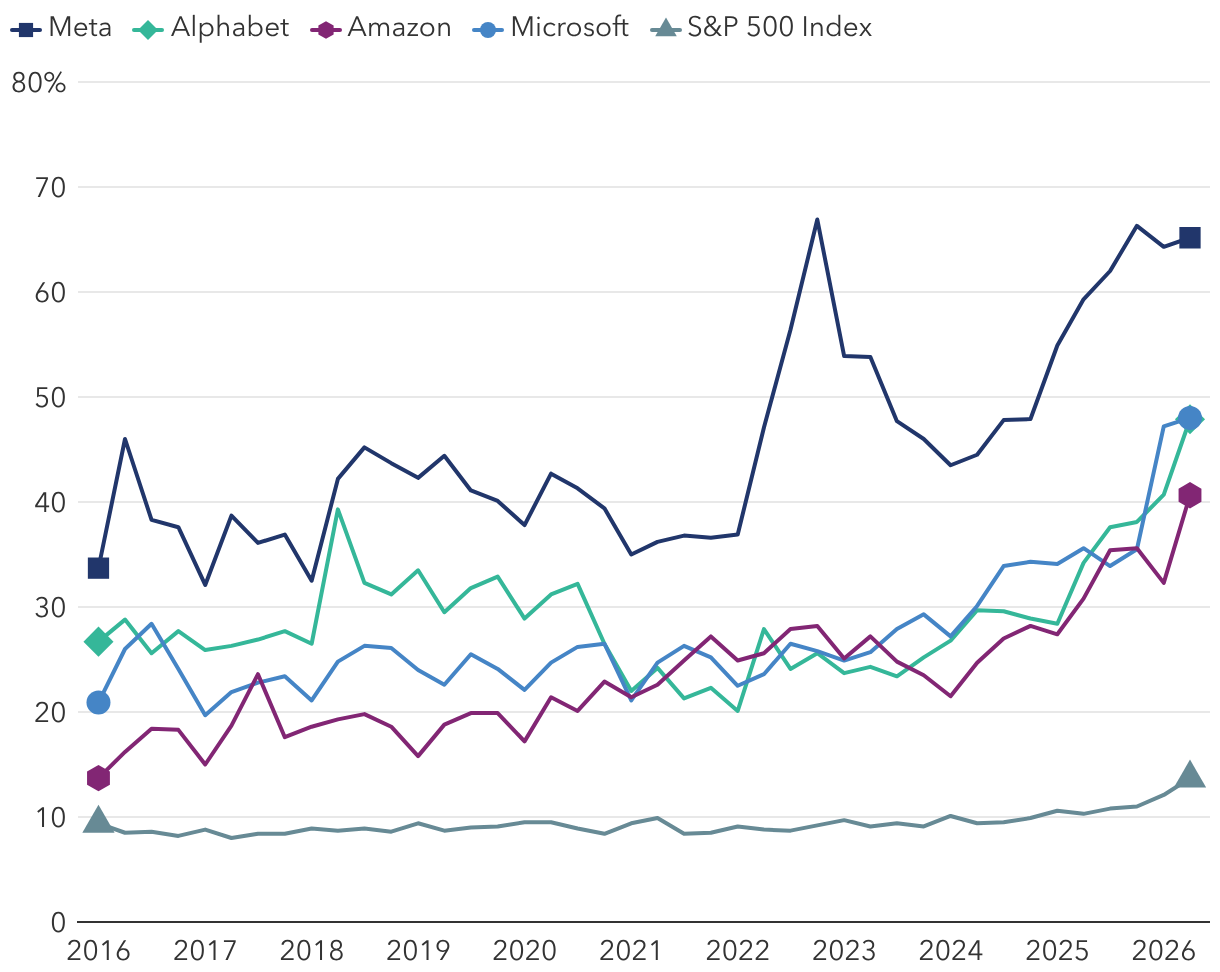
Signs of transformation are emerging in US equity markets amid a torrent of AI-related spending. The shift comes after more than a decade of concentrated gains for market-cap-weighted indices, which, thanks to a narrow group of mega-cap technology stocks, pushed valuations to historic extremes.
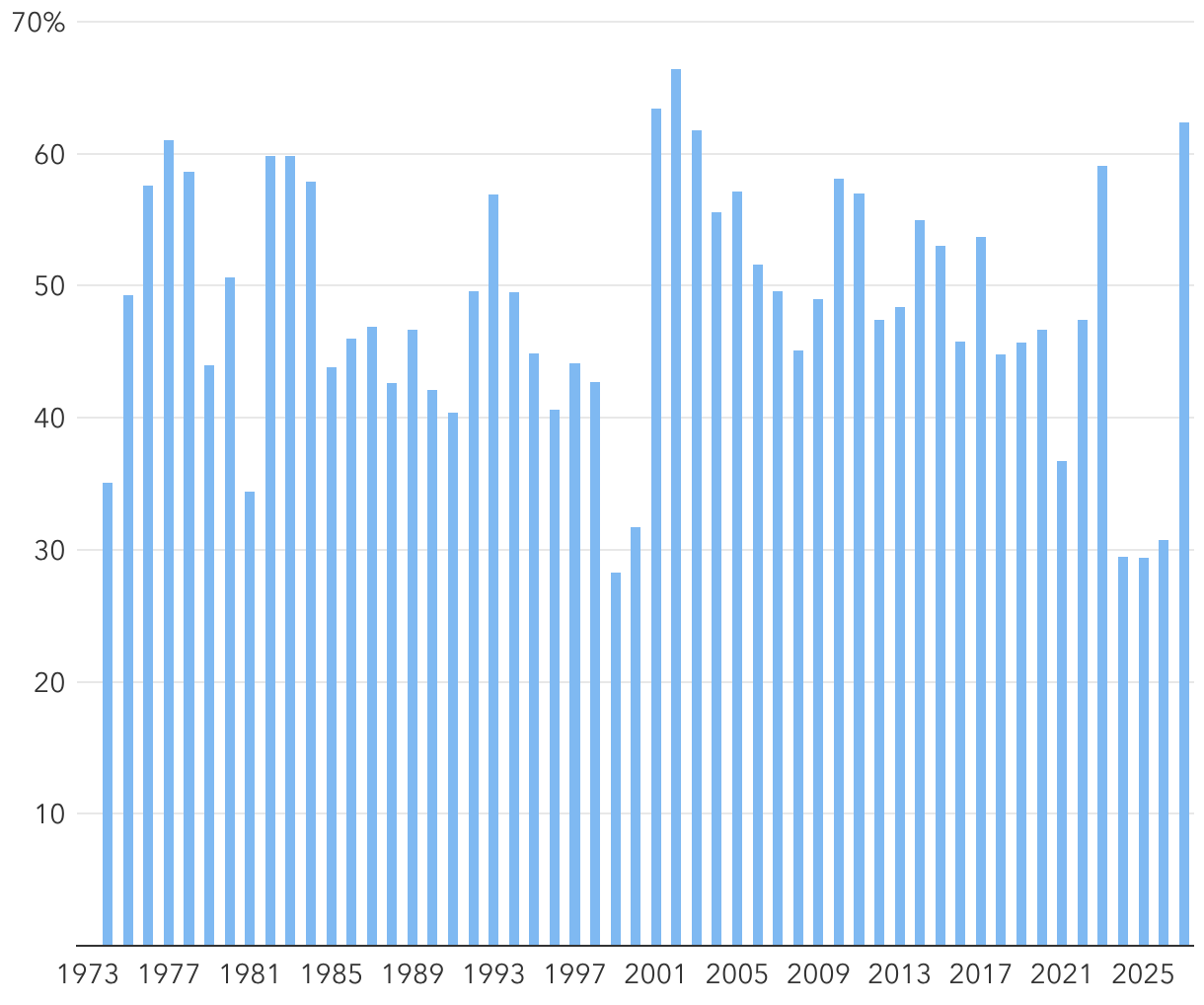
Investors are increasingly moving into sectors and individual stocks underrepresented in these indices. Dispersion among the stocks that constitute the S&P 500 Index is near multi-decade highs. Previously lagging sectors such as industrials and style factors including value and yield are reasserting leadership amid expectations that AI hyperscalers could drive top-line growth.
In this environment, deep fundamental research and careful security selection have become increasingly important. Here are the key themes our team is following.
AI revolution gets physical as earnings surge
Although investors have focused on semiconductor manufacturers and hyperscalers to capitalise on the AI boom, focus has since shifted to AI-adjacent beneficiaries. These companies stand to benefit from a surge of tech-driven capital expenditure amid an arms race to train AI models, deploy them at scale and integrate them into virtual and physical workspaces.
Free cash flow in the tech sector has empowered a substantial increase in earnings expectations over the past few months. But the market appears to see through this dynamic, realising that instead of driving dividends, share buybacks, or mergers and acquisitions as in the past, earnings could turn into top-line growth for AI-adjacent sectors. As a result, forward price-to-earnings valuations of non-tech sectors are picking up.
Outside of the energy rally driven by the Iran war, industrials, utilities and materials have been among the stronger sectors year-to-date to end March. These sectors drive the picks-and-shovels enablement of the AI boom powering steel- and concrete-intensive data centers built with plumbing, heating, ventilation, and air conditioning (HVAC) machinery and electrical — some of which are back-ordered for years.