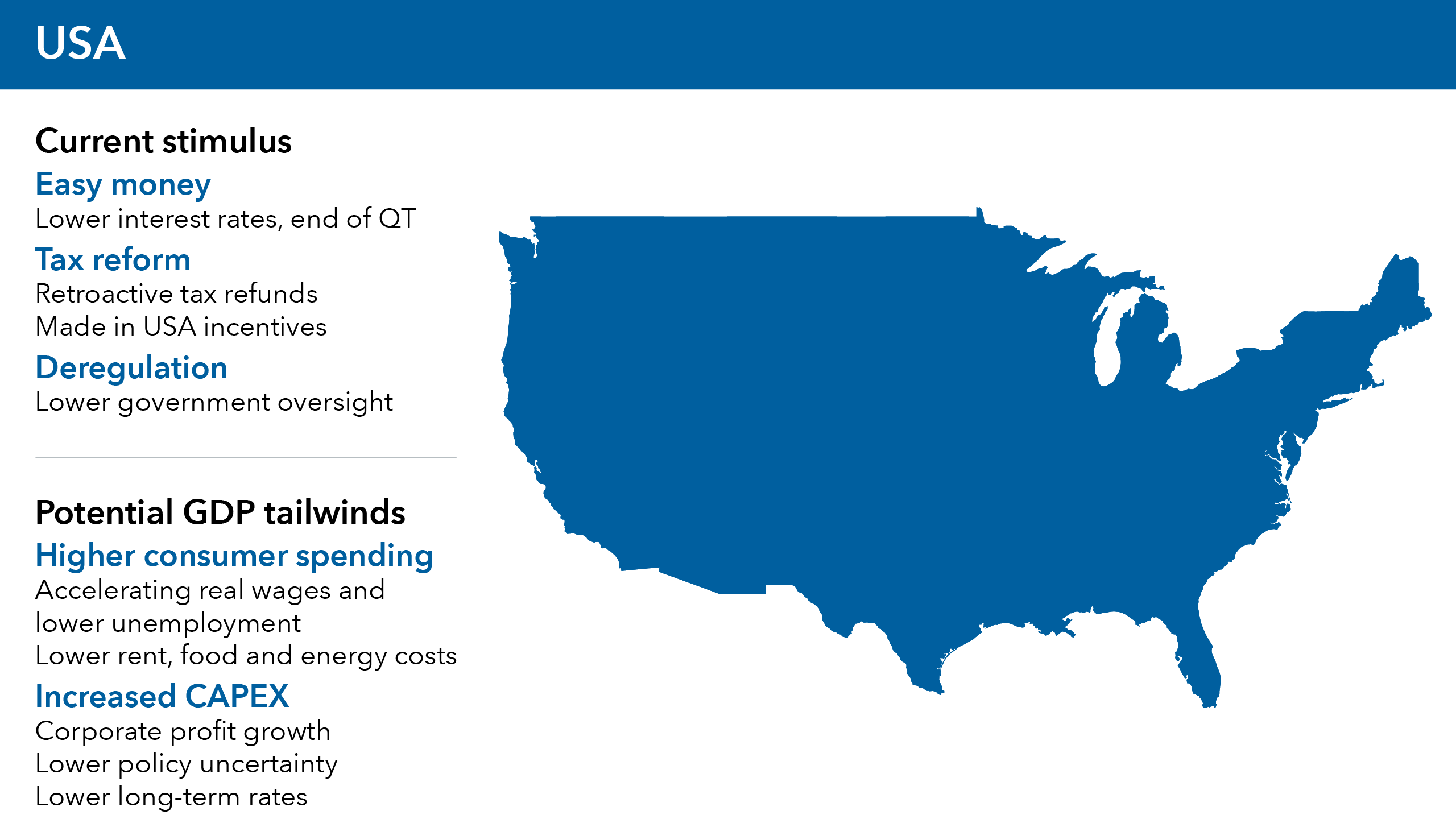
We know from the pandemic years that if you give US consumers money, they will spend it. Americans aren’t too keen on saving. Larger tax refunds are expected to put an extra US$100 billion into the hands of consumers this year, much of it landing in bank accounts at the start of the summer vacation season.
Last year, US households received tax refunds averaging slightly more than US$3,000. This year, the average refund should be around US$4,000, according to projections from the US Treasury Department.
AI-powered productivity boost
Finally, we need to see a rebound on the industrial side of the US economy, which has been stagnant for the past three years. That’s an unusually long recession for US industrial activity and, in my view, it isn’t likely to continue much longer. We are already seeing evidence of increasing inventory investments as the global economy, along with the US economy, picks up speed.
Moreover, many companies are using artificial intelligence (AI) to boost productivity. This is a trend that I think many investors are underestimating. Yes, AI is hurting some workers, particularly in entry-level jobs, but it’s also turning more experienced employees into AI-powered super workers. That should enable these employees to pursue higher wage increases over time.
I think we are in the early innings of this AI productivity boost across corporate America. Thus, I’ve increased my US productivity estimate to 3% this year, up from 2.5% previously, and I wouldn’t be surprised if it rises to 4% in a 1990s-type, tech-inspired scenario.
2.8% GDP growth is more realistic
While I think 5% GDP growth is possible this year, there are also many risks associated with such an optimistic forecast. In the stock market, we would call that “priced for perfection.” It leaves no room for disruption from trade disputes, geopolitical conflicts, labour market weakness, social unrest or market turbulence that could result from one or more of those events.
Given the resilience of the US economy, offset by the chances of a geopolitical or domestic event hampering growth at times, I have increased my GDP forecast to 2.8% for the full year 2026. That is above consensus and higher than my previous forecast in December.
At the end of the day, I feel comfortable being above consensus for two reasons: the powerful influence of an election year, and the impressive productivity gains we are seeing as the AI revolution energises the US economy.