Important information

This website is for Financial Intermediaries in Netherlands only.


If you are an Individual Investor click here, if you are an Institutional Investor click here. Should you be looking for information for another location, please click here.


By clicking, you acknowledge that you have fully understood and accepted the Legal and Regulatory Information.

Emerging Markets Can growing Chaebol reform in Korea spark an equity market re-rating?

Corporate reform is one of the cornerstone developments outlined as part of what we at Capital Group are calling the Great Global Restructuring. Asian equity markets in particular have faced a persistent challenge over recent years, namely misalignment between controlling shareholders and minority investors.


Shareholder returns in Asia have consistently lagged behind the US, driving capital and attention westward and highlighting the need for reform. South Korea is emerging as one of the early frontrunners, with strong presidential backing following the election of Democrat Lee Jae Myung in June 2025. While the last two presidents also tried to improve corporate efficiency, the former was derailed by Covid and the latter by impeachment.


Lee’s party controls the National Assembly, giving him more capacity to carry out policies. He is seeking a transformative rebalancing of household assets away from property and into capital markets, believing this can help address several of Korea’s most pressing challenges, including high household debt and income sustainability for a rapidly growing retiree population.


In this piece, analyst Andrew Chang focuses on the question of Korea’s family-controlled conglomerates, known as Chaebols. The 15 largest of these currently make up two-thirds of the Korean equity market and longstanding misalignment with minority shareholders remains a key valuation overhang. 

Composition of Korean market by market capitalisation

Composition of Korean market by market capitalisation

As at February 2026. Source: Capital Group

Lee has taken a firm stance on corporate reform and pushed through amendments to the Commercial Code despite heavy lobbying from chaebols. Together, these measures represent a meaningful shift in the balance of power between controlling families and minority shareholders. This reform has real potential to drive durable change across chaebols — and potentially a re-rating of Korean equities.


Over time, this shift should support higher returns on capital and narrower valuation discounts across affected segments of the market.


To read more, download the full article.


This insight is part of our broader analysis on how today’s global shifts are impacting investment opportunities – a dynamic we call The Great Global Restructuring. 

Explore the forces driving the Great Global Restructuring

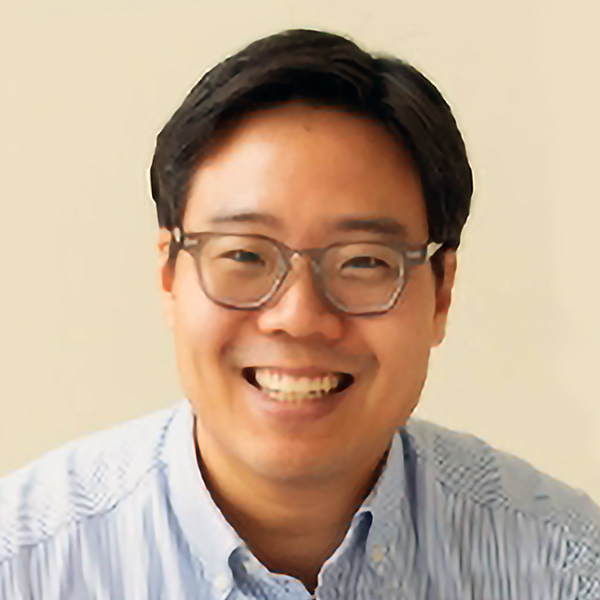
Andrew Chang is an equity investment analyst at Capital Group with research responsibilities for Korea. He has 18 years of investment industry experience. He holds an MBA from the Wharton School - University of Pennsylvania, and a bachelor’s degree from Dartmouth College. Andrew is based in Singapore.

Past results are not predictive of results in future periods. It is not possible to invest directly in an index, which is unmanaged. The value of investments and income from them can go down as well as up and you may lose some or all of your initial investment. This information is not intended to provide investment, tax or other advice, or to be a solicitation to buy or sell any securities.
 
Statements attributed to an individual represent the opinions of that individual as of the date published and do not necessarily reflect the opinions of Capital Group or its affiliates. All information is as at the date indicated unless otherwise stated. Some information may have been obtained from third parties, and as such the reliability of that information is not guaranteed.
 
Capital Group manages equity assets through three investment groups. These groups make investment and proxy voting decisions independently. Fixed income investment professionals provide fixed income research and investment management across the Capital organisation; however, for securities with equity characteristics, they act solely on behalf of one of the three equity investment groups.