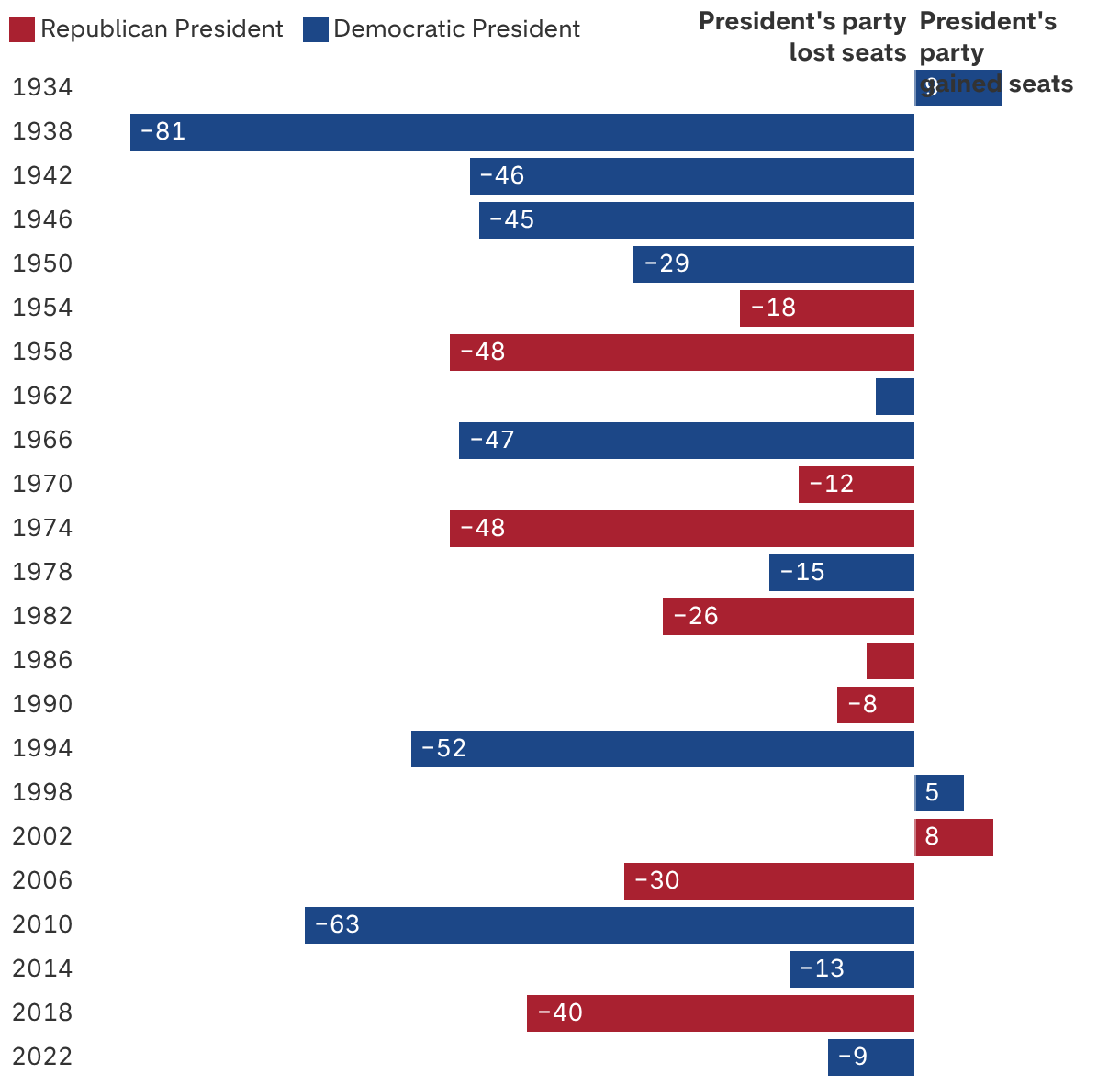
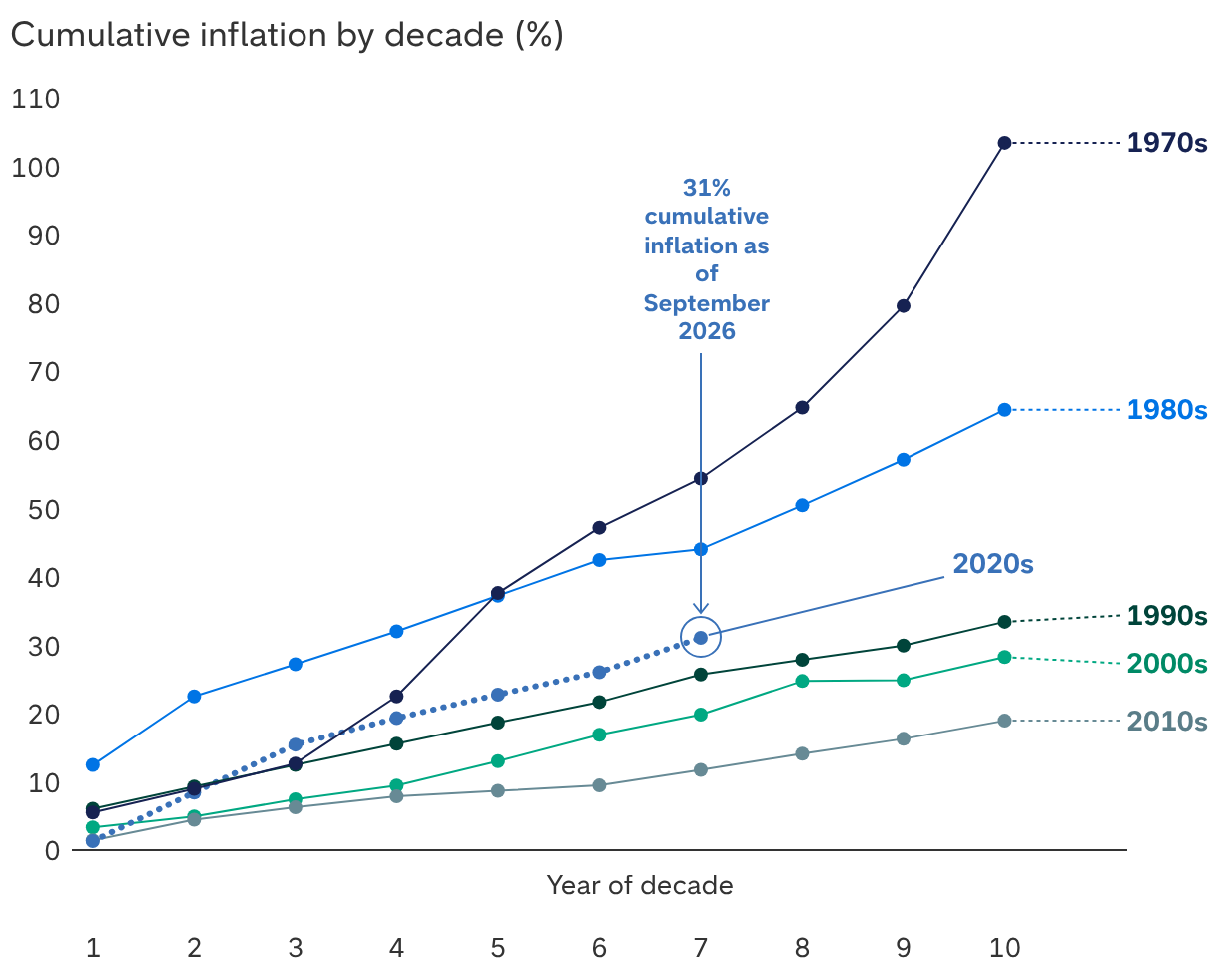
Virtually all Democrats running for office today have made “the affordability crisis” their No. 1 talking point in debates, stump speeches and political advertisements. Widespread frustration over the Iran war and rising prices could result in lower turnout among Republican voters. If the GOP loses the House, this will be the reason. It could also be a recurring theme in the future. If voters feel they are not getting some relief on inflation, regardless of which party is in power, they are likely to continue demanding change in political leadership.
3. The result will be political gridlock — and political theatre.
If I am right and Democrats regain control of the House, that’s all it will take to return Congress to a state of political gridlock. We will have a divided government. That means Congress won’t be able to achieve much on the legislative front over the next two years. We should also expect debt limit and budget standoffs to rattle markets temporarily.
That said, there are some areas where bipartisan cooperation might be possible. For instance, both parties have sought to expand housing availability and rein in pharmaceutical drug pricing. There might be room for compromise on government subsidies under the Affordable Care Act. ACA subsidies were allowed to expire last year, raising health insurance costs for many. Democrats have made it a priority to restore them, and Republicans might be willing to go along with it, if for no other reason than to remove it as a sticking point in the 2028 election. In addition, both parties have vocal critics of unconstrained AI data centre construction. I can see that issue playing a bigger role next year.
Beyond that, we should also expect to see some familiar political fireworks. When the new Congress convenes in January, I expect House Democrats to begin investigations of Trump, the Trump family and various members of the Trump administration almost immediately. I think it’s highly likely they will seek to impeach Trump again. The Senate, of course, won’t convict him, but this political theatre will probably consume the final two years of Trump’s presidency.
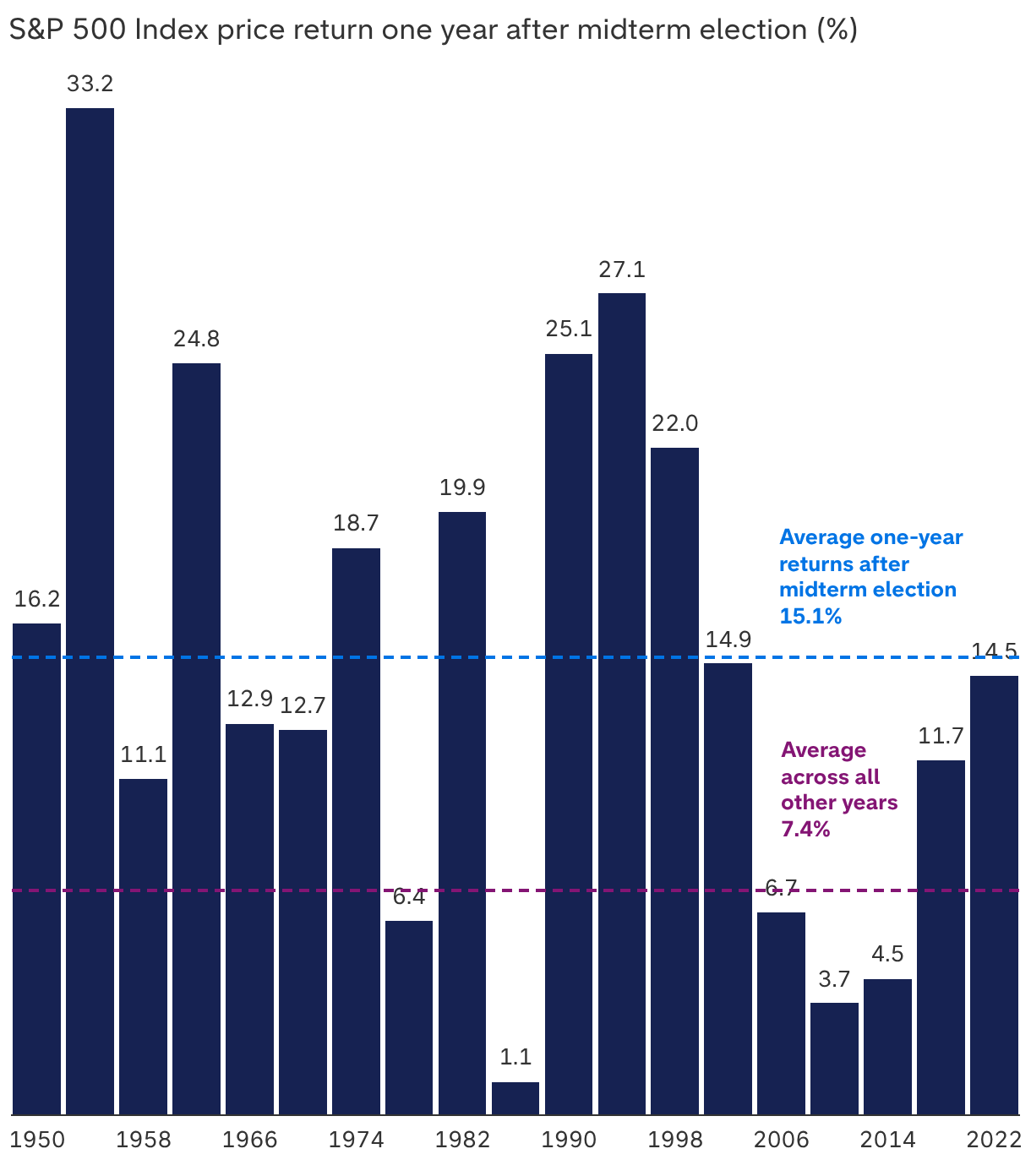
On the investment front, the good news is that US stocks tend to do well once the uncertainty generated by the midterms is over. Since 1950, the S&P 500 Index has returned 15% on average during the 12 months following midterm elections. This year, the S&P is already up about 12% on a year-to-date basis, as of 19 October. That doesn’t mean we won’t experience a downturn at some point, but it has proven that this year has already produced substantial returns despite the unpredictability of the election environment.