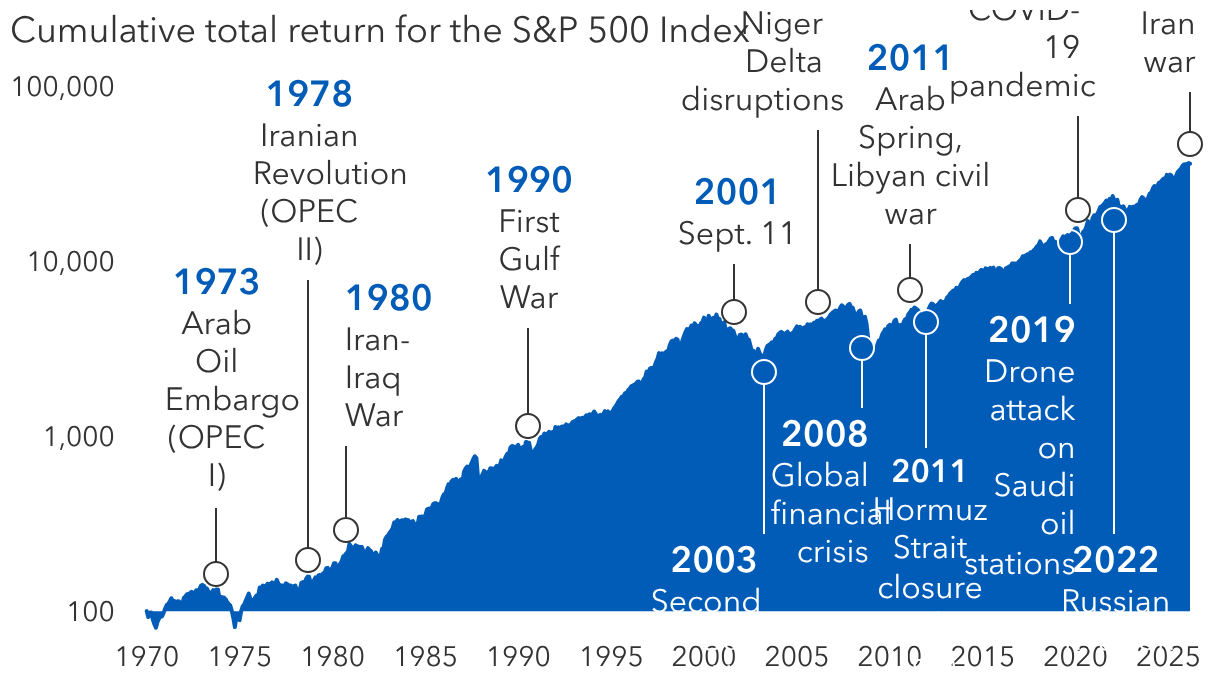
Fallout from the intensifying war in the Middle East has once again put market volatility in the spotlight.
Oil prices have surged, sending the cost of gasoline higher and increasing the prospect of a global energy-induced economic slowdown. Since US and Israeli strikes on Iran began in late February, the S&P 500 Index has fallen about 2.3% through to 18 March. Meanwhile, the yield on the 10-year US Treasury, a cornerstone of the global financial system, has risen to 4.20% from 3.94% before the war, though it remains below where it began the year.
Should the worst oil supply shock in decades persist, investors may have doubts about their approach in such an uncertain environment. It is natural to seek safer shores when markets are choppy. But it is equally important to step back, gain perspective, and look beyond the horizon.
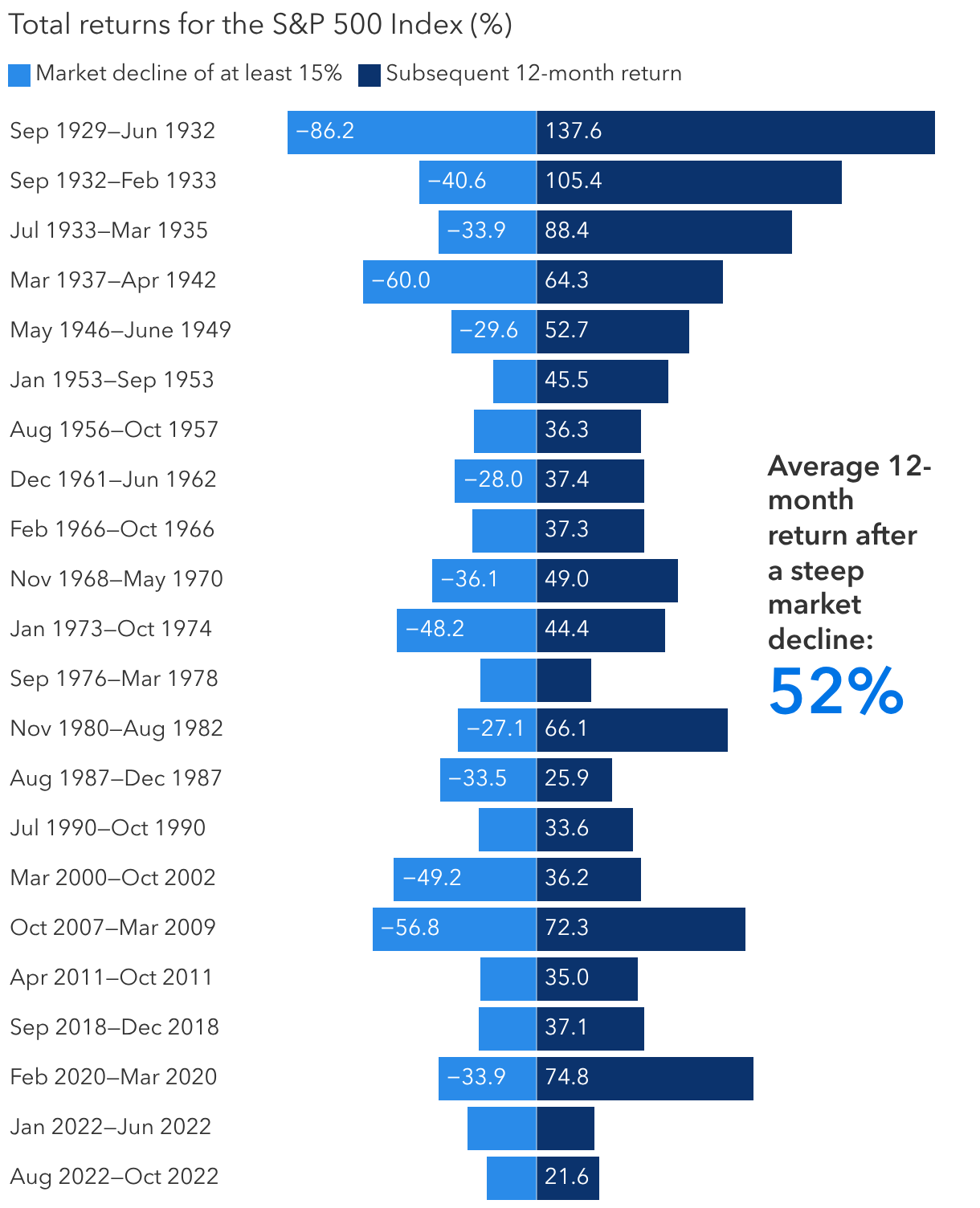
History shows the market has always recovered from previous declines. Here are five insights that can help investors regain confidence and stay invested for the long haul.
1. When in doubt, zoom out
Think back to early 2022. Russia’s invasion of Ukraine delivered a geopolitical shock that rattled markets and dominated headlines, much like today. Brent crude climbed nearly 30% to a high of $128 per barrel. At the same time, central banks led by the US Federal Reserve moved aggressively to raise interest rates, compounding uncertainty for investors already on edge.
How did stocks react? Fears that war and the fastest Fed rate hikes in decades would tip the global economy into a recession sent the S&P 500 Index down 19% in 2022. But the index staged a powerful rebound in 2023, gaining nearly 24% as inflation cooled, energy markets stabilised, and earnings proved more resilient than many investors expected. The episode serves as a reminder that markets often absorb shocks faster than headlines suggest.
Whether the market choppiness of early 2026 might give way to smoother sailing is impossible to know. But the upcoming midterm elections could steer the Trump administration to focus on more bread-and-butter issues that add economic optimism.