
Featuring:

Martin Romo
Chair and Chief Investment Officer
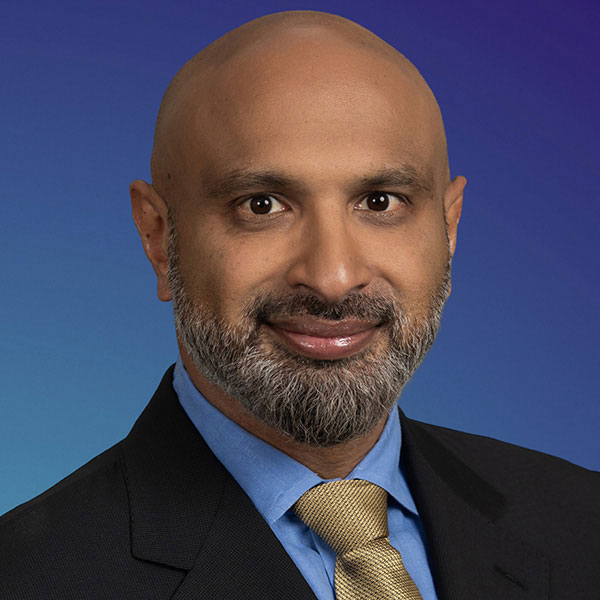
Pramod Atluri
Fixed Income Portfolio Manager
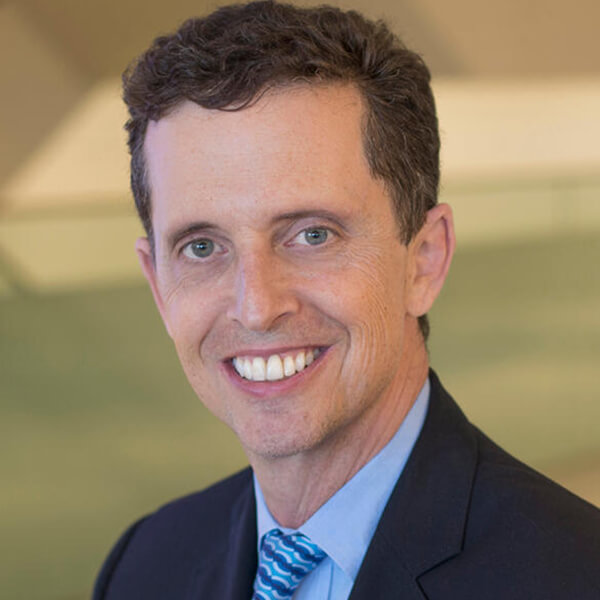
Will McKenna
Content Director

Will McKenna: Hello and welcome to the Capital Ideas webinar series. I'm your host, Will McKenna. I want to thank everybody for joining us. Really great to be with you, and I hope you're all having just a wonderful holiday season so far. We wanted to kick this off with the right kind of holiday spirit and joyful tone. So hopefully that's coming across and we're going to have a little fun along the way.
Now we're very excited for our topic today, which is Capital Group's 2026 Outlook. And we're going to dive into the key issues that are on your mind, including things like, where are we seeing the most compelling opportunities in stock and bond markets around the world? Are we witnessing an AI boom, an AI bubble or a combination of both? How many more cuts do we expect to see from the Federal Reserve and how might that play out? How will the Trump administration influence trade tariffs in the global economy? And then most importantly, what does it all mean for your portfolio? So we're going to answer those questions and your questions in the next hour, and we have two great speakers to help us break it all down.
Martin Romo is chief investment officer of Capital Group and a portfolio manager on our flagship growth strategy. Among other responsibilities, he has 32 years experience, all with Capital, and he serves on the Capital Group Management Committee. Earlier in his career as an analyst, he covered the global chemical industry as well as mortgage and consumer financials, which included Fannie Mae and Freddie Mac during the global financial crisis. And he makes a great Santa over there. He got his MBA from Stanford, Bachelor's in Architecture from UC Berkeley, and he is based in our San Francisco office.
Pramod Atluri, here on my left, is a fixed income portfolio manager. He's principal investment officer on our flagship core bond strategy. He's got 21 years of investment industry experience, been with Capital for nine years. And prior to that, Pramod was a portfolio manager at Fidelity. He got his MBA from Harvard and a bachelor in biological chemistry from the University of Chicago. I don't even want to know how complicated that is. He holds the Chartered Financial Analyst designation and he is based in Los Angeles.
Okay, guys, great to have you. Thanks for joining us. And Martin, I want to kick it off with you. Why don't you set the stage for us? What's your big-picture view on the economy and markets? Where do you see us going from here?
Martin Romo: Well, Will, it's great to see you. Great to be back here. I'm going to take that cue and take my Santa hat off. But it's great to see everyone and have the opportunity. I love these sessions because it gives me the chance to look back and look forward.
But Will, as I'm thinking about the world, I kind of feel a little bit like a broken record. I know we talked about some of the similar themes and how the market was shifting and broadening. And I think we're still in that environment. I like to call it the and-market. So as I look out over the next year, next few years, I'm both excited and a bit uneasy. I think we're all sharing that. There's a lot of innovation, a lot of structural change going around the world. That makes me really constructive. And I think the fundamental backdrop is pretty interesting and should support, over time, good equity returns. That being said, there's also a lot of fragility. So on one hand, good. On the other hand, bad. You see a ton of strength being reflected in the U.S. market returns. They're up mid-teens this year. But if you look outside the U.S., they're up even more. ACWI ex US, which is an index that tracks the markets outside the U.S., is up almost 30%. It's been a pretty tremendous turn in an environment where the U.S. had, for the last decade, been a lot better.
And so on one hand, the market has changed, but on the other, if you look longer term, over the last 10 years, the U.S. market is still over three to fourfold better than most other regions.
So there's still opportunities around the world. The markets, corporates seem pretty strong. Earnings growth for this year in the US is going to likely be low double digits. But the consumer's struggling. Unemployment's up 1. 2% from the bottom 30 months ago. And then on the other hand, you have global stimulus. So central banks everywhere really starting to drive in the interest of having economic growth.
So again, you've got a lot of these contradictory themes and effects going on. I think I'm thinking a lot and we're thinking a lot about valuation. How do you risk-adjust this world of opportunity and risk, and against a fragile backdrop that's dynamic? So the good thing for us, we've got great research all around the world. You all know this. We've got a huge experienced group of investors with a ton of different points of view. We're thinking long term on behalf of our own clients. So whether it's a boom or a bubble, whether we're concentrated or broad, we've got the right team.
So I'm feeling really good about the breadth of what we do because I think what investors need is broad breadth and balance over the long term. So I'm feeling really good about the opportunities. It's a great time to be an investor, and we've got great research analysts trying to find those great companies to invest on behalf of our clients long term.
Will McKenna: That's great. I love how you frame it as an and-market, given that backdrop. And certainly your focus on valuation is something we'll pick up on and go a little deeper on here.
Pramod, similar question. Give us your big picture outlook on the economy and markets. Where do you see us heading from here?
Pramod Atluri: Sure. And thanks, everyone for joining us. As I look at 2025, we've been in a resilient but moderating economy, easing inflationary pressures, and a rate cutting cycle in most parts of the world. And that led to core bonds posting some of their strongest results since 2019. Core bonds so far, I think, are over 7%. And importantly, during episodes of market volatility and drawdowns this year, bonds were up and showing that that negative correlation that we enjoyed for so long has really come back.
Looking ahead to 2026, I think a lot of those trends are likely to remain supportive for bonds in general, but the outlook is much more complex. So even though we're still in a rate-cutting cycle in many places, we're closer to the end of that cycle than the beginning. And many places are starting to think about hikes. In Japan, they're starting a hiking cycle. We have fiscal and monetary support in the U.S. and Europe and China, which could lead to a growth reacceleration. But at the same time, there are warning signs, as doubts surface about the sustainability of tech spending and weak U.S. labor markets.
Ultimately, as I look at 2026 with yields for high-quality bonds above 4% and low-quality bonds above 6%, and bonds back to providing diversification against equities, I think that bonds will continue to play an increasingly important role in portfolios.
Will McKenna: That's great. And so it sounds like you're fairly constructive, but seeing some warning signs out there. I know we're going to dig into a lot more detail behind that. Well, that's a great start. And I did see -- Hey, listen, in the green room where we're a little nervous about the hats, are the hats going to play? I am seeing some ho ho ho triple hats, and so I'm glad that worked out so far.
Let's do this. I want to tee up our first audience poll because those of you who've been with us at these year-end events know the drill. We're going to ask you to try to identify where in the world is this year's Outlook lighthouse cover located? Don't go to ChatGPT. We're going to know. We're going to know. So give us your best guess. Take a genuine guess, and then we'll come back to some answers later in the show.
Let's dig a little deeper into some of the specifics here in terms of equity and fixed income opportunities. Martin, in your role, chief investment officer, you get a real bird's-eye view of everything that's happening at Capital, all the work that analysts are doing around the world. Can you take us on a tour of the world's markets, including the U.S.? Talk about where you and the team who are out there every day are seeing opportunities and risks. Give us that world tour.
Martin Romo: Oh, thanks, Will. And I really -- We take this for granted at Capital. And I'll just remind folks, I think this year we'll do about 22,000 company visits this year alone. So I get the bird's-eye views, but our analysts are on the ground all around the world in every industry, having conversations with management teams, regulators, central banks around what they're driving towards long term. We meet at least once or twice a week as a global team to unpack what we're hearing and make sure we've aligned our clients' portfolios with those risks and opportunities that you said, Will.
So let me take you a little bit around a tour. I told you about the profile of returns. I think a lot of that has been a surprise to the market. If you know us, we've always been focused globally, and so it's fun to take a walk around the world and give you a sense for what I'm seeing and why I said I'm so encouraged fundamentally. Because really, despite a lot of pockets of uncertainty and fragility, there's an economic backdrop and central banks that are really focused, I think, on making sure the economies are healthy.
So let's start in Europe. There's been a wake-up call with the war in Ukraine, their reliance on a lot of energy from Russia and the realization that they had probably been very strict in terms of some of the regulatory standards. So what are we seeing? A reinvigoration of investments around defense and aerospace in that region. You're seeing a German central bank that's much more interested in stimulus, has relaxed some of the interest in controlling inflation. You're seeing, around Europe, a lot of efforts around more reform. And so it's really an interesting backdrop for companies that are well positioned where we think they have global opportunities.
And the interesting thing is those stocks in general are a lot cheaper than they are in the U.S. They also tend to pay a higher dividend yield. So the theme of looking for value, looking for a balance of dividends is one that you'll hear as I keep going around the world.
In Asia, some of the same themes. In Japan, there is, after 40 years, a real industrial revolution going on and the structural change in terms of the focus of the organizations in those companies and a new leadership team in the government that's really driving for reform, doing away with a lot of the legacy of what had been the manufacturing revolution of the '60s, '70s and early '80s, and coming to terms with cross holdings, companies that really have to be driving in the interest of their shareholders rather than the government or employees, and taking a hard look at what parts of their business they're best positioned in.
So Japan's a super interesting market, but even in China where there's two things going on. They've come through a pretty big overinvestment in real estate. I think the government, obviously a centrally controlled government, is interested in furthering the development of the economy, and they're moving out of that classic manufacturing into services and high technology at an increasing pace.
You've seen it in the auto industry. They're delivering cars now at half the price, many of them electrical vehicles and twice the quality and taking share. And they're intent on taking on technology, health care. So there's really interesting things going on in China, even though it continues to be a mostly closed market. So that's another area of interest. In India, there continues to be a broadening of that economy. So all over Asia, a ton of change, a ton of opportunities.
And then in the U.S., we've changed. We've got tariffs,. That's changing the global pattern of production. That means that we'll be reshoring a lot of production. That'll happen over the long term. In changing the immigration policies, some industries are shy of labor. That's an interesting point. If their development of robotics or AI, could that help? And a central bank here, the Fed, who is trying to balance, but is getting more comfortable with the inflation rate. And so again, a pretty constructive backdrop for equity returns. So it's not just at the industry level, it's not just the company level, but if we look around the world, it's a place we've got a ton of strength. We've got deep research and we think there's going to be a lot of opportunity to take advantage of our long-term insights.
Will McKenna: It's interesting. We had identified a number of those bold moves and stimulus around the world in the report, but hearing you go into a greater level of detail, I wasn't even aware of all those other things happening. And I think we've been here in prior years where it's felt like, well, Europe and other areas may be poised to move ahead, but it had felt like a bit of a head fake in those times. But these new catalysts really do make it feel different. For example, the German stimulus, I think people haven't differentiated necessarily between that and the greater NATO spending. And there's just a lot of things like that going on, quite bold moves, that it does feel a little different. So more in the Outlook report on that topic. Good stuff, Martin. Thank you.
And Pramod, big surprise, our audience wants to hear about inflation, interest rates and the Federal Reserve. Obviously, the Fed's been in rate-cutting mode. How much further do you think this is going to go? Where do we head from here?
Pramod Atluri: Sure. So the Fed just had a meeting, and they guided to one more cut in 2026, but the market is priced for two cuts. So the market believes that the Fed is going to ultimately deliver more than what they're guiding for, bringing rates down to about 3% by the end of the year. I think that's a very reasonable expectation. And if it comes to pass, I expect the front end of the yield curve, so think five-year and three-year and two-year maturities, to continue to drift lower in yield. But the long end might lag, leading to a steeper yield curve. But there are a lot of ways that this could go wrong or could be wrong. We have a very deeply divided Fed, where there are several members of the committee who wanted no cuts, and then there are some that wanted more cuts than just the one that they provided. And not only are they deeply divided, but they're very data-dependent at this point because there's so much uncertainty in the outlook.
Will the economy reaccelerate? Will the labor market stabilize or fall further? Will the government change the way that they issue debt? So issue more long-term debt or issue more Treasury bills? That will affect interest rates and affect the amount of stimulus to the economy. And the Fed also just changed the way they're managing their balance sheet. So for several years now, they've been reducing their balance sheet, something called quantitative tightening And now they've started to expand again and they're buying T-bills, and some people call that quantitative easing. So there's a lot of uncertainty as to what the Fed's likely to do next year. My base-case view, leaning on the analysis from our macroeconomists and our interest rate team, is that inflation is likely to keep moderating in 2026. Therefore, I think the Fed's likely to lean more dovish in 2026 definitely than what the Fed's guiding, but maybe even more so than what's priced into the market. And I think there's a better chance for interest rates to come down by the end of 2026.
Definitely better for it to move lower than to move higher, particularly at the front end of the curve where we have more visibility.
Will McKenna: Well, talking about dovish, I think the second half of that question is around Fed independence. A lot of questions about whether the central bank is being too heavily influenced by politics. What's your take on that? How might you see that playing out in the year ahead?
Pramod Atluri: Yeah. There's definitely a lot of talk about Fed independence, and honestly, rightly so. It's a very important topic, because there's just so many examples of countries that got into trouble by running inappropriate monetary policy. There's this view that they can get some short-term gain from running stimulative monetary policy, and they ultimately ignore the long-term pain that will come from--
Will McKenna: So they run too hot and they stoke inflation.
Pramod Atluri: Exactly.
Will McKenna: Yeah.
Pramod Atluri: And especially in smaller closed economies, it can lead to hyperinflation, it can lead to collapse of currencies, it can lead to mass unemployment. In this case, however, I think we're pretty far away still from the Fed being, quote, unquote, "captured." Right now, I think the incentives of the Fed and the administration are pretty aligned. They both want to support the labor market. They both think that interest rates are restrictive. And they both believe that interest rates are likely to come down over time. So while I think the rhetoric is high, I think market expectations and my own expectations seem consistent with the Fed cutting rates based on fundamentals and not because of political pressure. Now, I will say that if this politicization continues over the next several years, then I think the concern in the market will likely rise and we could see some impact on market pricing.
Will McKenna: Yeah, got it. And that's certainly a topic we'll be talking a lot about on the Capital Ideas platform early in the year. Let me just read out a few of the early answers on the location of the lighthouse. We had a lot of north, kind of Atlantic coast, Northern Atlantic, New England, Scotland, Gibraltar, Ireland, Maine, Portugal, Atlantic Coast, Duluth, Minnesota [laughs], the lakes out there, and then Evanston, Illinois. Maybe there's a Northwestern grad in our midst. But we'll see, the answer will come later. So Martin, let's turn back to you in terms of -- you had touched on valuations. But let me just read a quick excerpt from your Outlook opening letter. And again, please, everybody download this at the end of the call so you have your copy. Here's what Martin said. "Heading into a new year, I always have mixed feelings of excitement and unease. I'm excited about the investment opportunities emerging before our eyes, such as the incredible advances in the realm of artificial intelligence. At the same time, I'm uneasy over the lofty stock market valuations driven primarily by that same group of AI-related stocks. In this one corner of the stock market, we have a microcosm of the issues facing investors in 2026 and beyond."
So maybe take us into a little deeper detail. There's certainly questions about an AI bubble, but you all have to think about this every day and how you navigate the balance of those kind of dynamic growth stocks with maybe some more defensive dividend-oriented stocks. But how are you thinking about that topic, and then just equity valuations in general after several years of such outstanding returns?
Martin Romo: Well, it is the question of the day. And you're exactly right that we're wrestling with it. And I think I'll make some observations and I'll first steal a page from Mark Twain and add my and to it. So first, he's attributed to saying, "History doesn't repeat itself, it rhymes." And I joined in '93 and lived through the dot-com bubble. So I have some history and some experience to apply. And his other great quote is, "It ain't what you don't know that gets you in trouble. It's what you know for sure that just ain't so." So this debate around a bubble or a boom is a little bit, and I'll tip my hat to Pramod, the economists who've predicted eight of the last two recessions. And so I'm humble, I know this could be a bubble. But what we're seeing in terms of the development of AI and how it's impacting corporates and profitability, I think suggests that there's real meaningful fundamental delivery of value. And at the security level, there may be companies that are either way too expensive, taking on too much debt, or are not as well positioned as the world thinks.
So at the end of the day, these themes are important, but individual security selection comes down to conviction and research. But let me take you a little bit around the horn as to what I'm seeing, and just remind you folks, again, of that Mark Twain, "It's not what you don't know, it's what you think you know for sure." And it goes right down to Mag 7, that term. I think I said before, February of 2013, FANG was coined. That was four companies: Facebook, Amazon, Netflix, and Google. Now we have a Mag 7. Somewhere in there, Netflix got lost. But even if you look at the Mag 7, we've got an auto company, a phone company, a retail company, a search engine, a chip engine, a social media company and an enterprise software company. Other than them hanging under the banner of Mag 7, they're quite different businesses. And, oh, another reminder, five of those Mag 7 have underperformed the S&P 500 this year, which means they've done a lot worse than a lot of companies and indices around the world. So that's both an and on the other hand.
But there's also the scale and scope of these companies, which I've talked about before. So let's step back again. Look at the companies that are making big investments. What we call the hyperscalers, so these are the companies that are really driving these data centers. And those companies are Google, Amazon, OpenAI, Meta and Microsoft. Together, they're going to make $350 billion in CapEx this year. They also spend $250 billion on research and development, R&D.
And so it gives you a sense for how big these companies are. And they're quite profitable. They're much more profitable. So when I compare them to '99, they're actually under-levered, they don't have any debt, if you take them as a whole. They're still cash-generative. They're four times more profitable than the companies were in '99. So this is different. So there's some capital markets' participation, but at the end of the day, and as I mentioned earlier, Will, let's talk about valuation. That's where the difference really comes out. We're not there right now.
Companies are about 30 times on average at the top 10. They're growing at a multiple of the rest of the market. So let's go back to end of October of '22. In November of that year, OpenAI introduced their first ChatGPT, ChatGPT-1. It's been 36 months. So it just feels fundamentally different than that period. And we're not taking just valuation, we're doing the work. We had an AI summit, 75 of our investors together with public, private companies, venture capital firms, regulators, thinking not just about first-order impacts of these companies, but the second order on industries. And what you're seeing is, as consumers, we're using ChatGPT, it's getting a little better, but that's not what's really going on. It's at the enterprise level that you're seeing a big uplift. Let me remind you, tariffs, we have margins that are low, we have employment where it's hard to find the right people. So we're going through secondary benefits, tertiary benefits, as you see in this chart.
And I'll just give you a little sample. Procter & Gamble, they have teams of folks, 20, 30 folks around every product. So if you're using Tide, they wrap up and pull up the financials and look across their media spend and try to figure out their return. They think those groups of 30 or 40 people probably end up being five because AI can now aggregate all that information. In health care, we're seeing it across services. In energy, EOGs using AI to optimize their shale rigs. Industrials are using robotics.
So this is the enterprise level where you are going from consumers, where it has to be kind of okay to use, to enterprise uses, where it has to be on all the time and very good. There's a company called Anthropic, that January of this year, they were generating $1 billion in revenue. They'll finish this year at 10 billion annual, and they think next year there'll be 30 billion. So it's happening.
You're seeing this leverage at scale. It matters to these companies. It matters in industries. It matters for employment, inflation, profit margins. It's really remarkable and it's just starting to hit the enterprises, the big ones first, but we're starting to see small companies pick up. So there's a lot of demand and it's going to be volatile. Sentiment goes like this, up and down, even though the fundamentals, I think, we feel are pretty strong. So we're going to have to be active and nimble and convicted long term.
So I hope that answers -- I know went a little long, Will, but there's so much to unpack. But what I have is a great research team doing the work and I just listen to them and follow what they say.
Will McKenna: I love all that detail. And if my writing team is listening, we need to turn that into an in-depth article on Capital Ideas. Thank you for that. And a lot is different this go-around for those of us who live through the TMT bubble.
Pramod, bond returns have also been very good this year. I think it's the best year since 2022 in terms of the Bloomberg US Aggregate Index. Talk about that. Do you think that's sustainable going forward? If so, what would be driving that?
Pramod Atluri: Yeah, I think it might even be the best return since before that.
Broadly speaking, there are two big drivers of bond returns. Interest rates, like the interest rates on Treasuries, the risk-free rate, and credit spreads, or the extra yield one gets for taking on credit risk. As credit spreads compress, that generates returns for investors. And as interest rates fall, that also generates positive returns.
So in 2025, we had a historic rally in credit spreads, taking spreads to 30-year tights, 30-year lows, 30-year rich levels. And at the same time, interest rates fell. So both added to investors' return, on top of the starting yield, which was something like 4.9% for the Bloomberg Aggregate Index. You add all of that together and we're today sitting at something about 7% total returns for the Agg index, and a little bit higher for lower quality bonds like in high yield.
Looking forward, I think the starting yield is going to be a bit lower. So if last year we started at 4.9%, today we're at about 4.4, 4.5%. And credit spreads, like I said, they're at 30-year rich levels. And there are reasons to believe that credit spreads are likely to drift higher or drift cheaper next year, so that would be a little bit of a headwind for returns.
And a lot of that is driven by something that Martin was just talking about. The amount of spending by those hyperscalers is leading to bond issuance next year on top of their record-high issuance that we have already had. So that amount of supply by very high-quality companies is likely to reprice our market. And so credit spreads could drift a little bit higher.
So the big question then is what's going to happen with interest rates? And if interest rates stay at roughly today's levels, then I think that if you're starting off with 4.5% yields, you'll probably end the year with something like 4% total returns. So still good, still beating inflation, but just not as good as the 7% we had this year.
But if inflation continues to fall, like I expect, and the labor market or tech spending potentially falters in 2026, I think there's plenty of room for interest rates to come down. The Fed has a lot of room to continue cutting. And that 4% could easily move up to six-plus percent in my view. Still, I think a little bit lower than what we enjoyed this year, but still very healthy returns --
Pramod Atluri: For something that's a defensive part of someone's portfolio allocation.
Will McKenna: That's good, good insight. Martin, I want to jump ahead. We're talking about different themes across equity markets and we'd love to get your view on the themes and opportunities you're seeing out there, and where you and the team are finding some of those specific examples. Take us into the specific areas of opportunity within equities.
Martin Romo: Well, I think I've touched on a bit of it. We talked about dynamic growth, but I really think about the world where we are right now in three buckets. Dynamic growth, you can't take your eye off where innovation is driving changes both within the company and industry. You also have to recognize that the markets are up a lot. We're now in the third year of double-digit returns in the U.S. so valuations are elevated, and we're on watch. This is when there can be dislocations, and markets do decline. So I think we're thinking about defending with dividends. Historically, that's been a really good place where you can find quality companies that are well positioned, can deliver dividends, and you can guarantee a source of income and return.
And the last part, and it's a theme we've touched on already, is think globally. Diversify internationally and don't lean into what has been the strongest market in the U.S. If you've got that opportunity to broaden that window or that lens, look outside the U.S.
So when I think about some of those themes, how they're playing out, we've talked about AI, but there's other places of dynamic growth. And I'll surprise you a little bit because there's one that hits kind of the three and that's the tobacco industry. Forever a sunset industry, but there's a change in technology even there. Heat-not-burn cigarettes and the tobacco patches for some companies mean that they're growing again against a backdrop of the traditional cigarette declining pretty globally. So that's an interesting area.
Aerospace and defense we've talked about before, but that's another area of dynamic growth.
And then I think about going both in terms of dividends and looking outside the U.S., you can take some of these themes as well. Think about companies that have looked at the U.S. model and some of the technology disruptors and are deploying it in other regions. In South America, where you're seeing a big turn in those economies, there's companies that are mimicking what Amazon did, companies that are taking and democratizing banking down in South America.
But even here in the US and in Europe, you've got a really interesting setup. You've got the banks who, again, may be starting to grow again because of the stimulative backdrop and may be less regulated. So they have a good economy, good rate structure, and perhaps an ability to redeploy their capital in ways they haven't. Who would've thought that's an industry that could grow and deliver dividends?
And then lastly, in this whole context, it's the forgotten. What industries, what companies have we completely forgotten about? I would say first and foremost, stuff, energy. Some of the metals have been good related to AI, but a lot of them haven't. So I'm looking a lot at and working with our analysts within the energy complex where right now we're hearing about a glut and way too much oil. And as an old chemical cyclicals analyst, that makes me interested. aAd they've got good steady dividends.
So I keep going around the horn. It's a target rich environment. But those three themes of thinking about dynamic growth, again, that's another source of balance, dynamic growth, defend with dividend, and diversify internationally. If you're thinking about investing in equity, I think those three categories will serve you well long term.
Will McKenna: Yeah. I'm picking up on your term “forgotten.” And I love the technical term of stuff, like oil and things like that. But being on watch, that really made sense to me and being ready to be nimble about pivoting to some of those more defensive areas.
Pramod, somewhat similar question, themes, opportunities across the bond markets, how are you and the team thinking about that from, whether it's credit, Treasuries, mortgages, et cetera?
Pramod Atluri: Yeah, sure. So just going through some of the key sectors, if I start with Treasuries, that's clearly the most complicated of the sectors in my view. There are so many factors pushing and pulling it in different directions. And I've mentioned some of this earlier in today's call.
You have Japan's interest rates rising, which are impacting US interest rates. You have inflation, which is continuing to come down, but what happens if the economy accelerates next year? Will it continue to come down? You have diverging monetary policy globally, which is going to impact demand for U.S. Treasuries. You have the Fed quantitative tightening, easing. There's a lot of things going on.
Ultimately, I think at the front end of the yield curve, what's going to matter most is this declining inflation environment and the labor market. I think those are going to be the key things that are going to determine what the Fed does and whether that pulls down the front end of the yield curve. But the longer end, I think, is going to be more complicated and it's going to have to do with the overall growth rate and what's going on around the world.
If I look at corporates, the interesting thing about the themes in corporates is historically, I would say, you're typically just saying, "Is the economy growing or weakening?" And that's going to tell you whether corporates are going to do better or worse. In this case, I don't think that's necessarily the case. I have a fairly constructive view of 2026, alongside the work that our macroeconomists and our sector teams have done. But I still think that corporates may actually underperform because of the supply that I recently talked about, right? The amount of supply that's coming in might overwhelm the amount of demand, and that could lead to weakness in credit spreads. But we'll see. We'll see how much demand there is for this paper as it comes to market.
Mortgages, agency mortgages, is another sector that I think is going to be more influenced by supply and demand next year than it has been recently. There's been some weak demand in general for mortgages for a number of years, but something that's happening right now is, with this administration, is deregulation of banks and other financial intermediaries. And that's allowing them to expand their balance sheets and creating more demand for things like agency mortgages. And so mortgages have had a fantastic 2025. In fact, I believe their returns for a AAA super high-quality asset class is, I believe, outpacing corporates this year. And again, the amount of demand that's been unlocked and could potentially be more unlocked with deregulation, or whatever happens with Fannie and Freddie, I think that's going to be an important factor. And then another important factor is going to be what does the Fed do?
If the Fed does cut rates and unlocks some kind of a resurgence of housing or refi activity, that's going to affect the mortgage sector. And then when I look at things like high yield and emerging markets, those are sectors that I think are going to be less driven -- Well, let me start with high yield. High yield, I think, is going to be less driven by big trends. I think that market in particular is very idiosyncratic. And that's a sector where you got to go issuer by issuer, bond by bond.
Will McKenna: Security selection. Yeah.
Pramod Atluri: Absolutely. You need a really strong research team to pick that. And a lot of that's because the tailwind of a strong rally has already happened. We're already at relatively tight spreads, 30-year tight spreads, in which case, now, if you're going to get good return, like pick the winners and avoid the losers, you really need to pick carefully. EM is the last one I'd say, which is, it's similarly very idiosyncratic. You got to be really careful with emerging markets. But there is this tailwind, and I think I brought it up last year, but it's probably true in 2026, that if the dollar continues to weaken in 2026 like it has in 2025, that could provide a nice tailwind on top of actually pretty good yields in EM. And so EM is one that it's a tricky one to analyze, but there are potentially some tailwinds in its favor.
Will McKenna: Okay. That's a great overview. Martin, a really important part of your job, chief investment officer, is making sure The Capital System ™ is alive and well, is healthy and thriving. I know this is a key part of your work and your passion. Take us inside that, inside the Capital System. Share some stories about how it's functioning these days. How would you characterize it?
Martin Romo: Well, you're right. The job of a CIO at Capital is not to have a house view. So I will not convey that, but it is principally around The Capital System. And for those who aren't as familiar, The Capital System is at the core of what we do. And it's a system and a platform that started almost 70 years ago. And the components and the three pillars are collaborative research, diverse perspectives, and always with a long-term view. And so if you unpack those three pillars, it's much of what I've been talking about. It's those 22,000 visits, 250 analysts all around the world visiting companies, usually with someone with them, someone in their cluster or another portfolio manager or a number of portfolio managers. So anytime we take on, “Should we invest,” you're usually someone else in an industry or someone else who covers the same industry around the world, helping you think through the risk and rewards.
You've got a portfolio manager who's got experience and has either covered that industry or did an industry that's a little different. So then you've got a group of portfolio managers in every one of our strategies that help make sure that our convictions are really thorough, that we answer the hard questions, because the market's going to answer the hard question for us long term. So we really rely on an experienced group of portfolio managers, most of them with over 25 years of experience. And I talked a little bit about that summit we had, the AI summit, and it's just one model because we're doing another one around private credit. We're trying to understand not just what's happening within these industries, but across, and their impact more broadly. So 75 of us dedicated a whole day and a half to try to not only understand what's happening in AI, but understand the implications for industries it's related to.
So it's all the best of that. And we're not trying to figure out when things are going to happen, it's what's going to happen long term and extending our time horizon where all of this starts to pay off for our clients, where we really see this Capital System come. And so what I've come to appreciate and what I'm entrusted to ensure, and I'll use my and, it doesn't only deliver The Capital System, these three pillars, collaborative research, diverse perspectives and long term, it doesn't just deliver results. And we've demonstrated that over time. But it's a dependable and durable model and it enables us to evolve and change as the markets change. So we've navigated markets now as an organization for over 90 years. We're built for this kind of environment where those choices are important. We're going to deliver and evolve over time, and Capital System is at the heart of how we do that.
Will McKenna: I love that. And as somebody who sits outside the investment team, I have access to see their -- Capital Connect is the name of our database that houses all our research reports and it just is full of great stuff every day. It's really this incredible think tank that is a sight to see. Okay, let's do this. A little drum roll. I need my friend John Nicolazzo here, who's a drummer. Leo McKenna is a good little drummer. We're going to reveal the answer to our poll question. Again, a lot of folks were in the Atlantic, North Atlantic, but in fact, can we throw that slide on the screen? It's a beautiful island in Japan. It's the Cape Oganzaki lighthouse. I'm sure I didn't pronounce that correctly. But a couple of you got that. And I'm sure you didn't use ChatGPT to get that answer. But beautiful with sunrise there, maybe reflecting a little bit of our optimism. Okay. We're turning toward home here. I think it's time to don our hats again, guys.
Pramod Atluri: All right.
Will McKenna: And we're going to get into closing comments, and really the idea here is, we've talked about a lot, and I would restate the thing I said earlier. We've covered a lot of territory we've talked about our outlook across the firm. We want you to download this. Guys, let's end with key messages you'd like our audience to take away from today's discussion. Pramod Atluri, why don't you take that first?
Pramod Atluri: Sure. While my outlook for 2026 is positive, there's definitely a lot of uncertainty, and hopefully that came across in some of the thoughts and messages that I've said. But one important thing to remember in fixed income, and I think I said this last year, is in fixed income, the upside is capped. It's fundamentally different than equities. And because of that, one should take risk in fixed income when you're paid to take risk in fixed income. And today, after a 30-year rally, or a rally in credit spreads taking us to 30-year tights and valuations, broadly speaking, you're not being paid to take risk. Therefore, in fixed income allocations, and there's still a lot of value in fixed income because yields are still relatively high, you can buy high-quality bonds at 4.5%, corporate bonds at 5%, high yield, six-plus percent. There's still a lot of value there, but the way you use bonds should be for defense now so that you can play offense later.
And so that allows you to use bonds to help diversify portfolios whilst paying you four-plus percent for that defense to help you weather unexpected shocks. So I think the key message is right now, in fixed income, there's a very valuable role that we're playing, but right now, it's defense, not offense.
Will McKenna: Got it. I think I heard someone say we should have bond funds that act like bond funds. Does that ring a bell with you?
Pramod Atluri: I've heard that.
Will McKenna: Yeah. I hope Mike Gitlin's watching this show. Martin Romo, bring us home. Key messages you want to leave with our audience today as they look ahead to '26.
Martin Romo: Well, I think the key message you've heard is equities have been a great place to invest over the last few years, and I still think there's opportunity. The fundamental backdrop is, as Pramod said, dynamic, full of risk and opportunity. But we're in a world that's broadening, broadening industries, broadening around the world, and that sense of balance, that ability to both look at the risk and the opportunities and think long term, I think we're well positioned. The Capital System has done this before. Because I'm convinced that the Capital System will continue to deliver and equities will continue long term to deliver great results and help all our clients meet their savings goals. So I'm really looking forward to next year on our toes, focused on the long term, and got great folks visiting great companies and making the right decisions.
Will McKenna: Love it. Thank you for that good, positive message, Martin. Okay. Before we sign off, everybody, I want to remind you to download the copy of this report. You can get it on the site now. There's a link in your player. Please read through it, talk to your team about it. Also, mark your calendars for our next webinar. Well, take some time in the holidays first before you think about our next webinar. But in January, we're going to come back with a great event that features Mike Gitlin and Greg Miliotes, and my colleague Apu Sikri talking about beyond '26, what are the big trends out there for us. And listen, I just want to thank everybody. Great engagement. I saw a bunch of great comments and questions there. We didn't get to all of them. Sorry about that. But it's really because of you that Capital Group was voted number one for though leadership for the sixth time.
Finally, let me thank these guys, Martin and Pramod. Great insights, a lot of fun, good sports for wearing these hats. Actually, they made me wear this hat. I didn't want to do it, but they made me do it. I hope everybody found this as helpful as I did. Thanks again, and happy holidays to everybody.
1 hour CE credit for CFP, IWI and IAR*
What's next for the economy and markets in the U.S. and around the world?
Stocks and bonds have rallied in the face of rising tariffs and lingering inflation. An AI boom is driving economic growth while causing worry about a tech bubble. How should investors approach financial markets seemingly full of paradoxes? Portfolio managers Martin Romo and Pramod Atluri identify risks and opportunities for the year ahead and what they could mean for your portfolio.
Event date:December 18, 2025
Martin Romo is chair and chief investment officer of Capital Group. He is also an equity portfolio manager with 33 years of investment industry experience (as of 12/31/2025). He holds an MBA from Stanford and a bachelor's degree in architecture from the University of California, Berkeley.
Pramod Atluri is a fixed income portfolio manager with 22 years of investment industry experience (as of 12/31/2025). He holds an MBA from Harvard and a bachelor's degree in biological chemistry from the University of Chicago. He is a CFA charterholder.