
Featuring:
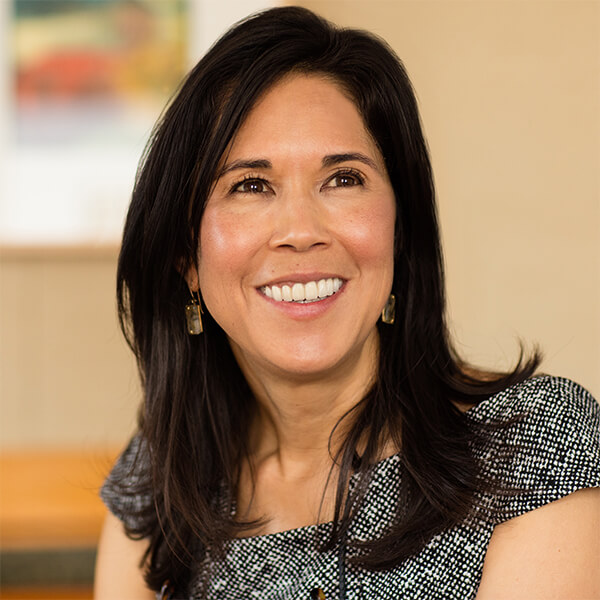
Lisa Thompson
Equity Portfolio Manager

Diana Wagner
Equity Portfolio Manager

Will McKenna
Content Director

Will McKenna: Hello, everybody. Welcome to the Capital Ideas webinar series. I'm your host, Will McKenna. I want to thank everybody for joining us today. Really great to be with you. Hope you're all really having an excellent summer so far.
Our topic today is U.S. versus international and emerging markets equities. Both last year and this year so far, stocks outside the U.S. have been leading world markets. So, do we expect that trend to continue, or will U.S. markets reassert their leadership in the years ahead? Of course, meanwhile, there's plenty of volatility in geopolitical and economic backdrop, even today as we watch oil prices rise back above $100, among other challenges. But fortunately, we've got two great speakers to help us make sense of it all and what it means for your portfolios.
We're looking forward to a really spirited debate today, a battle royale, if you will, over the next hour. And so, I'm going to introduce our speakers. In this corner, representing markets outside the U.S., we have Lisa Thompson. She's an equity portfolio manager on our flagship international and emerging markets strategies. She weighs in at 38 years of investment industry experience, has been with Capital for 31 years. Earlier in her career as an analyst, she covered companies across emerging markets from Latin America to Mexico, emerging Europe, West Asia and Africa. She got her bachelor's in math from the University of Pennsylvania. She's a CFA charter holder and she is based in our New York office.
And in this corner, representing U.S. equities, we have Diana Wagner. Diana's an equity portfolio manager on several of our core U.S. equity strategies. She weighs in at 31 years investment industry experience, been with us for 25 years. Early in her career as an analyst, she covered global semiconductor equipment, think ASML among others, and U.S. healthcare services. Got her MBA from Columbia and a bachelor's in art history from Yale. She too is based in our New York office, so it's a real New York show today.
I should also note that, in addition to their different backgrounds, Lisa and Diana have very distinct, very different investment styles, which I think you'll hear on the show. Lisa tends to be more of a contrarian deep-value investor, and Diana tends to focus more on the quality growth end of the spectrum. Of course, you'll hear that from them. And the fact that we have portfolio managers with diverse perspectives is one of the hallmarks of The Capital System, as many of you know. So with all that as an opening, Lisa, I'd love to start with you and really get your big picture outlook. Where do you see us today? Where are we heading from here? And do you think this strong showing from non-U.S. markets will continue?
Lisa Thompson: Well, thank you, Will.
I think the short answer is yes. I actually think we may be at the beginning of a decade in which emerging markets and international can continue to outperform the U.S. equities market. I want to put the caveat out there that both markets are more cyclical with greater exposure to commodities and financials than the U.S. equity market. And both markets have enjoyed very strong returns, as you mentioned, over the last 18, 19 months. If there is a market pullback, they could both underperform near-term, but I would view this as an opportunity to add to ex U.S. exposure relative to the U.S. and I want to go through why.
First of all, let me just go through the numbers. The recent numbers are impressive. Since the end of 2024, the S&P 500 is up 30% cumulatively, but EAFE is up 46% and emerging markets free is up a whopping 60%. Despite these incredible returns, over the last 18 months or so, the longer term historical returns still handily favor the U.S. market. Over a five, 10, 15, or 20-year period, the S&P 500 has materially outpaced both EAFE and EM, driven by stronger earnings growth, especially from tech mega caps as well as multiple expansion.
So for me, the key question is whether this U.S. advantage can persist. And here, I think you're going to hear a bit of my contrarian streak. I am skeptical. AI has triggered an unprecedented CapEx boom and many of the largest U.S. companies are becoming more capital intensive, just as competition intensifies among hyperscalers, LLMs and new AI entrants. While I think AI will undoubtedly be transformational, and that cloud growth and all this ancillary growth will remain strong, I think the earnings setup could look a little bit more challenging than it's been in the past.
The other point that I want to make is I think that U.S. exceptionalism may also be vulnerable to capital repatriation. Strong U.S. returns, over the past 20 years, have pulled enormous amounts of global capital into U.S. assets. The net U.S. international investment position, that is the amount of securities, bonds, and stocks that foreigners own in the U.S., less what we own abroad, peaked near $30 trillion at the end of 2024, which is about 100% of GDP. As countries pursue reshoring, AI investment, defense spending, and pursue overall higher nominal GDP growth, governments, I think, outside of the U.S. may be looking to use regulation and tax incentives to bring capital home. I think all of this creates a very supportive backdrop for both EM and international markets. These markets are more geared to global growth and have greater exposure to commodities, as well as the midstream and refining processing layer. In a run-it-hot environment, the bottlenecks will be infrastructure, as we've recently seen in the semi-space. I think that international and EM equities are going to be bigger beneficiaries of what have been years of underinvestment in productive assets in much of the world.
Will McKenna: That's a great start, Lisa. Thank you. I'm just noting a couple of things we'll probably return to. Some skepticism about AI and the earnings power there. And also this idea of capital repatriation, which we haven't talked much about on this program. Might be interesting to dig into that in more detail.
Okay. Diana, Lisa really laid down a challenge there for you. She sees this trend continuing. What do you have to say on the U.S.? Well, I'll start us with more of your big picture outlook, but then how do you see things heading from here?
Diana Wagner: Well, Will, I have to say that Lisa makes some excellent points. There are macro trends and fundamental trends supporting companies in non-U.S. economies. And I hope that the takeaway for this audience is not necessarily either/or, but a diversified portfolio of U.S. and non-U.S. stocks and funds.
Having said that, because Lisa does make some excellent points, I will say that I have been bullish on the U.S. and I remain bullish on the U.S. S&P's up about 9% now, in the halfway point through the year. What's driving U.S. markets is that the economy remains strong, supported by three things: AI spending, a resurging industrial economy, and a still resilient consumer.
When I look at the U.S. versus non-U.S., a few reasons why, in my portfolios, I prefer the U.S. is we are in a time of higher energy prices and higher energy prices hurt rest of the world more than the U.S. Countries like Japan, parts of Europe, are stung more by higher energy prices. They're more dependent on imports and that's driving more inflation there. And so we're seeing central banks outside of the U.S. hiking rates, while in the U.S. for now we're in a holding pattern, I think unless oil goes to 120 and stays there. Recent inflation data was a bit more dovish, but now it appears we're back in war mode and oil prices are inching up. So that's something that we'll have to watch. Again, I think that the U.S. is more resilient and less impacted than countries outside of the U.S.
Also the U.S. has some special tailwinds and themes. As Lisa mentioned, AI may be a double-edged sword, but for now it's an incredible tailwind for U.S. economic growth. And it's not just tech. AI also touches industrials, utilities, and other sectors. The thing is that so far it's been primarily a U.S. story, even though there are suppliers in the semiconductor and kind of tech hardware food chain outside of the U.S., the whole data center build-out has been primarily a U.S. story, though now you could argue that Europe is in the early stages of its own data center build-out, so it's coming there as well.
In the rest of the world, it's less concentrated. In the U.S., despite higher gas prices at the pump, the economy which is 70% consumer-driven is still chugging along.
Also the U.S. has demographics in our favor. Baby boomers' spending is less impacted by inflation and they're holding onto equities far longer than they have in the past. I think all of this, to me, argues for U.S. over rest of the world, though of course there are important trends and a lot of attractive companies outside of the U.S. as well.
Will McKenna: That's great. Good opening. You've both made compelling points, so I don't know which way to lean yet, so we got to keep going. Diana, a good list of ideas there. Of course, the AI spending and the industrial kind of renaissance that goes along with that, and a resilient consumer, despite some of the other headwinds that we have. Let's go ahead and dig into some of the more specific opportunities and risks you all see out there. Lisa, I thought it would be helpful, given your broad view of the world markets, and God knows, I know you travel a ton, but would love for you to take the audience on a bit of a tour of the world, outside the U.S., and share thoughts about what are the opportunities and risks that you're seeing in the different markets that you study.
Lisa Thompson: Sure. I think one of the risks that I think I do worry about is what I would call the gamification of markets and the use of leverage. I think we've seen with this recent semiconductor rally, some of these single-stock leveraged ETFs. Along with the growth of trading betting platforms like Polymarket and Kalshi, I do think there has become almost a gamification of the markets along with more leverage. This is something I am monitoring, and it does give me a little concern. It goes along with what I worry about, which is the tightening of global liquidity. Obviously, higher oil prices, a stronger dollar, this is a very difficult thing for financial conditions, and so these are two things that I am watching. I also think we're moving from what has been a global savings glut to more scarcity of capital. I think this has ramification for the bond market and for yields.
In terms of opportunities, I think there's a real focus that we've seen developing in Asia, over the past few years, on corporate reform and improving returns. This started really almost a decade ago in Japan, but really got its boost in 2023 when the Tokyo Stock Exchange started a name-and-shaming program of companies that were trading below book value and really forced them to explain why they were trading below book value and, importantly, what they were going to do about it. This has been incredibly successful at raising returns for the market and for individual companies, and this is actually spreading to Korea and even China. I think it is very positive for stock market returns when you see individual companies improving their capital structure by better governance and capital return policies.
I also think that in places like Europe, we have been seeing, over the past few years, a relaxation of regulation. I think when we think about Europe, we always do think that it is a more heavily regulated area than the U.S.. I think that is true. But what we saw four to five years ago in the banking sector was, I would say, a bit of a relaxation of regulation. This is not going to be a smooth path. It's going to be two steps forward, one step back, but I do think it is happening and I think it is now extending to places like the telecom sector as well. It ties into another topic that I think is very important, which is security of supply. Governments want to have capacity, they want to have infrastructure on shore, things like rare earth's processing capacity in the smelting and refining areas. Countries no longer want to rely on China for a lot of these needs. I think that this is another really interesting area to look at, as an investor.
Will McKenna: Okay. That's great. I want to return to a couple of those thoughts, Japan, in particular, later. I know you've been there a handful of times already this year, so let's come back to that and dig into those examples.
Diana, one of the concerns that I see, to some degree in the questions we're getting, but also just out there broadly in the U.S. market is the amount of concentration that we've been seeing, especially for those investors who are in cap weighted index funds. How are you navigating through this period of market concentration in your own portfolios? How are you thinking about that and achieving diversification in this era of concentration?
Diana Wagner: Yeah, well, I mean, I think one thing that's interesting to point out is when you look at the market valuation, because people also talk about market concentration, they talk about valuation, and I actually think that valuation for the U.S. market is reasonable. Market's not cheap, but it's not particularly expensive either. The 10-year average on the S&P P/E is 19 and we're now at 20. And looking at the U.S. versus the rest of the world, the U.S. is now at 20 times and ACWI is at 17 times. Ex US is closer to 15 times. But that gap was actually wider a year ago and it's narrowed because the valuation for the S&P has actually gone down from 22 to 20 times over the last year. But market concentration is definitely a thing. Right now, the top 10 are 40% of the S&P, the top five, almost 30%.
But what's interesting is that most of these mega caps are not that expensive. NVIDIA is at 16 times next year's earnings. Alphabet, 21 times. Amazon, 23 times. Meta, 17 times. And so when you look at the market return over the last year, it's been all about earnings growth and the earnings and earnings upside coming through, particularly from the tech sector.
So this year earnings are expected to grow in the mid-20s, around 26-27% with tech and comm services contributing nearly two-thirds of that. So it's not just that the index is concentrated, but the contribution to earnings growth is concentrated too.
And so when you look at funds that have done really well this year versus just okay, it's usually because they got those handful of stocks right. The tip of the spear AI themes like memory, semi-equipment, storage, kind of hard disk drives.
But the thing that I would point out is that concentration, market concentration is not a new thing. We've been here before. Now granted, the Nifty Fifty didn't end so well by the time we got to the 70s, but the key question for us now is figuring out which of the stocks of these mega caps now are going to be the enduring companies that we will want to buy and hold over the long term.
And as you point out for active managers, a concentrated market presents a lot of challenges, but there are also opportunities. So one challenge is that if we love one of the biggest market cap stocks, various fund constraints prevent us from owning as much as we'd like, but it also creates opportunities over the long-term horizon for active managers and bottom-up stock pickers like us who can look beyond the top 10 and identify great companies at attractive valuations.
The others are stocks that were much smaller market cap, but just had enormous stock appreciation this year. And a lot of them are stocks that our analysts identified not this year, but in the last few years as beneficiaries of what we're seeing with AI deployment.
Will McKenna: That's great. And I do want to come back to this idea of the active managers being able to look beyond those top 10. We're going to dig into what those might be for you.
First though, let me tee up our first audience poll for everyone out there and see if we can get some interesting responses from you. And I believe our audience poll this time is related to our U.S. international theme. Where are you going this summer? Are you focused on locations in the U.S.? If so, tell us where. Or are you going abroad? And we'd love to hear some of those ideas, and we'll come back to see what you all said.
Okay, maybe my favorite question of our series here, which is to have each of you talk about the investment themes and opportunities that you're most interested in, you're most focused on these days.
Lisa, maybe we can start with you with some of the international emerging market themes and specific examples that are in your area of focus, and then we'll return to Diana for some U.S. ones. But over to you, Lisa.
Lisa Thompson: Sure. I've mentioned a little bit of this, but I think beneficiaries of countries going for growth. All G7 countries are trying to lift nominal GDP growth by investing in the real economy, whether that's defense, reshoring, or AI. And I think this naturally benefits industrials, extractive industries. I think it's very bullish for commodities, including base metals and even energy, which have suffered from many, many years of underinvestment. I think in particular, base metals have long lead times to bring in additional capacity, and I think that's an attractive area.
I think that I'm also very excited about China's anti-involution campaign. Now, what is anti-involution? This is the attempt by the government of China to bring down the hyper-competitive business practices and overcapacity in certain segments of the economy. The market is skeptical about this and I'm not. I think it favors the strongest players in many sectors where China has historically had excess competition. And I think we're finding a great hunting ground for places in the consumer sector, chemicals, refining. A lot of these places are going to benefit from lower competitive intensity that's not just in China, but it will be impacting industries globally.
I'm also very excited about beneficiaries of what I call AI adoption. That is not so much the AI infrastructure build out, but ways that AI can benefit productivity at companies. For example, a company like Recruit in Japan has been able to use AI to enhance its revenues. I even think the much maligned software and IT services sector can be an interesting hunting ground to sift through a bit of the rubble there.
And I also think that this idea of capital repatriation, as I mentioned, coming back to countries that have explored a lot of capital, for me, this would manifest in stronger exchange rates outside of the U.S. and particularly in Asia. And that's another thing that I'm excited about.
Will McKenna: You mentioned Recruit in Japan. Are there any other specific examples, company examples like that, of the themes you mentioned in different markets, whether that's around defense, reshoring, or-
Lisa Thompson: Yeah.
Will McKenna: ... this idea of the AI victims within software? Anything else come to mind?
Lisa Thompson: I think that Japan is a really good hunting ground for this because I think that in general, IT build out was a little bit slower in Japan. So they were a little bit further behind in the curve. It's a unique market obviously with a unique language. And I do think that there are a number of companies that are going to be pretty interesting. Companies like Fujitsu, Baycurrent. There are a number of companies that we think are pretty attractive and actually maybe seeing AI benefit their business. I think the market had some skepticism and coming around a little bit to that view.
Will McKenna: I must admit, I didn't know much about the China anti-involution policy until I read one of your research notes. And you had said, some of the things you talked about a couple of minutes ago, but also you said here, “If successful, stronger Chinese companies should enjoy better returns while global competitors benefit from reduced competitive pressure.” So it's not just necessarily a tailwind for those Chinese companies, but maybe some of the competitors who don't have to be involved in that sort of race to the bottom. Fair to say?
Lisa Thompson: Exactly.
Will McKenna: Okay, good.
Lisa Thompson: That's exactly right.
Will McKenna: We'll return to that, but let me give Diana a shot. What are you excited about these days? What are some of the themes that you're focused on, the opportunities that catch your attention these days?
Diana Wagner: Well, Will, I remain very excited about the AI theme, though it's definitely evolving. I think that the market is coming to understand that the hyperscalers are no longer the safety trade they once were. They used to be free cashflow machines with pristine fortress-like balance sheets, and now they don't generate free cashflow because they're spending every last dollar on CapEx. And the ROIC on that CapEx is still uncertain. And what kind of moat this CapEx will enable is also still unclear. And over the last two years, the hyperscalers have raised nearly $300 billion of debt to fund their CapEx ambitions. And so their financial profile today is a lot riskier and more dependent on capital markets. So far the capital markets have been accommodating, but what happens if credit spreads blow out and funding gets a lot more expensive? In my portfolios, I'm still more focused on the picks and shovels suppliers to AI, the semiconductor complex in particular. And I think that area remains very compelling as an area to invest, especially after the recent correction.
However, I acknowledge that if the hyperscalers can't raise enough money to invest in CapEx, the whole food chain is going to suffer. So we really need the hyperscalers to show great returns on their CapEx so the market will have confidence to support their investment. And I think today's Google results had... There are things that you can pick on, but I think the kind of growth acceleration that they showed in GCP, the kind of margin expansion they showed there is an indication of the kind of returns they're going to get on the CapEx that they're investing now. And I think that those returns will become more evident over the next few quarters and years.
Now within the semiconductor industry, I'll kind of highlight a couple of stocks, in particular, Broadcom and Micron. Broadcom is a stock that we've liked for a long time and I think that it's becoming more clear to the rest of the world why. And a key reason is it's a share gainer. Basically, most of the hyperscalers want to develop their own custom chips in partnership with Broadcom and move away from NVIDIA's GPUs. It doesn't mean that there's not going to be a plenty big enough market for the GPUs, but on the margin, it's interesting the choice that the hyperscalers are making.
And then memory. Memory stocks have been on a tear even though they've had this recent correction. But I think at this point it looks as compelling as ever because every development that we're seeing, including the shift to open-weight models, just adds to the demand for memory. And the industry is being very disciplined and adding supply slowly. And if you look at a stock like Micron, over the last year, despite the stock being up 800%, the P/E has been cut in half.
The thing to watch with memory is China and how quickly they can catch up on the latest kind of memory technology, which is called HBM technology. Our analyst thinks that they're still five to six years behind, but that's kind of something that I'm watching closely because ultimately there will be a supply response. And at this point, I think that it's going to take a number of years and these companies are going to continue to show very strong earnings growth and margins over the next few years and they remain compelling investments.
If I can, I would also like to highlight something outside of semiconductors, outside of this area, and that's industrials. And these stocks have done well over the last year as the market has started to anticipate a recovery given, yes, there's some kind of influence and tailwinds from AI, but also the big trend of onshoring, stimulus from the tax bill. But I think that there's more room to go.
So I mean, we're seeing healthy economic activity start to translate into strong orders for the industrial economy. The ISM is now at 53, 54 after running below 50 for the last three years, basically the longest downturn in decades. And we've been through this 20-year cycle of offshoring manufacturing to China and we're seeing the reverse of that start in many industries. And I think the recovery there, the reversal is just getting started.
And two stocks that I'd highlight in the industrial areas are XPO Logistics and United Rentals. XPO is a 25 billion market cap LTL trucking company that's gaining share and growing margins by improving service. And it's interesting because they've grown margins and their business is tied to industrial production. And now that ISM is finally building some positive momentum, I think that earnings for that company are going to be a coiled spring.
I also still really like United Rentals. They actually reported another great quarter last night. Business is booming and they're the number one player in a consolidating construction equipment rental market. And all of their growth is coming from mega projects, including data centers and data center-related markets like utilities, but they're also seeing benefits from this reshoring with healthcare seeing big projects and bringing manufacturing back to the U.S. and across a number of other industries. So I think that United Rentals is going to remain a big beneficiary of these trends in the industrial economy.
Will McKenna: Oh, that's a great list. Thank you. And Lisa, I wanted to come back to you on one follow-up there. You talked about the software-as-a-service sector or SaaS companies, and I've heard it referred to as SaaSpocalypse or AI roadkill-
Diana Wagner: Yes.
Will McKenna: ... or the victims of some of this. Are there any company examples within that theme that you feel have been unfairly maligned or babies thrown out in the proverbial bath water? How are you thinking about that?
Lisa Thompson: Yeah, as I said, I think these were companies that just the sector overall that was sort of considered almost future-proof. People thought that they had an incredible moat, valuations were very high. And then obviously with the release of these incredible LLM models, it really challenged their dominance. And I think that that challenge and that question is, it's well deserved, right? So there was, I would say, sort of a serial de-rating of the sector.
And here's where I think we have the opportunity to shine and look through and see, okay, which companies, which businesses are going to be AI roadkill? And there will be some. And which ones are going to be more durable? And which companies are going to actually be helpful? Because yes, I think some of the leading edge tech companies may not need as much software, but there are a lot of companies that I would say general large corporations, small and medium-sized businesses for sure, that are going to still want to have a provider of choice to have the feeling that they have security. And again, I think that in particular we would say this in Japan, but even I would say something like SAP we feel like is a little bit more mission-critical than maybe the market is believing.
Will McKenna: Yeah. And when you worked in a big company like Capital, you know once these products are embedded, it's very difficult to pull them out.
Let me just thank folks for some fun responses to our travel poll. We had a couple saying Michigan, John wants to go fly-fishing wherever. I'm going fly-fishing. Come on, John, we got space for you in the boat. Angela's going to the Galapagos Islands. Really great. Somebody said, “I've got opposing answers, staying in the U.S. and going abroad,” reflecting our webinar topic. Corey is going to Lake Wawasee in Indiana, if I said that correctly. Jim, going to the US Open Tennis Tournament. Come on, that's a great event. I bet Lisa and/or Diana are probably going there. Thomas is waiting until the weather gets cooler. Stephanie's going to Bermuda, the Azores, I don't know if I said that right, and Sweden. Dan's going to Guatemala. Kimberly, Cabo. Wow, great list everybody. I'm jealous. Thank you for that.
And speaking of travel, both of you I think have been traveling a lot recently on research trips. And Diana, maybe I'll start with you. If memory serves, I think you were at some consumer conferences or traveling with some of our analysts and your fellow PMs. Tell us where you've been going and what you've been learning.
Diana Wagner: Yeah. Well, you're right. You have a good memory. So one fascinating trip that I was on recently was at a staples company conference in Paris last month. Not a bad place to be to talk about companies that are unloved, companies in the food and beverage and household products areas that have been just left on the wayside while everybody's been focused on more exciting areas like tech. And it was really great to have our staples analysts and portfolio managers interested in the sector all together debating these companies with demand down as consumer tastes shift away from processed food, away from alcohol and sugary beverages, these companies are having to reinvent themselves and innovate. And at this conference, it was kind of fascinating to see some of the innovations that these companies are coming up with.
So there's this spirits company, Pernod Ricard, which showed us some of their new products, including, get this, peanut butter and jelly whiskey. And they also have one that's just peanut butter if you don't like the jelly. And then they also have a Dunkin’ coffee flavored Kahlúa. So they're hoping that this kind of innovation revitalizes interest in alcohol. And at this point, they still think that it's secular, not structural. I don't know if I agree with them on that, but that's some of the innovation that they're putting forth.
And there were also a lot of companies pitching themselves as turnarounds. And one company that looked promising was Nestlé. And as you guys may see, Nestlé reported today and the market did not like what they saw. And I guess that's a good reminder that turnarounds never occur in a straight line and they're harder than management will make them out to be. But I do think that over the long term, Nestlé is in great categories like coffee and pet care, and they are driving deep-rooted change that over time should improve their growth trajectory. So that's one that I walked away from the conference intrigued by and I'm kind of more excited now that the stock valuation has become even more attractive after today.
But sometimes you don't have to travel as far as Paris to do some interesting kind of on-the-ground research. One of the most impactful trips that I took recently was just me and an analyst going to, of all places, Stamford, Connecticut, to the global headquarters of a company called ITT, which is a $17 billion market cap industrial that manufactures highly engineered products, components for a diverse range of industrial markets, including autos. And the fascinating thing was that this is a global company and their headquarters in Stamford was just a couple of floors in a random office park. And that visit really brought to life their story of pushing lean and entrepreneurialism and being fully decentralized. Turns out that this company with 12,000 employees has just 65 people in their headquarters in Stamford, Connecticut. And that's pretty lean.
And it was really great to meet their very dynamic Italian, very Italian CEO and their French CFO for this very kind of American company, and to hear how they have overcome what others would call a bad portfolio mix and a bad geographic mix with a lot of exposure to China, which in theory a U.S. company shouldn't be competing well in. But somehow they've managed to deliver growth, which has been at the very high end of their industrial peers without having AI exposure, without having much aerospace exposure, which have been the big growth markets in industrials. So it was fascinating to hear this management team walk through example by example of how they've been able to drive this change and drive this kind of growth and why it's sustainable. So spending that time and then seeing their lean business model in action was really impactful and gave me the courage to dip my toe into the stock and I'm really excited for the path there.
Will McKenna: That's a great story. And sometimes those stories closer to the home are most interesting. I'm still a little stuck on the PBJ whiskey idea and looking forward to sampling that at some point. Lisa, you talked about Japan earlier. As I understand it, you've been there a few times this year. Maybe take us inside that process. Why do you keep going back? What are you learning there? What does that look like? And what are the insights and actions that come out of that?
Lisa Thompson: Well, I think that if you go back five or 10 years ago, actually I remember very clearly I was in Japan maybe six or seven years ago and talking to a broker and he said, it was just an off the cuff comment that nobody really knows well companies outside of the top 15 companies in Japan. And I do think it's a very rich and diversified hunting ground and we have great research on the ground that is super helpful.
Some of these companies are a little harder. There are a lot of conglomerates in Japan, so you kind of have to look at different parts of the business. The Japanese don't typically oversell their businesses, so you really have to look underneath the hood and make some bold predictions yourself. But what Japan has to its advantage is just years and years of R&D and an incredible culture of perfection and obviously benefiting from what has been a low exchange rate as well.
So I think that it's just been an incredible hunting ground and I just continue, every time I go, I feel like there's so much more I don't know. So I've been there three times this year. Every time, I'm trying to meet different companies, both companies that are doing well right now, but also looking for those companies that might not be in the spotlight today, but where I think there might be some diamonds in the rough, so to speak. So I just think it's a phenomenal place for a stock picker.
I would say the same about Korea. I've only been to Korea once this year, but I'm going back again next year. I think it's a great... We hear a lot about Hynix and Samsung, but again, there's a lot of depth to this market and I'm just trying to increase my knowledge base. So that's why I've been going.
Will McKenna: And that's interesting. I mean, I think I read one of your recent articles where you said there was a time, and you referenced it there, where you only needed to know 30, 40 companies in Japan, the big car companies, the big automation companies, et cetera. But now it might be 10 times that amount that are-
Lisa Thompson: Oh, more. More.
Will McKenna: Or more.
Lisa Thompson: And this is the thing, you can meet companies that are relatively small that just have incredible expertise in one narrow thing. So I think it's just a great, great hunting ground. Again, when you marry that with the higher focus on governance and returns, you can see companies that are benefiting on a multi-year basis. A company like Hitachi, which really began its governance transition over 10 years ago, exiting, lower return businesses. These things can go on for many, many years, and so that's why I continue to be attracted to Japan as a great stock picker's market.
Will McKenna: Got it. Let me just say to the folks in the audience, I think we've been having a series of maybe some tech problems for some of you, and apologies about that. We will have a replay out to you in the next week or so. Alan says, “It's sort of ironic: a webinar heavily focused on technology and the technology isn't working.” Okay, that's completely fair.
Let's do this. Lisa, I might stick with you. We've talked a lot about what are the themes and opportunities that we're seeing out in markets. Well, let's turn that into the real-world application in your portfolios. When you think about how you're positioned today in your different responsibilities in your portfolios, give us a sense of what that looks like in the current environment and how you're setting up for the season ahead.
Lisa Thompson: So I think one of the areas that I've been focused on has been on the commodity space. As I mentioned, I think there has been kind of chronic underinvestment. I do think that as the G7 tries to "run it hot," I think this is going to be an area where we're going to see sustained higher returns. And it just takes a long time to put up things like a copper mine. I don't know, 16-17 years. So it's a long lead time. The Chinese have not really been able to do much better and it's in increasingly more difficult jurisdictions.
Also, I came into this year obviously not anticipating a war. In fact, I was in the UAE and Saudi Arabia two weeks before the war broke out. But I did come in with more exposure on the energy side. And that was frankly because I like the fact that energy is very uncorrelated with the rest of the market, as we see in days like today. And I felt that the market was a little bit too relaxed about what they perceived as oversupply. I think that we've seen kind of underinvestment in the energy sector for a number of years, really since 2012. We have seen the improvement of technology, but I'm not 100% convinced that in extractive industries that technology is going to be the full panacea that some people expect.
So that's been an area worked out a little bit better than I expected, to be frank. Again, I didn't anticipate a war. I am not one to think that oil prices will be sustained at this level, particularly given how high refining margins are. But I do think that I'm also not a believer that we're going back to the kind of $60 barrel price. So that's been an area that I've been interested in.
I, like Diana, and I always find it interesting when people who have different investment styles are thinking about a similar sector, I've been kind of more intrigued by the consumer sector. I think the companies in general have been hit by a perfect storm. They took too much pricing during COVID. They were overearning and under-innovating. And that led to, coupled with the rollout of GLP-1s and a number of oil shocks led to, I think, an affordability crisis and a lack of reason to buy branded consumer goods.
I think a lot of that is in the price. Again, there are some structural issues for this sector, but I do think it's kind of an interesting hunting ground, and again, a sector that brings some unique diversification benefits.
I did mention one area that I've been more excited about in the past, I'm a little bit less excited about now is actually in the financial sector. It's not that I think there's been anything wrong, but if I go back to three or four years ago, even I had a much stronger review that was, I think, differentiated on rates and inflation and the yield curve. Now I do think we're at a point where the yield curves and longer-end yields are pretty high and I'm not as convinced that rates can be sustained at a much higher level. And so that's just given me a little bit of pause because I think we may see regulation or other things that could have a little bit more of an impact. So that's an area that I've been at the margin de-emphasizing a bit.
Will McKenna: Got it. That's a great listen. And you used the word “uncorrelated” several times and that I think is evidence of how different you are from some of your peers and the way we tend to mix portfolio managers together with different styles. Diana, as you think about this question and how you might be positioned, I know one of the things we've had you on the show before talking a lot about and given your history following the sector is healthcare. And would just be curious to hear how you're thinking about that these days in your portfolios given some of the challenges and headwinds that have been tough on that sector.
Diana Wagner: Well, just in terms of incrementally what I'm doing in my portfolio, I have had a lot of exposure to AI and AI-related themes. And although I'm still very excited about them, on the margin I'm trying to bring a bit more balance to my portfolio. And so I've been buying more healthcare, some staples, utilities, and especially because I manage in growth and income mandates, those are sectors that also give me nice yields. And in healthcare in the U.S., it's been a bit of a tale of two cities because biotech and pharma stocks have been doing quite well, but medtech and tools companies, and until recently HMO stocks, managed care stocks have done poorly over the last few years. And I think that at this point, the valuations have become really quite compelling.
And let me just touch on medtech. There's been disappointment in product cycles as well as macro concerns about procedure growth after the post-COVID bubble in procedures. But when you look at highly innovative companies like Boston Scientific and Intuitive Surgical, they've had their multiples cut in more than half. And the stocks are basically assuming that there's no more innovation and there's going to be secular pressure on procedure volumes. I mean, Boston Scientific used to trade at north of 30 times earnings just a year ago and now it's at 12 times. So yes, competition has come in to the pulsed field ablation market and the AFib market, but does that mean that the cycle is over and that Boston Scientific is done innovating? I don't think so. And it's hard to say which quarter the business will turn. And we may not be at bottom yet, but at these valuations, I think the margin of safety is pretty big. And I think that some of the other medtech stocks are in a similar place.
And the tools companies as well. I think a couple of days ago we had Danaher report and people interpreted the results as indicative of tools not quite getting ready to grow again, but this morning Thermo had a much more constructive quarter. And I think some of the trends that have been benefiting pharma and biotech are trickling down to the tools companies. And I think that the valuations there also are very compelling. And I think that those stocks are very attractive here. And then on the healthcare services side where I was an analyst for a number of years, I would say that managed care is probably a few quarters ahead of where medtech is in terms of a fundamental and valuation recovery. And they're also working their way through what's been a historically tough cycle.
And let me just spend a minute or so on UnitedHealth here, which I think is one of the most interesting companies and one of the ones I'm most excited about. And the backdrop here is that post-COVID there was huge pent-up demand that drove a spike in procedure volumes and just general healthcare utilization. And for a health insurer like UnitedHealth that crushed their underwriting margins and it crushed underwriting margins across the industry. And other companies suffered huge earnings hits like Humana, CVS, Elevance. And for a while there, a couple of years ago, United kept chugging along because United always found a way to deliver. But it turned out that they couldn't outrun industry headwinds and they had their own day of reckoning last year. They admitted a huge earnings shortfall, not only due to the industry headwinds, but also some execution stumbles and also some frankly lax management, surprisingly lax management for UnitedHealth. So they fired the CEO and the CFO and they brought back the former CEO, Steve Hemsley, who revived UNH post-trauma once before back in '07 when the CEO at that time got kicked out for options backdating. And so now Steve Hemsley is back. He's all discipline, all rigor, and he's overhauled management processes and is really trying to restore a culture of transparency and excellence. And the good thing for a company like UnitedHealth is that they don't have to invent a chip to compete with NVIDIA. They just have to set expectations low, which I think they've done, and execute just basic blocking and tackling. And if you look at what they've done over the last couple of quarters this year, they're showing some nice progress. They're showing kind of discipline and underwriting, which has led to some upside in underwriting margins, and they seem to be back on the path of restoring credibility
So I think that there are a number of areas in healthcare that are still very attractive where the valuations are low and the companies actually have pretty attractive dividend yields as well. So I think for a range of investors, healthcare is a pretty compelling area and it's an area that is anti-AI. If you're looking for something anti-AI that moves when the AI market kind of goes one way, those stocks, like healthcare goes a different way. And so that's an attractive feature as well.
Will McKenna: That's great. What a good overview of that entire sector. And it's interesting to hear you talk about that because I know sometimes these CEO transitions can be a real catalyst or a moment for positive change. Let's do this as we head toward the finish line here, let's maybe take on a little lighter note. Would love to hear, and this is usually one of the favorite sections of our events, any good book or podcast recommendations from our speakers? Lisa, maybe I'll start with you here. What's on your nightstand or in your podcast feed?
Lisa Thompson: Well, I was going to say I love listening to Capital Ideas, even listening to Diana now, I love hearing viewpoints from my fellow portfolio managers. I get a lot of great ideas and it reminds me how much talent we have. I do want to talk about two of our colleagues at Capital have wives who are releasing books in the next couple of months. They haven't been released, but they've gotten great early feedback. So I've already pre-ordered them on Audible. One is Brant Thompson's wife, Anna Nordberg, has written a novel called “When She Was Ours.” And then on the other side of the spectrum, Humphrey Oleng's wife, Lindsay Crouse, has published a book called “The Case for Quitting,” where she challenges what she calls The Cult of Perseverance, which I think I need to read because I'm probably a founding member of The Cult of Perseverance. But those are two books that I'm excited to be reading this fall.
Will McKenna: Love that. So sort of in-house talent, so to speak. Anna Nordberg, “When She Was Ours,” and Lindsay Crouse, “The Case for Quitting.” And Lisa's not going anywhere anytime soon.
Lisa Thompson: Nope.
Will McKenna: So how about for you, Diana?
Diana Wagner: Well, so the book that I have loved this summer is “1873” by Liaquat Ahamed. And it's a book about the global financial crisis triggered by the 1873 market crash and made worse by policy mistakes. And I think he does an amazing job of bringing to life a distant period of speculative access, which has parallels to today's world. And it's not a period that many of us are familiar with, like we all think about the 1929 crash, but that was more of a U.S. phenomenon. But he does a great job of explaining the interconnectedness and transmission of speculative excess around the world. And so I think it's a very interesting book for these times.
Will McKenna: Oh, that's a great one. And I should say for our audience, speaking of books, we're going to be releasing our own book a little later this fall, “Capital Ideas: Lessons from veteran investors,” which includes chapters from about 25 of our current and former portfolio managers. Lisa's one of them, but many, many others, some great collective wisdom from their career experiences. Lessons learned, mistakes made, fun travels from the road, and the kind of stories you heard on this. So looking forward to that, and we'll get that out to many of you when that becomes available.
Well, let me do this. We're coming to our close here. Let me apologize for any tech problems we had today. We will get you all the replay, the full replay so that you can view that anything you missed and get CE credit accordingly. Certainly want to thank everybody for your engagement and great questions today. And it's really because of you that we've been voted number one for thought leadership for I think the sixth time. Keep your eye out for upcoming webinars and podcasts. We're not going to have an event in August, but we will return in September to look at megatrends, everything from AI to space and beyond, and then something right after the midterms to talk about the implications of that. And of course our podcast, if you aren't listening to that yet, please do check it out. I think you'll get a lot out of that just as you do from these events.
And finally, I want to thank Lisa and Diana for your great insights today. Really fun. It was fascinating to hear your different styles come to life and really sort of bring The Capital System to life in that way and all the diverse perspectives we have here. There are many paths to investment success, and I think you just heard two of them. So let me thank everybody for joining us. Please enjoy the rest of your day and the rest of your summer. Thank you.
1 hour CE credit for CFP, IWI and IAR*
International equities have remained in focus in 2026, as market leadership broadens beyond the U.S. and opportunities continue to emerge across regions.
Join portfolio managers Lisa Thompson and Diana Wagner as they assess how international and emerging markets stocks have fared versus U.S. stocks so far in 2026. What are the trends and what could this mean for long-term strategies?
Earn CE credit and get actionable insights.
Event date:July 23, 2026
Lisa Thompson is an equity portfolio manager with 38 years of investment industry experience (as of 12/31/2025). She holds a bachelor’s degree in mathematics from the University of Pennsylvania and is a CFA® charterholder.
Diana Wagner is an equity portfolio manager with 31 years of investment industry experience (as of 12/31/2025). She holds an MBA from Columbia and a bachelor’s degree in art history from Yale University.