
Featuring:

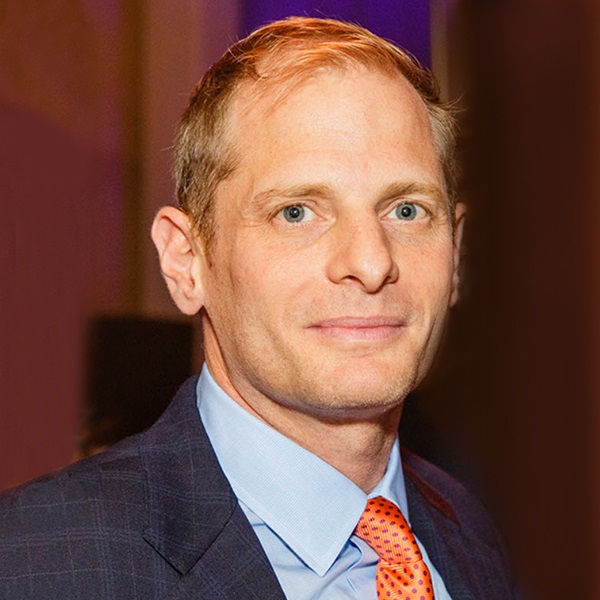
Mark Casey
Equity Portfolio Manager
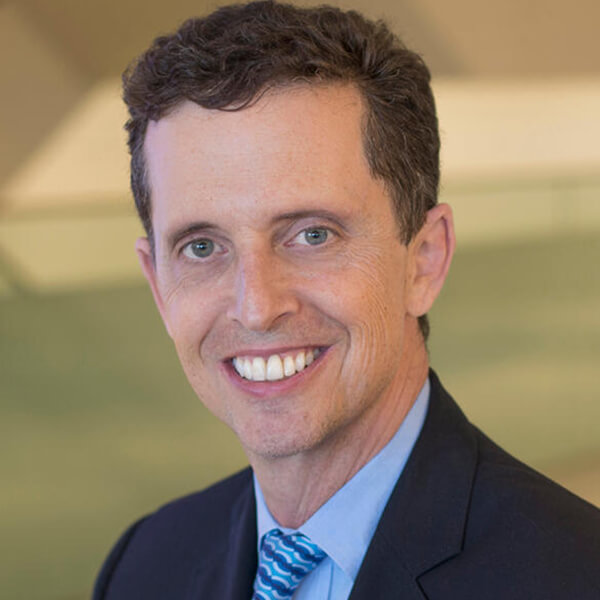
Michael Beckwith
Equity Portfolio Manager
Will McKenna
Content Director

Will McKenna: Hey everybody, and welcome to the Capital Ideas webinar program. I'm your host, Will McKenna. I want to thank everybody for joining us today. It's great to be with you as always.
Very excited for today's topic, which is Megatrends: from AI to space and beyond. And we're going to dig into a lot of these exciting innovations that are driving long-term investment opportunities. Meanwhile, there's plenty of volatility in the current backdrop, whether that's in the economy, in geopolitics, in the bond market more recently, even as stock markets have been touching new highs. Suffice to say there's plenty going on in the investment environment, but fortunately we've got two great speakers to help us make sense of it all and what it all means for your portfolios. So with that, let me introduce these folks.
Mark Casey, you probably recognize, he's a friend of the program. He's an equity portfolio manager on our flagship U.S. growth strategy among other responsibilities. He has 26 years investment experience, all with Capital. Earlier in his career as an analyst, he covered U.S. media, entertainment, newspapers, and internet companies. And then prior to joining Capital, he was working in tech as a director and product manager for Siebel Systems, for those of you who remember that name. Got his MBA from Harvard and bachelor's from Yale, and he is based in San Francisco.
Michael Beckwith, we're pleased to have joining us on the program for the first time. He's a portfolio manager on U.S. growth and world growth and income strategies. He's been with Capital for seven years. Prior to joining us, he held similar roles at places like Sequoia Capital and some other firms. When he was an analyst earlier in his career, he covered global technology, industrial and financial companies. He got his law degree from Harvard, but must have left that profession behind him. And his bachelor's from Middlebury, he too is based in San Francisco. So both of these guys are in San Francisco, really the epicenter of the AI world and have been covering tech going back to the boom of the late '90s. So I think perfect guests for today.
And Mark, I might start with you. Before we dig into the big megatrends, can you just start us off with your big picture outlook on the economy and markets? Where do you see us today and where are we heading from here?
Mark Casey: Sure, Will. Thanks. And it's nice to be here. The main observation I have about the U.S. stock market here is that it's incredibly concentrated. If you look at the 10 biggest companies in the S&P 500 index, they add up to 40% of the value of the index. I checked the numbers this morning. And some of those companies are exposed to things like Amazon retail or device sales at Apple. But by far, the dominant theme driving the valuations of that 40% of the S&P that's in 10 companies is the AI build out. And so I think that's just the most important issue to get right by a lot.
There are other themes that matter in the stock market. Many of those are related to geopolitics. You have oil prices high and some agricultural and other commodity prices high due to conflicts between the U.S. and Iran and Russia and Ukraine. For many governments around the world, there's a desire to increase supply chain for new weapons systems given, again, those same conflicts and worries about other conflicts. You still have the disentanglement of the U.S. and Chinese supply chains, and those are major themes also. But basically I put AI at the... It's like real estate. It's location, location and location. And right now in the stock market, it feels like it's AI, AI and AI.
And what matters a lot is what sort of return on investment will all of the people who are building AI get? If that return is good, then that will fund continued growth of AI investments. But if it's worse than the market is expecting, then there's going to be trouble when at some point those people can't continue to fund the investments.
Will McKenna: Yeah, that's helpful, Mark. And I remember you saying on an earlier call, you phrased it as something like, you feel like AI is the sun and occasionally things like the Iran war blocking out the sun temporarily, but really the sun is still AI. And you do mention that concentration, those 10 companies which have created a separation from the rest of the market. That's great.
Michael, similar question. Let's get your view on your big picture outlook and then we're going to dig into the megatrends that you're following. So over to you.
Michael Beckwith: Great, Will, and it's a pleasure to be here today with everyone.
So maybe I'll start with the economy. It's really a story of two competing tensions. On one side, you have strong corporate investment and resilient consumer spending. On the other, inflationary pressures driven by energy, and importantly, pressure that is partly an outgrowth of that same private AI investment boom that Mark hit on. Chairman Warsh made the point himself last week: the hyperscalers are out in the market raising capital and that competition for capital is real, including U.S. sovereign bonds. The thing driving the growth has also helped driving the cost of money. And so in terms of where we are with economy, second quarter headline GDP was one and a half percent, which is fairly pedestrian, but private domestic final sales. So think the part of GDP that actually consumers and businesses drive, stripping out trade inventories grew 4.2%. And effectively the private engine is running hot.
And obviously last week the Fed responded by raising rates 25 basis points unanimously, calling activities solid, spending resilient, productivity strong, capital investment robust, but the wrench in the system was inflation is still elevated. And so what we're seeing now is the Fed is engaging the policy brake, and I don't think that break is coming off soon. If you look at the dot plot, it implies two more hikes this year and the future markets are pricing in more than that. So this is, I think, an important gap that I'd watch. The one thing I'm confident about is we cannot count on falling rates to lift every asset in the way we have over the last decade.
And two things that I think are important to pause on is valuation. So first, a counterintuitive point, the S&P is now trading at about 20 and a half times forward earnings, and that multiple has actually come down over the course of the year, not because prices fell, but because earnings growth outran them with 16% projected growth this year. And it's really a tale of two worlds: U.S. market and the rest of the world. So the MSCI ACWI ex U.S trades at 13 times and interestingly with the same 16% projected earnings growth. So this is one of the reasons that we continue to think there's a rich opportunity set away from home.
So in closing, my base case is resilient, not relaxed. I don't see a classic recession unraveling. I also don't see a rising tide lifts all boats that favors businesses that can self-fund their growth, convert investment into productivity and free cash flow, and take share without needing a perfect macro backdrop. So my conclusion is I'm not hiding, I'm not chasing either, and I'm being selective.
Will McKenna: That's great. I like your conclusion. Also, I just noted your point. The market has gotten more expensive in price, yet cheaper and multiple at the same time, that kind of counterintuitive idea. And also we'll return to your point about the opportunity set away from home later when we talk about how you're thinking about positioning your portfolios. That's great. Okay, let's jump into the megatrends.
Mark, you have spoken consistently on this program and elsewhere about your preference, your investment style of investing in what you call "unstoppable trends." So maybe remind the audience, how do you define an unstoppable trend? And then can you give some examples of what they are and especially those that you're kind of focused on these days?
Mark Casey: Sure. To me, an unstoppable trend in the economy is the result of a new product or service just being so much better in every way that it's going to take market share compared to the old product or service every year, kind of forever. And what you need is for consumers have to view it as much better so that they really want to buy it. And then the economics also have to really be better. For example, some things are put forward as though they're unstoppable trends. The growth of windmills to provide power, for example, was people thought, "Oh, well, there's a lot of desire for green energy to take over grid production, so windmills are going to be an unstoppable trend." But they were really propped up largely by mandates and subsidies and tax incentives. And so without those, the growth slows or declines.
So some of the best unstoppable trends relate to digital technology. And we all know these in our own lives. Think of how much you now tap with your phone to make a digital payment when you're in a store compared to how often you pull out dollar bills or coins or write checks. So you got digital payments as an unstoppable trend. Online commerce versus driving to stores to pick things up or to see if they're in the store yourself. From on-premise computing and data centers that companies control to cloud computing and data centers that a few huge web companies control. Streaming video is an unstoppable trend. You might argue, by the way, Will, that with the federal debt at 40 trillion now and with deficit spending all over the developed world, you kind of might wonder if government overspending is an unstoppable trend, especially with aging populations with growing retirement benefits, but I wouldn't put that in the same category as these digital trends.
And you don't have to look at technology to find unstoppable trends. The growth of commercial air travel is one. Only about a quarter, actually less than a quarter of the people in the world have ever been on an airplane, but every year about 75 million people, about 1% of the world's population, they get on an airplane for the first time in their life. Isn't that amazing? The first time in their life and they say, "Wow, this is better than the bus. I want to save up and be able to do this again." So I think commercial air travel growth is an unstoppable trend.
Tobacco is, I think, in an unstoppable decline, but interestingly, it's being replaced by less harmful versions of nicotine, so heat-not-burn cigarettes instead of inhaling the smoke or vaping or what are called "modern oral pouches," those ZYNs that were in short supply several months ago. So I think that's another unstoppable trend and there's more. Everywhere you look, you can find one in most industries.
Will McKenna: Yeah, that's great. And I appreciate hearing some of the ones that are in the physical economy, as you've called it, the heat-not-burn nicotine as a trend and planes being better than buses. That's a good reminder for those of us who complain sometimes about air travel. It's still better than the bus. I certainly appreciate that. I think we'll dig into a couple of more of those as we go on. I know you've talked about the move from unintelligent systems to intelligent systems.
So Michael, let's go there. As you think about AI, I know you follow this very closely and there's so much going on. We've got this incredible growth in usage, demand, and excitement. At the same time, it seems like the narrative has pivoted over to reports about rogue AI, fears of impending doom, calls for regulation. Can you put this in perspective for us? What are your thoughts on the story as we see it today? Do you think, is AI doom going to slow down the AI boom or do you think the opportunities will continue to outweigh the risks?
Michael Beckwith: Thanks, Will. And as Mark highlighted with 40% of the top 10 companies and probably half the market tied to it, it's something that we are thinking about night and day. And I think my punchline is I don't believe the doom debate changes the final destination of AI, but there are three critical circuit breakers, physical, financial, regulatory that can absolutely change how fast we get there. And the pace, not the destination is what shows up in your client's returns every year. So let's start with why the destination, I don't believe, is in doubt.
So token consumption, which is a proxy for the volume of AI being used, is running up roughly 20 times year over year, 2000% growth. This hearkens back to when Bezos left D.E. Shaw and he saw the growth in the internet and he said, "You need to be part of exponential growth." The Fed estimates that only 20% of American business have adopted AI at all, and companies like OpenAI and Anthropic have gone from zero to 115 billion of annualized revenue in three years. That's roughly the size of what Amazon AWS was in 2025. Nothing in corporate history has scaled like that, and it's being matched by an unprecedented capital build out, with the hyperscalers and neoclouds projecting to spend about $900 billion this year, with 2027 potentially growing another 40%.
And more importantly, and I think this is overlooked, is I think the return is showing up in ordinary companies, not just chip makers, not just AI native companies. And I'll call out a couple examples. C.H. Robinson, which is a Midwest company, which is an old-fashioned truck brokerage, they've put AI across their processes, and shipments per day are up 15% year over year and 60% since the end of '22. And the time to request to quote went from 17 minutes to 32 seconds. And we have been in a freight recession for the last two years. They've had down revenue and increasing margins. That would not have been possible without AI. Or UnitedHealth, it's investing a billion and a half in AI. Their prior authorizations review went from eight hours to 30 seconds. Chubb, in insurance, they expect 150 basis point improvement in its efficiency ratio with roughly 85% of underwriting and claims process with no human touch.
This is real tangible productivity and economic benefit. And that's why I don't think the doom will play out, but what actually slows it is the three circuit breakers I talked about. One is physical constraints and local backlash. In the first quarter of the year, local opposition blocked or delayed 75 data centers worth about $130 billion. That matched all of 2025 in three months. And right now we're building about 15 gigawatts a year of AI data centers in the U.S. which is about half the electricity consumption of California. And by end of decade, people want to get to 40 to 50 gigawatts. Against that, we have multi-year lead times on gas turbines, multi-year waits for interconnects, acute shortage of skilled labor. The binding constraint isn't chips, it's power and permission.
The second one, which I think is real, is financing. I'm not especially worried about the U.S. hyperscalers, even though they are now spending more CapEx than they generate in operating cash flow. The real concern is the neoclouds. That's a financing mismatch in my mind, and it's a mechanism by which a CapEx boom could become a credit event.
And lastly, regulation. And this is not the science fiction version, but there is a very realistic path where a high-profile AI failure, because of alignment issues, causes genuine economic harm followed by very reactionary legislative response that ends up hurting the industry. The risk to price isn't the model, it's the overcorrection to a potential footfall by the models.
So in summary, I think the boom is unstoppable. I think Mark's views will be interesting. The pace is not certain. I own the trend and I expect the timeline to be a lot lumpier than the linear CapEx forecasts seem to imply.
Will McKenna: Yeah, I like your framing around the three circuit breakers. That's a good way to point it out. And I didn't know as much about the neoclouds and the fact that the financing might be sort of a looming risk there. But your point about regulation, and we've gotten one good question here from Jeff, that so far there's been sort of a voluntary program of self-regulation. As Jeff says, is this the fox guarding the henhouse or first to market companies digging a moat as a barrier to entry into the space? Mark, maybe you can tackle that as we pivot to you, maybe a quick answer on that question, but want to get your perspective on your broader sense of where we are in the AI development cycle and where you're finding AI opportunities and what type of companies might reflect that trend.
Mark Casey: Sure, Will. Very quickly on the regulation question, I saw a funny tweet on the site formerly known as Twitter where somebody said, "There's no regulatory situation that the plaintiff's bar is… You don't need more than the plaintiff's bar to end up establishing the regulatory framework," was what they meant. And the point was, "Hey, if a company is hacked by AI, they should sue the AI lab that hacked them." Breaking into somebody else's computer systems is criminal and it doesn't become less criminal just because you did it by accident with your own AI that you hadn't learned to control or sandbox. So I expect we will see a lot of lawsuits and that those will help establish product liability rules.
That said, there is also room for a higher level discussion. When people talk about how AI might kill everyone, I saw a lot of tweets that said, "Well, nobody's ever really explained exactly how they're going to kill everyone." And some people basically say that means it's impossible for them to kill anyone. The other side of the argument is if AI became... And I'm not saying this is what will happen, but this is the argument. Imagine that AI becomes so much more intelligent than humans that it's as intelligent compared to humans as humans are compared to mice. In that sort of thing, you don't have to really think, do you really have to know exactly how the humans could kill the mice? All you have to know is how much smarter humans are than mice to know the mice don't really stand a chance. So I think that is part of what people are worried about when they debate government regulation.
Shifting over, Will, to your question about where we are in the cycle, I think we're really early. I think it's very, very early. And I was trying to figure out the right analogy for it. At first, I thought of, "well, maybe I'll talk about it in terms of innings of a baseball game." So I'll start with that, but then I'll explain why I think innings might not be right way to think about it.
I think of AI as being able to do white collar work and, through robots, it's also able to do blue collar work. I think we're farther along into the game with white collar work than blue collar. With white collar work, maybe we're in the second or third inning. With blue collar work, maybe they're still singing the national anthem or something. I don't think the game has really gotten going in a big way.
In white collar work, I think the way most of us started using AI was we used ChatGPT as kind of a souped up, more comprehensive type of Google that could also do your homework for you if you were a student or help you summarize things, or edit or draft a document for you in a white collar job. And that was kind of the first inning.
The second inning was when agents entered the game and agents started to be able to do all the sorts of queries you used to do individually. Agents could do them repeatedly over hours or overnight by the hundreds of agents, or now even the thousands of agents, and really complete projects for you. And where you really saw that takeoff was in the software development use case. So think of people who write code at companies. A year ago, probably the average software developer was using ChatGPT or GitHub, or something like that, kind of as autocomplete. You'd start typing the thought you had and the AI would finish the sentence for you, and you'd be happy it did it because it didn't make any grammatical errors.
And then at the end of last year, Claude Code shipped and that was an agentic way to write software. And now the same companies that used to say 20% of our code is contributed by AI, meaning autocomplete, they're saying that 90% of the code was written by AI, not just autocompleted, written completely. And the whole field has changed overnight in a matter of months. AI went from something you used as a tool to help you write better, and now the whole software development job is changing to one in which you supervise agents who do almost all of the code writing. And what you do is give them a concept of what they should write, and then you supervise them to see if they did it well and come up with test cases to prove that they did it well.
So that's why I kind of feel like talking about baseball innings might feel wrong. In a baseball game, on average, the innings take about the same amount of time. Obviously, if somebody scores six runs an inning, that's a long inning, but the innings roughly take about the same amount of time. But what we saw with coding was the agents and AIs got good enough that, in a matter of months, the whole job description changed. And that could happen in other fields. So I think in future innings we'll see, I don't know to what extent that will happen in law or to what extent that will happen in corporate finance, but the tools keep getting better.
It was easy to do it in code or easier to do it in code because code is something that you can verify that you wrote it correctly. You can't necessarily verify that you got the law correct. In fact, that's why we have lawsuits is because there's a lot of ambiguity and you've got to fight it out. And with stocks, same way. You can verify that you made the balance sheet correctly, but you can't verify that you predicted the future correctly. So it's going to be harder for AI to just completely revolutionize other job descriptions, but it's getting better fast and I think it will revolutionize them.
So I'll turn quickly to robots and blue collar work and introduce my other framework. My other framework is not innings in a baseball game. It's a quote from the Ernest Hemingway book, "The Sun Also Rises," and there's a character in there who is bankrupt. And one of the other characters says, "How did you go bankrupt?" And he said, "Two ways. Gradually, then suddenly." And I think that's kind of what AI is doing. It's making gradual progress in areas, and then all of a sudden you can't believe how far it's come. I think that's what we're going to see in some of these robots.
I was at Aurora Innovation's Analyst Day yesterday in Dallas. They make self-driving trucks, and they're the first company to take the driver out and move 18-wheelers on highways in Texas back and forth delivering things with no human intervention. And their plan is to have 200 trucks on the road at the end of this year. And then in 2030, they want to have 30,000 trucks on the road at the end of the year. So they think their truck fleet is going to grow by a factor of 150 times between this year end and four years later.
And that kind of vertical ascent, that's the "suddenly" part of the "gradually, then suddenly." Right now, there's effectively none of these things in the United States, and you could imagine 10 years from now, half of all trucks being AI-powered, self-driving trucks. A similar thing is happening with drone delivery, where if you look at the number of deliveries that something like a Wing or a Zipline is doing today, you'd put it into thousands, but by the end of the decade, we think it's going to be in the many millions of drone deliveries per day.
So we haven't seen much, we're still in the national anthem phase for robots, but I would keep this gradually then suddenly framework in mind, and that's part of why it's so difficult to call how this AI development is going to play out because things can go from so small to so big so quickly.
Will McKenna: I feel like the gradually-to-suddenly transition is sort of starting to happen with Waymo out here, Mark. I know you guys use Waymo a lot in San Fran, and it's becoming quite ubiquitous in LA. I don't know how many other folks in our audience. I wish we could see you. We'd ask you for a show of hands, but are using Waymo, but it's getting pretty prevalent here, and we've all gotten very used to it and use it all the time.
Mark Casey: If I can chip in on that. Yesterday I took a regular Uber home from the airport and I had to scold the driver because he was texting his wife while driving me. And that's totally irresponsible, and I felt very unsafe back there. I was just thinking, "Man, I can't wait till there's a Waymo because at least it won't text." They don't do Waymos yet from San Francisco Airport. But yeah, people on the call, if you haven't gone in a self-driving robotaxi, it's almost worth going to a city where they offer them, and it'll be a fun part of your vacation. Get inside and see what it's like, and you'll probably be blown away.
Will McKenna: Well, and your sort of white collar, blue collar framing makes a lot of sense. How long before they have an avatar that can replace me on these webinars?
Mark Casey: Never. Never.
Will McKenna: Huh? Really? Okay. Thank you for saying that, although I'm not sure that's true. Let's ask our first audience interaction poll question. Matt, if you could tee that up. I think it's something along the lines of what are some of the creative ways you're using AI in your life, your work life, your personal life, whatever it may be? Let us know in the comments and we'll dig into those later.
By the way, one of the comments that came through there, Mark, when you were speaking, from Joseph, "Doesn't Mark look like Billy Zane? Another handsome devil." But I don't know. We'll see.
I want to pivot to you, Michael, to our second big mega trend, which is space, and I know you follow this very closely. There's been a great deal of hype around it earlier this year, I guess back in June or the summer when SpaceX was holding its IPO. It's kind of cooled off since then. But maybe help the audience understand what is the space economy? What realistically makes up the space economy and what are the more, let's say, realistic opportunities that you see unfolding in the near term versus medium and longer term, the things that seem a bit more pie in the sky? And mention companies other than SpaceX that might be connected to this theme, in addition to SpaceX.
Michael Beckwith: Great. Well, I think the first thing to remember when thinking about SpaceX is this is an Elon Musk company, so I think there's a golden rule: The present is the prototype, or what we're seeing today is the opening act for what's in store. What exists today is real, but it's also not what anyone is actually buying when they are thinking about the stock, very similar to Tesla.
So let's take a step back. What's the space economy today? The biggest by far is services delivered back to ground. So think satellite TV, broadband, everything GPS touches. The second is government and defense, with the U.S. Space Force alone requesting $71 billion for next year, more than double the prior year. Third is hardware. So satellites that carry things like Starlink.
And fourth, the smallest of all is launch. So today, Falcon 9, which is SpaceX's current generation of rocket, it flew 165 times last year, a rocket every other day.
SpaceX is roughly half of all launches worldwide, about 70% if you exclude China, and it's closer to 85% to 90% of the mass that actually reached orbit. It's important to kind of step back and recognize this happened because of a really, really profound engineering breakthrough. SpaceX, they land the rocket and they fly it again. Before 2015, no orbital booster had ever been recovered. Today, it's routine.
And Elon, for all his naysayers, nobody on the planet thought this was going to work. Even a few years ago, ArianeGroup CEO said a reusable European rocket was not economically interesting. The two drivers of the business today, so when we focus on where the economics coming from, are Starlink. I'm sure there are people on the phone that use the Starlink service. They have about 11 million subscribers doing about 17 billion in annualized revenue.
And the other major driver today is defense. This is the part I'm going to stress because it doesn't depend on anything working in the future. As I highlighted, the Space Force budget requested roughly doubled their budget requests and SpaceX's classified arm called Starshield just won 2.3 billion to be the backbone of the Pentagon's new space data network and 4 billion for the moving target indicator program at the center of the Golden Dome. So that's the missile shield architecture that gets a lot of attention in Israel.
Separately, the Space Force raised the ceiling on its Lane 1 launch program from about 6 billion to roughly 17 billion. So I think this is important. In a budget environment where Mark highlighted the deficits and where almost everything is being cut, space is being protected. The Pentagon has decided space is where the next conflict will be contested.
So let's fast-forward a little to 2030. The key is not the reusability of the rocket, but rapid reusability of the rocket. So Elon, they have a plan to fly this same vehicle in days rather than months and cut the cost per kilogram from $1,000 to $100. And this is critical because what it does, it will turn space from a shipping constraint to a utility. I can't talk about this without pausing on orbital compute because it's the topic everyone wants to talk about. First, I'll tackle it from first principles. Strip a data center down and it needs three things: electricity, a way to shed heat and a place to sit. On the ground, all three have bottlenecks, which I hit on earlier. Interconnect queues to the grid are running years. Water constraints are significant. Local opposition is real and land costs are going up left and right.
In orbit, you get the first one free and forever. In the right orbit, there is no night and no atmosphere absorbing the sunlight, so panel produces more power and produces it continuously. No grid, no fuel, no permit. Heat, you reject by radiating it into a vacuum, no water, no chillers. Those I'll come back to, that's harder than it sounds. And there's no land and nobody to object. The reason nobody built this before is that the cost thousands of dollars to put a kilogram in space. At $100, the freight is a rounding error against the value of the chips you're shipping in.
So I think what's unique is the whole thesis is cheap launch doesn't make orbit special. It makes orbit ordinary and it's just another place to put digital compute. And I think SpaceX is unusually suited to it because they already build more satellites than anyone else on Earth, already own the rocket and already know how to power and do thermal in space.
The open scientific questions and technical questions are radiation, commercial chips aren't built for it yet. Cooling, which there's going to be a lot of questions whether a vacuum can only radiate heat away, and then servicing. These chips have high failure rates. It's not as easy to walk into space to move out a server.
Why it's significant is they want to put 100 gigawatts of compute in space by the early 2030s. Even if we cut that in half at 15 to 20 billion of revenue per gigawatt, that is $750 to $1 trillion a year. So that is the prize people are focused on. And then way into the future, 2035 and beyond, there is just a call option if cost per kilogram drops from $100 to $10, you open up a lot of opportunities for manufacturing that only is possible in microgravity, specialty fiber optics and glass, semiconductor crystals, pharmaceutical proteins.
So in summary, the present is very much the prototype with SpaceX and the space industry writ large. And our job at Capital is to risk adjust the probability of success with Starship orbital compute and adjacencies SpaceX may move into over the next five years.
Will McKenna: That's great. That's very comprehensive. Let me do this. Thank you in the audience folks for some interesting answers on how you're using AI. And just to share some of these, Jeff says "research," Jay says "cross-referencing spreadsheets." Bill takes a contrarian view. "I'm not intentionally using it." It said, "The brain is like a muscle. It needs exercise to stay fit." Agreed. Well said.
Mick says, "It's creating images for our company website, dinner recipes, identifying insects and animals via picture." That's interesting. "Then for work, it's my editor-in-chief, things like research, PowerPoint, et cetera." That's great.
And what I might do, guys, is pivot. We've gotten a lot of good questions here. I might pivot to a speed round for you. I know we're going to get to some other themes maybe when we talk portfolios, but just brief answers to some of these. David asked, "How do you invest in the AI food chain?" I think what we might call the stack or I think Mark, you were going to cover some of those opportunities from the hardware side, the software side, et cetera, construction equipment.
Mark Casey: Sure. I would just say it's similar to any other big trend. You always know how much a company is selling for today, and so you know the market capitalization, and then you have to make an informed guess about what the earnings power will be in the future and whether it'll be sufficiently high to make today's market cap low.
And I would say broadly speaking for many of these companies involved in the AI build-out, especially in, say, semiconductors and semiconductor capital equipment, the market is showing a lot of confidence for how much revenue they'll generate in '27 and '28. And then the big debate becomes, what's it going to look like in '29 and 2030? And if you have a logical reason to believe that we will continue to grow at a pretty healthy pace in '29 and 2030, a lot of those things will turn out to be undervalued. But if you think that's the year where we get to, "Hey, you know what? We've sort of got enough data centers. In fact, we overbuilt a little bit and let's bring this down and slow down the pace," then a lot of stuff in that area is going to be bad.
And I'll just wrap up by saying my favorite way to invest in AI is to take a company that's already a good business defined by when they find a way to save money, they don't have to lower their prices. They just get to keep it. It is extra profit. If you get to do that as a business, you're a good business. And if you are that type of business and there's a lot of complexity in your business that AI can remove from it, then you're going to have even more cost savings and more profit. So I like finding things like that.
Will McKenna: I know. I remember you talking about a company where AI doesn't really matter except for those kind of cost savings like Hermès or a luxury company like that where AI is not going to disrupt them, but they could use AI to maybe strip out expenses without having to necessarily change their prices.
Michael, let me come to you. Norman and a couple other folks asked the question, "Do AI productivity gains also come with a reduction in head count?" How are you and the teams thinking about that, whether it's on the white collar side as you were articulating, Mark, or blue collar, etcetera?
Michael Beckwith: So it's a topic that we've been focused on a lot. We have a great CSR team, which is our team of economists, and we've run a lot of scenarios, some of them very benign, some of them much more draconian. But I think the interesting thing is there is not evidence to date of job displacement from AI. One prototypical category that people have cited for a decade that would get first eaten by machine learning and then AI is radiologists. What's happened is the number of scans have gone up dramatically and the need for radiologists has increased.
And as Mark highlighted, we had a significant phase change in coding productivity with agentic systems in December, and everyone was saying we would have mass layoffs of engineers. That has not happened. And there is a piece where when you get tools that make you that much more productive, more things are created and you still need people in the loop.
I think long-term, given how the rate of change and improvement both in what I would call the white collar intelligence models as well as the physical intelligence models, we will see. But right now, there is not evidence that what we're seeing in productivity gains is leading to significant headcount reductions.
Will McKenna: Yeah, the point about the engineer is interesting. And I'd heard the radiologist, there's sort of a famous quote about that, and that has turned out to be different. Just want to thank John for his comment here. "The Jetsons were my first look into AI." Mine too. I guess that dates me a little bit. Let's pivot now to talk about your portfolios. We've talked about a lot of ideas. We haven't gotten to some of the megatrends that I know you all are following around, call it healthcare, drug discovery. There's a lot going on there and in other areas too. But Mark, maybe start us off. When you think about your portfolios, how are they positioned for megatrends and the current environment? Take us into what's going on inside your portfolios.
Mark Casey: Sure. Well, I am an optimist about the way AI is going to play out over the next many, many years. I like the way Michael phrased it where he said the path is going to be bumpy to get there. I would say right now I have more of my portfolio in companies that would sort of love it if the selling prices of AI things dropped, but I also still own some things that don't want the prices of AI components to go down. But one example of something, I look at Meta, which makes Facebook and Instagram and WhatsApp, I view them on the one hand as very AI proof. AI might do your shopping for you, and if it does, then maybe the ads that Amazon shows on its retail site won't get clicked on by the AIs. And AI might book your hotels for you, and that could be problematic for some of the hotel booking sites. But is AI going to be entertained on your behalf? Is AI going to engage in celebrity gossip on your behalf, talk to your friends on your behalf? I don't think so. Those are things you want to do yourself.
And that's the sort of thing people do on Instagram and Facebook. So they're a real beneficiary of AI being able to help them target content to you better and to monetize it better with ads. And so I don't think AI hurts them. And then there's an interesting question of whether they can also use AI to help them. And so there's this new product they have called Muse. I don't know how many guys have used it. I think there's only a half a million daily users right now, but it only came out about 10 days ago, and it's number one in the App Store. And that is, I think in two or three years, most of us will have some sort of little AI agent.
Google will have one, Apple will have one, Meta clearly has one out already called Muse. But they also are a beneficiary of... If you look at AI, it doesn't hurt their business. It probably helps their business. But if the cost of everything dropped, then they'd be especially happy because for them it's an ingredient in products they produce, and you always want the ingredients to go down. So I have a lot of AI exposure, but then I also have a lot of exposure to the other themes I mentioned. I love commercial aerospace. I think miles flown goes up almost every year, probably will for the rest of our lives. And there's lots of good companies that sell components into the commercial aerospace industry where they make great profit margins. Aging population, the first boomers turned 80 this year in 2026. And so there's going to be a lot more 80-year-olds each year for the next bunch of years as the boomer generation was born from '46 to '64. And there's shortages of things that certain 80-year-olds need like high-end care homes for end-of-life care for the last couple years of people's lives. So I like that trend. And then of course on tobacco, the death of tobacco and the growth of nicotine. I actually think nicotine will be a growth industry. It's been a decline industry when the only way to really get it was to light things on fire and to inhale the smoke and get cancer.
But with these products, you're going to live 10 years longer than you would've if you smoked so people won't try to quit as much. They can use the products more times a day, and the companies pay lower taxes. So this stuff is more profitable because it's less harmful. So those are some of the other themes I like.
Will McKenna: Oh, that's great. Michael, similar question for you in a speed round. What's in your portfolio these days, both inside and outside of AI?
Michael Beckwith: Yeah, maybe I'll break it down into three thematic areas and it hits on one of the questions earlier in the call. In terms of AI, I would say I have three major expressions. One, what I would define as the toll roads, Taiwan Semiconductor and advanced foundry, and the hyperscalers such as Amazon, Microsoft and Google. Regardless of who wins in AI, the leading edge chips will be produced at TSMC. And regardless who wins in the model wars, enterprises will default to running models in secure environments run by the large clouds today. The second is the physical layer of AI. So those are semiconductor and semi equipment companies, think Broadcom, NVIDIA, Applied Materials and ASML. Third, with the rise in agentic systems and long context tasks, there are two layers of the semi-hardware stack that become increasingly, increasingly important: memory and storage. So I have a positive expression in the HDD companies and memory.
The theme we did not have time to touch on is obesity. So maybe taking Mark's baseball analogy, we're far past the national anthem, but we are maybe in the third or fourth inning. And then lastly, aerospace, space and defense. I've held commercial aerospace for a long time for many of the reasons Mark hit on, but companies like TransDigm, Airbus, I did start a holding in SpaceX at the IPO, and we have a private holding in Anduril, which is a next-generation private defense company. So those are some of the thematic holdings.
Will McKenna: You were both around in the late '90s, early 2000s. You lived through that as either investors following tech or in the ecosystem. A lot of people do draw comparisons between this period and that. How are both of you thinking about that given your experience? And I know people have made the point that there were companies without any earnings then, and now you've got companies with these great earnings, etcetera, etcetera. But almost more to your feel for this environment, do you share any concerns that the audience may have that we're due for a downturn? There may be a bubble brewing. How are you guys thinking about it given your unique experience? Mark, you want to start?
Mark Casey: Sure. This doesn't feel like that at all to me. That was a real bubble and I think this is a boom. Are there stocks that are overpriced? Sure. Could this entire sector of the economy turn out to be as overpriced as the internet sector was in 1999 or early 2000? No, I don't think so. For two reasons. One, the stocks are just far cheaper now. If you go down the list of the biggest tech companies, Microsoft is at 25 times earnings, Amazon is maybe a point higher than that. In the bubble in 2000, Microsoft was at 65 times earnings, and Amazon famously was losing tons of money and was tiny. If you look at NVIDIA and Broadcom, the two big makers of GPUs and xPUs that are powering this innovation, you go two years forward and they're below 15 times earnings. And as you go through the memory companies, the market's obviously very skeptical of them if it's trading them for four times earnings or five times earnings.
The market's already saying the earnings are going to decline, and so you're not taking quite as much valuation risk as you would be if the P/E multiples were high. And everywhere I look, I just see multiples that a lot of these tech companies are in line with or even below the average valuation for the market in a couple of years. So that's one reason I don't worry about it as much as I would have the original bubble in 2000. The other is the economy into which all of these digital things can be sold is so much bigger now. In the year 2000, I don't know how many people had broadband, but it was probably not more than 50 million people in the world. Now it's the whole world. And that's why you can have this gradually-then-suddenly phenomenon where with coding agents, you go from developers using it as a tool to using it as their whole job in a matter of less than a year.
Or that's how somebody like Aurora could, if it does happen, that's how they could go from 200 trucks to 30,000 trucks in four years. It's because this digital economy is so much more frictionless and large and ready to accept exceptional growth. So yeah, can we have a cyclical downturn? Sure. Are there some companies that are overvalued? Yep. Are we going to have some bumps in the road? Yes. But is this going to pop like that last bubble did? I don't see it.
Will McKenna: Oh, that's great. I really like your gradually-then-suddenly phenomenon as a framing device. It's much easier to understand than scaling laws or some of these more abstract concepts. Let's do this, Michael. I want to do a combo question of audience loves hearing book ideas and/or podcast ideas. I know you have a couple. And then if you would segue into your summary key takeaways that you want to leave with the audience today. So give us a book and a podcast, and then your summary.
Michael Beckwith: Great. Well, I'm going to give a book that was top of mind because I read it this weekend, which was "Ausländer" by Michael Moritz. He was formerly chairman of Sequoia Capital, a place I worked many years ago. And it's a really unique family history, piecing together old letters, family trees and photos, and tracks how his family left Nazi Germany and moved to Wales. And the book is really just an intimate and haunting look into his bloodline and heritage, and he really turns the phrase in a very unique way, so I'd recommend that. Podcast. I've been geeking out on "The Rest Is History." It's hosted by two British historians. They're really wonderful deep dives with a quirky British sense of humor. And two episodes I would recommend are the outbreak of "The First World War" and "Alexander the Great," since we seem to have a lot of empire building in the world today.
And in terms of my closing thoughts, I would say: One, the megatrends are real, but they won't move in a straight line. AI, space, personalized medicine, electrification can all be durable even when individual stocks or subsegments correct sharply. Second, the bottlenecks often matter as much as the breakthrough. The model needs power, satellites need ground equipment and a paying use case. The drug needs manufacturing, reimbursement, and clinical proof. Third, this is exactly the environment in which active selection I think really matters. We need to distinguish a durable trend from a durable business and a durable business from a sensible price. And so my closing thought is I'm optimistic about innovation. I try to be disciplined about valuation and diversified in how I access that opportunity given that the future rarely arrives in a straight line.
Will McKenna: Oh, that's a great summary and like those book ideas too. I've been getting into books and things about boating and sailing recently and actually ran across my old copy of "Moby Dick" from high school and digging back into some of those classics. Mark, over to you. Any book/podcast you want to tee up and then your summary comments?
Mark Casey: Sure. Well, on the book front, I recently discovered the joy of reading books by Patrick Radden Keefe.
Will McKenna: Oh yeah, I love that.
Mark Casey: Last name K-E-E-F-E. And he writes a genre which I love, which is called narrative nonfiction. So they're truthful books, nonfiction, but narrative, they're written as if you're reading a gripping fictional story. And I can't stop reading these books. The first one I read was "Empire of Pain," and that's about the Sackler family and Purdue Pharma and oxycontin, which triggered the opioid crisis and heroin crises in this country. And I got to say, it's kind of a dark pill or a black pill, like the amount of corruption that in large part they seem to have gotten away with, but it's an incredibly well-told story about a tragedy that happened in the U.S. And then there's also a book, another of his I read called "London Falling," and I want to somehow trick my 18-year-old and 16-year-olds into reading this book. It should be easy to trick them because it's such a compelling story, but the big message of the book is if you're a young man or a young woman, don't go lying about your origins or don't go pretending to be somebody you don't want to be.
That's what the main character in this book does, and boy, does it end badly for him. So I love reading Patrick Radden Keefe books, and there's a few more to go. And then my main takeaway, I would reiterate what Michael said about active management and diversification. You tend to think that if you buy an index, you're getting a diversified portfolio, but if 40% of the index is in 10 tech companies, it's not so diversified. You could argue it's not really diversified at all. So this is a good time for active management. Also, I'm super bullish on the United States right now, just in general, not necessarily as a stock market, but as a society that is innovating like crazy. These leading AI labs are American startups. SpaceX is an American startup. What you see the revolution in new data centers coming online, these self-driving truck and car companies, these robot car companies, these drone companies.
I mean, we just have this economy that attracts entrepreneurs and funds them and rewards them for creating great things that can make our lives better. And you compare how much of this is happening here in the United States, and then the spill on benefits to our economy from these winning companies compared to how little of it is happening in other places of the world. And it just reminds me how dynamic our system is, and it makes me optimistic about it.
Will McKenna: Oh, I love that. That's such a great summary from both of you. Thank you for that. And as we are starting to wrap this up, don't leave quite yet. I want to offer some thank yous. First, my colleague, Anne Bohrer, I'd love to thank. Anne is going off to her retirement, but she has been just instrumental in our webinar program. She was telling me yesterday, she and I have done 75 of these together, which is shocking when you think back about it, but thank you, Anne, for everything you've done on this program. I also want to thank the audience. Wow, great engagement, great questions today. We tried to get through a bunch of them, but you had a lot of other more thoughtful questions as well. Your Capital Group team should reach out to you to give you some of the information there. It's because of you all that we've been voted number one for thought leadership for, I think, the sixth time.
Also, save the date, if you would, for our next webinar. We're going to come back to you two days after the midterms there in the first week of November. We've got Matt Miller and Reagan Anderson who are absolute aces on that topic. What are the implications for investors? So I hope you can hold the date there. And finally, let me thank Mark and Michael for your great insights. I hope all of you guys found this interesting, learned a lot. I know I did, and I just want to thank everybody for joining us and enjoy the rest of your day. Thanks so much.
1 hour CE credit for CFP and IWI*
Join portfolio managers Mark Casey and Michael Beckwith as they explore the durable trends shaping the global economy. How sustainable is the AI boom, where are other opportunities emerging, and what could it all mean for positioning investment portfolios?
Earn CE credit and gain actionable insights for long-term investing.
Event date:September 24, 2026
Mark Casey is an equity portfolio manager with 26 years of investment industry experience (as of 12/31/2025). He holds an MBA from Harvard and a bachelor’s degree from Yale.
Michael Beckwith is an equity portfolio manager with 27 years of investment industry experience (as of 12/31/2025). He holds a juris doctorate degree from Harvard Law School and a bachelor’s degree in history from Middlebury College.